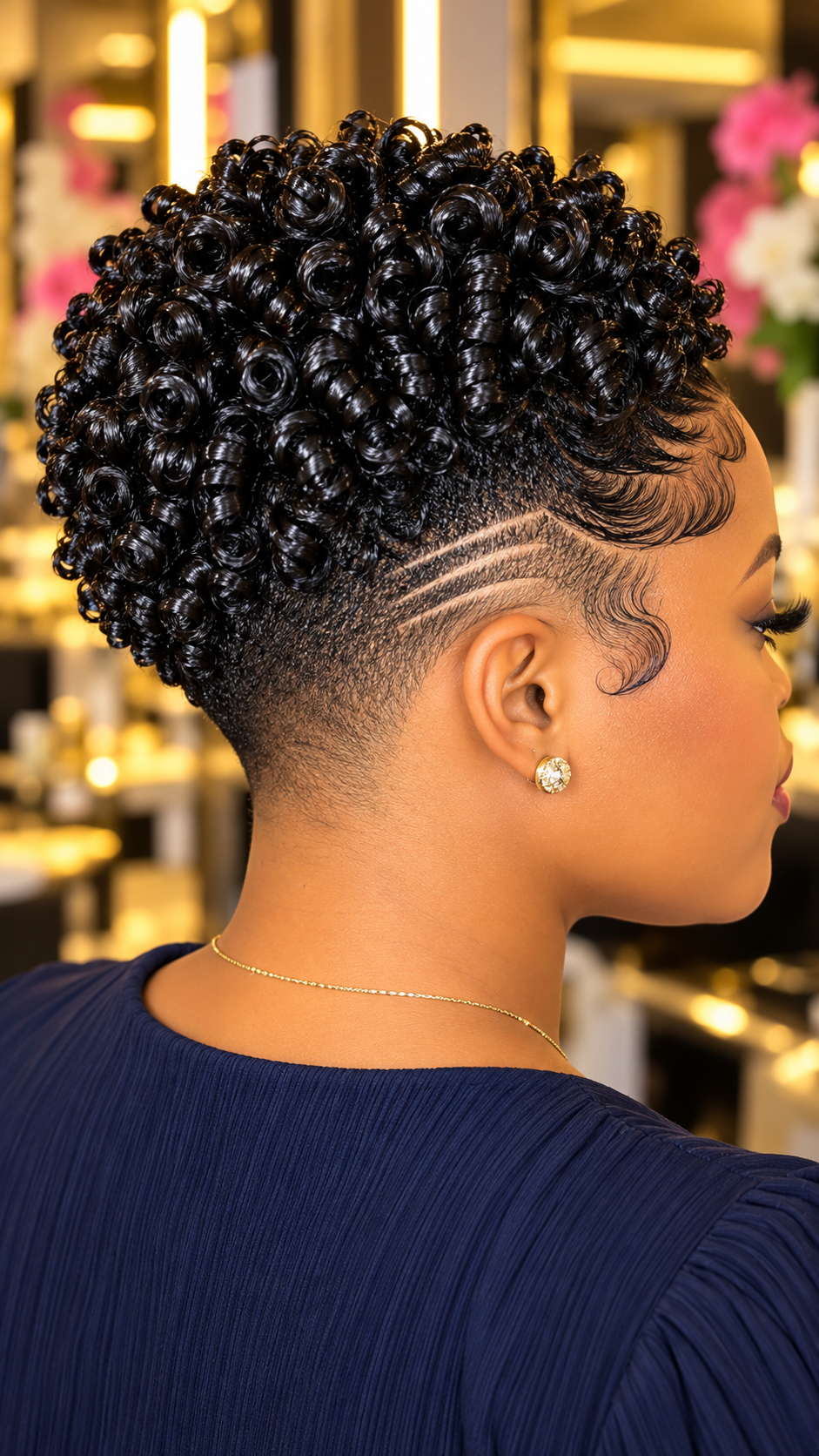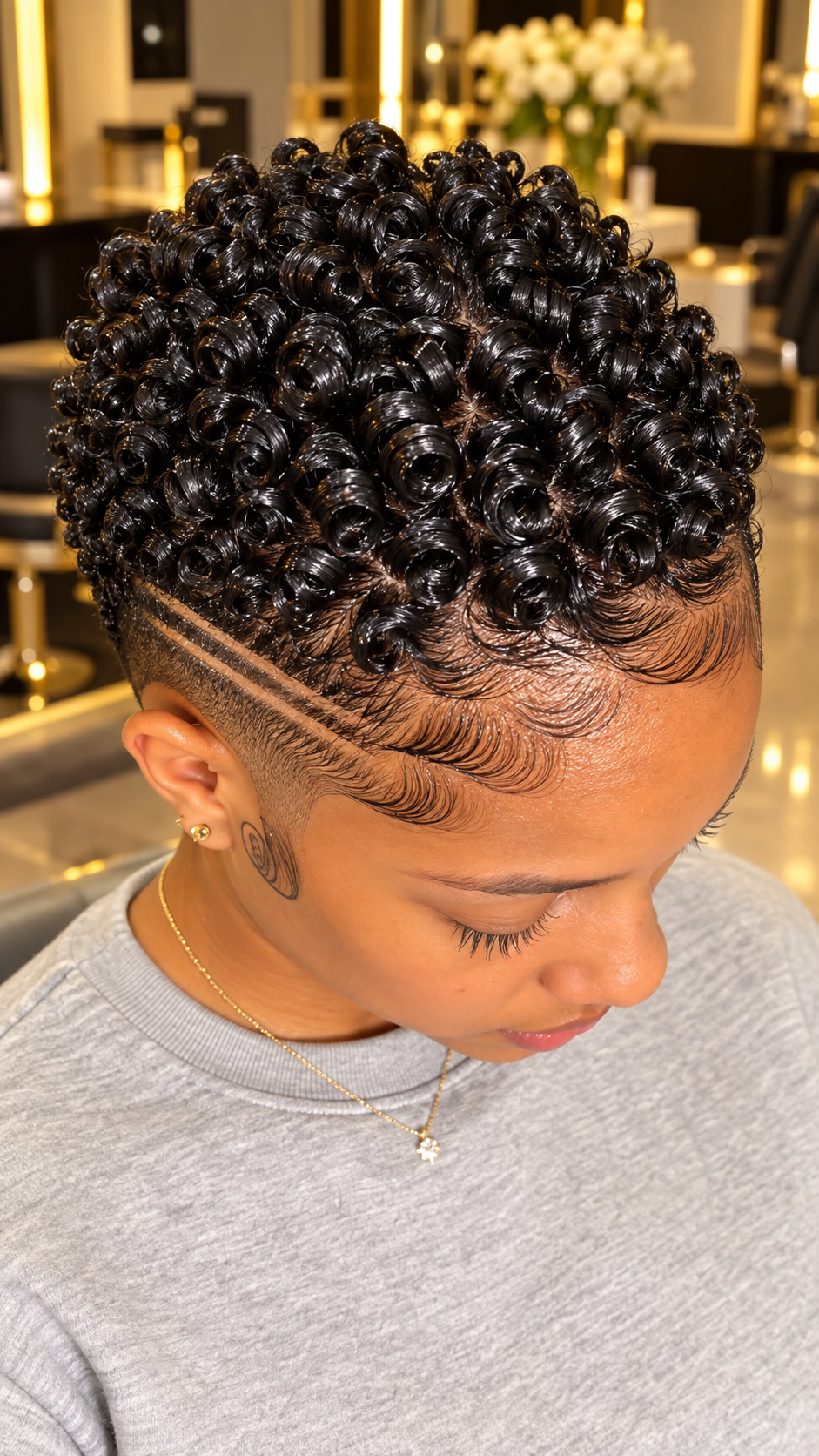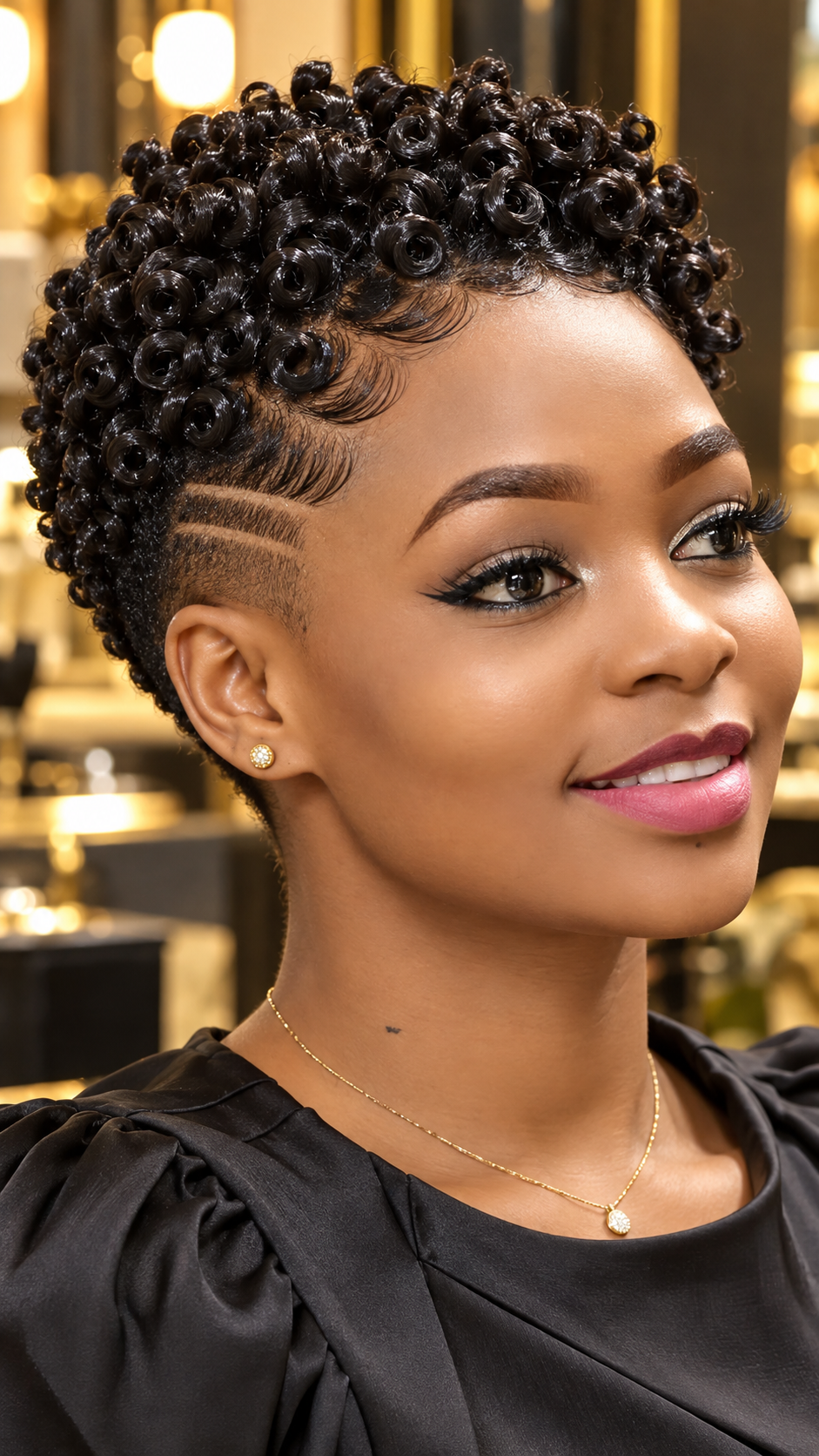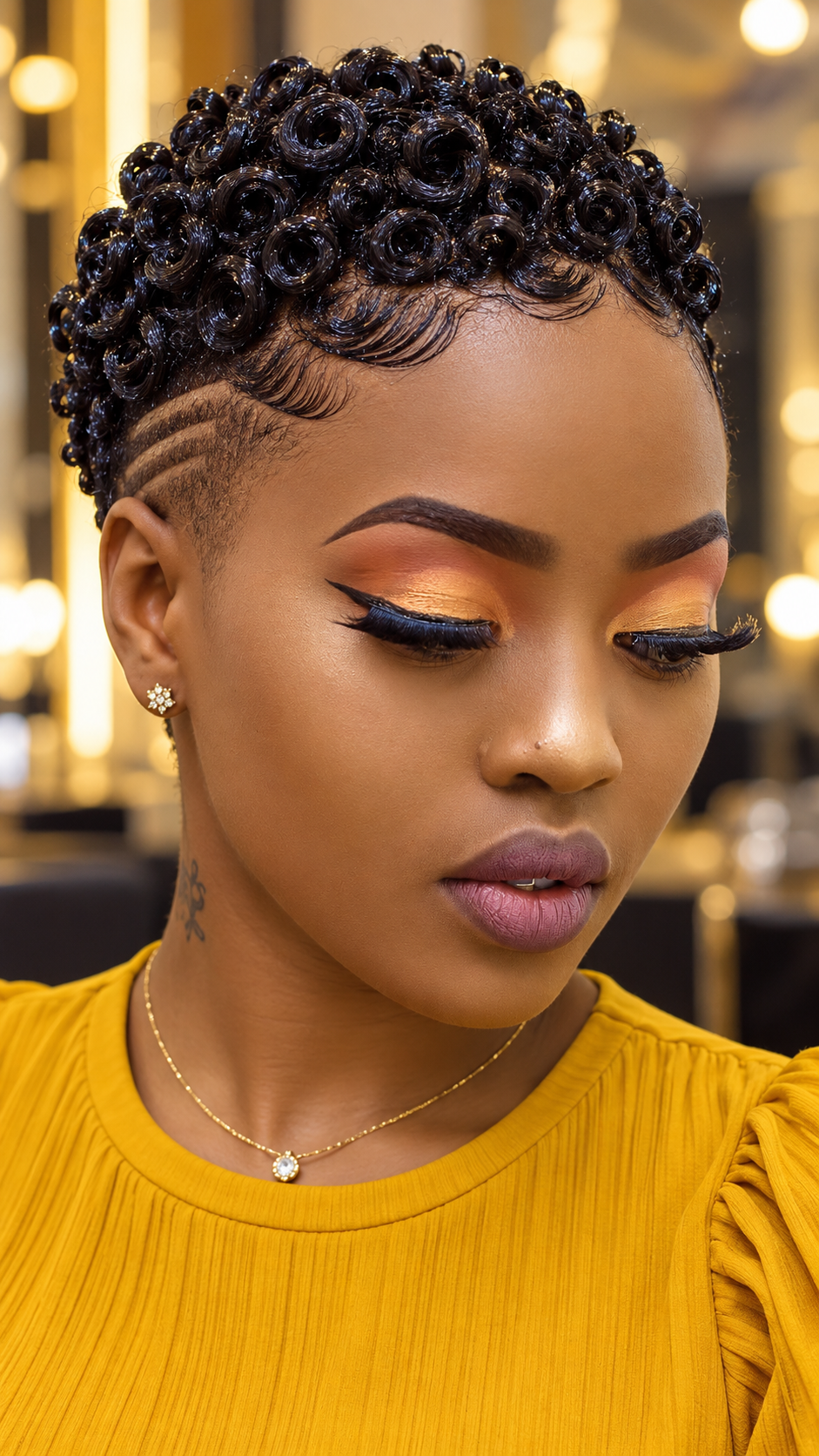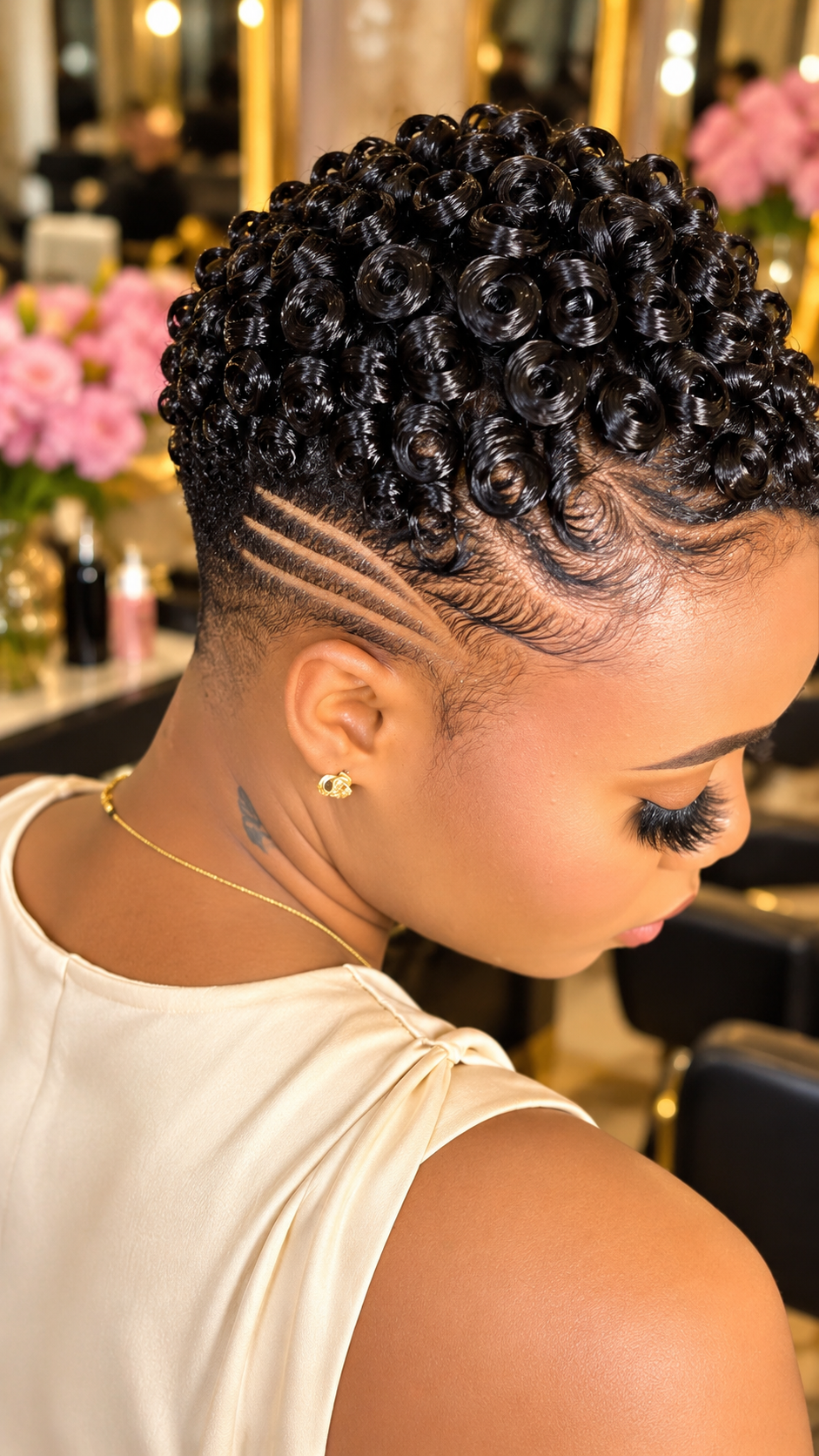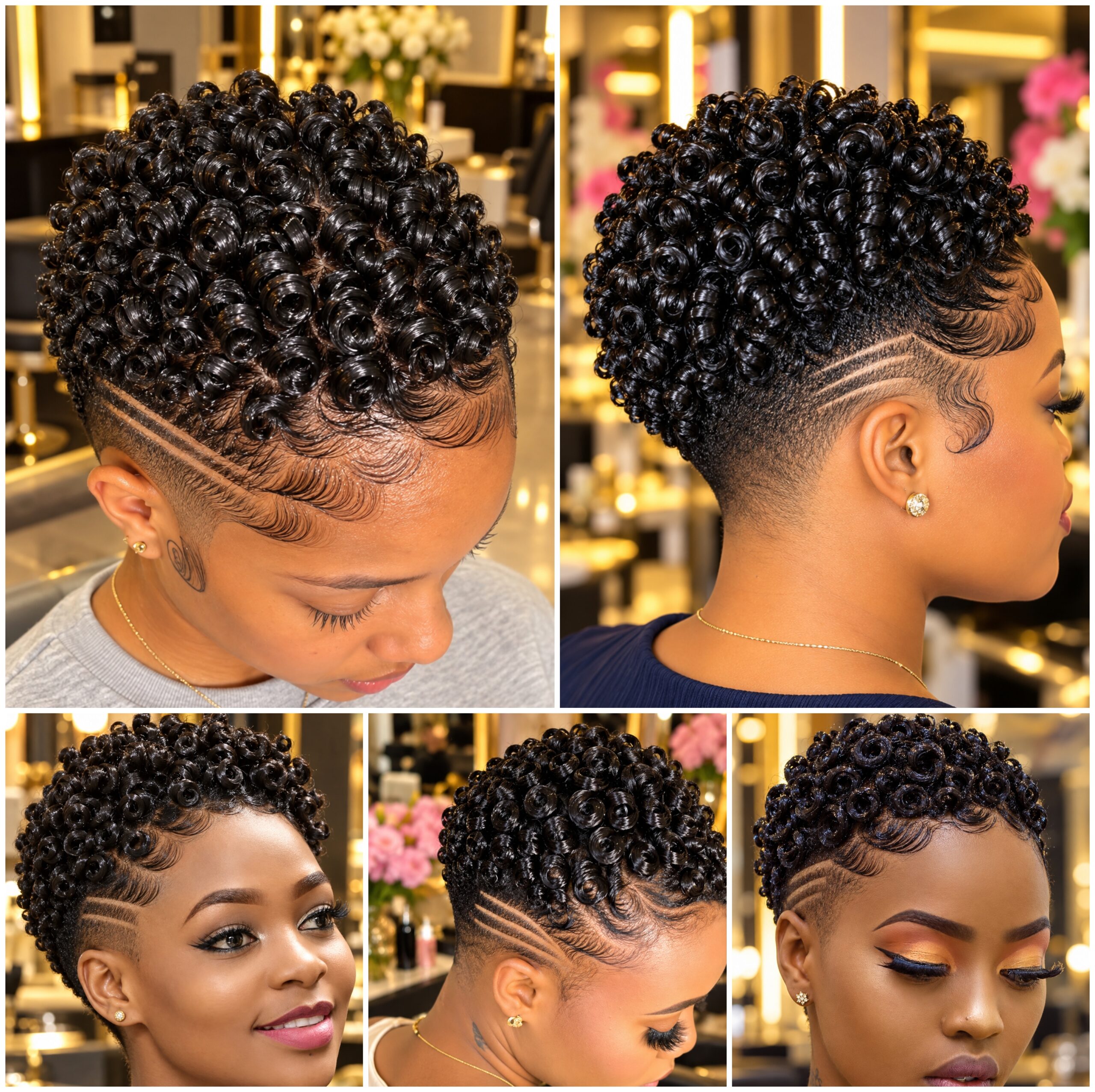
Afro coil haircuts offer an expressive way to combine natural curl structure with precise barbering. The most interesting variations bring together a compact crown of tightly curled hair and carefully designed temple accents that enhance the overall silhouette. From subtle curved lines to bold geometric details, these hairstyles demonstrate how a relatively small area of the head can influence the appearance of an entire haircut.
For women who appreciate natural Afro hair, a closely shaped coil cut can provide a practical alternative to longer protective hairstyles. The curls remain visible across the upper head, while the sides can be tapered, closely trimmed, or shaped into decorative patterns. The result can be understated or highly artistic, depending on the curl length, density, color, and chosen temple design.
These styles are particularly appealing because they allow the wearer to preserve the character of natural coils while experimenting with professional barbering techniques. A well-planned haircut considers the natural growth pattern, the shape of the head, and the relationship between the crown and temples.


Whether created directly on natural hair or reproduced through a carefully constructed wig, the most successful Afro coil styles rely on thoughtful proportions rather than unnecessary volume or excessive decoration.
The Relationship Between Crown Coils and Temple Detailing
The upper section of an Afro coil haircut usually provides the hairstyle’s primary volume. Depending on the natural curl pattern, the coils may appear as tightly wound spirals, small circular curls, or densely grouped spring-like formations.
Temple accents introduce contrast. A closely tapered side can make the upper curls appear more prominent, while a curved or angular line can establish a distinctive visual direction.
The balance between these areas is important. If the crown is excessively high, the temple pattern may seem disconnected from the overall hairstyle. If the upper curls are cut too close, the decorative side may dominate the appearance.
For many women, a rounded crown with moderate height provides a flattering foundation. The sides can then be adjusted according to facial proportions, hair density, and personal preference.
A barber experienced with Afro hair can evaluate how the natural coils respond to cutting and determine how much length should remain to preserve their spring-like appearance.
Popular Afro Coil Arrangements for Women
Compact Circular Coils
Compact circular coils create a rounded upper surface filled with small, closely arranged curls. This approach works particularly well when the natural hair has sufficient density to form a continuous silhouette.
The coils may be shaped with the fingers or appropriate styling techniques, depending on the hair’s natural behavior. Their size can vary, producing a hairstyle with subtle movement rather than identical curls across the entire crown.
A low taper around the temples and nape can emphasize the circular arrangement without removing too much hair.
Elevated Spiral Crown
An elevated spiral crown leaves slightly more length through the upper head. The curls rise above the closely trimmed sides, creating a noticeable difference in height.
This approach can be attractive for women who want visible coil structure without maintaining a large Afro silhouette.
The barber should preserve enough length for the curls to form naturally while keeping the sides proportional to the head.
Asymmetrical Coil Placement
Asymmetrical styling concentrates slightly more height or curl movement toward one side. This can complement a temple accent positioned on the opposite side or beneath the fuller section.
The result introduces directional interest without requiring a dramatic haircut.
Because Afro hair can shrink considerably as it dries, the final silhouette should be evaluated in its natural state rather than judged exclusively while wet.
Temple Accents That Complement Natural Afro Coils
Temple accents can range from a single discreet line to a carefully arranged geometric composition. The most suitable option depends on the haircut’s proportions and the amount of hair available around the sides.
Single Curved Temple Line
A single curved line provides a restrained decorative element. It can begin near the front temple and follow a gentle arc toward the side.
This design is suitable for women who want a noticeable detail without introducing several competing patterns.
The line should follow the natural shape of the head and remain proportionate to the surrounding hair.
Double Parallel Curves
Two closely spaced curved lines create a more pronounced side arrangement. The space between them becomes part of the design, particularly when the surrounding hair is dark and closely tapered.
The curves do not need to extend across the entire side. A compact double-line accent near the temple can be sufficient.
Precise spacing is important because uneven distances may make the design appear unbalanced.
Angular and Lightning-Inspired Patterns
Angular temple artwork introduces sharper directional changes. Zigzag shapes, pointed divisions, and lightning-inspired accents can give an Afro coil cut a more graphic appearance.
These patterns generally require a closely trimmed foundation so the lines remain visible.
A barber should plan the geometry before cutting, particularly when the design contains several pointed changes in direction.
Feather-Inspired Side Artwork
Feather-inspired patterns use branching curves and tapered sections to create an intricate appearance. The design may begin with one longer channel and continue into smaller divisions.
This approach can complement a rounded coil crown because the flowing lines contrast with the circular curls above.
However, elaborate artwork requires sufficient space and an experienced barber. Attempting too many channels on a narrow temple area can make the pattern difficult to distinguish.
Choosing a Cut According to Hair Density
Hair density influences how a coil haircut should be shaped. Women with dense natural hair may be able to maintain a rounded crown with relatively little length, while lower-density hair may require a different cutting strategy.
The barber should evaluate the natural distribution of hair rather than assuming that every section grows with the same density.
Some clients have fuller crowns and lighter temple areas. Others have consistent density throughout the head. These differences can influence whether a single curved accent or a more elaborate side design is appropriate.
Closely trimming an already sparse temple may make the area appear less full. In such cases, a subtle taper without decorative lines may be more suitable.
The goal is to create a hairstyle that works with the client’s natural hair rather than forcing a pattern onto an unsuitable area.
Color Options for Afro Coil Haircuts
Although natural black remains a versatile choice, Afro coil cuts can also be adapted through carefully selected color treatments.
Natural Black and Deep Espresso
Black and espresso shades emphasize the shadows between individual coils. They also provide strong contrast for exposed temple lines.
These colors can be especially effective when the haircut includes detailed geometric artwork.
Mocha and Chocolate Brown
Mocha and chocolate shades introduce warmth while maintaining a relatively understated appearance.
They can complement compact coil arrangements and softly tapered sides without drawing attention away from the haircut’s structure.
Copper and Auburn
Copper and auburn colors create a brighter visual impression. When concentrated through the crown, they can establish a noticeable contrast against darker temples.
Color placement should be planned carefully so the lower design remains visible.
Silver and Ash Brown
Silver, smoky gray, and ash-brown shades offer cooler alternatives. These colors may highlight individual curl shapes, particularly when the coils are arranged into distinct circular formations.
Professional consultation is important before lightening naturally dark hair because achieving pale shades may require chemical processing.
Finding the Right Barber for an Afro Coil Cut
A successful haircut begins with a barber or hairstylist who understands natural Afro hair and has experience with precision tapering.
Search for professionals specializing in women’s natural haircuts, tapered Afro styles, coil styling, and temple line designs.
Before booking, review photographs of their previous work. Look for examples showing balanced crown shapes, carefully blended sides, and accurate decorative patterns.
A portfolio containing several different hair densities can be particularly useful because it demonstrates how the professional adapts cutting techniques to individual clients.
During the consultation, explain the preferred crown height, curl size, temple design, and amount of hair to be retained around the sides.
Reference photographs should show the desired hairstyle from more than one angle whenever possible.
Planning the Salon Appointment
The appointment should begin with an assessment of the client’s natural curl pattern, density, scalp condition, and existing haircut.
The barber can then establish the overall silhouette before introducing decorative details.
For a tapered coil haircut, shaping the sides and nape first may help establish the proportions. The crown can then be adjusted according to the desired height and curl arrangement.
Temple artwork should be added only after the main haircut has been balanced.
This sequence reduces the likelihood of placing decorative lines too high or too low.
Clients should also discuss how the hairstyle will appear after washing and natural shrinkage. The finished cut should remain attractive without requiring excessive daily manipulation.
Natural Hair or a Sculpted Afro Coil Wig?
Some women prefer to achieve these hairstyles directly on their natural hair, while others may choose a wig for greater flexibility.
A natural haircut allows the barber to work directly with the client’s growth pattern and existing curl structure. However, trimming and carved temple details involve permanent changes until the hair grows back.
A sculpted wig can provide a similar appearance without requiring the wearer to cut their natural hair.
Custom wig makers may reproduce compact coils, tapered silhouettes, and decorative side patterns using suitable hair and cap construction.
Not every wig can support the same degree of side detailing. The maker must consider the density and placement of the hair, the cap foundation, and the intended fitting position.
Customers should request photographs of the actual wig and confirm the hair material, cap measurements, and installation requirements before purchasing.
Estimated Prices for Custom Afro Coil Wigs
The following USD ranges are illustrative planning estimates rather than verified live retail prices. Actual costs depend on the seller, fiber composition, cap construction, curl styling, and amount of decorative work.
| Wig Category | Illustrative USD Range | Typical Planning Considerations |
|---|---|---|
| Premium Custom | $320–$780+ | Personalized cap construction, detailed coil placement, custom taper styling, and intricate temple artwork. |
| Standard Custom | $165–$390 | Customized Afro coil silhouette with selected side accents on a prepared wig foundation. |
| Basic Human Hair | $90–$250 | A possible base unit requiring additional cutting, coil styling, and temple customization. |
| Premium Synthetic | $60–$175 | A pre-styled coil wig with a compact silhouette, subject to the fiber’s styling limitations. |
| Basic Synthetic | $25–$85 | A budget-oriented curly wig that may offer limited customization options. |
These categories apply to possible wig purchases rather than natural haircut services. Barbering appointments, color processing, lace preparation, shipping, and installation may involve separate charges.
For natural haircuts, request a quotation directly from a local barber or salon. The price may vary according to the complexity of the temple design and the services included.
Maintaining Natural Afro Coils Between Appointments
Coil maintenance should focus on preserving moisture, limiting unnecessary manipulation, and keeping the haircut’s overall proportions attractive as the hair grows.
A suitable cleansing routine depends on the individual’s scalp, hair condition, and product use.
Conditioning products can help manage dryness, while lightweight styling products may assist with curl separation. The appropriate choice depends on the natural hair’s response rather than a universal product recommendation.
Excessive combing may disturb carefully arranged coils. Gentle handling and appropriate detangling methods are generally preferable.
Clients should also consider how sleeping habits and headwear affect the crown. Repeated friction may flatten or disturb certain sections.
Keeping Temple Artwork Recognizable
Decorative temple lines gradually become less prominent as the hair grows.
The frequency of barber touch-ups depends on individual growth rate, the complexity of the design, and the client’s preference.
Simple single-line accents may remain visually acceptable for longer than intricate branching patterns that rely on narrow spacing.
Attempting to maintain complicated artwork at home with cutting tools can create uneven lines or remove more hair than intended.
Professional touch-ups are generally preferable when the design contains several closely positioned channels.
How Face Shape Can Influence the Silhouette
Face shape may influence personal styling preferences, but it should not be treated as a rigid rule determining which haircut someone can wear.
A rounded crown can create softness around the upper head, while a more elevated arrangement may introduce additional vertical emphasis.
Closely tapered temples can make the upper curls appear more prominent. A slightly fuller side may create a different balance.
The barber should consider the client’s preferences, natural hair distribution, and desired level of maintenance rather than relying exclusively on face-shape categories.
Small adjustments to crown height and side density can make a substantial difference without changing the basic haircut.
Common Mistakes When Requesting Decorative Coil Cuts
One frequent mistake is choosing a temple design without considering the available hair density. A complex pattern may require more space than the client’s natural growth allows.
Another is cutting the crown too close before assessing curl shrinkage. Coils can appear considerably shorter after drying, potentially changing the intended silhouette.
Clients may also request several decorative elements that compete for attention. A compact coil crown and one carefully positioned accent can sometimes create a stronger result than multiple unrelated patterns.
Color decisions should also be considered in relation to the haircut. Lightening the entire head may reduce the contrast that makes dark temple artwork noticeable.
Clear communication and reference photographs can help prevent these issues before cutting begins.
Building a Personal Signature With Afro Coil Styling
The appeal of Afro coil cuts lies in their adaptability. A woman can choose a restrained black coil crown with one curved temple accent or explore a more expressive design incorporating geometric artwork and warm color.
The same general haircut can produce different impressions depending on curl size, crown height, side density, and decorative placement.
For women who prefer natural hair, professional barbering can create a distinctive appearance while preserving the character of their curls.
For those who want the look without cutting their own hair, a custom sculpted wig may provide an alternative, provided the cap and styling are suitable.
The most successful result is one that respects the hair’s natural behavior, maintains balanced proportions, and incorporates temple detailing with purpose.
Rather than treating the decorative lines as an afterthought, consider them part of the overall hairstyle. Their position, direction, and scale should complement the coils above.
With the right professional guidance, Afro coil cuts can offer an appealing combination of natural curl expression, precision barbering, and individualized style.
Search Terms
Women’s tapered Afro coil haircuts · Natural black spiral coil crown · Curved temple line Afro hairstyle · Double arc side design natural coils · Copper tapered Afro with temple accents · Feather inspired barber line coil cut · Compact 4A coil pixie for women · Sculpted Afro coil wig with side detailing