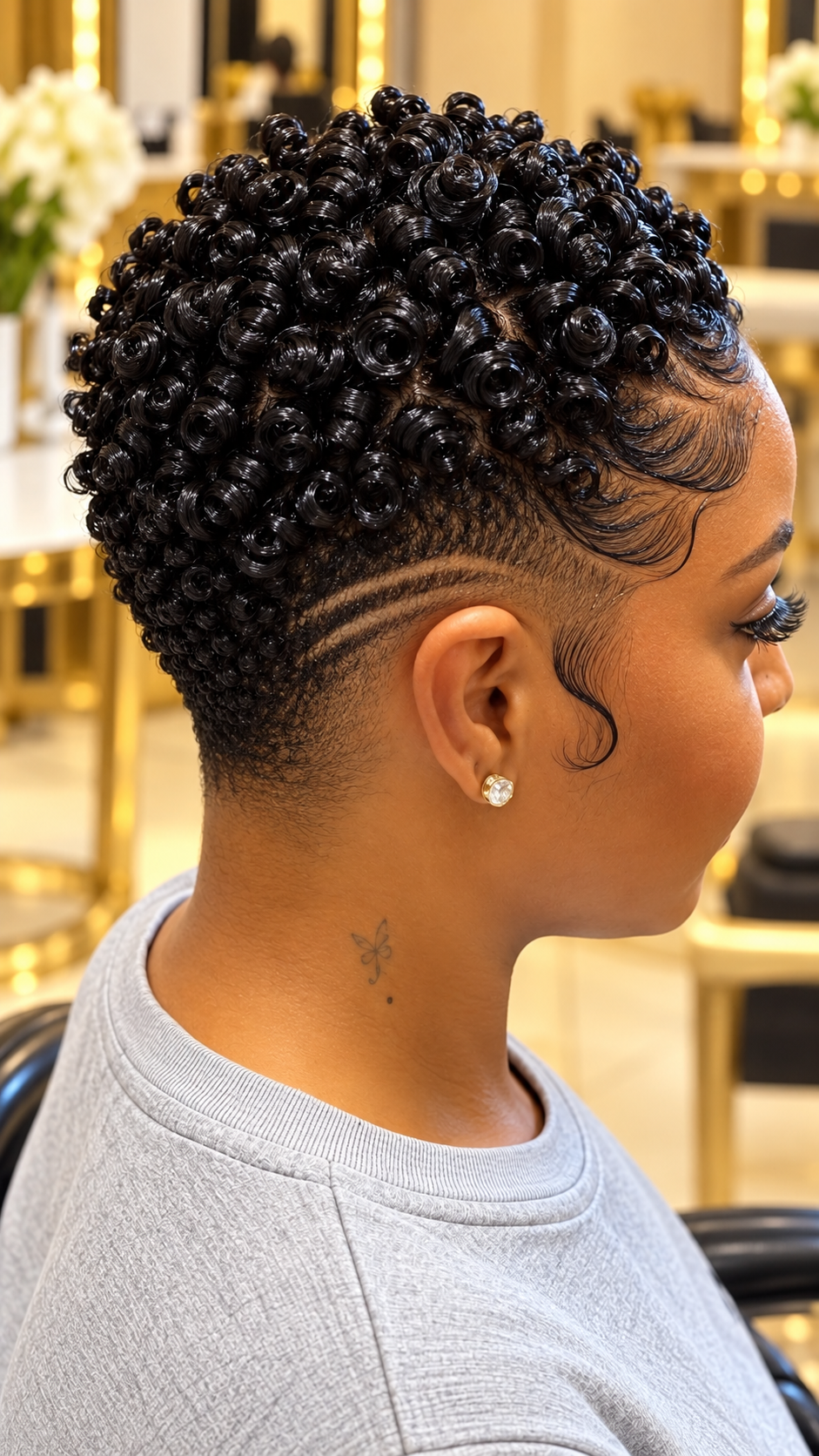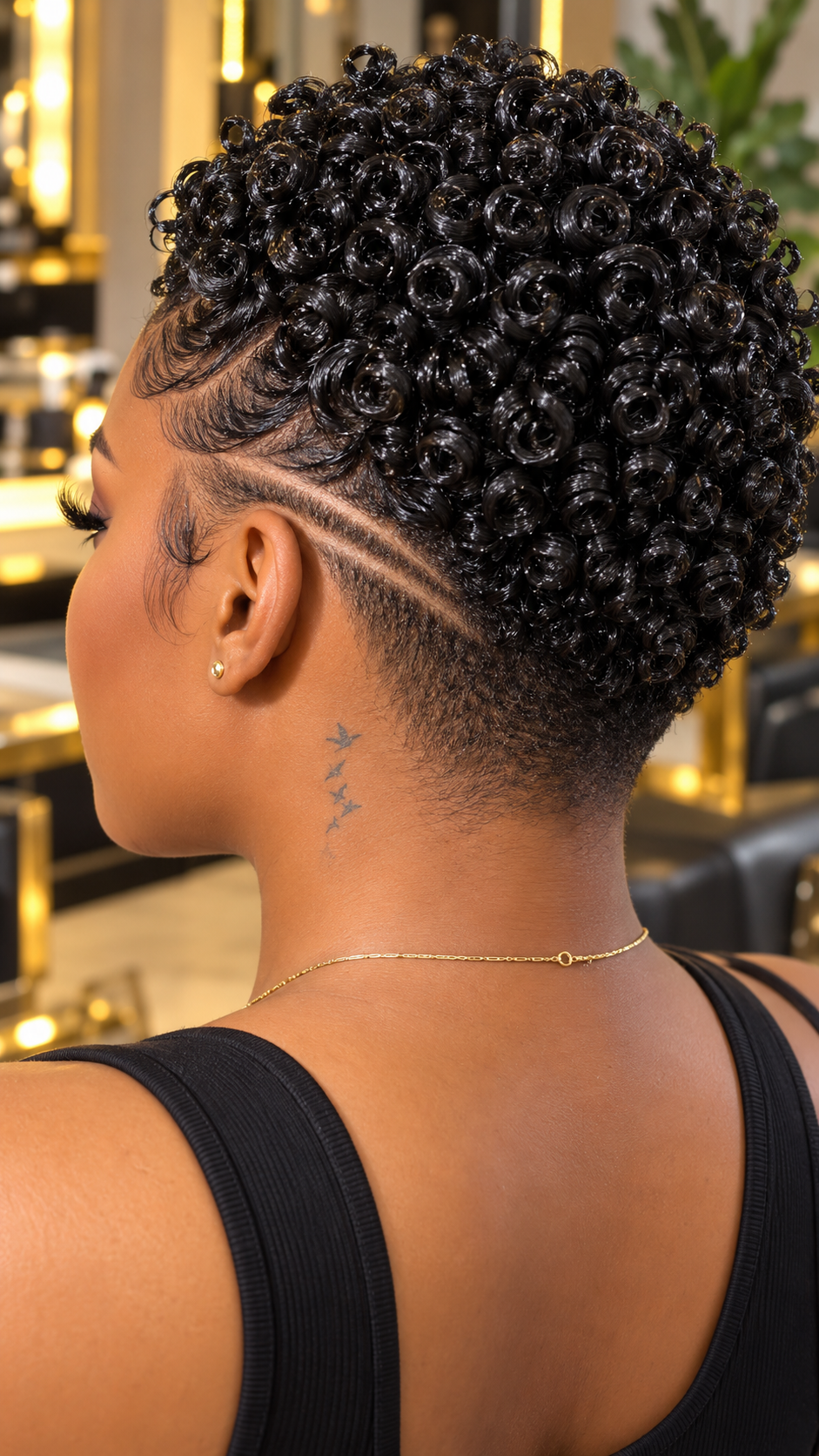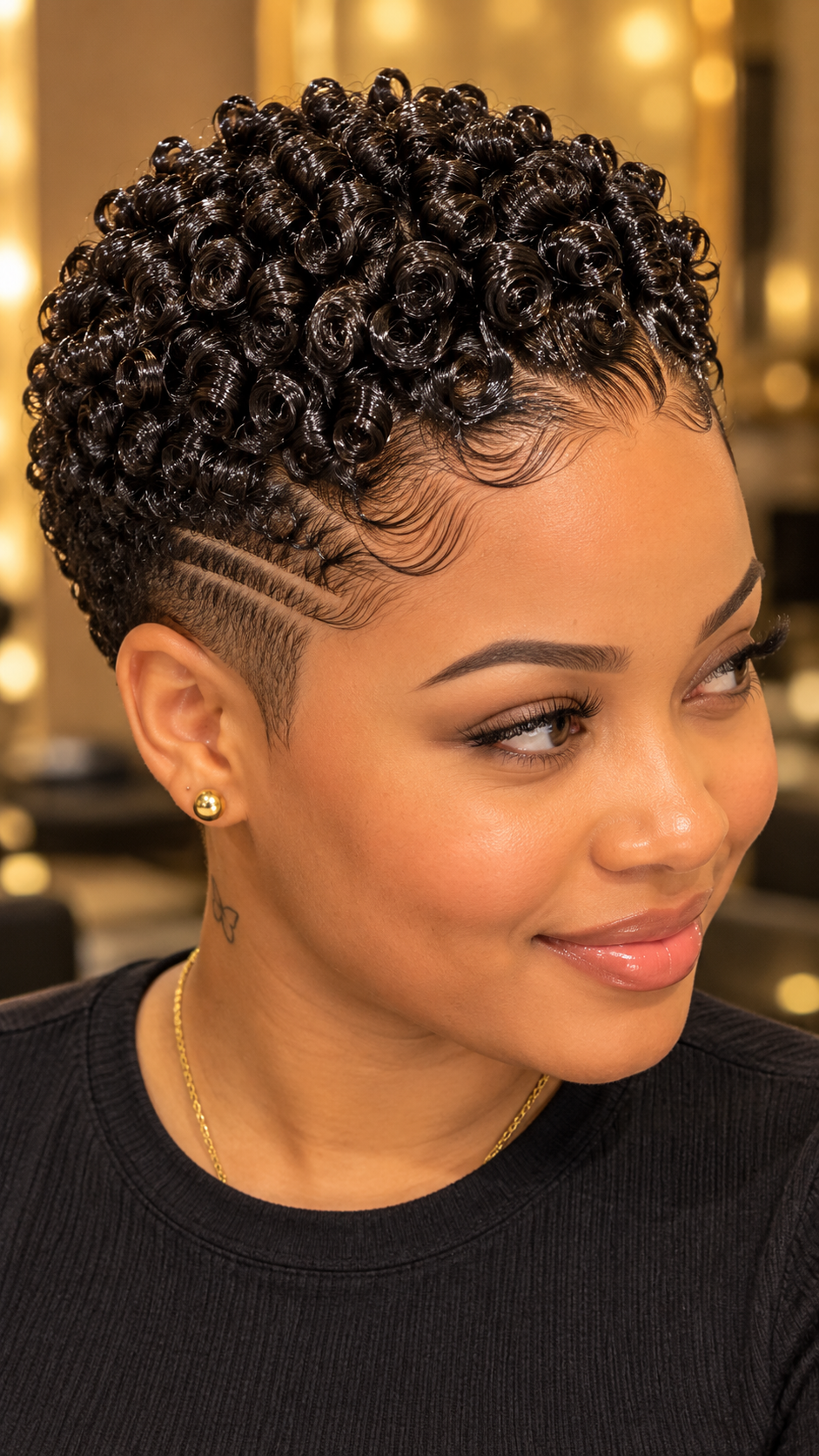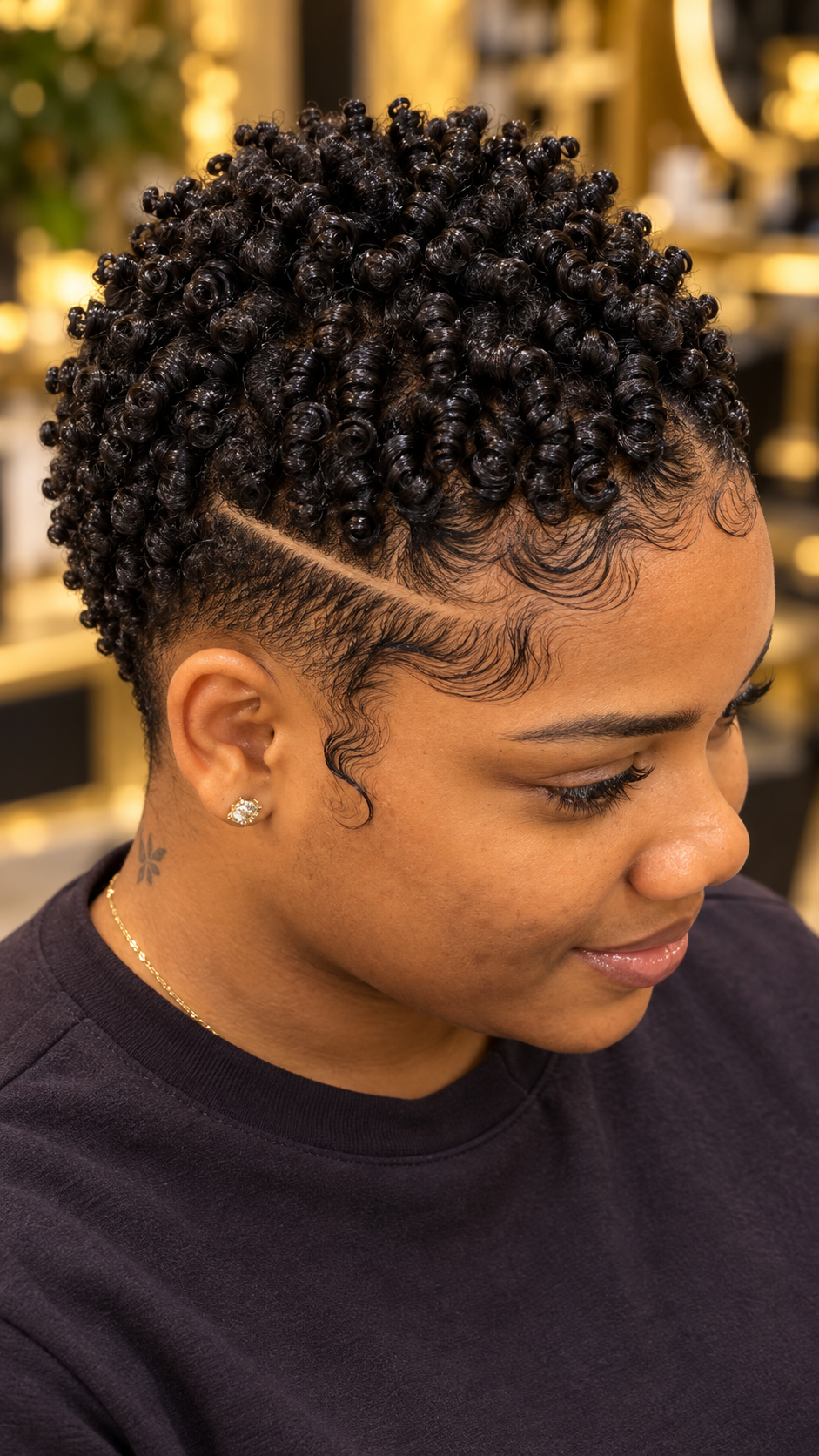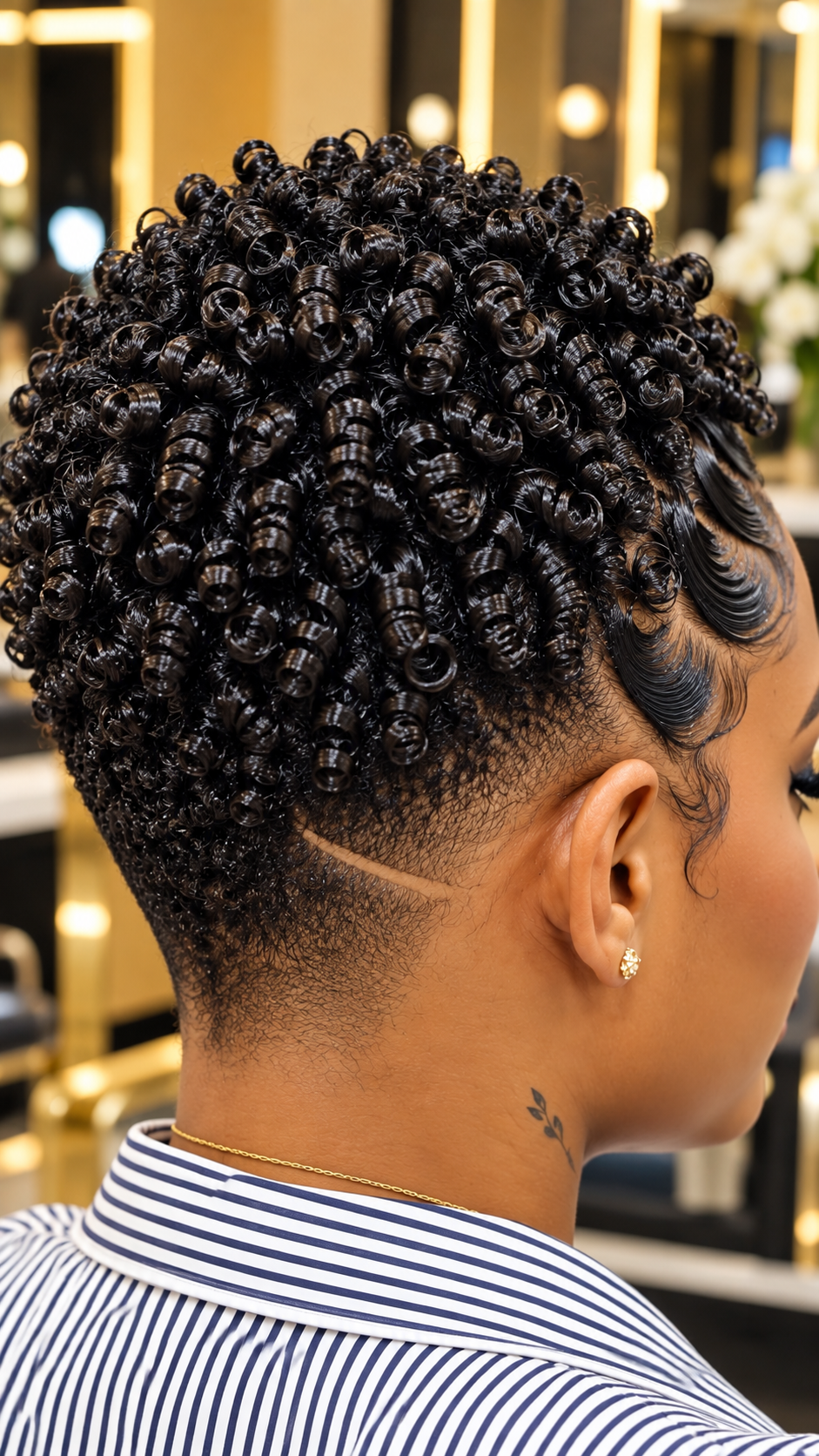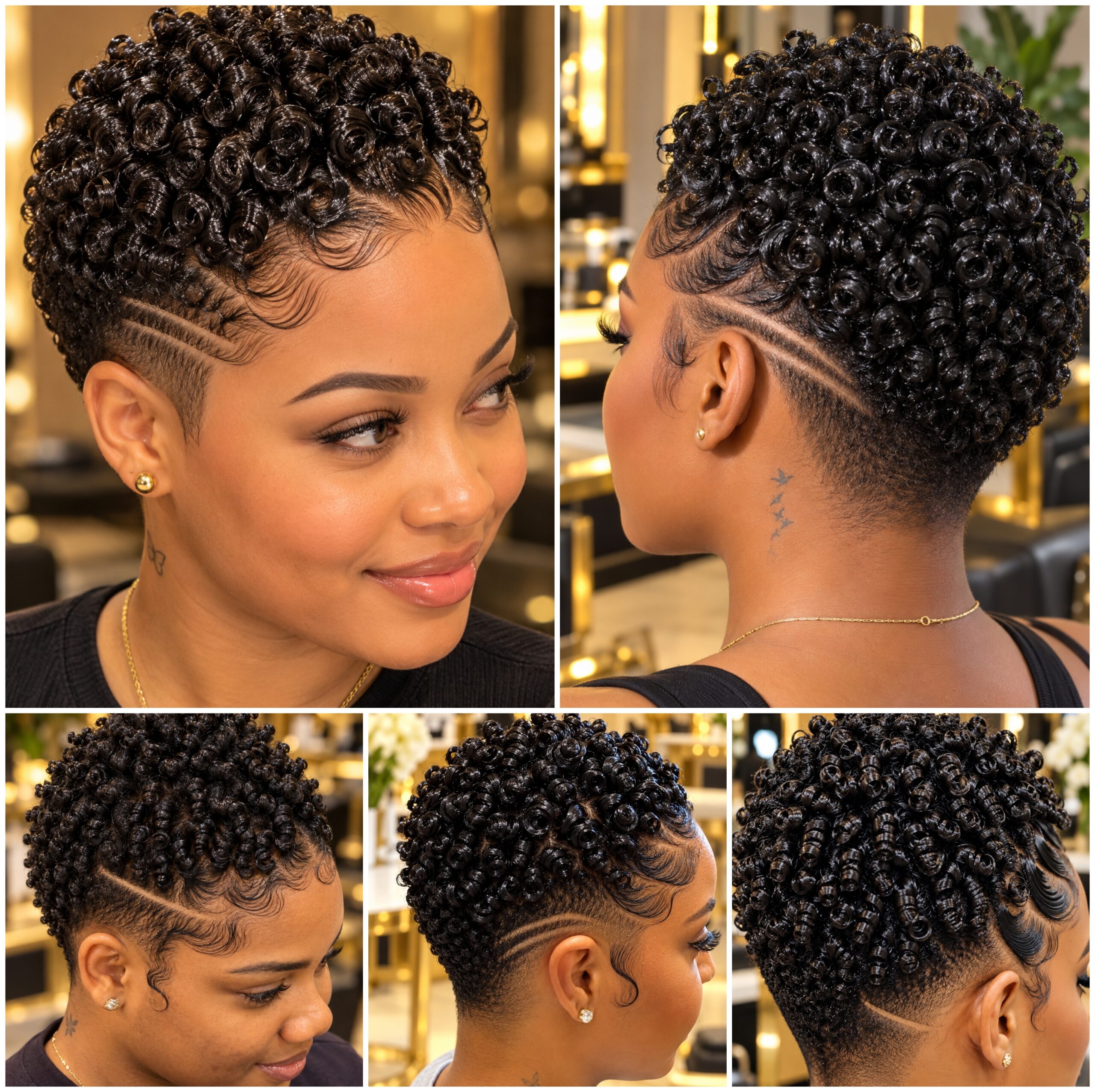
Curly fade cuts with parallel side parts bring together two contrasting approaches to hairstyling: natural-looking curl volume above and precision-cut separation along the sides. The appeal comes from the way closely spaced lines interrupt the darker hair beneath a fuller curly crown, creating a recognizable profile without requiring excessive length or elaborate accessories.
This hairstyle category offers considerable flexibility. The curls can be compact and tightly coiled, softly rounded, or arranged into more sculpted formations. Meanwhile, the parallel side parts can be positioned near the temple, extended toward the back, or incorporated into a gradual fade. The most successful versions maintain a clear relationship between the upper curl density and the spacing of the carved lines.
For women considering this hairstyle as a natural haircut or a custom wig, the main decisions involve curl structure, fade depth, side-part placement, and maintenance. A photograph of a specific finished style is particularly valuable because small changes to any of these details can produce a noticeably different result.


Parallel Side Parts as a Precision Haircut Detail
Parallel side parts are two or more exposed channels arranged in similar directions across the side of the head. They are commonly created by carefully separating or reducing hair along narrow paths, leaving darker strands between the lines.
The channels may be straight, gently curved, or diagonal. Their defining characteristic is the coordinated spacing between neighboring separations.
On a curly fade haircut, these lines become particularly noticeable because the upper hair has greater volume than the closely cut side. The contrast creates a visual boundary between the curly crown and the lower section.
A pair of narrow parallel parts can create a restrained appearance, while three carefully spaced lines introduce a more intricate design. The appropriate number depends on the available side area, hair density, and desired overall balance.
Spacing Makes a Greater Difference Than Line Width
When the exposed channels are positioned too close together, the remaining hair between them may become difficult to distinguish. Excessively wide spacing, however, can make the lines appear unrelated.
A barber should evaluate the available hair and the curvature of the head before determining the final placement.
For a custom wig, this consideration is especially important because removing hair may expose the underlying foundation. Unlike natural hair, the removed strands will not grow back.
Buyers should therefore approve the intended line arrangement before any permanent carving is performed.
Choosing a Curl Pattern That Complements the Fade
The upper curls determine much of the hairstyle’s personality. Tight natural coils create a compact silhouette, while larger curls introduce broader movement and a fuller appearance.
Finger coils can produce individual spiral formations with recognizable separation between neighboring sections. A rounded curly crown, by contrast, may have a more continuous surface with less emphasis on individual ringlets.
For women seeking a sculpted appearance, circular curls or controlled spiral loops can create additional dimension above the fade.
The choice should depend on hair characteristics, styling preferences, and the amount of daily maintenance the wearer is comfortable performing.
Keeping the Crown Proportionate
A curly fade should not automatically be made taller or fuller simply because the side hair is closely cut.
Excessive upper volume can overpower the parallel side parts, making them less visible from ordinary viewing angles.
A compact crown often provides a stronger relationship between the curls and the carved design.
For custom wig orders, ask the maker to demonstrate the intended crown height and side proportions before final styling.
How the Fade Influences the Appearance of the Side Parts
A fade gradually changes the hair length along the side and back. Depending on the desired result, the transition may begin relatively low or extend farther upward toward the crown.
When parallel parts are incorporated into a fade, their placement must account for the changing hair density.
Lines cut into an area with extremely little hair may be difficult to see. Conversely, channels positioned within denser hair can create stronger contrast.
The barber should identify a suitable region where enough hair remains to separate the lines visually.
For a wig, the fade-like appearance may be created through close trimming, controlled hair density, or the arrangement of strands over the foundation. The exact method depends on the wig’s construction.
Two-Line and Three-Line Variations
A double parallel side part is a useful choice for someone seeking a recognizable detail without covering much of the side with decorative cutting.
Two lines can follow a gentle diagonal direction from the temple toward the rear, with a narrow band of hair between them.
A triple-line arrangement introduces another layer of separation. This can work particularly well when the side panel has enough height to accommodate all three channels without crowding.
The lines do not necessarily need to extend across the entire side. Some hairstyles use shorter parallel strokes that taper before reaching the back.
However, the chosen variation should be communicated clearly. A barber or wig maker should not add extra channels simply to make the design appear more elaborate.
Choosing Between Natural Hair and a Curly Fade Wig
A natural curly fade requires the wearer to commit to cutting the side hair. For someone who wants to retain their existing length, a custom wig may offer a way to explore a similar silhouette without changing their natural haircut.
The two approaches involve different practical considerations.
Natural hair can be shaped directly by a barber, and the carved parts can be refreshed as the hair grows. A wig, however, depends on a constructed foundation with a fixed amount of hair.
Decorative cutting on a wig requires particular caution because removing too much hair may expose the lace or cap material.
A custom wig can also provide pre-arranged curls that may require less daily reconstruction, depending on the fiber and styling method. However, the durability of that arrangement must be confirmed with the seller.
When a Custom Wig Is the Better Purchasing Option
A custom unit may be appropriate when the buyer wants a particular curl diameter, precise parallel side parts, or a specific hair color that is difficult to find in ready-made products.
When ordering, provide reference photographs showing the front, side, and back of the desired hairstyle.
Ask the maker to confirm the number of parallel channels, their direction, and the intended fade depth.
Cap measurements, fiber material, lace specifications, and attachment components should also be discussed before construction begins.
A wig should not be assumed to contain human hair, premium lace, or an adhesive-free attachment system without reliable product information.
Finding the Right Barber or Wig Stylist
For natural hair, search for a barber experienced with women’s curly fades, precision side parts, and decorative line work.
Examples of previous haircuts can reveal whether the barber creates consistent spacing and balanced transitions between the crown and side.
For wigs, look for a specialist who has worked with closely tapered units and decorative carving on lace foundations.
Ask whether the professional can complete both the curl styling and side detailing. Some wig makers may prepare the base unit while another stylist performs the final cutting.
When booking, explain whether the appointment involves natural hair, an existing wig, or a custom unit that has not yet been completed.
What to Discuss During the Consultation
Begin with the intended curl structure and crown height. Then establish how low the fade should extend and where the parallel side parts will be positioned.
For natural hair, the barber should evaluate the existing density and growth pattern before cutting.
For a wig, the stylist should examine the foundation and confirm that enough hair is available for the requested design.
If lace trimming or installation is required, those services should be discussed separately.
A clear consultation reduces the risk of receiving a haircut with the correct general shape but inaccurate side detailing.
Hair Color Options for Curly Fades With Parallel Parts
Natural black and deep espresso brown are practical choices because the dark hair can create strong contrast against exposed side channels.
Chocolate brown introduces a slightly warmer appearance while retaining enough depth for the parting design to remain visible.
For buyers interested in brighter colors, copper, auburn, caramel, or silver accents may be incorporated into the upper curls.
However, color should not overwhelm the side geometry. Keeping the lower section darker can help the parallel parts remain recognizable.
When ordering a colored wig, request photographs under neutral daylight. Store lighting can change the apparent warmth and brightness of the hair.
Color processing should only be considered after confirming the fiber and its compatibility with the intended treatment.
Estimated Wig Prices and Custom Styling Budgets
The following USD ranges are illustrative planning estimates rather than verified current product prices. They are intended to help compare possible wig purchasing categories. Actual quotations depend on supplier, material, cap construction, curl styling, fade detailing, and included services.
| Wig Category | Illustrative USD Range | Relevant Considerations |
|---|---|---|
| Premium Custom | $300–$800+ | Individual construction, detailed curl arrangement, precision parallel carving, selected cap specifications, and possible fitting services |
| Standard Custom | $160–$420 | Customized crown shape, side-part placement, and selected construction options |
| Basic Human Hair | $85–$250 | Base human-hair unit with possible additional costs for curl setting, tapering, and side detailing |
| Premium Synthetic | $55–$180 | Pre-styled curls, cap quality, side design accuracy, and fiber-specific care restrictions |
| Basic Synthetic | $25–$100 | General curly pixie resemblance, simpler construction, and potentially limited customization |
These categories describe possible buying options rather than a particular verified product.
Precision carving may increase the total cost, particularly if the wig requires specialist cutting after construction.
Installation, lace fitting, shipping, taxes, coloring, and additional salon services may be charged separately.
Natural-hair barber services should be quoted independently because haircut prices vary substantially by location and salon.
Maintaining the Fade and Parallel Parts
On natural hair, the carved channels gradually become less noticeable as the hair grows. The frequency of barber visits depends on growth rate, desired line visibility, and the length of the surrounding fade.
The upper curls may require separate care to maintain their shape. Product choice should be appropriate for the individual’s hair characteristics and styling method.
For a wig, the parallel channels do not grow out, but nearby strands may shift and obscure their appearance.
Before removing additional hair, a stylist should determine whether careful repositioning can restore the visibility of the design.
Repeated carving on a wig may permanently reduce the available hair density.
Protecting the Curly Crown
Circular curls and sculpted coils can lose their arrangement when repeatedly brushed or compressed.
For wigs, maintenance should follow the manufacturer’s instructions for the confirmed fiber.
Do not assume that synthetic hair can tolerate heat or chemical processing. Human hair may allow different styling techniques, but its processing history still matters.
A suitable wig form may help preserve the upper silhouette during storage, provided the cap is not stretched.
For natural hair, a stylist can recommend a curl-care routine that supports the chosen shape without unnecessarily disturbing the side parts.
Making the Final Style Decision
The strongest curly fade designs with parallel side parts balance three elements: the amount of volume above, the closeness of the fade, and the spacing of the exposed channels.
A compact curly crown can emphasize the precision of two or three side parts, while a fuller upper section may create a more dramatic silhouette.
The appropriate choice depends on the wearer’s preferences, available hair density, and whether the hairstyle will be created on natural hair or a wig.
For custom wig purchases, request photographs of the exact unit from several angles and confirm the cap specifications before any permanent customization.
For natural hair, choose a barber who can demonstrate consistent line work and an understanding of curly fade proportions.
When the curl pattern, fade, and parallel channels are planned together, the result can remain distinctive without relying on unnecessary decoration. The value of this hairstyle lies in that coordination: curls provide movement, the fade creates contrast, and the parallel parts establish the recognizable side detail.
Search Terms
curly fade with parallel side parts · black curly pixie double side lines · tapered natural curls parallel carving · sculpted coil fade temple parting · women’s curly fade two razor lines · compact spiral crown side fade haircut · three parallel side part curly pixie · curly fade wig with carved side channels