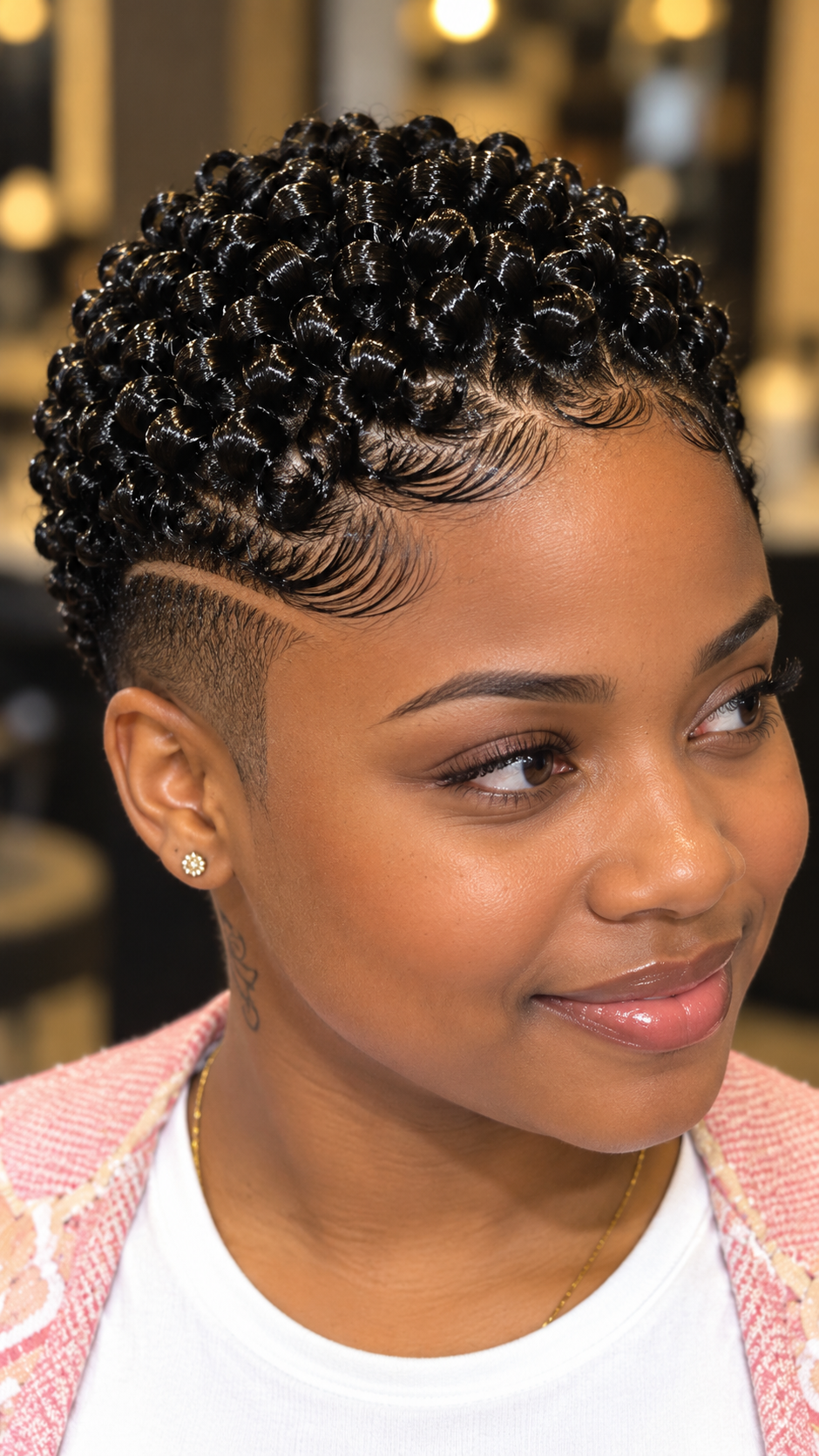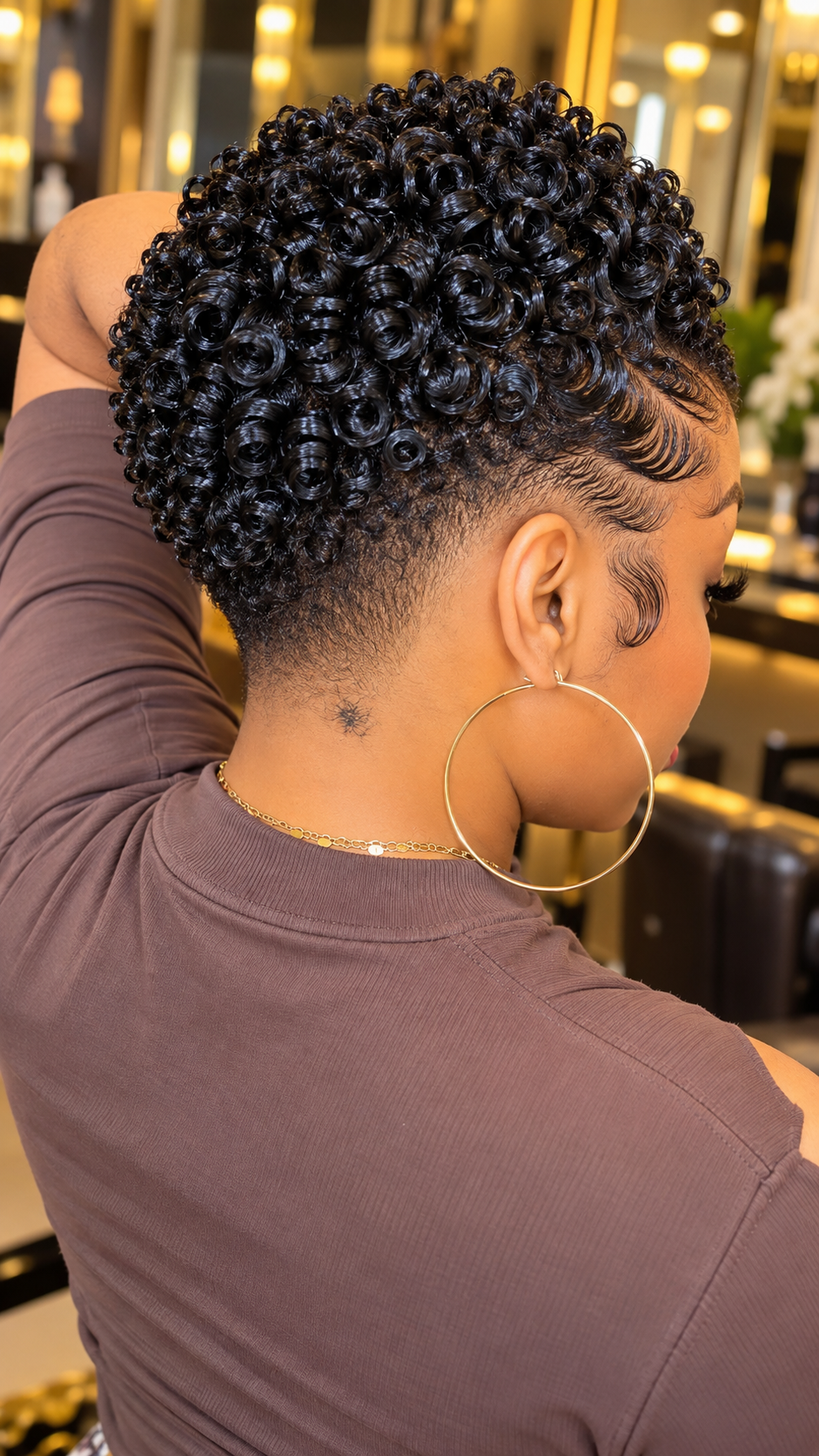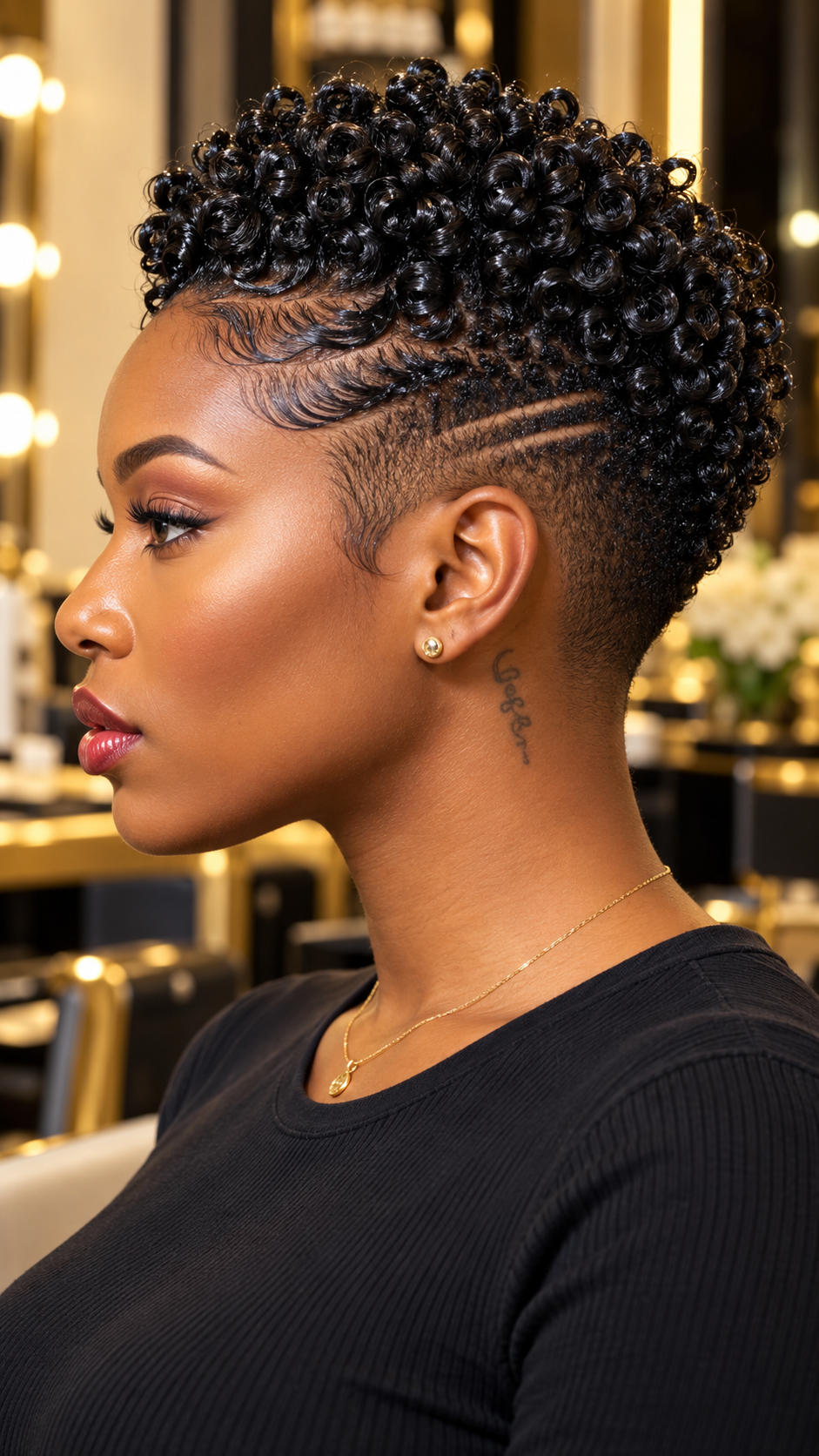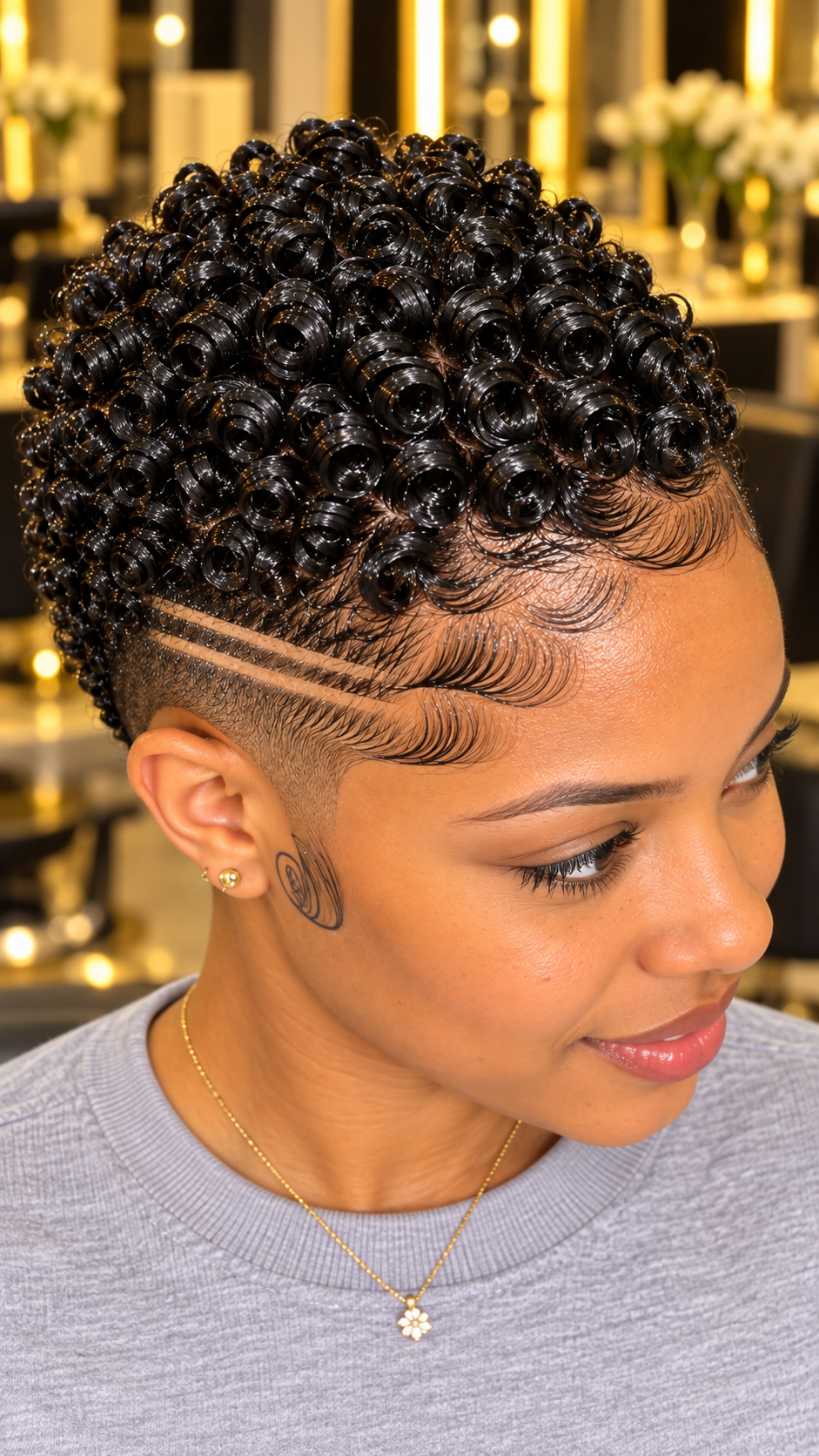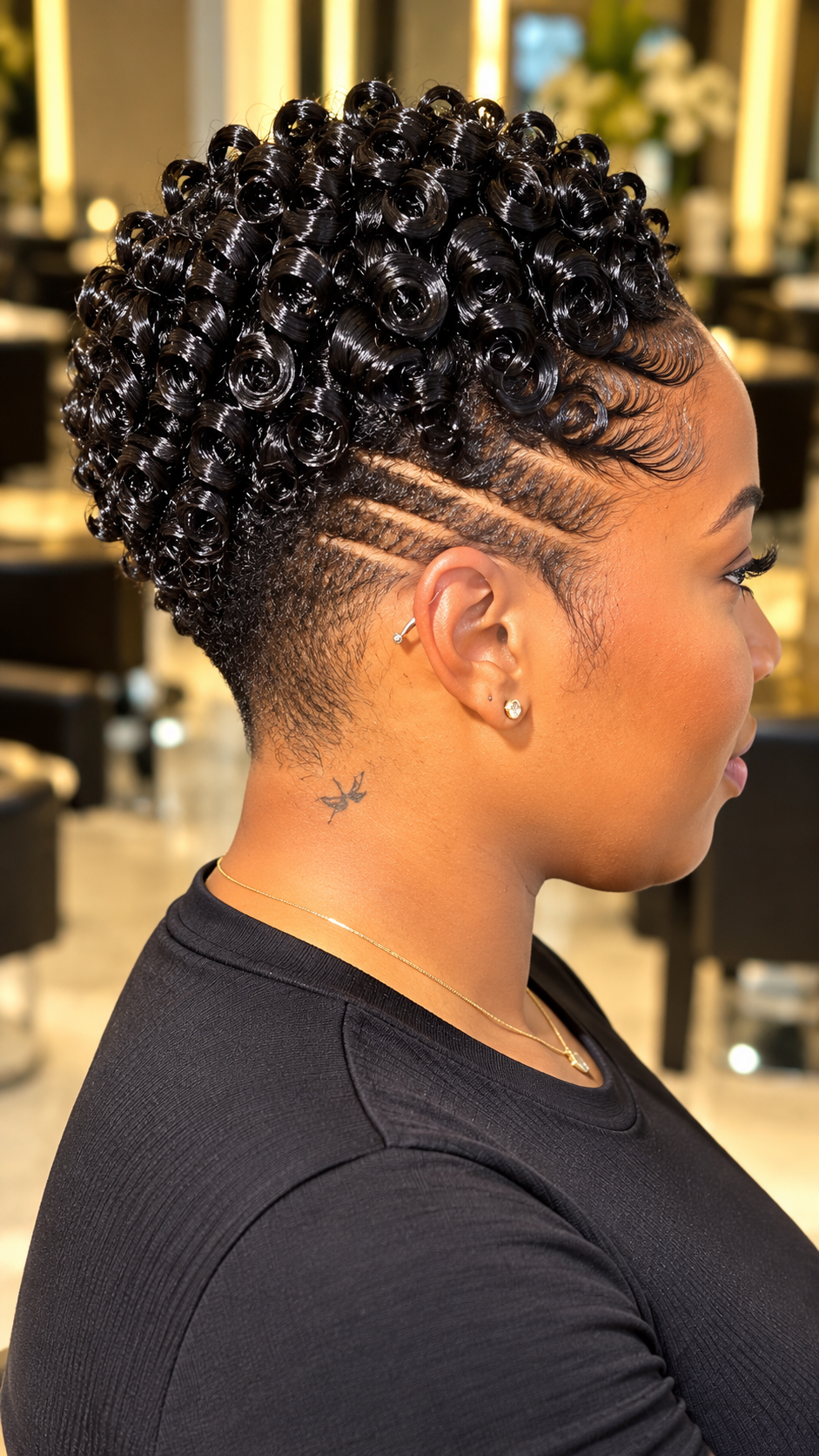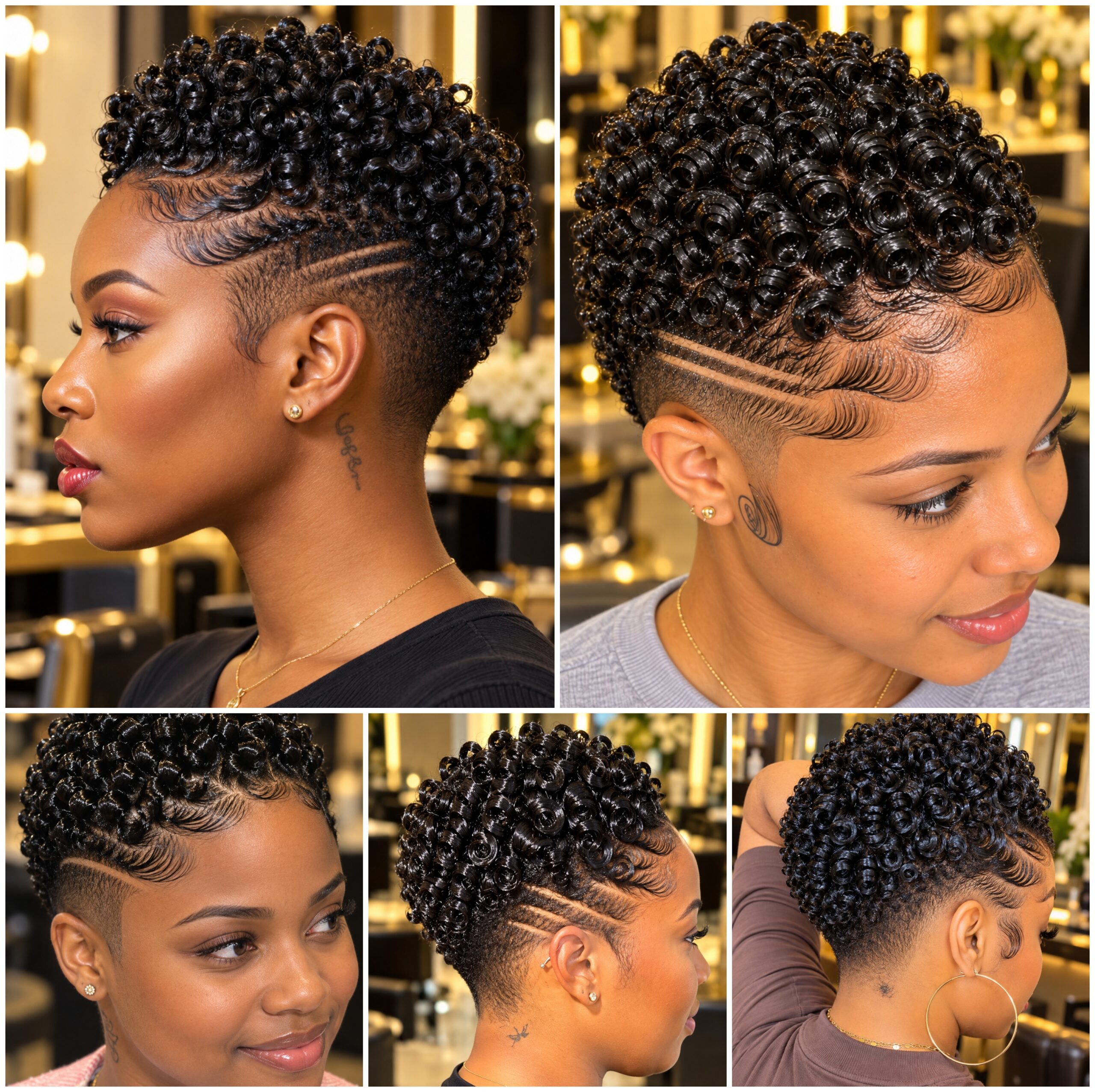
Spiral coil pixies with low fade sides offer a distinctive way to combine the beauty of tightly curled hair with the precision of a carefully graduated haircut. The upper section is shaped around springy spiral coils that create movement, height, and a rounded silhouette, while the lower sides gradually decrease in length near the temples and ears. This contrast allows the curls to remain the focal point without requiring long hair or an oversized crown.
For women who enjoy natural hairstyles, the combination provides considerable styling flexibility. The coils can be arranged into compact spirals, slightly separated curls, or a fuller rounded crown. The low fade can remain subtle or create a more noticeable distinction between the upper hair and the closely cropped lower sections.
The hairstyle can be created on natural hair or adapted into a custom pixie wig. However, these approaches require different techniques. Natural-hair versions depend on the wearer’s curl pattern, density, and growth direction, while wig versions require suitable fiber selection, cap construction, and careful placement of shorter hair along the sides.


Understanding these differences is important before booking a salon appointment or purchasing a wig. The most successful result is not necessarily the hairstyle with the greatest number of curls or the closest fade. It is the version that balances crown volume, spiral formation, and side proportions according to the wearer’s needs.
The Relationship Between Spiral Coils and a Low Fade
The defining characteristic of this hairstyle is the contrast between the upper curls and the lower sides. Spiral coils create visible movement through their rounded formations, while the low fade provides a compact foundation around the lower head.
A low fade generally begins close to the hairline around the ears and lower sides. The hair becomes progressively longer as it approaches the upper sections, allowing the crown to retain more density.
This gradual transition distinguishes the hairstyle from a high fade, where a larger portion of the sides may be cut very close. With a low fade, more hair remains around the upper temples, helping the rounded crown appear connected to the rest of the haircut.
The spiral coils can vary in diameter depending on the natural curl pattern or styling technique. Some women prefer small, closely arranged spirals that create a compact appearance. Others choose slightly larger coils that produce more visible separation between individual curls.
The key is maintaining enough contrast to distinguish the crown from the faded sides without creating an abrupt or disproportionate division.
Choosing the Right Spiral Formation
Not all spiral coils behave in the same way. Their appearance depends on hair length, curl pattern, moisture, styling products, and the method used to form them.
Compact Spring Coils
Small spring coils create a dense, rounded crown. They are particularly suitable for clients who want a closely arranged hairstyle with numerous individual curls.
These coils may be created through finger coiling or another method appropriate to the hair. The stylist works with small sections, encouraging the strands to form spirals that remain relatively close to the head.
The result can provide a sculpted appearance without requiring excessive length.
Medium Spiral Sections
Medium-sized spirals create a more open arrangement. Individual curls are easier to distinguish, and the upper hair may have a slightly softer silhouette.
This option can work well when the client wants noticeable curl separation without an extremely dense crown.
The final appearance depends on how much the hair shrinks after drying. A stylist should consider the natural shrinkage pattern before deciding on the cutting length.
Rounded Natural Coil Crowns
A rounded crown can also be created by encouraging the natural curl pattern rather than forming every spiral individually.
This approach may require less detailed setting, although the maintenance routine still depends on the hair’s condition and styling preferences.
The objective is to preserve a balanced upper silhouette that complements the low fade.
Why the Fade Should Remain Close to the Lower Hairline
The position of the fade strongly influences the overall appearance. A low fade keeps the shortest sections concentrated near the lower temples, around the ears, and toward the nape.
This allows the upper sides to retain enough hair to connect naturally with the spiral crown.
If the fade rises too high, the hairstyle may resemble a high-tapered cut with a more dramatic contrast. That can be attractive, but it is a different interpretation from a traditional low fade.
For clients who want a subtle appearance, the barber can maintain a gradual transition with limited scalp exposure. For those who prefer stronger contrast, the lower sections may be cut closer while keeping the fade positioned relatively low.
The barber should evaluate the client’s head shape, hair density, and growth direction before selecting clipper lengths.
Planning the Crown Height Before Cutting
Spiral coils can appear considerably shorter after drying because of shrinkage. This is especially important for tightly coiled natural hair.
A client who wants a crown measuring several centimeters when dry may need to retain additional length before styling. The exact amount depends on the curl pattern and how the hair responds to moisture.
Cutting the upper hair too aggressively can reduce the visibility of individual spirals. Leaving excessive length may create more volume than the client wants.
A useful salon consultation should establish the desired dry silhouette rather than relying only on measurements taken while the hair is stretched.
For women transitioning from longer natural hairstyles, the barber may recommend cutting gradually and checking the result after the coils have been formed.
Natural Black Coils Create Depth Without Additional Coloring
Natural black is a strong choice for spiral coil pixies because the dark shade allows the shape of individual curls to become the main visual attraction.
Light reflects along the outer surfaces of the spirals, while the spaces between them create darker areas that emphasize curl separation.
The low fade adds another dimension through the gradual change in hair density and length.
For clients who prefer a monochromatic hairstyle, natural black or deep espresso brown can provide an attractive result without chemical coloring.
Color is not required for the hairstyle to appear distinctive. Careful cutting and curl formation can create substantial visual interest on their own.
Exploring Copper, Mocha and Smoky Silver Variations
Although natural black remains a popular option, spiral coil pixies can also be adapted with carefully selected colors.
Mocha brown creates a softer alternative to black while retaining considerable depth. Chocolate and cinnamon tones can emphasize the circular shape of individual coils.
Copper and auburn shades produce a warmer appearance, particularly when the upper curls contain subtle differences in color. A darker foundation can help create contrast between the crown and faded sides.
Smoky silver and ash-brown accents offer a cooler interpretation. These shades may make the upper spiral formations more noticeable, especially when combined with darker roots.
However, coloring tightly coiled natural hair requires attention to hair condition. Lightening can increase dryness and may affect curl behavior. A qualified colorist should assess the hair before chemical processing.
For wigs, the desired color must be available in the selected material or achievable through a compatible coloring method. Synthetic fibers should not be treated with conventional hair dye unless the manufacturer specifically confirms compatibility.
Creating Spiral Coils on Natural Hair
A professional coil-setting appointment generally begins with assessing the hair and preparing it according to its needs. The stylist may cleanse, condition, and detangle the hair before dividing it into manageable sections.
Small sections can then be shaped into spirals using a suitable styling product and a gentle finger-coiling technique.
The size of each section influences the resulting curl diameter. Smaller sections tend to produce more compact coils, while larger sections may create broader formations.
Consistent tension is important, but excessive pulling should be avoided. The stylist should work with the natural curl pattern rather than forcing the hair into a shape that requires unnecessary manipulation.
Once the coils are arranged, the hair can be dried using a method appropriate to its condition and the products applied.
After drying, the stylist can assess the overall silhouette and make minor adjustments where necessary.
How a Barber Creates the Low Fade
The low fade should be planned around the intended crown shape. A barber may begin by establishing the lower outline and determining how gradually the hair should increase in length toward the upper sides.
Different clipper guards and blending techniques can be used to create the transition. The exact method depends on hair density, growth direction, and the desired degree of scalp exposure.
Particular attention should be paid to the area around the ears. A fade that rises unevenly may make the hairstyle appear unbalanced from the side.
The nape should also be considered. Some clients prefer a subtle neckline taper, while others want a more noticeable fade extending across the lower back.
Before cutting, the barber and client should agree on how much hair will remain around the temples and whether the side transition should be symmetrical.
Adapting the Hairstyle to Different Head Shapes
The proportions of the crown and sides can be adjusted without changing the essential identity of the hairstyle.
A slightly rounded crown may complement a variety of head shapes, while a more elongated upper section can create a different visual balance.
Clients who prefer less height may choose compact spirals with a restrained crown. Those who enjoy a fuller upper silhouette may retain additional length while keeping the low fade relatively subtle.
The most important consideration is how the hairstyle appears from the front, side, and rear.
A barber should avoid relying on a single reference angle. Examining the head from several directions helps establish a balanced transition between the coils and faded sections.
Finding a Barber or Natural-Hair Stylist
For natural hair, look for a barber experienced in women’s low fades and tightly coiled hair. A stylist specializing in finger coils or natural curl setting may also be useful.
Some salons offer both services in one appointment. Others may require separate appointments for the haircut and coil styling.
When booking, explain the desired crown length, spiral diameter, and fade position. Reference photographs can help communicate whether the preferred result is compact or relatively full.
Ask whether the service includes washing, conditioning, cutting, coil setting, and finishing.
It is also useful to discuss maintenance expectations before the haircut. A very precise fade may require more frequent barber visits than a softer, less dramatic transition.
Can Spiral Coil Pixies Be Created as Wigs?
Yes. The general appearance can be adapted into a custom pixie wig, although the construction differs from a natural-hair haircut.
A wig maker may arrange compact spiral curls across the crown while using shorter, closely attached hair along the lower sides to create a tapered appearance.
The result should be evaluated according to its proportions. The upper curls need sufficient density to create a rounded silhouette, while the lower hair should remain compact enough to resemble a low fade.
Creating a convincing fade on a wig requires careful planning because cutting into an unsuitable foundation can expose or damage the cap.
Buyers should therefore seek makers who have experience with tapered pixie wigs rather than assuming that any curly wig can be converted successfully.
Choosing the Right Wig Construction
Cap fit is an important consideration for a compact pixie wig because the sides follow the contour of the head closely.
A cap that is too large may create excess material beneath the tapered sections. A cap that is too small may feel uncomfortable and affect the positioning of the hairline.
For custom orders, the maker may request head circumference, front-to-nape distance, and ear-to-ear measurements.
If the wig includes lace, ask the seller to identify its actual type and coverage area. Lace should not be described as HD lace without product-specific verification.
Request a complete underside photograph showing the cap construction and any securing components.
The presence of an adjustment strap or comb does not automatically establish that the wig can be worn securely without adhesive.
Where to Buy a Spiral Coil Pixie Wig
Customers can begin by searching local wig salons, custom wig makers, and online retailers offering curly pixie units.
Search descriptions should include the desired coil size, low fade placement, color, and cap requirements.
When contacting a seller, ask whether the photographed product is the actual available unit or an example of a previous custom order.
Request current photographs from the front, both sides, above, and rear. The underside should also be shown when evaluating cap construction.
Before paying, confirm the fiber composition, cap size, styling services, production timeline, shipping arrangements, and return policy.
A custom order may provide greater control over crown density and side proportions, but it may also involve additional labor and a longer waiting period.
Illustrative Prices for Spiral Coil Pixie Wigs
The following USD amounts are illustrative planning ranges rather than verified live product prices. Actual costs depend on material, cap construction, coil styling, fade detailing, color processing, and seller location.
| Wig Category | Illustrative USD Range | Potential Purchase Scope |
|---|---|---|
| Premium Custom | $270–$660+ | Personalized cap planning, carefully arranged spiral coils, detailed low-fade styling, and individualized finishing. |
| Standard Custom | $145–$340 | Reference-based spiral crown styling with selected side and hairline adjustments. |
| Basic Human Hair | $85–$225 | A human-hair pixie base that may require separate coil setting and taper customization. |
| Premium Synthetic | $60–$165 | A manufactured-fiber curly pixie with prearranged coils or selected styling options, depending on availability. |
| Basic Synthetic | $25–$85 | An entry-level curly pixie that may resemble the overall silhouette without detailed low-fade customization. |
These categories describe possible purchasing options rather than the composition of a particular wig.
Natural-hair salon services are separate from these prices. A barber may charge for the fade, while a natural-hair stylist may charge separately for coil setting.
For wig orders, ask whether the quotation includes fitting, lace trimming if applicable, shipping, taxes, and later adjustments.
Maintaining Spiral Coils Between Styling Appointments
Spiral coils require a maintenance routine that respects the hair’s natural pattern and moisture needs.
Repeated brushing can separate the coils and increase frizz. Instead, individual sections may be refreshed gently when necessary.
A suitable moisturizing product can help maintain flexibility, but excessive application may create buildup and weigh down the crown.
The frequency of washing depends on scalp condition, product use, activity level, and the needs of the hair.
For wigs, cleaning and restyling should follow the manufacturer’s instructions. Human hair and synthetic fibers may require different products and techniques.
Keeping the Low Fade Neat as Hair Grows
The fade gradually changes as the hair grows. The shortest areas around the ears and nape may lose their freshly cut appearance before the upper crown requires major reshaping.
Some clients prefer regular minor touch-ups, while others allow the lower hair to grow for several weeks before returning to the barber.
During maintenance appointments, the barber should preserve the original fade height rather than automatically moving the transition higher.
Repeatedly increasing the fade height can gradually change the hairstyle into a different cut.
Clients with sensitive scalps should discuss comfortable clipper techniques and avoid unnecessary irritation.
Nighttime Protection for Coiled Pixie Hair
Friction during sleep can flatten individual coils and disturb the rounded crown. A soft satin bonnet or pillowcase may help reduce unnecessary rubbing.
Any head covering should fit comfortably without compressing the curls excessively or placing tension on the hairline.
For natural hair, a gentle morning refresh may be sufficient to restore sections affected by sleep.
For wig versions, remove and store the unit according to the manufacturer’s guidance. A suitable wig stand can help maintain the cap shape and reduce pressure on the upper curls.
Common Mistakes That Change the Intended Silhouette
One common mistake is cutting the fade too high. This can remove more side hair than intended and create a stronger contrast than the client originally requested.
Another is leaving excessive length on the crown without accounting for shrinkage and styling volume. The resulting hairstyle may appear larger than expected.
Using heavy styling products can also reduce the spring of the coils and create buildup.
For wig buyers, choosing a unit based only on color may lead to disappointment if the curl pattern or side proportions differ.
The most reliable approach is to evaluate the crown, fade, hairline, and overall silhouette together before committing to a haircut or purchase.
Creating a Balanced Everyday Hairstyle
Spiral coil pixies with low fade sides offer a combination of natural curl movement and precise cutting. The upper coils provide personality and dimension, while the gradual lower fade keeps the hairstyle compact and proportional.
The design can be adapted through curl diameter, crown height, fade intensity, and color without losing its essential character.
For natural hair, the best results come from a barber and stylist who understand tightly coiled textures, shrinkage, and careful sectioning. For wig versions, accurate cap fitting and appropriate hair placement are equally important.
By selecting a realistic crown length, maintaining the low fade, and following a suitable care routine, women can enjoy a distinctive pixie hairstyle that emphasizes the