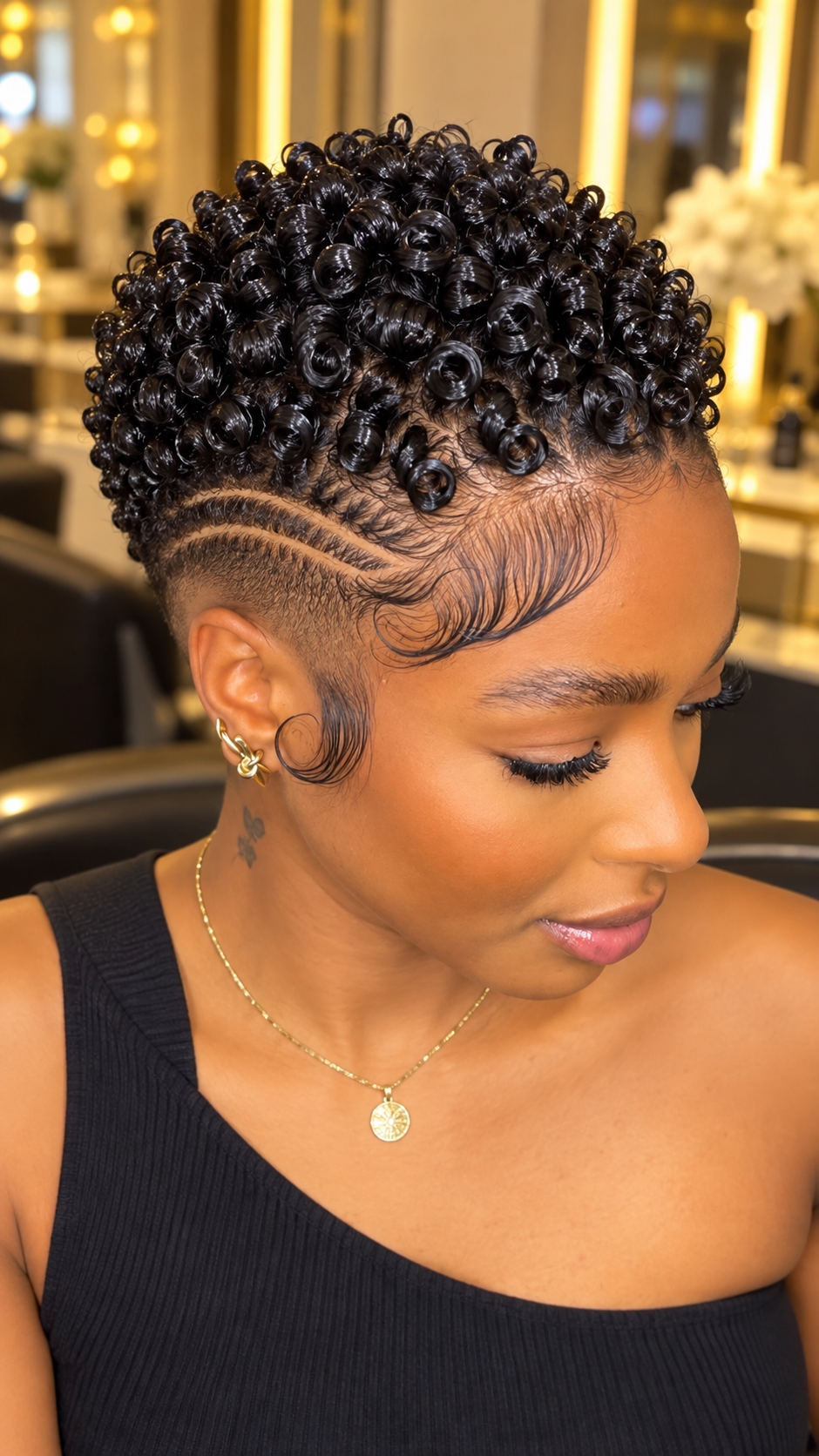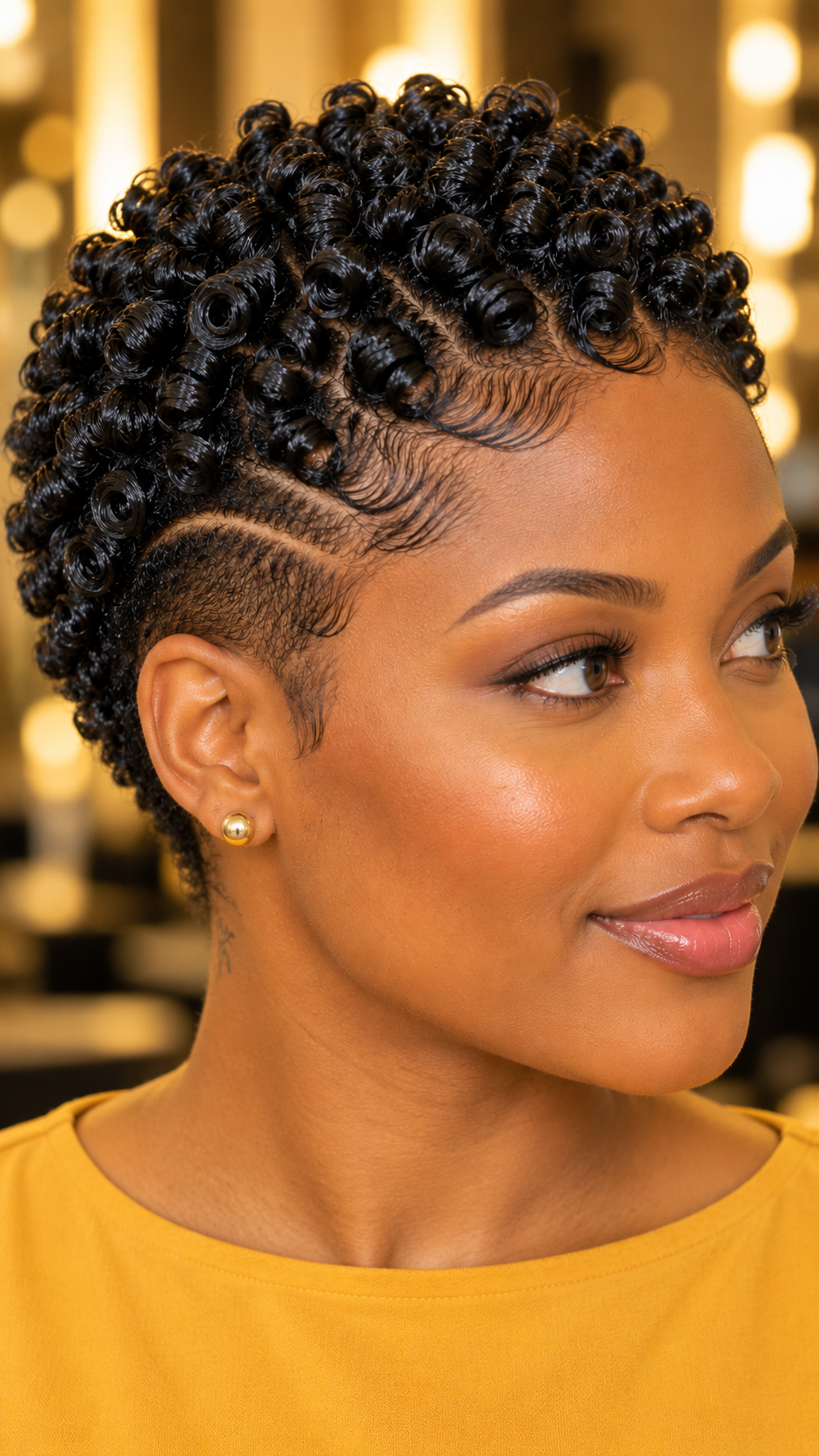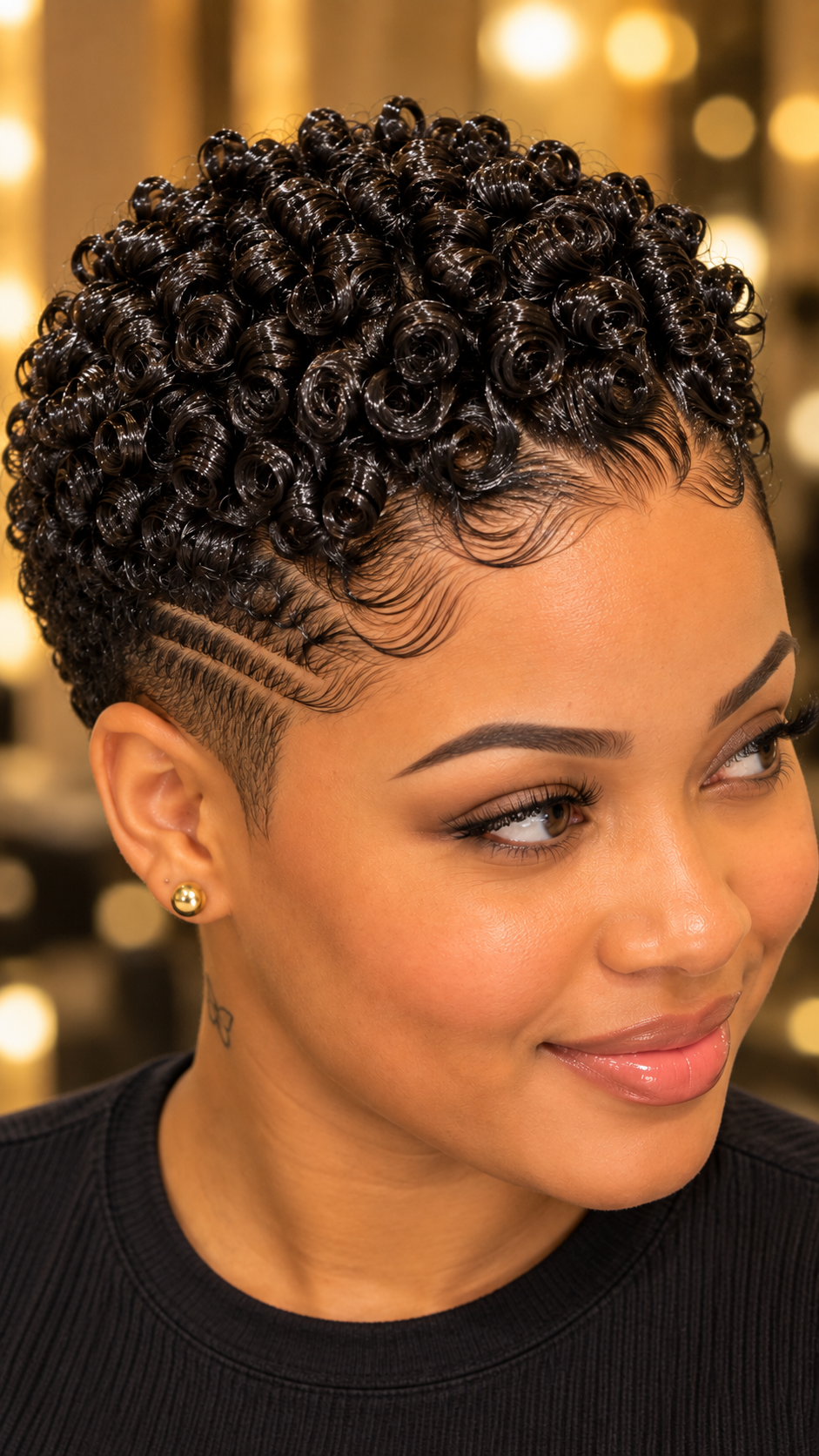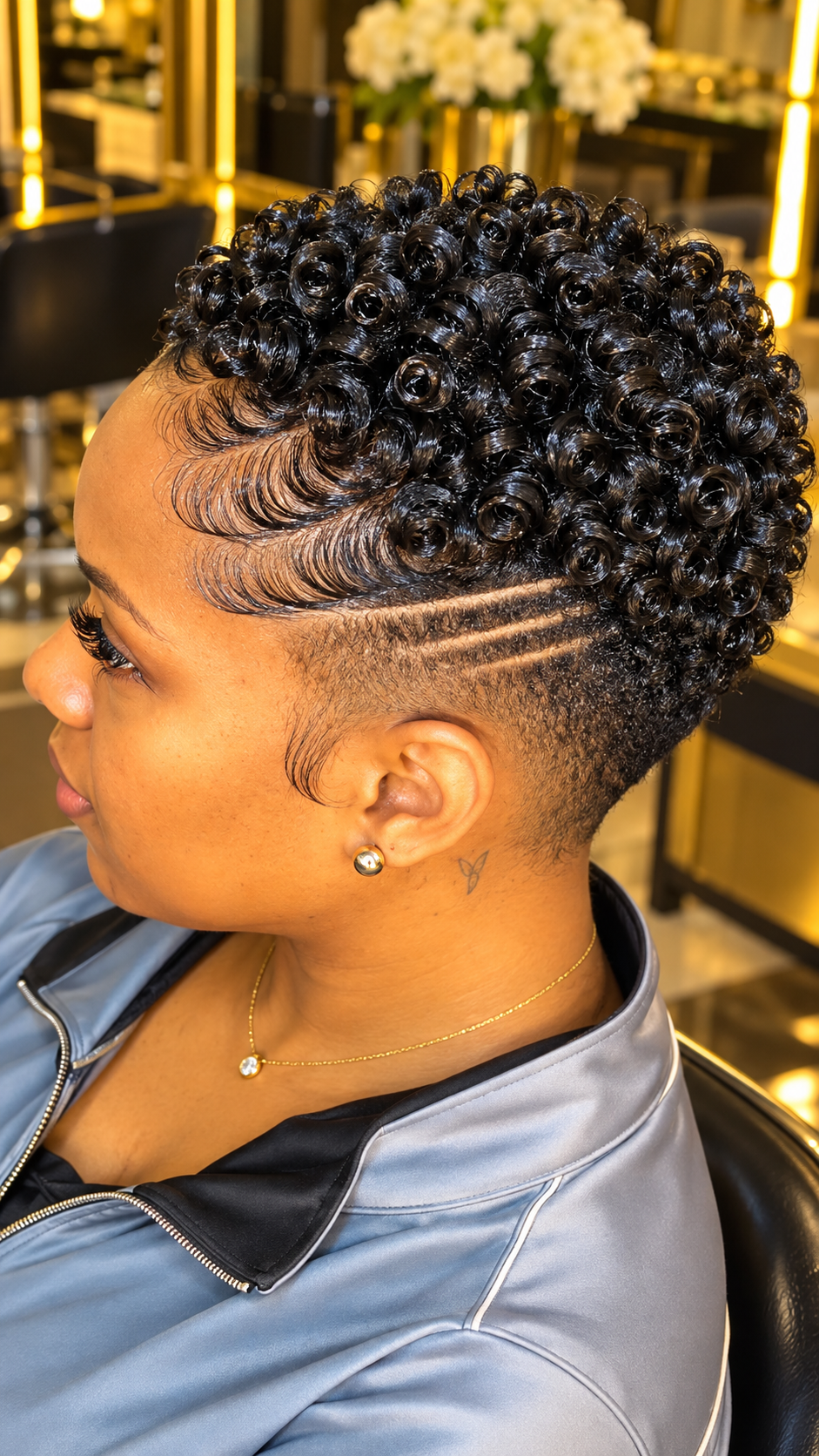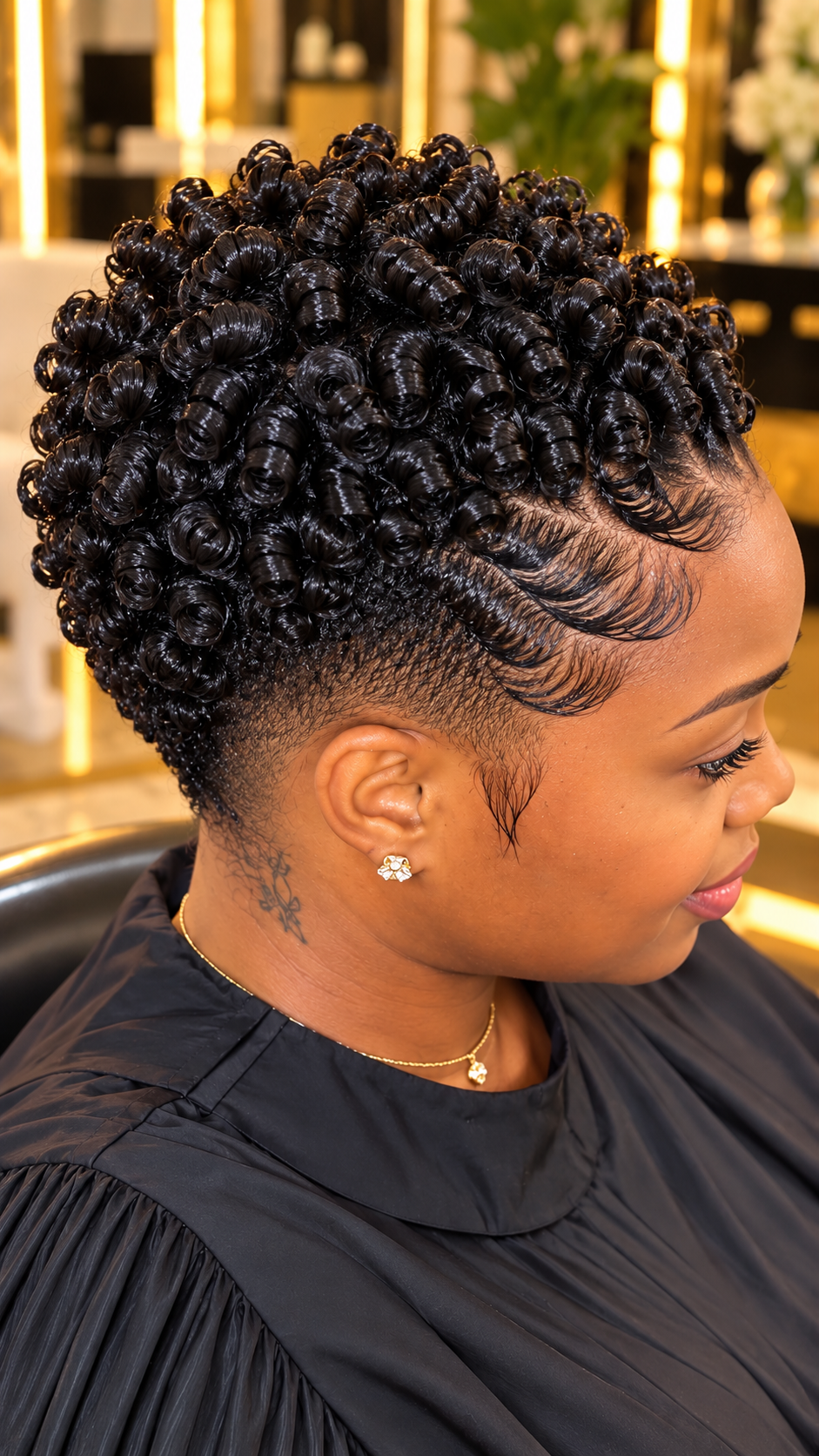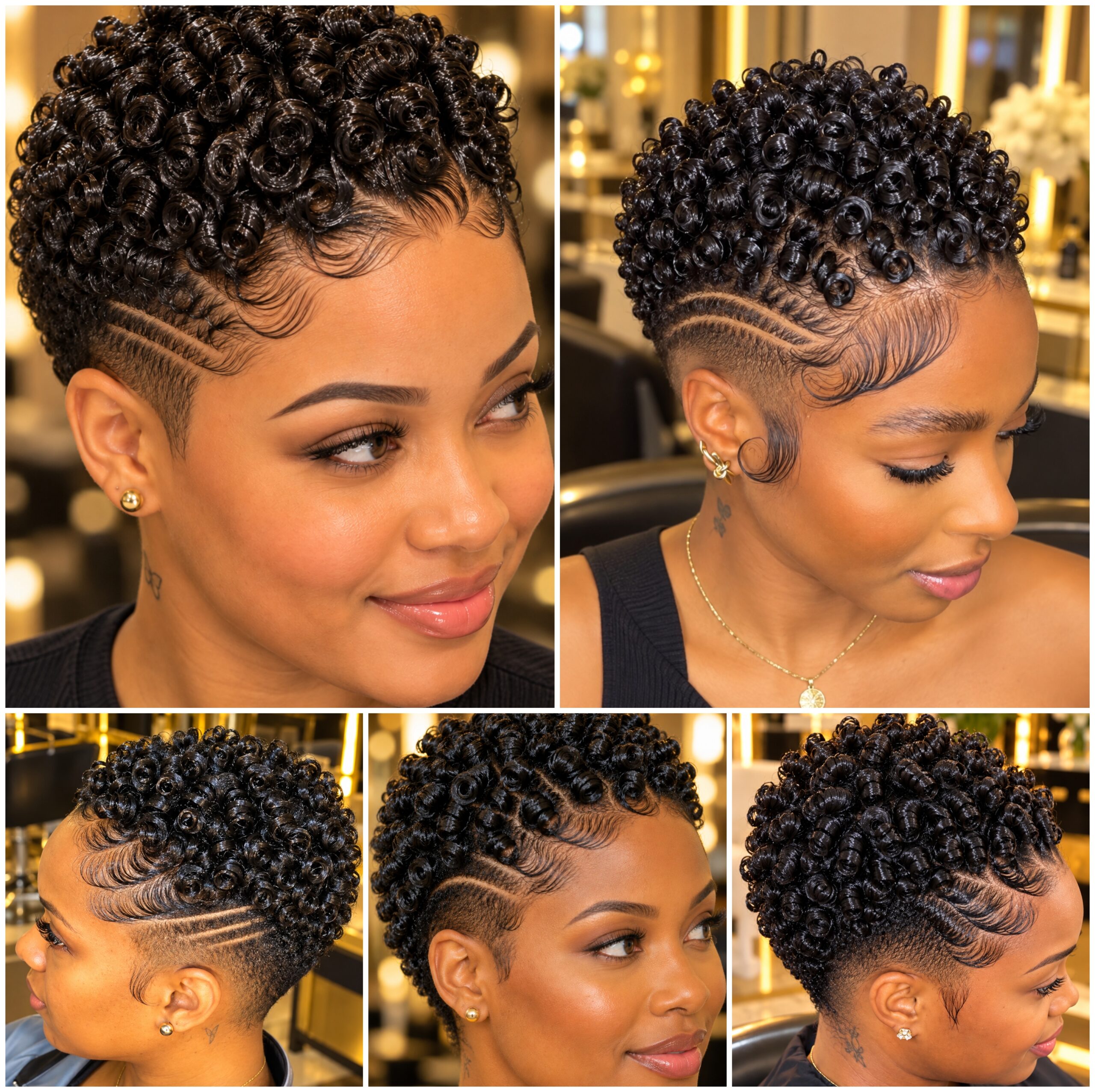
Short coily Afros with shaved temple lines bring together two distinctive approaches to natural hair styling: the rich volume of tightly curled Afro hair and the precision of barber-created temple artwork. The combination offers a hairstyle that feels expressive without requiring long hair, elaborate extensions, or complicated daily arrangements. Its appeal comes from the contrast between the soft, rounded appearance of the coils and the sharp, deliberate lines cut into the shorter hair around the temples.
This hairstyle is particularly popular among women who appreciate natural hair but want something more distinctive than an ordinary tapered Afro. The crown retains its natural curl pattern, while the sides are reduced in length to create a visible contrast. One or more shaved lines can then be added near the temple, following a straight, diagonal, or gently curved direction.
The result can be understated or dramatic depending on the density of the coils, the height of the taper, and the placement of the shaved artwork. Some women prefer a single narrow line, while others choose two parallel marks or an asymmetrical arrangement that emphasizes one side of the head.


For anyone considering this haircut, the most important decision is not simply how closely to shave the sides. It is how to balance the crown, hairline, and temple design so that the finished hairstyle complements the wearer’s natural curl structure and head shape.
Understanding the Relationship Between Coils and Temple Artwork
Natural coily hair has a unique ability to create volume without requiring substantial length. Tightly curled strands rise from the scalp and form a dense surface that can be shaped into a rounded, oval, or slightly elevated crown.
When the sides are tapered, the difference in length makes the upper coils appear more prominent. Adding shaved temple lines introduces another visual element, directing attention toward the hairline and the transition between the longer crown and closely cropped sides.
The design works particularly well with tightly coiled Type 4 hair, including 4A, 4B, and 4C curl patterns. However, the exact appearance varies according to strand density, shrinkage, moisture, and cutting technique.
A barber should work with the natural behavior of the hair rather than forcing every client into the same silhouette. Coils that form visible spirals may require a different cutting approach from hair that grows in tighter, less individually separated formations.
The shaved lines should complement the haircut instead of dominating it. Their purpose is to introduce contrast and personality while allowing the natural Afro crown to remain the central element.
Choosing the Right Crown Height for a Balanced Afro
The crown is the foundation of this hairstyle. Its height determines how much contrast appears between the natural coils and the tapered sides.
A compact crown measuring approximately one to two inches when stretched can create a neat, closely fitted appearance. Longer coils may provide additional volume, allowing the barber to produce a fuller rounded silhouette.
These measurements are only styling references. Natural shrinkage can make the visible hair length considerably shorter than its stretched length.
Women with dense coils may prefer a gently rounded crown that follows the natural contour of the head. Those seeking more height can request additional length near the upper center while keeping the sides comparatively close.
Excessive crown height is not necessary to make shaved temple lines noticeable. In fact, a moderately elevated Afro often allows the artwork to remain more visible.
Why Crown Proportions Matter
A well-proportioned Afro should appear connected to the shape of the head. If the crown is cut too wide, the hairstyle may become unnecessarily bulky. If it is reduced too aggressively, the contrast between the coils and tapered sides may disappear.
Before cutting, the barber should examine the client’s natural growth direction, hair density, and existing hairline.
It can be helpful to begin with a slightly fuller crown and gradually reduce the volume. This approach allows the client to evaluate the shape before additional length is removed.
For clients growing out a previous haircut, the barber may also need to accommodate uneven lengths while preserving a balanced appearance.
Single, Double, and Curved Temple Line Options
The shaved temple artwork can be customized without changing the fundamental Afro silhouette. Several arrangements work particularly well with compact coily hair.
A Single Diagonal Temple Line
One narrow line extending backward from the temple creates a restrained appearance. It works well for women who want a noticeable detail without covering a large section of the side.
The line may follow a slight upward or downward angle depending on the natural hairline and the available tapered area.
Two Parallel Shaved Lines
Two closely spaced lines create a stronger geometric effect. Their separation should remain visible, with enough hair between them to prevent the design from appearing like one wide shaved section.
This option is particularly effective when the sides are tapered closely enough to create contrast with the crown.
A Gentle Curved Temple Design
A curved line follows the rounded contour of the head and can produce a softer appearance than a straight diagonal mark.
The curve should be planned carefully. An excessively long line may extend into areas where the hair is too dense or too uneven for a consistent result.
For a personalized haircut, the barber can also create different artwork on each side, although asymmetrical designs should be discussed before cutting begins.
Natural Black, Espresso, Copper, and Silver Coils
Color can influence the appearance of a coily Afro, but it is not necessary for the temple artwork to stand out.
Natural black hair creates a strong contrast between the closely shaved channels and the surrounding coils. Espresso and deep chocolate brown offer a similarly rich appearance, with warmer reflections under daylight.
Women seeking a brighter hairstyle may consider copper, auburn, or honey-brown coloring through the crown while keeping the tapered sides darker. This approach emphasizes the natural curls without requiring the entire haircut to be lightened.
Silver-gray and salt-and-pepper Afros can also look distinctive with shaved temple lines. The mixture of light and dark strands creates visual depth, while the artwork introduces a deliberate shape around the sides.
Color selection should account for the condition of the hair and scalp. Tightly coiled hair may be vulnerable to dryness and breakage, especially when chemical lightening is involved.
Anyone considering significant color changes should consult a professional colorist experienced with natural coily hair.
Finding a Barber Who Specializes in Women’s Natural Hair
The quality of the haircut depends heavily on the professional performing it. A barber experienced with natural Afro hair will understand how shrinkage, density, and growth patterns affect the finished silhouette.
Search for a women’s natural hair barber, tapered Afro haircut specialist, or barber experienced in temple line designs.
Review photographs of previous work before booking. Look for examples showing proportional crowns, carefully blended sides, and precise line artwork.
A stylist who regularly works with coily hair may also be able to recommend an appropriate crown length based on the client’s natural curl pattern.
When arranging an appointment, explain that the desired haircut combines a compact coily Afro with shaved temple lines. Mention whether the preferred artwork is a single line, double lines, or a curved design.
Bringing reference photographs from several angles can help communicate the desired result more accurately.
What to Discuss Before the Clippers Touch Your Hair
A successful appointment begins with a brief consultation about the overall shape.
First, establish how much length should remain on the crown. The barber should assess the hair in its natural condition and account for shrinkage before deciding how much to remove.
Next, discuss the side taper. A very close fade produces stronger contrast, while a slightly longer taper creates a more gradual transition.
The temple artwork should be planned after the general side shape has been agreed upon. This ensures that the shaved lines sit within an appropriate area rather than extending into the fuller crown.
Clients should also discuss whether the artwork will appear on one side or both. A single-sided design can create an asymmetrical appearance, while matching temple lines provide greater visual balance.
Because shaved artwork involves removing hair, the placement should be approved before cutting begins. Correcting an unsuitable line may require waiting for the hair to grow back.
The Haircut Process From Crown Shaping to Line Detailing
The barber typically begins by examining the natural growth pattern and determining the intended Afro silhouette.
The crown can then be shaped using suitable cutting techniques. Depending on the hair’s condition and the desired result, the professional may work with the coils in their natural state or prepare them for more consistent length assessment.
After the crown is established, the sides are gradually tapered. The barber should maintain a balanced transition between the longer upper hair and the shorter temple area.
Once the general haircut is complete, the shaved lines can be planned and carefully created using appropriate precision tools.
The final stage involves inspecting the design from the front, sides, and rear. The barber can check whether the crown remains proportional and whether the temple artwork follows the intended direction.
Additional curl styling may be performed if the client wants more visible spiral separation or a particular crown shape.
Can This Hairstyle Be Purchased as a Wig?
Although short coily Afros with shaved temple lines are commonly created through natural haircuts, a similar appearance may also be commissioned as a custom wig.
The main challenge is reproducing the contrast between the dense upper coils and the closely cropped side artwork.
A suitable wig base needs enough hair to create the rounded crown while allowing the lower sections to be customized without exposing unwanted cap material.
Not every ready-made Afro wig can accommodate shaved temple lines. Cutting into an unsuitable cap may damage its construction or create visible gaps.
Customers interested in a wig version should contact a maker experienced with tapered pixie units and barber-inspired hair designs.
Ask whether the desired temple artwork can be incorporated into the construction or safely created during customization.
Before ordering, confirm the cap measurements, fiber type, lace specifications if applicable, and the proposed styling method.
Human hair and synthetic fibers may require different approaches to cutting, curl arrangement, and maintenance. A product photograph alone cannot verify these characteristics.
Illustrative Prices for Natural Afro Styling and Wig Alternatives
The cost of this hairstyle depends on whether the customer chooses a natural haircut, a ready-made wig, or a customized unit. A barber appointment and a complete wig purchase are different services and should be budgeted separately.
The following USD figures are illustrative planning ranges rather than verified live prices. Actual quotations vary by location, professional experience, material, and the complexity of the requested artwork.
| Wig Category | Illustrative USD Range | Possible Purchase Scope |
|---|---|---|
| Premium Custom | $260–$620+ | Personalized cap sizing, carefully arranged coily crown, detailed temple artwork, and advanced fitting customization. |
| Standard Custom | $135–$310 | Customized tapered Afro silhouette with a selected temple line arrangement. |
| Basic Human Hair | $85–$210 | A human-hair Afro or pixie base that may require additional shaping and professional side customization. |
| Premium Synthetic | $55–$145 | Higher-priced synthetic coily wigs with a compact silhouette, subject to product specifications. |
| Basic Synthetic | $20–$75 | Budget Afro-style wigs that may require compromises in curl arrangement or temple detailing. |
For a natural haircut, the cost will depend on the barber’s standard service price, the complexity of the shaved lines, and whether additional curl styling or coloring is included.
For a wig, ask whether the quotation includes cap adjustments, specialized side work, delivery, and installation.
A lower-priced ready-made unit may require additional customization, while a professionally prepared custom wig may include more of the desired styling from the beginning.
Daily Care for a Compact Coily Afro
Natural coily hair benefits from a maintenance routine that supports moisture retention while preserving the haircut’s shape.
Use a cleansing schedule appropriate for the scalp and hair condition. A gentle shampoo followed by a suitable conditioner can help reduce dryness and make the coils easier to manage.
Light moisturizing products may help maintain softness, but excessive product buildup can make the crown appear heavy or uneven.
Finger styling can be useful for arranging visible coils without unnecessarily disturbing the entire hairstyle.
Women who prefer a more separated spiral appearance may use a compatible curl product and work through small sections. Those who prefer a fuller Afro silhouette may choose a less individually separated finish.
The shaved temple area should be kept comfortable and free from irritation. Avoid applying harsh products to freshly shaved skin, especially if the area feels sensitive after a barber appointment.
Keeping the Temple Lines Sharp as Hair Grows
Shaved artwork changes as the surrounding hair grows. The lines may gradually become less noticeable because new growth reduces the contrast between the shaved channels and adjacent hair.
The frequency of touch-ups depends on individual hair growth, the closeness of the original cut, and the desired appearance.
Some clients prefer relatively frequent barber visits to maintain crisp temple artwork, while others allow the design to soften naturally between appointments.
Trying to recreate the lines at home can be difficult, particularly when the pattern contains curves or two closely spaced channels.
A professional touch-up is generally the safer option for maintaining the intended geometry without accidentally widening the shaved areas.
If the scalp becomes irritated, allow the skin to recover before scheduling further close shaving.
Adapting the Style to Different Face Shapes
The crown height and taper can be adjusted to create different visual proportions.
For a round face, slightly more height near the upper center may create an elongated appearance. For a longer face, a moderately rounded crown can provide additional width.
Women with angular facial contours may prefer softer crown shaping, while those seeking a stronger geometric appearance can emphasize the temple artwork.
These are styling possibilities rather than strict rules. Personal preference, natural hair density, and the wearer’s comfort should guide the final decision.
A barber should assess the hairstyle from several angles rather than focusing only on the frontal view.
Making the Hairstyle Work Beyond the First Appointment
Short coily Afros with shaved temple lines offer considerable flexibility. The crown can remain natural black, incorporate warm brown coloring, or develop into a silver-gray appearance over time. The temple artwork can be restrained with a single diagonal line or made more prominent through carefully spaced double curves.
The most successful versions preserve the natural character of the coils while allowing the shaved artwork to complement the haircut.
For a natural hair appointment, choose a barber who understands tightly coiled textures and precision side designs. For a wig alternative, work with a maker who can explain how the tapered areas and decorative lines will be constructed.
Whether worn as a natural haircut or recreated through a custom wig, this style demonstrates how compact Afro curls and carefully placed temple artwork can produce a distinctive appearance without relying on excessive length or complicated accessories.
Search Terms
Short coily Afro with shaved temple lines · Natural 4C Afro with single side razor line · Tapered 4A coils with double temple stripes · Black coily crown with curved shaved sides · Women’s compact Afro barber line haircut · Rounded natural Afro with diagonal temple design · Close tapered sides with dense spring coils · Coily pixie Afro with precision side artwork