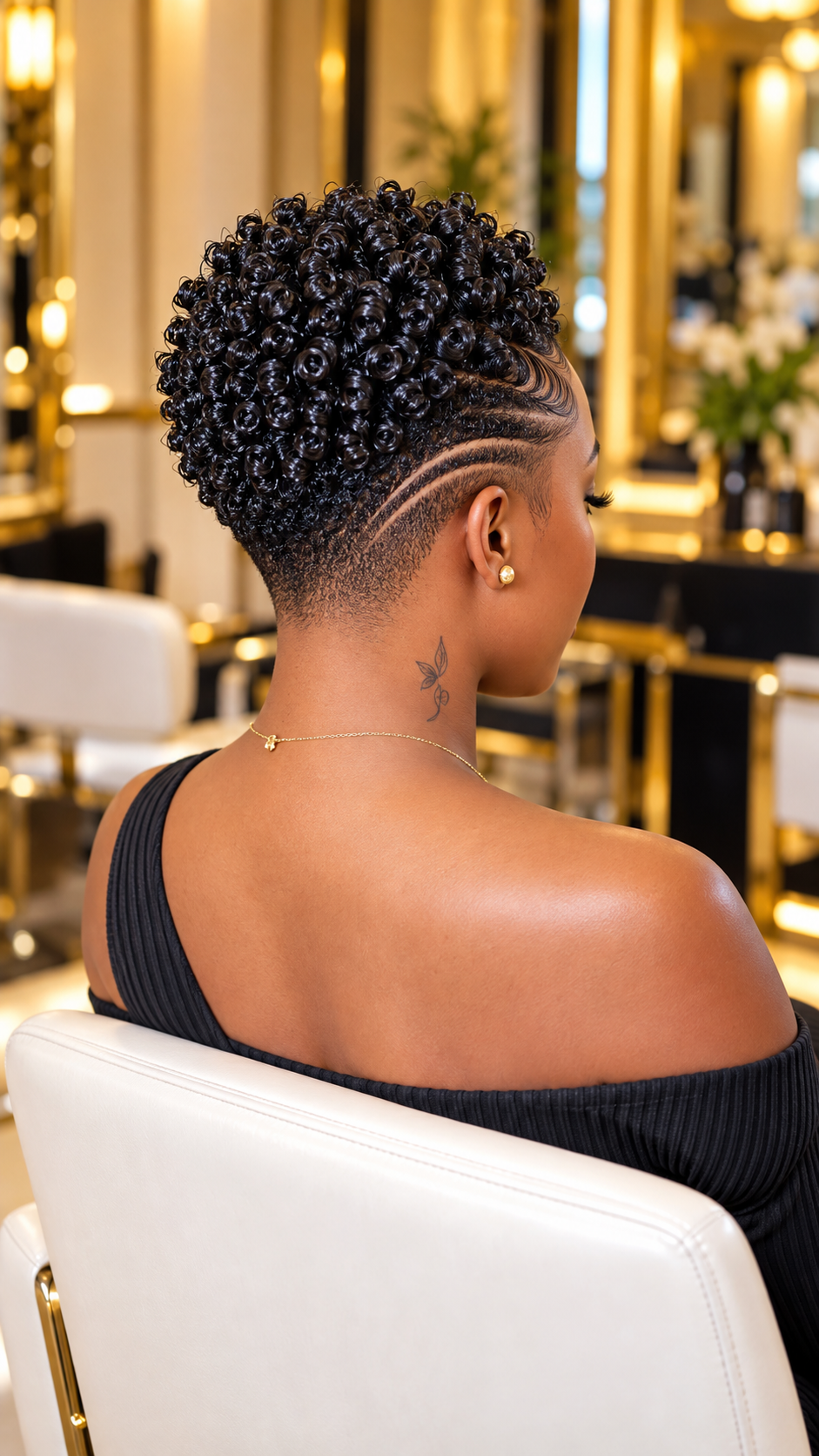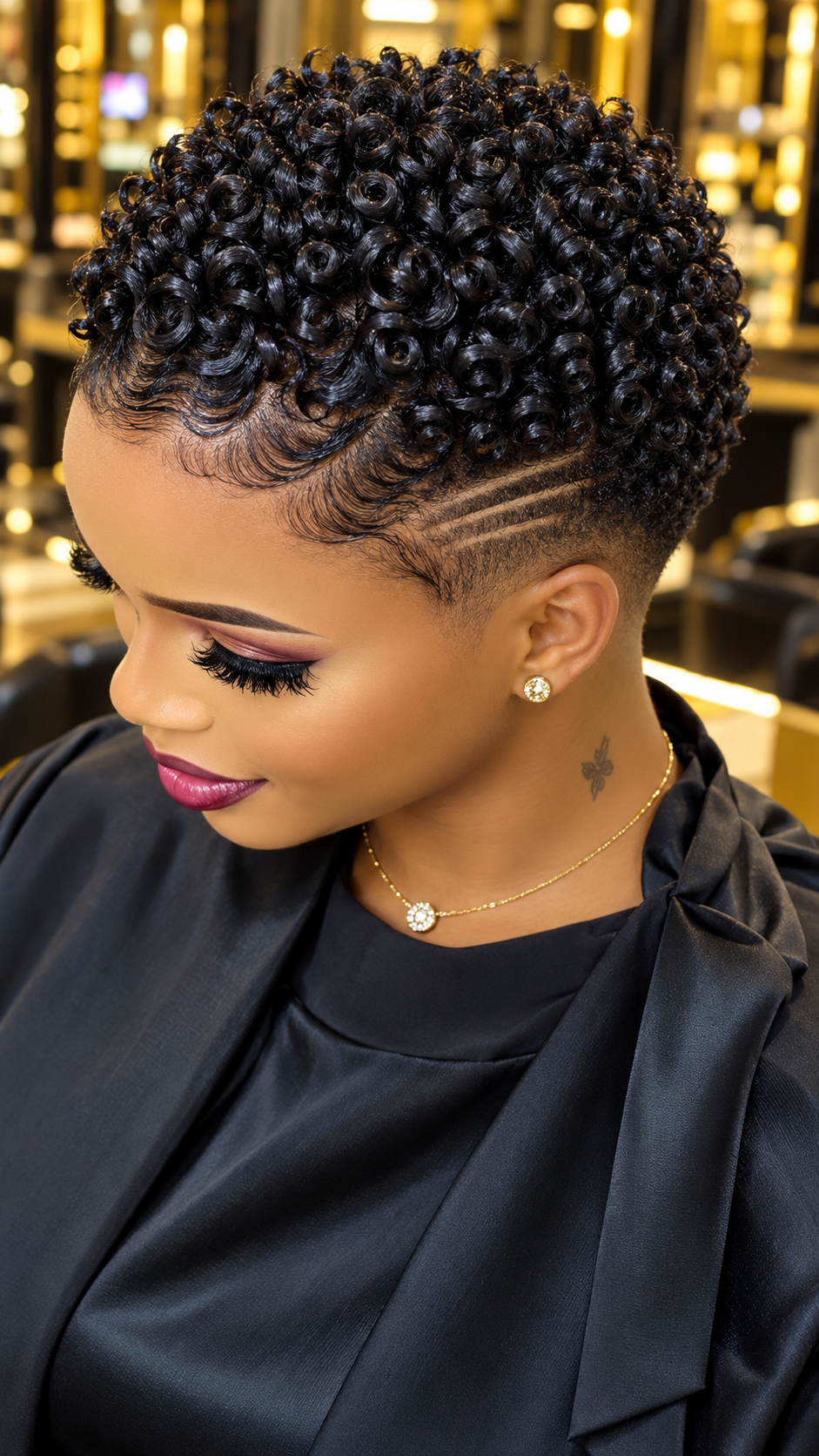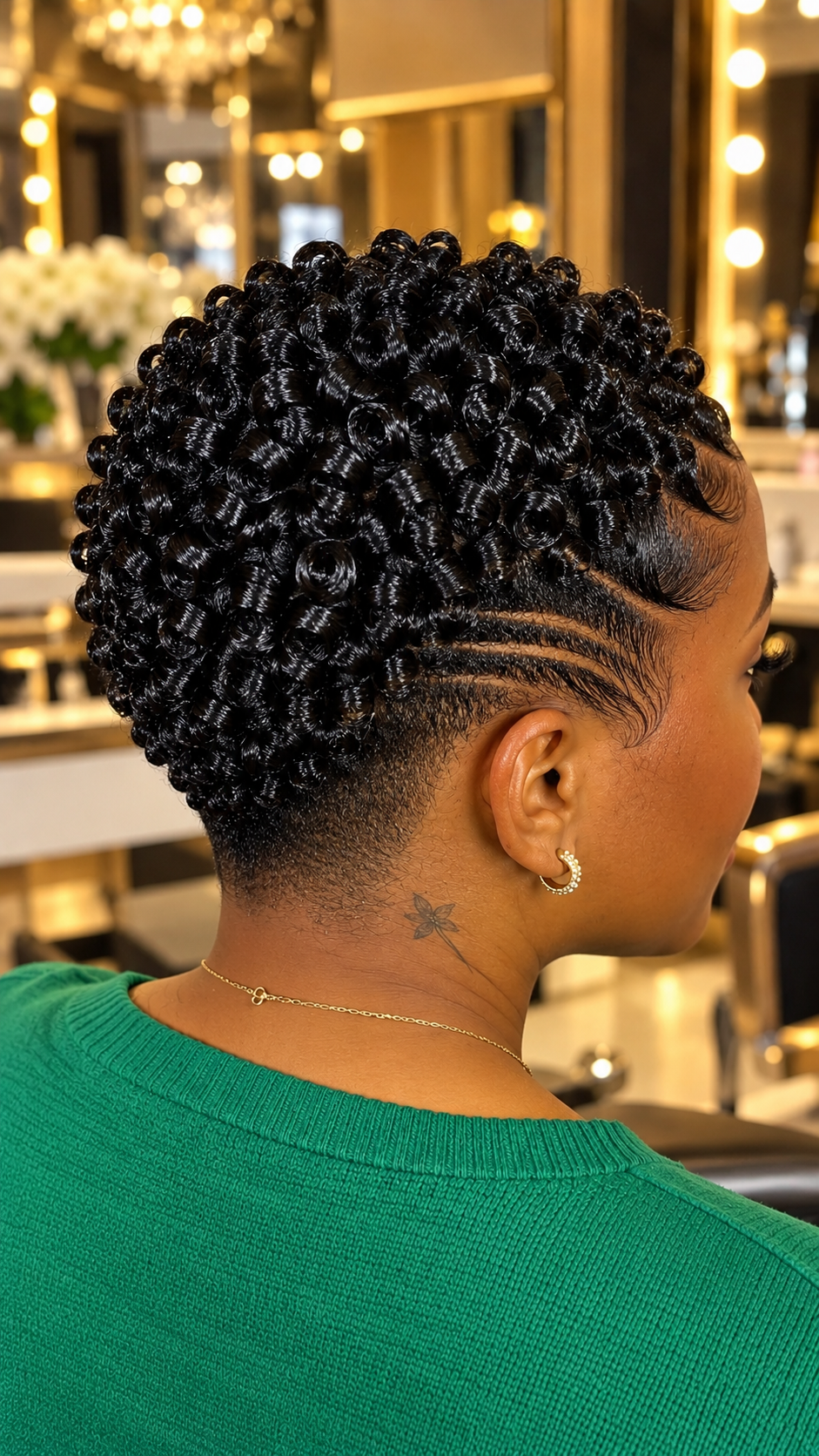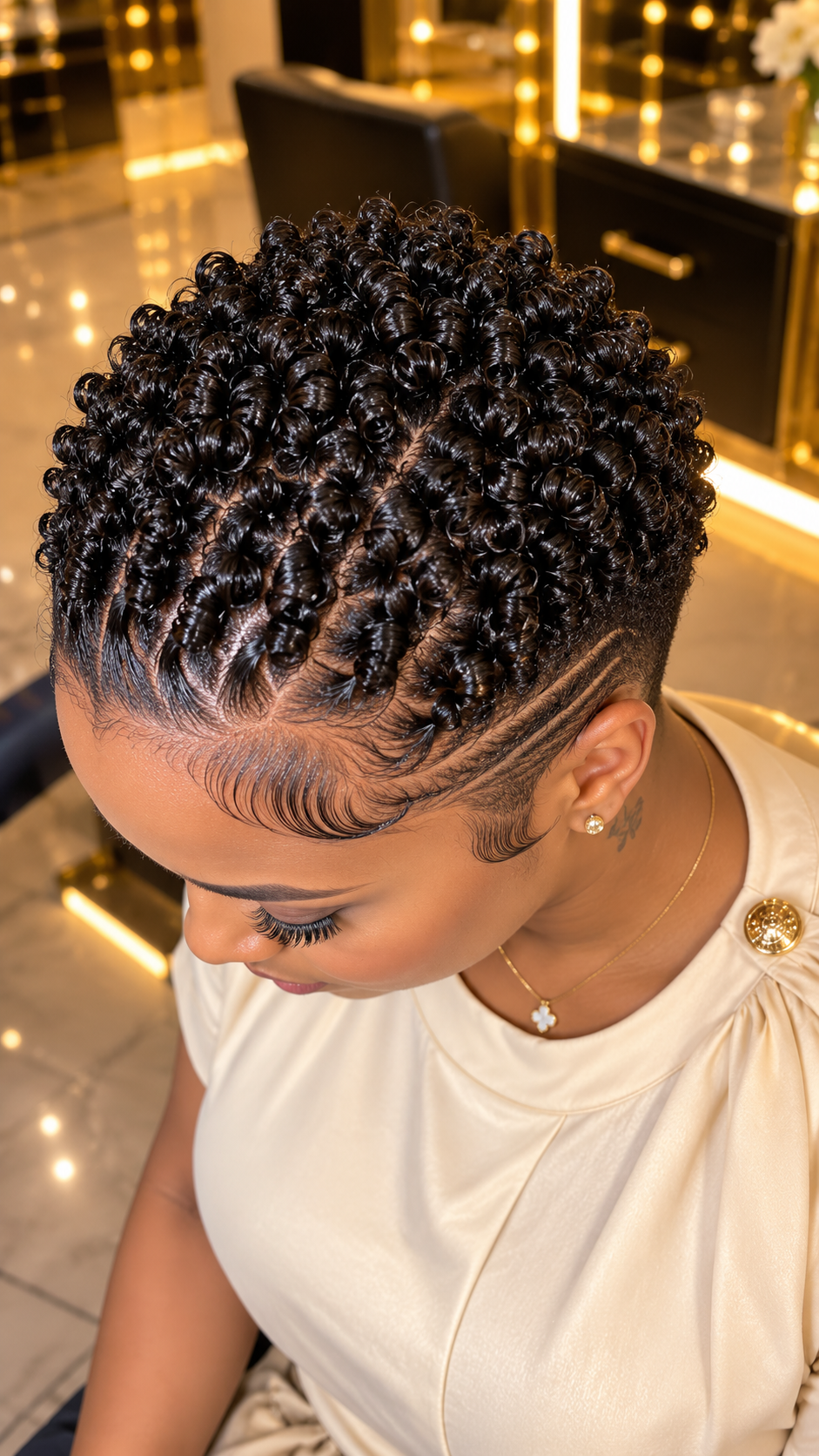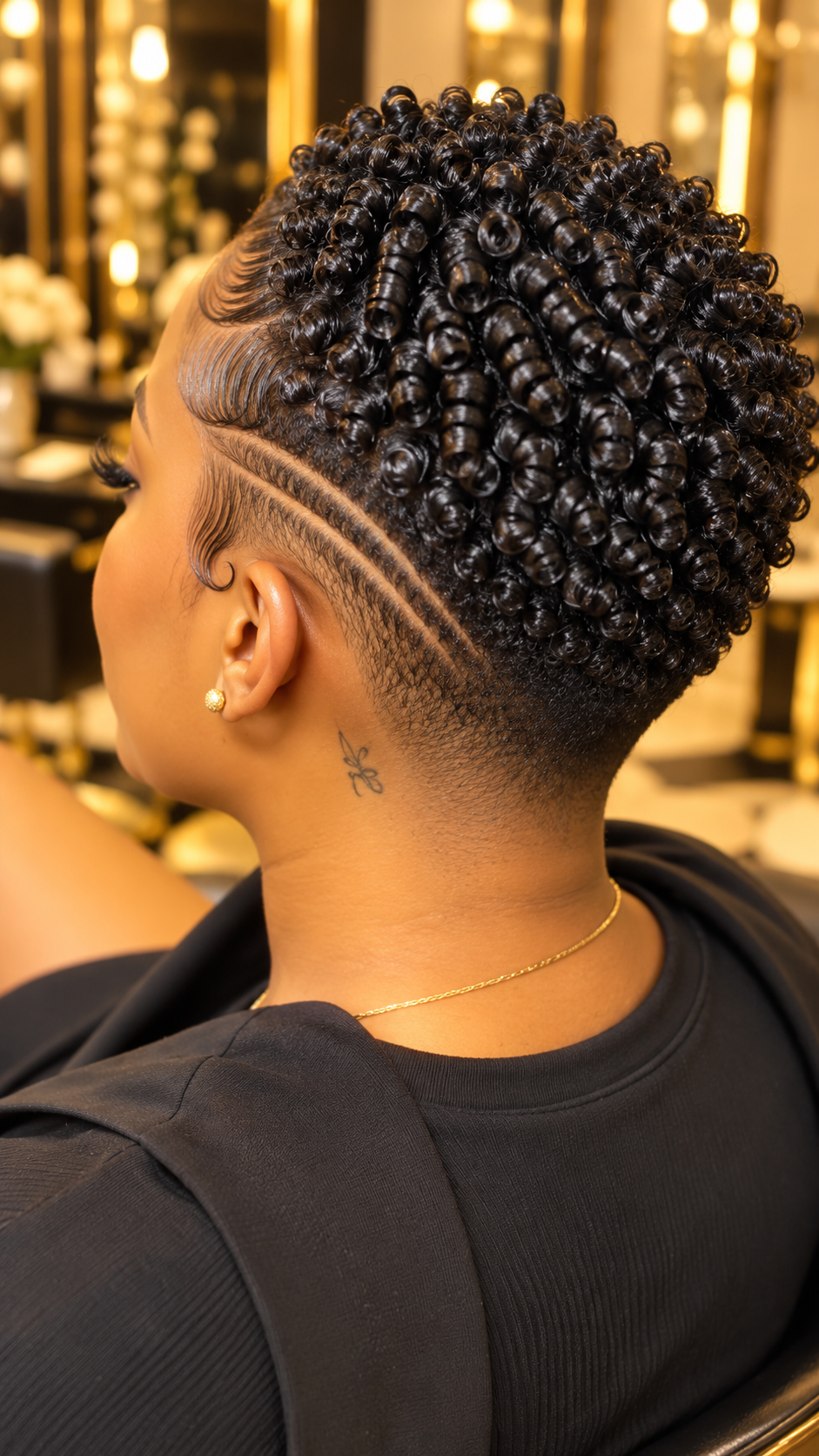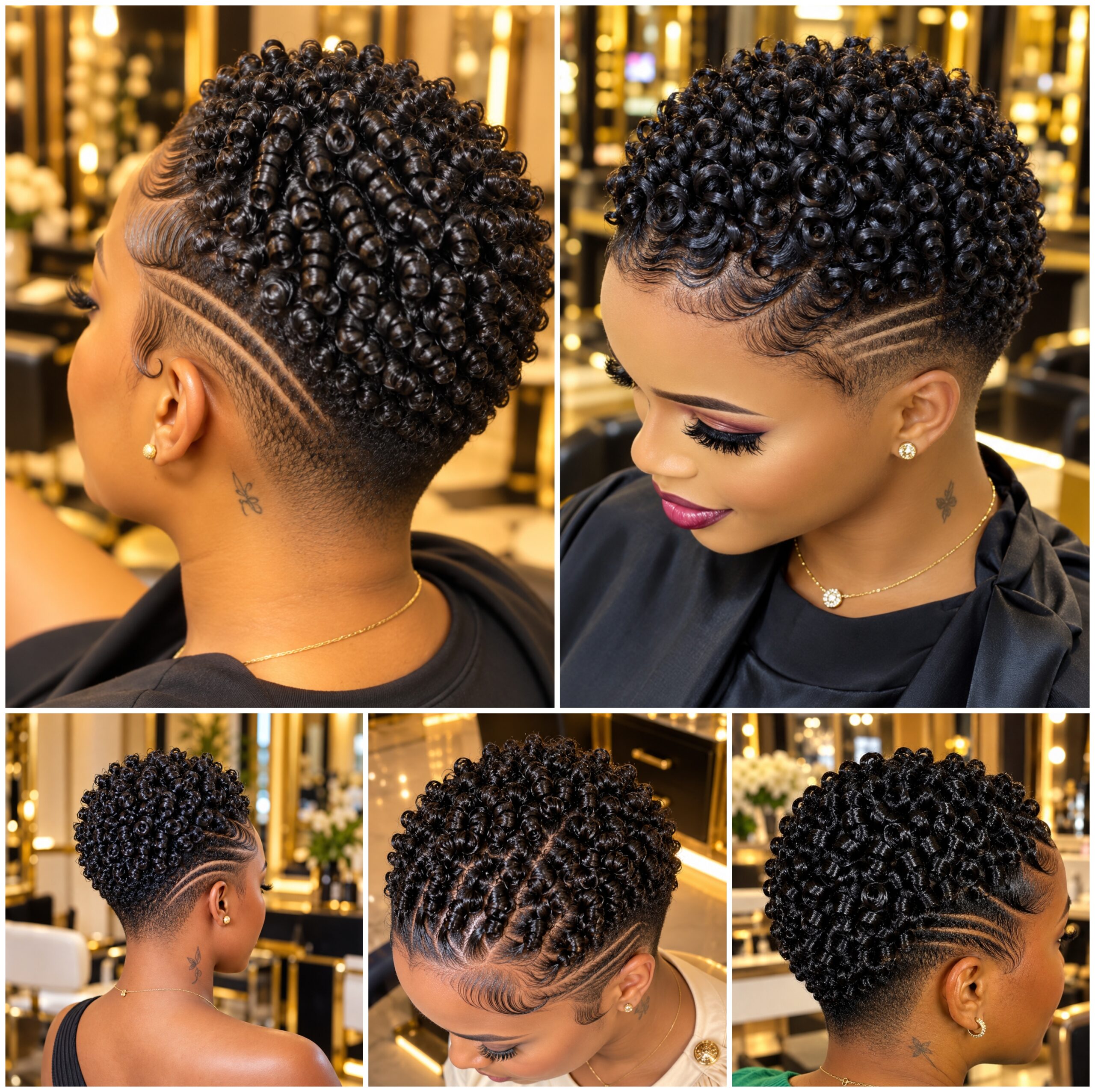
A softly rounded crown of individually formed finger coils paired with cropped pixie proportions creates an expressive natural hairstyle with excellent curl visibility. Precisely shaved parting lines along the shorter sides introduce a striking contrast, allowing the spiral pattern to remain prominent while giving the haircut a distinctive barber-inspired appearance.
This combination is particularly appealing for women who appreciate springy Afro coils, proportional pixie shaping, and artistic side detailing. The crown provides natural movement, while the tapered areas keep the hairstyle lightweight around the temples, ears, and neckline.
Creating a Rounded Crown with Individual Spirals
The upper section should retain enough length for the natural curls to form recognizable spirals. Finger styling is especially effective for creating an organized coil pattern without removing the softness associated with tightly curled Afro hair.


Start with clean, damp, detangled hair. Divide the crown into manageable sections and apply a lightweight leave-in conditioner followed by styling foam or flexible-hold gel. Each section can then be wrapped around a finger until the desired spiral forms.
Smaller sections generally create tighter coils with greater separation, while slightly larger sections provide additional fullness. Maintaining a balanced crown height is important because excessive volume can make a compact pixie silhouette appear disproportionate.
Natural shrinkage should also be considered before trimming. Tightly coiled textures can become noticeably shorter after drying, so the stylist should assess the finished curl pattern before making final length adjustments.
Designing the Side Parting Lines
The shaved parting details are usually positioned near one temple or slightly above the ear, where the shorter hair provides enough contrast for the design to remain visible.
A single diagonal line can create a subtle accent, while two narrow parallel marks offer a more noticeable appearance. Gently curved parts can also follow the natural contour of the head, creating a flowing transition beneath the coiled crown.
Line spacing and placement are essential. Each shaved section should have enough surrounding hair to remain clearly distinguishable. Closely crowded marks may gradually merge as new growth appears.
The barber can adjust the length and direction of the lines according to the natural hairline, head shape, and available tapered area.
Choosing the Ideal Pixie Proportions
A compact pixie should maintain enough crown fullness to showcase the curls while reducing unnecessary bulk around the lower sides. The stylist can leave slightly more length toward the center or front when additional height is preferred.
A low taper creates a gradual transition around the temples and neckline while preserving more density through the upper sides. This option works well when the goal is to keep the overall silhouette soft.
A closer fade creates stronger contrast and makes the shaved parts more noticeable. However, very closely cut areas may require more frequent maintenance to preserve their original appearance.
The rear section should connect naturally with the sides. Careful blending around the neckline helps maintain a proportional silhouette from every viewing angle.
Enhancing Curl Separation and Natural Shine
Healthy-looking coils begin with moisture rather than excessive oil application. A lightweight leave-in conditioner can help soften the hair before styling, while curl foam provides enough hold to preserve individual spirals.
After the crown has dried, a small amount of finishing serum can enhance reflection across the curls. This creates a glossy finger-coil appearance without making the hair feel greasy or stiff.
Heavy waxes, thick creams, and excessive oils should be used sparingly. Product buildup can reduce curl movement and make shorter Afro hair appear flatter than intended.
Allowing the coils to dry before separating them also helps minimize frizz and preserve the original spiral formation.
Protecting the Hairline During Precision Cutting
Shaved parting designs should complement the existing hairline rather than require unnecessary removal of delicate temple hairs. An experienced barber can create visible side artwork while preserving the natural front edge.
Women with fragile edges may prefer softer outlining and minimal brushing around the temples. Lightweight styling foam can be used to arrange small front sections when additional hairline detail is desired.
Maintaining moisture around these areas is important because repeated styling and close cutting can make the hairline more vulnerable to dryness and breakage.
Finding a Stylist Experienced with Natural Afro Hair
An Afro hair salon, natural hair studio, curl specialist, or women’s barber experienced with tightly coiled textures is a suitable place to request this hairstyle.
Useful searches include finger coil pixie stylist near me, women’s Afro taper barber, natural hair salon for coily pixie cuts, and Black women’s haircut with shaved parting lines.
Review recent client photographs before booking. Look for examples with similar curl density and examine whether the professional can create consistent finger coils, balanced taper transitions, and precise side designs.
Photographs showing the hairstyle from the front, sides, and back are especially valuable when evaluating the stylist’s cutting experience.
Booking the Correct Salon Appointment
Appointments are commonly arranged through Instagram, WhatsApp, salon websites, direct telephone booking, or online scheduling platforms.
Send a clear reference photograph before confirming the appointment. Explain the preferred coil diameter, crown height, taper depth, and exact placement of the shaved parts.
Ask whether shampooing, conditioning, detangling, finger-coil styling, pixie cutting, fading, outlining, and razor detailing are included in the quoted price.
Some salons offer natural hair styling and barber work as separate services. Confirming that both can be completed during the same appointment helps avoid unexpected charges or additional visits.
A short consultation also allows the stylist to assess hair density, shrinkage, and the natural growth direction before beginning the cut.
Finding a Removable Wig Alternative
Women who prefer not to cut their natural hair can explore custom wig makers, specialist Afro wig retailers, beauty supply stores, and online wig shops.
Useful searches include finger coil Afro pixie wig, short coily human hair wig for Black women, tapered natural pixie wig, and finger coil lace front wig.
Human-hair units provide greater flexibility for reshaping individual spirals, adjusting crown volume, and reducing density around the sides. Quality synthetic units may preserve their original coil pattern with less daily styling.
Authentic shaved parting lines are difficult to reproduce convincingly on conventional wigs. A custom maker may imitate the overall cropped silhouette, although scalp-level barber designs generally appear more realistic on natural hair.
Checking Wig Construction Before Purchasing
Before ordering, examine cap measurements, crown density, coil diameter, lace shade, hairline construction, and temple coverage.
Pay particular attention to the side profile. A wig with excessive density around the temples may hide the cropped appearance, even when the crown has the correct spiral pattern.
For custom orders, provide front, side, and rear reference photographs. Ask whether the unit can be professionally trimmed after delivery and whether the maker can customize the side density.
It is also useful to confirm processing times, return conditions, and whether the wig arrives pre-styled or requires additional salon preparation.
Refreshing Individual Coils Between Wash Days
When the curls begin to feel dry or lose their original formation, lightly mist the crown with water and apply a small amount of leave-in conditioner or styling foam.
Loose spirals can be rewound around a finger instead of repeatedly manipulating the entire crown. This helps preserve separation and reduces unnecessary frizz.
A satin bonnet, scarf, or satin pillowcase can help reduce overnight friction and moisture loss. Flattened sections can be gently lifted with the fingers the following morning.
Avoid brushing through dry coils aggressively because this can disturb the spiral pattern and make the compact crown appear less organized.
Maintaining the Shaved Parting Design
The closely cut sides will generally require attention sooner than the crown. As new growth appears, the shaved parts gradually become less visible and the surrounding taper loses some of its original contrast.
A barber can retrace the existing lines, refresh the temple areas, and tidy the neckline without removing unnecessary length from the upper curls.
Keeping the original line width and direction during touch-ups is important. Repeatedly enlarging the shaved sections may eventually change the proportions and remove more hair than intended.
The combination of compact natural spirals, flattering pixie proportions, and precisely positioned side partings creates a distinctive balance between curl movement and barber craftsmanship. With consistent moisture care, gentle nighttime protection, and occasional side maintenance, the hairstyle can remain expressive, practical, and comfortable for everyday wear.
Search Terms
finger coil Afro pixie haircut · coily pixie with shaved side parts · natural Afro finger coils for women · pixie taper with razor part lines · Black women’s finger coil haircut · cropped Afro coils with side design · finger coil crown with tapered sides · natural hair pixie with shaved parting