
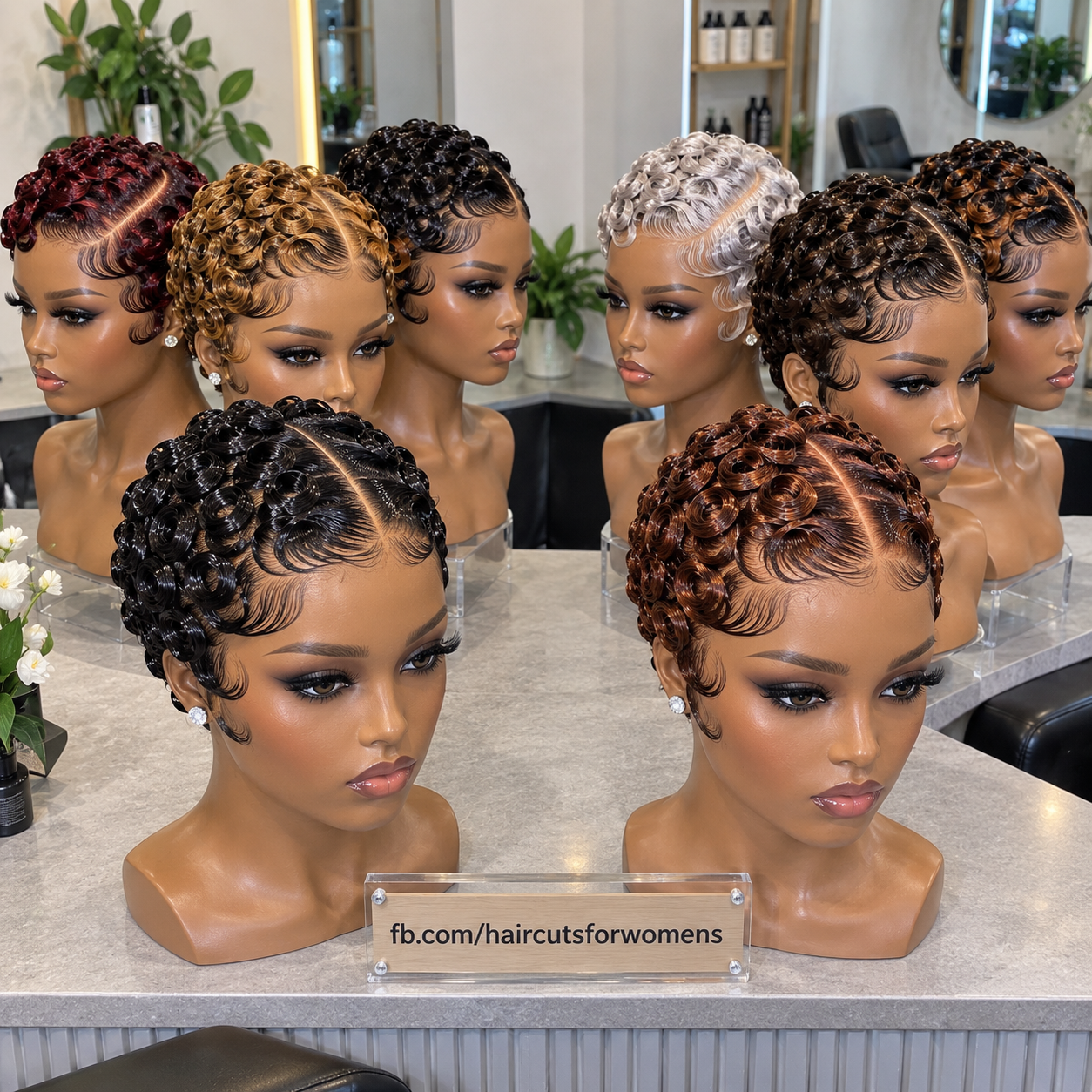
This collection shows how one compact pixie concept can be developed into a full color range without losing the details that make the hairstyle recognizable. Across the display, the wigs combine glossy ring curls, a visible side part, sweeping finger-wave sections around the forehead and carefully arranged curls that continue toward the temples. The color selection includes deep black, burgundy wine, golden honey, chocolate brown, warm copper and pale pearl-silver variations, giving buyers several directions while keeping the same overall styling language.
The most important detail is the relationship between the circular curls and the flatter perimeter work. The upper sections are filled with polished loops that create controlled volume, while the hair beside the part is pressed into wider curved waves. This contrast gives the wigs a sculpted appearance from both the front and three-quarter angles. Rather than looking like a basic curled unit, each wig has an intentional direction that can be followed from the part through the forehead and down toward the temple.
For anyone trying to order a similar wig, the photograph is useful because it shows several colors under the same general styling concept. A buyer can choose the color from one mannequin while using another mannequin to explain the preferred curl placement. The key is to communicate each detail separately instead of asking only for a “curly pixie.”
Side Parting Gives The Ring Curls A Clear Direction
The visible side part is one of the strongest structural elements in this collection. It separates the dense circular curls from the sweeping wave section and prevents the crown from appearing randomly arranged. On the front black and copper versions, the part travels diagonally backward and creates a clean division between two different styling directions.
One side of the part carries clusters of compact ring curls. On the other side, longer sections curve away from the part before forming broad waves around the forehead. This arrangement gives the hairstyle an asymmetrical character while maintaining balanced proportions around the head.
When ordering, tell the stylist which side you want the part to appear on. A reversed part changes the direction of the forehead waves and can substantially change how the wig frames the face. If you have a preferred side for photographs or everyday styling, discuss this before the wig is set.
Glossy Circular Curls Create A Compact Crown
The crown is covered with small-to-medium circular loops rather than loose spirals. Each curl has a visible center and a polished outer surface. The curls overlap enough to create fullness, but individual rings remain easy to distinguish. This is especially noticeable on the black units, where reflected light traces the curved strands and separates neighboring loops.
The crown height remains controlled. The curls create noticeable volume without producing an oversized silhouette. This proportion is important because excessive height would change the character of the pixie and reduce the visual connection between the crown and sculpted perimeter.
Customers requesting a custom version should show the stylist a close reference of the crown. Ask for compact glossy ring curls arranged in overlapping sections rather than loose curls falling freely. Curl diameter, density and placement should all be discussed because changing any of these elements can create a noticeably different result.
Forehead Waves Provide The Signature Front Detail
Wide finger-wave sections sit beside the visible part and sweep across the forehead. These waves are flatter than the circular crown curls and follow a deliberate curved path toward the temple. Several units also include smaller curled pieces near the side of the face, creating a continuous transition from the larger forehead wave into the perimeter.
The front black unit provides a particularly clear example. The broad wave begins beside the part, travels forward and then bends toward the temple. Smaller curls continue beneath it. The copper unit beside it follows a similar concept while the warmer color makes the strand direction more noticeable.
If this detail is important to your order, use the phrase “sculpted finger-wave front with curled temple pieces” when speaking with the stylist. Sending the photograph remains essential because terminology can be interpreted differently by different wig makers.
Burgundy Wine Adds Deep Red Dimension
The burgundy wigs bring a rich wine-red option into the collection. Their color appears deeper in the spaces between the curls and brighter along the reflective outer edges. This tonal variation makes the ring pattern highly visible without requiring a bright red shade.
Burgundy is particularly effective with this curl arrangement because every loop catches light differently. From one angle the crown may appear almost dark cherry, while direct light reveals stronger red reflections. Buyers who want this direction should ask to see the seller’s burgundy options in both indoor and natural light.
Color names are not standardized between wig suppliers. One seller’s burgundy may lean toward purple while another may offer a warmer cherry-red version. Use the displayed wig as the visual reference and request actual photographs of the available shade before paying for a custom order.
Golden Honey Makes The Ring Pattern Highly Visible
The golden-honey variation is one of the brightest warm options in the collection. Its lighter color makes the circular construction of every curl immediately visible. Darker shadows between the loops provide contrast, allowing the crown to retain depth rather than appearing like one flat light-colored section.
Customers who like this direction but want slightly less brightness can ask to compare golden honey with caramel brown or darker honey shades. Another possibility is keeping a deeper foundation while introducing golden pieces selectively through the ring curls.
When requesting highlights, explain how much contrast you want. Fine accents create a more blended result, while broader golden sections make individual loops stand out more strongly. A colorist should confirm the placement before beginning extensive customization.
Pearl Silver Offers A Cooler Color Direction
The pale silver version creates a strong contrast against the black, brown and burgundy wigs around it. Its curls appear pearl-silver with a slight champagne influence under the salon lighting. The light color makes the individual rings highly visible and gives the forehead waves a distinctly graphic appearance.
Customers interested in this shade should request photographs under different lighting conditions. Pale silver can shift toward beige, champagne or cooler grey depending on the fiber, toner and surrounding light. A visual sample is therefore more useful than relying on a shade name.
If a darker foundation is preferred, ask whether the stylist can create a smoky root that transitions into pearl or silver lengths. This can add depth while preserving the bright appearance of the ring curls.
Chocolate Brown Creates A Softer Dark Alternative
Several units explore rich brown shades that sit between deep black and brighter copper. Chocolate brown keeps much of the depth associated with dark hair while allowing warm reflections to become visible around the loops.
This can be a useful option for buyers who find black too intense but do not want a strongly red or golden wig. Under lower light, chocolate brown can appear quite deep. Near a window or stronger salon lighting, the warmer undertones become easier to see.
Ask the seller to compare chocolate, espresso and chestnut options if you are uncertain. Seeing the shades beside one another can make the differences easier to judge than reading product color names online.
Copper Brown Brings Warm Red-Brown Light To The Crown
The copper variation at the front-right uses a warmer reddish-brown direction. Light catches the raised ring curls and produces brighter copper reflections, while deeper areas retain a brown foundation. This gives the crown depth without requiring contrasting blonde highlights.
Copper works particularly well with circular curls because the reflective surfaces create natural-looking tonal changes. Customers can ask for deeper auburn-copper if they prefer a darker result or a brighter cinnamon-copper direction if they want stronger warmth.
If the wig will be custom colored, request a strand or color sample whenever possible. Copper shades can shift dramatically according to the starting material and lighting, so visual confirmation is valuable.
Dark Brown With Caramel Accents Adds Extra Contrast
Some of the brown variations show lighter warm pieces against a deeper base. This creates more obvious separation between the ring curls and can make the crown appear more dimensional in photographs. Caramel or golden-brown accents work particularly well when distributed through selected loops rather than covering the entire crown evenly.
When discussing this approach, specify whether you want subtle scattered accents or a stronger highlighted effect. Also decide whether the front finger-wave section should contain the lighter color or remain predominantly dark. These decisions can significantly change the final appearance.
A photograph of the desired color balance should remain part of the consultation. Written descriptions alone rarely communicate the exact ratio between dark and light strands.
Choosing Crown Density Before Production Begins
The wigs in this display carry enough hair to create a full ring-curl crown without overwhelming the face. Density matters because the loops need space to remain individually visible. Packing too many curls into the same area can hide the circular pattern, while insufficient density can leave noticeable gaps.
If you already own a wig and want a stylist to recreate this appearance, send photographs of the existing unit before booking. The stylist can determine whether its length and density are suitable for the desired ring setting.
For a new custom order, ask how the seller plans to achieve the compact crown. Confirm whether the wig will arrive completely styled or whether additional salon work will be required after delivery.
Details To Confirm With The Wig Stylist
- Preferred side for the diagonal part
- Small-to-medium circular ring curl size
- Compact rounded crown height
- Broad sculpted finger waves beside the part
- Curled temple pieces around the perimeter
- Chosen color family and undertone
- Amount and placement of lighter accents
- Hair or fiber material used for the unit
- Required cap measurements
- Whether the curls arrive fully set
- Recommended maintenance products
- Alteration options after delivery
Premium Custom / Standard Custom / Basic Human Hair / Premium Synthetic / Basic Synthetic
The photograph does not provide verified prices for the displayed wigs. The figures below are therefore general budgeting examples rather than prices for these exact units. Final cost can vary according to material, density, coloring, cap construction, labor, customization and the seller’s location.
| Category | General Planning Range | Common Cost Factors |
|---|---|---|
| Premium Custom | $350–$750+ | Individual sizing, advanced coloring, detailed ring setting and extensive perimeter work |
| Standard Custom | $220–$450 | Selected shade, custom parting, crown shaping and finger-wave styling |
| Basic Human Hair | $140–$300 | Hair grade, density, cap type and additional styling labor |
| Premium Synthetic | $80–$180 | Higher-grade fiber, dimensional shades and stronger curl retention |
| Basic Synthetic | $45–$100 | Stock colors, standard sizing and limited customization |
How To Place A More Accurate Online Order
Begin by selecting the mannequin whose color is closest to your preference. Then decide whether you also want that mannequin’s part direction and curl placement. If you prefer the color from one version and the front styling from another, explain that clearly to the seller.
Send close reference images and list the structural details separately. Mention the ring-curl crown, diagonal side part, sweeping forehead wave and curled temple sections. Ask the seller to confirm which parts of the reference they can reproduce before requesting payment.
Next, provide measurements according to the seller’s instructions. Confirm the cap size, production period, total price, deposit, shipping method and customization policy. Custom-colored or individually sized wigs may have different return conditions from ready-made products, so this should be checked before ordering.
Booking A Stylist For A Similar Result
A local wig stylist can be useful if you prefer to purchase a base unit and have the final curl arrangement completed in person. Before buying the base wig, show the reference to the stylist and ask which length, density and material will work best.
This prevents buying a unit that does not contain enough hair for the crown or one that requires unnecessary cutting. The stylist can also explain whether the desired color should be purchased ready-made or created after the base wig arrives.
During the appointment, keep the reference available. Check the side part and front wave direction before the entire crown is completed, since those details establish the overall orientation of the hairstyle.
Maintaining The Circular Curl Arrangement
Ring curls require careful storage because crushing the crown can distort their circular shape. Keep the wig on an appropriate mannequin head or stand when it is not being worn. Avoid placing other items directly against the curls.
Do not brush through the ring pattern unless the stylist specifically recommends resetting the hairstyle. Brushing can separate the loops and change the appearance considerably. Follow care instructions appropriate to the actual material used in the wig.
If heat is required for curl restoration, confirm the safe temperature before using a heated tool. Human hair and synthetic fibers have different requirements, and some fibers can be damaged by temperatures that would be acceptable for human hair.
Creating A Coordinated Color Collection For A Wig Business
This display demonstrates an effective way to build a recognizable product family. The seller can retain the same ring-curl structure and side-part styling while offering customers several color directions. That creates variety without making every unit look unrelated.
A coordinated selection might include deep black, chocolate brown, burgundy wine, copper brown, golden honey, caramel-highlighted brown and pearl silver. Customers can compare the shades while still understanding what the underlying hairstyle will look like.
For online listings, photograph each color from consistent front, three-quarter and crown angles. A close view of the side part is also valuable because it shows the transition from circular curls into the forehead wave. Consistent photographs make color comparison easier and give customers more information before contacting the seller.
Search Terms
Side Part Ring Curl Pixie Wig · Burgundy Sculpted Curl Wig · Pearl Silver Pixie Wig · Golden Honey Ring Curl Wig · Chocolate Brown Pixie Wig · Copper Brown Curl Wig · Finger Wave Pixie Wig · Glossy Circular Curl Wig
Using The Display As A Precise Custom Styling Reference
The best way to use this image is to break the hairstyle into separate choices rather than asking a stylist to copy everything from memory. Start with the color. Next choose the direction of the diagonal part, the approximate ring-curl diameter and the desired crown density. Then confirm how the broad forehead wave should travel toward the temple and whether smaller perimeter curls should be included.
The collection offers enough color variety to demonstrate how strongly shade can influence the same basic structure. Deep black concentrates attention on shine and curl placement. Burgundy creates rich red depth. Golden honey increases visibility between the individual loops. Pearl silver introduces a cooler high-contrast option, while chocolate and copper shades provide different levels of warmth.
Before finalizing the order, confirm material, measurements, production time, maintenance requirements and customization policies. Ask for photographs of comparable work if you are ordering from a stylist for the first time. Clear communication about the crown, parting, perimeter waves and color gives the stylist a much stronger target and gives the buyer a better chance of receiving the polished ring-curl pixie appearance represented by this collection.