
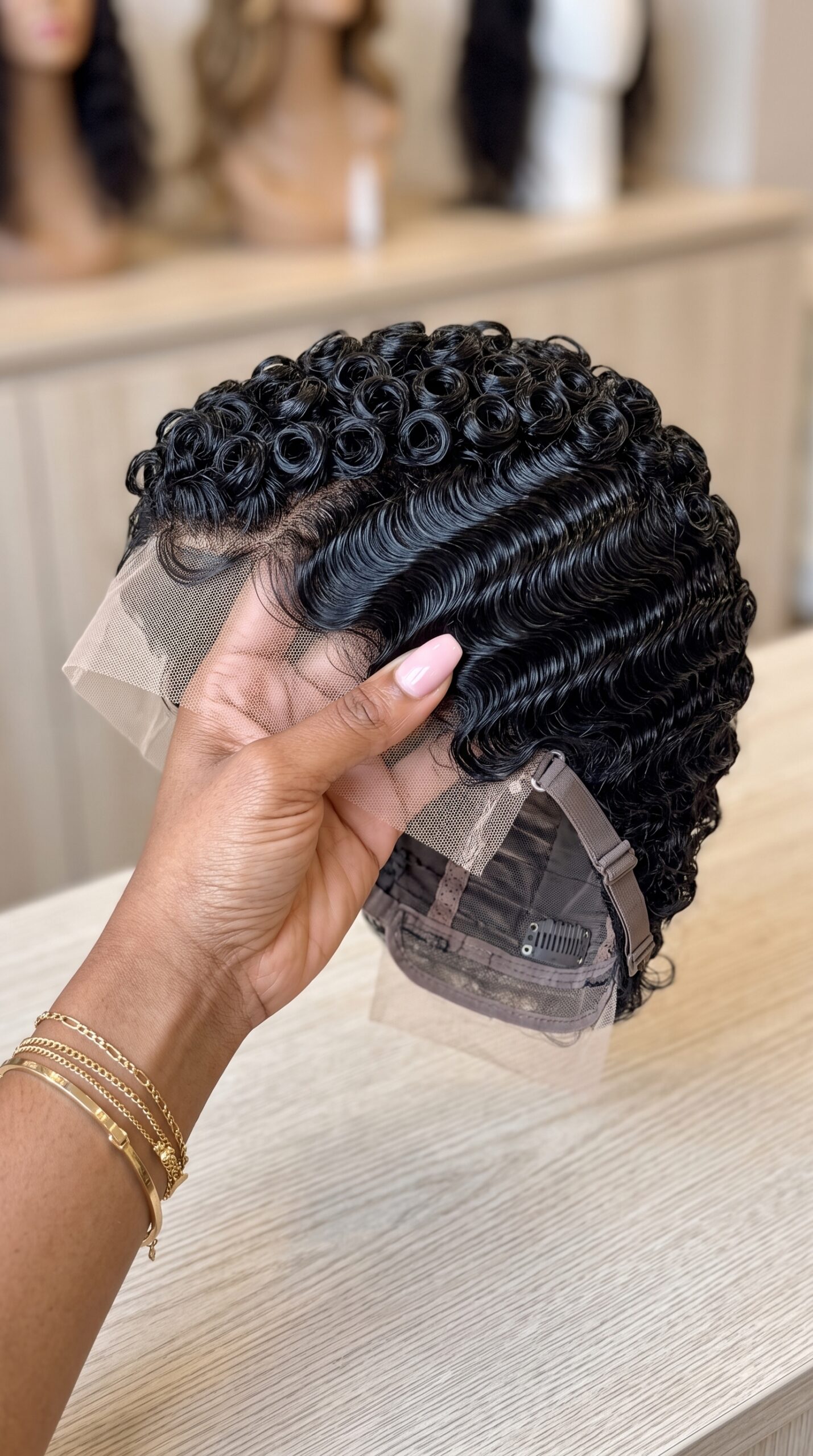
A short curly pixie wig does not frame the face evenly by default. The moment a style uses a deep side part, one side begins carrying more visual weight than the other. On a wig like this one, that effect becomes even stronger because the top uses tight sculpted ringlets while the side panel uses smooth finger-wave ridges.
That means you are not only buying curls, lace, or a cap. You are also buying a direction. The side part decides where the eye goes first, which temple feels more open, which cheekbone gets more emphasis, and how balanced or dramatic the whole unit appears once it is worn. Before paying for a pixie like this, you need to know whether that asymmetry is working for you or whether you are only reacting to the style in one flattering angle.
Where To Buy A Deep Side-Part Curly Pixie Wig
Custom wig makers. A custom maker is often the best option when side-part placement matters. Ask not only for the style, but for the exact side, depth, and direction of the part. On a pixie, shifting the part even slightly can change the whole silhouette.
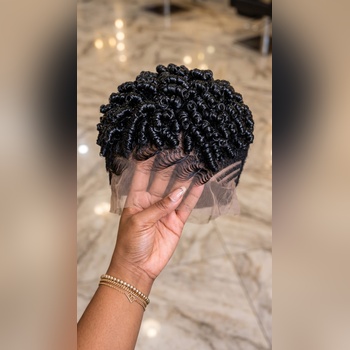
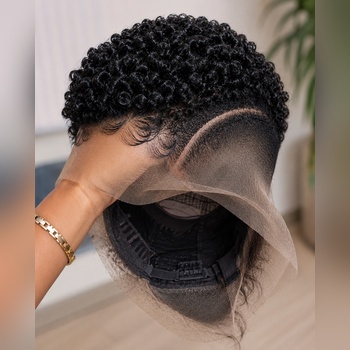
Instagram and TikTok sellers. Social sellers often show only the most flattering side. Ask for front, left-side, and right-side views. A deep side-part pixie should still look intentional from more than one angle, even though it naturally favors one side.
Etsy. Independent makers may offer more flexibility with part placement, cap size, and overall silhouette. Read carefully to see whether the wig is fixed to one side or whether the part can be adjusted slightly within the lace area.
Marketplaces like Amazon, AliExpress, and Temu. Budget listings can make every pixie look similar at first glance, but the part position can vary a lot. Compare buyer photos and look carefully at how far over the side part travels and how the short side is styled.
Local beauty supply shops and salons. Local shopping can be useful because you can hold the wig against your face shape and see which side the heavier mass of curls would sit on. A few seconds in a mirror can tell you whether the asymmetry feels natural on you.
Vendors and wholesalers direct. Ask for exact lace dimensions, whether the part is fixed or slightly flexible, and whether the side-wave section is meant to sit on the left or right when worn. That matters more than many buyers realize.
Regionally. Wig makers in Lagos, Accra, Atlanta, London, and major South African hair markets often understand short pixie styling very well, but “side part” can still describe many different placements. Use a clear reference image rather than relying on a style name alone.
Vet the seller. Favor sellers who show the unit from straight on as well as from both sides. A serious seller should be comfortable revealing how asymmetrical the design really is.
Red flags. Be cautious if every photo hides one side, if the part looks different in every image, or if the unit only appears balanced when the model tilts her head in one exact direction.
When you order, send. Provide your cap size, preferred side for the part, whether you want a dramatic or softer asymmetry, and a reference showing the exact side profile you like best.
Contact / order inquiries: WhatsApp [WhatsApp: +XX XXX XXX XX XX]
How Much It Costs
Premium custom human hair. A well-made human-hair deep side-part curly pixie can commonly range from about $220–$430 depending on hair quality, lace, ventilation, cap construction, curl definition, and the amount of detail in the waved side section.
Standard custom human hair. Around $170–$300 can cover many short custom pixies. At this level, the biggest differences often come from lace quality and how intentionally the asymmetrical shape was built.
Basic human hair. Around $150–$230 may buy a simpler unit with a convincing top but less refined side shaping. On a side-part pixie, weaker shaping becomes visible quickly because the silhouette is so exposed.
Good synthetic. Around $60–$150 can buy a strong-looking preset pixie. Synthetic fiber may hold the curls and molded side well, but the exact visual balance of the asymmetry still matters just as much as it does in human hair.
Basic synthetic. Around $25–$70 is common for budget units. At this level, the part may be more generic, the side waves less refined, and the overall silhouette less carefully calibrated.
What the price may include or exclude. Ask whether custom part placement, lace tinting, knot work, cap-size adjustment, and side-panel styling are included or charged separately.
Shipping and duty. International shipping, customs, and local taxes can increase the final price significantly. Compare the full landed cost rather than only the listed wig price.
Ongoing costs. A deep side-part pixie may need occasional reshaping of the side waves and curl refreshing at the crown. The more sculpted the asymmetry, the more important maintenance becomes.
First-year total. Include curl products, possible lace maintenance, styling refreshes, and any professional help if you cannot easily restyle the wave section yourself.
Cost per wear. A pixie that flatters your face every time can provide better value than a cheaper unit whose direction or part placement never quite feels right once you actually wear it.
What a very low price may signal. It may indicate a more generic silhouette, a less deliberate side part, weaker lace, or styling that looks dramatic in the listing but is not carefully engineered.
Deposit structure. Custom orders often require around 30–50% upfront and the balance before dispatch. Keep the requested side, depth, and style direction in writing.
Shipping, Delivery, And What To Expect After Ordering
When the wig arrives, inspect it before trimming the lace. Look at it from the front first, then from both sides. A deep side-part pixie should clearly have a “long side” and a “short side,” but the imbalance should feel stylish rather than accidental.
Place the wig in wearing position and check whether the part sits where the seller showed it. Small shifts can change how much forehead is exposed, how the temple curves appear, and how the crown volume reads.
Do not judge the wig from one angle only. A design built around asymmetry has to be evaluated as a full silhouette.
The Side Part Creates Visual Weight On One Side
This is the most important lesson from a wig like this. A deep side part pushes more hair mass toward one side of the head. At the same time, it opens the opposite side and gives more room to finger-wave shaping and edge detail.
That means the style does not distribute attention evenly. One side carries the denser ringlet crown and part of the visible volume. The other side becomes cleaner, flatter, and more sculpted.
When this is done well, the result feels elegant and intentional. When it is done poorly, the wig can look lopsided rather than styled.
A Deep Side Part Is More Forgiving Than A Center Part, But Only Up To A Point
A center part demands visible symmetry, so even small left-right differences become easy to spot. A deep side part gives the maker more freedom because the design itself is asymmetrical.
That freedom is useful, but it is not unlimited. The heavy side still has to look controlled, and the lighter side still has to feel purposeful. If one side looks richly styled while the other looks unfinished, the wig stops looking balanced.
In other words, a side part can hide small inconsistencies better than a center part, but it cannot rescue weak design.
The Wave Side And The Curl Side Must Still Belong To The Same Wig
This particular pixie combines two styling languages. The crown and fuller side use tight ringlets, while the flatter side uses smooth laid waves. That contrast is part of the look.
The important buying question is whether those two areas feel integrated. They should look like one deliberate haircut translated into wig form, not like two unrelated styles pressed together.
Check how the waves lead into the part and how the curls pick up from that transition. If the meeting point feels awkward, the wig may look divided into sections rather than flowing as one design.
Part Depth Changes How Dramatic The Style Feels
Not every side part is equally deep. A shallow side part gives a softer imbalance. A deep side part creates a much stronger directional effect.
In a pixie like this, the depth of the part decides how much of the front becomes wave-led versus curl-led. A slightly deeper part can make the style feel more polished and dramatic. A slightly shallower one can make it feel softer and more wearable every day.
That is why two wigs described as “side-part pixies” can feel completely different in real life.
Face Framing Depends On Which Side Opens Up
A deep side part does not only affect the hair. It affects the face. The more open side reveals more temple and cheek area, while the fuller side adds more visual softness and shadow.
That can change how a wearer experiences her own features. Some people prefer the more open side because it sharpens the face. Others prefer the fuller side because it softens the outline.
This is one reason the direction of the part matters. The exact same pixie can feel more flattering when reversed to the other side.
The Front View Must Still Make Sense
Many asymmetrical pixies look attractive from the side but lose their coherence when seen from the front. The part may feel too far over, the heavy side may dominate too much, or the open side may appear too empty.
That is why a straight-on view is essential when evaluating a side-part wig. The silhouette should still feel centered overall, even though the styling itself is intentionally unbalanced.
A well-designed asymmetrical pixie does not look crooked from the front. It looks directional.
Asymmetry Is A Styling Choice, Not A Mistake
Some buyers hesitate when they see a pixie that does not mirror itself, but asymmetry is one of the reasons these wigs feel dynamic. The style looks shaped rather than generic.
The key is intentionality. The stronger side should appear built on purpose, the lighter side should still feel finished, and the entire front should lead the eye naturally.
Do not ask whether both sides are identical. Ask whether both sides are doing their intended jobs.
Before You Pay
- Can you show the wig from the front, the fuller side, and the more open side?
- How deep is the side part, and is it fixed or slightly adjustable?
- Does the wave side blend smoothly into the curl side, or do they look disconnected?
- Can this same style be made to part on the opposite side if I prefer that direction on my face?
- Will the silhouette still look balanced from the front once worn on a real head?
Trimming The Lace
Do not trim the lace until you are sure the wig is sitting in its intended directional position. On a deep side-part pixie, even a small shift can change how the entire asymmetry reads.
Trim gradually and check the front after every small section. Pay close attention to the more open temple side because that is where changes in positioning will show most quickly.
If you are unsure, let a stylist trim the lace while preserving the directional balance of the style. On a pixie like this, the lace cut and the part direction need to work together.
Search Terms
deep side part curly pixie wig · asymmetrical finger wave pixie wig · side part ringlet pixie wig · black sculpted curl pixie wig · finger wave side curly pixie wig · glueless side part pixie wig · short asymmetrical curl wig · molded wave and curl pixie wig
Final Thoughts
The deep side part on a pixie wig does much more than divide the hair. It decides which side carries the visual weight, which side opens up the face, and how dramatic or soft the overall silhouette becomes. In a style like this, the side part is part of the architecture of the wig.
If you want a short pixie that feels intentional and flattering, do not judge only the curls or the shine. Judge the direction. A beautiful asymmetrical wig should not merely look good from one angle. It should clearly show that every side was designed to play a specific role.