
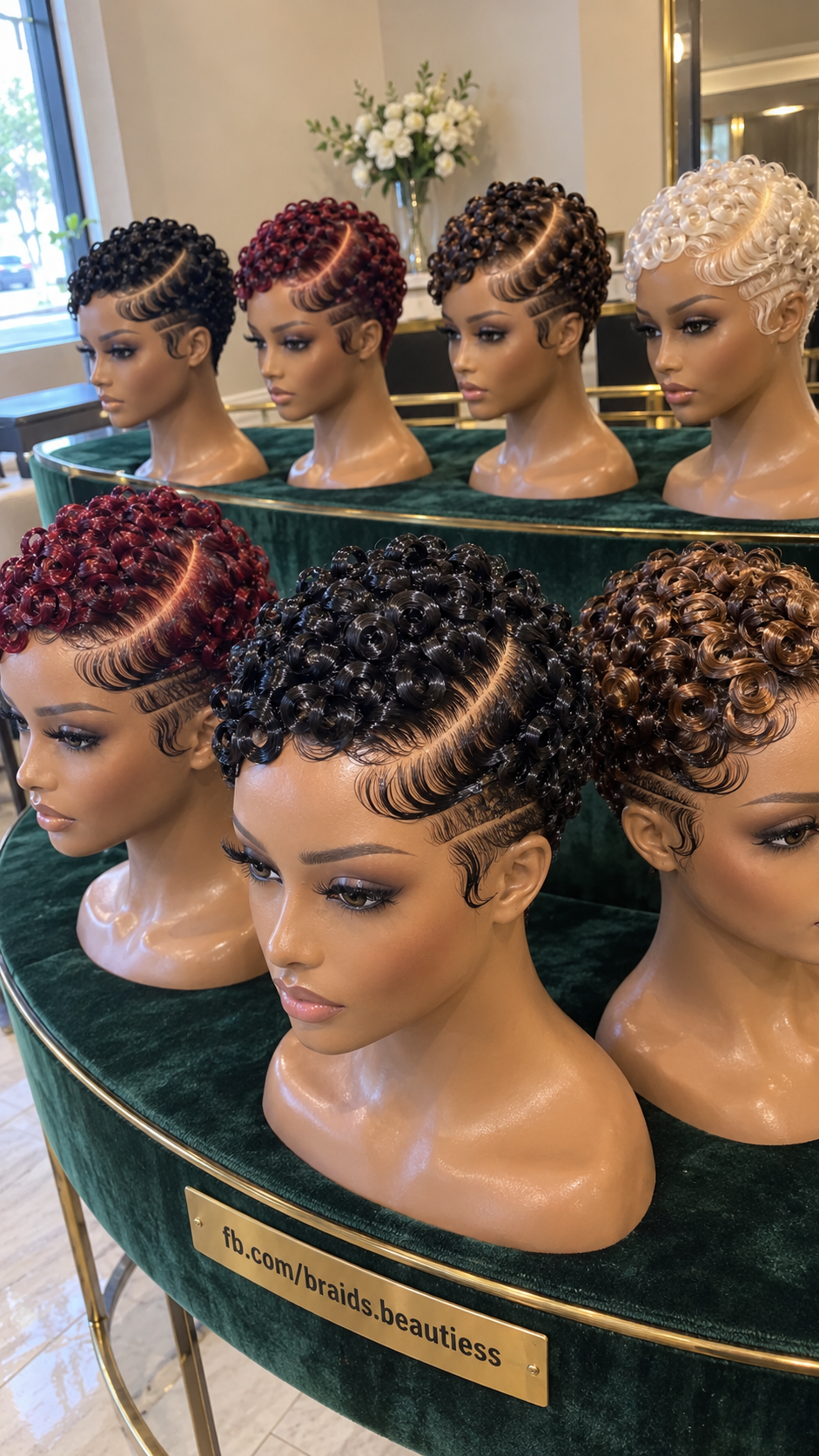
A collection like this is best understood as a salon menu rather than seven copies of the same hairstyle in different colors. The display brings together compact finger-curl wigs with several distinct identities: glossy black spiral crowns, burgundy-red loops, warm bronze-brown curls, a pale platinum option, directional side partings and carefully arranged temple work. Seeing the units together also reveals something that an isolated product photograph cannot show as easily—the importance of choosing a wig by construction and placement, not merely by selecting a favorite shade.
The strongest units in the group use small circular or coiled sections across the crown while directing the hair differently around the front and sides. Some have a pronounced diagonal separation that exposes a narrow scalp-toned path. Others emphasize sweeping finger-wave movements near the temple. The darker units make the carved side details particularly visible, while the platinum version relies more heavily on the contrast created by its pale curls and sculpted perimeter.
Because these wigs are shown already arranged on mannequin heads, the image does not provide a reliable close inspection of the underlying lace or cap construction for every individual unit. It would therefore be inappropriate to advertise the entire collection as HD lace based on this photograph. A customer interested in one specific piece should ask the seller to show that unit off the mannequin and confirm its construction before ordering.
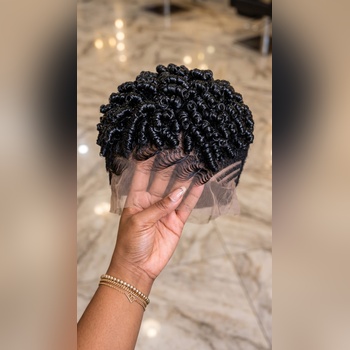
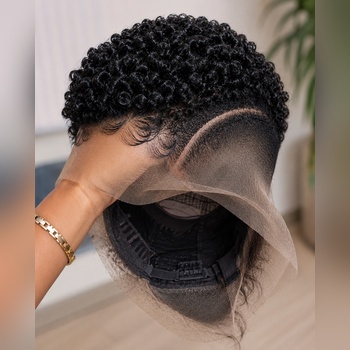
Start by Choosing a Crown Personality
The central black wig provides one of the clearest examples of the collection’s curl language. Its crown is covered with compact circular loops that resemble carefully rolled finger curls. Rather than producing a fluffy surface, the sections remain separated enough for the circular shapes to stay recognizable. Light reflects along the glossy black strands and makes the individual rings visible even without contrasting color.
The burgundy unit offers a different reading of the same general family. Red-wine tones reveal the curves more strongly because highlights appear naturally wherever the loops catch the salon lighting. The color adds depth without requiring a dramatically different crown height.
The bronze-brown version introduces warmer reflections. Its loops create a richer golden-brown surface, particularly across the upper crown where the light reaches them directly. For a customer who likes sculpted curls but wants something less severe than deep black and less vivid than burgundy, this warmer palette occupies a useful middle ground.
The pale platinum wig changes the visual balance most dramatically. Because the strands are so light, the circular construction is immediately visible. This version places less emphasis on shadow and more emphasis on the actual shape of each curl. It can therefore appear brighter and more decorative even when the underlying crown dimensions are similar.
The Parting Is Not the Same Across Every Unit
Color may be the first difference a customer notices, but the directional parting deserves equal attention. Several wigs show a diagonal exposed path beginning near the forward crown and traveling toward the side. That line determines how the curls are divided and where the front movement begins.
On the foreground black unit, the parting is particularly prominent. The curl mass occupies one side while a broad sequence of fine, curved strands sweeps along the exposed boundary. This creates a deliberate asymmetry. The wig should therefore not be treated as a generic all-over curly unit that can simply be rotated on the head.
The bronze wig in the foreground also uses a visible directional division, but the relationship between its brown curls and side work gives it a different appearance. A buyer comparing these pieces should look at where the part begins, which direction it travels and how much crown hair sits on either side.
If ordering remotely, request an elevated photograph of the selected wig. A straight frontal image can hide the full path of the parting, while a slightly higher camera position makes its length and direction much easier to evaluate.
Temple Work Is a Major Part of the Collection
Several units include elaborate curved strands around the temple. These sections sit much flatter than the circular crown curls and create a transition into the side. On the foreground black wig, long arcs follow the parting and continue toward the ear area. Additional fine strands form smaller curves lower on the side.
This work changes the character of the wig considerably. Without it, the crown could appear like a simple collection of ring curls. The sweeping temple sections connect those curls to the perimeter and introduce another direction of movement.
The black wig at the rear left demonstrates another variation. Its side includes compact line work beneath the curled crown. The effect is more graphic and barber-inspired than the softer sweeping sections seen on some of the other mannequins.
When commissioning a similar piece, buyers should specify whether they want pronounced side lines, finger-wave-inspired temple strands or a quieter perimeter. These are separate choices and should not be assumed merely from the crown curl pattern.
Black Gives the Curl Construction Maximum Contrast
Black appears in several positions throughout the collection, but that does not make the black options interchangeable. Deep color creates strong shadow inside each loop, making the circular openings easy to see. The glossy surfaces then catch narrow bands of light, creating a highly sculpted appearance.
A black version can also make exposed side pathways appear more prominent because the contrast between the dark hair and scalp-toned area is stronger. This makes precision especially important. Uneven spacing or an incorrectly positioned side line can be more noticeable on a dark unit.
For customers who want the hairstyle itself to remain the focus, black is a practical choice. There is no secondary color competing with the curl pattern. The quality of the sectioning, parting and perimeter work becomes the visual story.
Burgundy Creates Depth Without Hiding the Rings
The burgundy units introduce a wine-red tone that changes according to lighting. Deeper sections can appear almost dark cherry, while raised loops reflect brighter red. This natural variation helps reveal the circular crown pattern.
Customers considering burgundy should ask to see the wig under neutral lighting before approving the color. Bright salon lights can intensify red tones, and a phone camera may process them differently from how they appear in person.
For custom orders, it is also useful to clarify whether the desired result is a uniform burgundy or a darker-root interpretation. The photograph demonstrates the general red family, but precise color formulation should come from the seller’s actual available hair or fiber rather than assumptions based on a screen.
Bronze Brown Offers a Warmer Route Into the Same Curl Family
The bronze-brown wig in the foreground uses warm reflections to outline its ring formation. Darker areas remain between curls, preventing the crown from becoming visually flat. The shade works particularly well with the glossy loop arrangement because every bend catches a slightly different amount of light.
This can be an appealing choice for customers who want visible color without moving into pale blonde territory. It also offers enough contrast against darker roots and side work for the structural details to remain easy to read.
A salon ordering this color for inventory should request consistency photographs if purchasing multiple units. Brown terminology varies widely between suppliers, and one company’s bronze brown may be another company’s copper, chestnut or caramel. Visual approval is more dependable than a shade name alone.
The Platinum Unit Needs Its Own Maintenance Strategy
The pale wig at the rear right should not simply be treated as the black design in another color. Light hair changes both visual impact and maintenance priorities. Product residue, discoloration and environmental staining can become more visible on pale fibers than on black hair.
If the unit is human hair, buyers should ask how the pale shade was achieved and what aftercare is recommended. Highly lightened human hair may require more conservative heat use than darker untreated hair. If the wig is synthetic, the exact fiber should be confirmed before heated styling tools are introduced.
The pale curls also benefit from careful storage because crushed rings are immediately noticeable against the light color. Keeping the unit upright on an appropriate stand can help the circular crown retain its spacing.
Choose by Side Profile Before Choosing by Color
A practical way to shop this collection is to temporarily ignore color and compare silhouettes first. Look at the crown height, the direction of the parting, the size of the loops and the amount of side detailing. Once the preferred construction has been identified, ask whether that exact design can be produced in the desired shade.
This prevents a common ordering mistake: choosing the burgundy color from one wig but assuming it automatically comes with the side work seen on a different black unit. In custom wig production, color, crown arrangement and perimeter design may be separate options.
A salon can make this process easier by photographing each unit individually from the front, side, rear and slightly above. Assigning a product reference to each wig also reduces confusion when customers place orders through messages or social media.
A Consultation Can Turn the Display Into a Custom Order
For customers visiting a salon, the mannequin display is an excellent starting point for a consultation. Rather than immediately selecting one unit, discuss which elements are most important. One customer may love the burgundy crown but prefer the temple work of the black center wig. Another may want the bronze palette with fewer side accents.
The stylist can then determine whether an existing unit can be adjusted or whether a custom order is more appropriate. If the desired changes involve only color or minor placement, customization may be straightforward. Changing the entire parting and side architecture can require a different base construction.
For online customers, the same consultation can happen through detailed photographs and measurements. Ask the seller to confirm cap sizing, fiber or hair type, parting construction, available colors and what customization is included before payment.
Request Individual Product Images Before Paying
A group photograph is useful for comparing options, but it should not replace close photographs of the exact wig being purchased. Once a customer has selected a mannequin, ask the seller to photograph that unit separately.
The most useful set includes a direct front image, both sides, the rear and an elevated crown view. If lace is part of the construction, request an additional photograph of the wig removed from the mannequin so the lace and cap can be inspected. This is also the point at which the seller should confirm whether the lace has already been trimmed.
These steps are particularly valuable for custom or final-sale products. They provide an opportunity to identify color or construction differences before shipping and before irreversible alterations have been made.
Pricing Should Reflect the Amount of Hand Work
The wigs in this display may use relatively little length compared with long units, but their compact size should not be mistaken for simple production. Creating repeated ring curls, controlling their spacing, arranging the parting and completing detailed temple or side work can require considerable labor.
| Category | Estimated Price Range | What May Influence the Cost |
|---|---|---|
| Premium Custom | $300–$550+ | Higher-grade hair, custom cap sizing, individually arranged ring curls, personalized parting, detailed temple work and professional preparation. |
| Standard Custom | $185–$325 | Prepared curl crown, selected color and planned side styling with more standardized sizing and finishing. |
| Basic Human Hair | $115–$210 | A human-hair foundation that may require additional salon work to recreate the displayed curl arrangement and side details. |
| Premium Synthetic | $70–$145 | A quality pre-set option where the circular curls can retain their arrangement with relatively little daily manipulation. |
| Basic Synthetic | $35–$85 | A budget interpretation that may use simpler curl placement, parting or perimeter work. |
These ranges are broad shopping references rather than fixed prices for the wigs shown. Actual pricing depends on country, hair or fiber, cap construction, labor, coloring and the amount of individual customization. Installation, delivery and future salon maintenance may be separate charges.
When comparing quotes, ask what arrives already completed. A higher-priced unit with the ring crown, side work and custom color already prepared may ultimately cost less than a basic wig that requires several local appointments.
Human Hair and Synthetic Fiber Serve Different Buyers
Human hair may be preferable for customers who want their stylist to rebuild or modify the curl pattern over time. It generally provides more flexibility for professional reshaping, although safe heat levels depend on the hair’s quality and processing history.
Premium synthetic fiber can be attractive for a customer who wants the circular crown to remain largely pre-set. A well-manufactured synthetic loop may recover its shape with less daily work, but the wearer has less freedom to alter the style. Heat resistance should never be assumed without checking the fiber specification.
Color can also influence the decision. A buyer considering the platinum or burgundy options should ask whether the shade is part of the fiber itself or the result of processing human hair. That information helps establish realistic maintenance expectations.
Ring Curls Should Be Maintained Individually
The crown should not be brushed as though it were loose straight hair. Each circular section contributes to the overall arrangement, and aggressive brushing can combine neighboring curls into an undefined mass.
Routine maintenance should begin by identifying any loops that have become displaced. Work on those sections individually rather than dismantling the entire crown. Use only products appropriate for the actual material and avoid excessive application that can make the rings heavy or sticky.
Before a full wash, photograph the wig from above. That image becomes a useful reconstruction guide if the loops loosen while wet. For professional resetting, the stylist can use the original crown pattern as a map rather than inventing a new arrangement.
Side Work Requires a Lighter Hand Than Natural Hair
The sculpted temple areas and narrow side lines may eventually need attention, but they should not be aggressively recut at every appointment. Wig hair does not replace itself, so repeated removal can permanently alter the pattern.
If fine strands shift across an exposed line, repositioning may restore the appearance without cutting. When actual refinement is necessary, show the stylist a clear photograph of the wig when it was new. This gives them a reference for the original width and direction.
The same principle applies to the curved temple strands. Their purpose is to complement the crown, not gradually expand into larger shapes after repeated maintenance.
Storage Is Especially Important for a Collection of Pre-Set Curls
These wigs should be given enough room that their crowns do not press against one another. A salon storing several units can use individual mannequin heads or appropriate stands so each ring pattern remains intact.
At home, avoid placing the wig underneath clothing or other hairpieces. Compression can flatten one side of the crown and require professional resetting. Make sure the unit is completely dry before storage, particularly after washing or cleaning the perimeter.
Pale and warm-colored options should also be kept away from surfaces that could transfer color. A clean, dry storage area protects both the shape and appearance of the fiber or hair.
Build a Booking Plan Around the Work the Wig Actually Needs
A ready-styled unit may need only fitting and minor perimeter preparation. A basic human-hair foundation can require several additional services, such as crown setting, side detailing and color work. Ask the salon to identify these services before booking so enough appointment time is reserved.
For an online purchase, inspect the wig immediately after delivery. Confirm the chosen color, curl arrangement, parting and side details before any lace is cut or hair is removed. If there is a substantial difference from the order, contact the seller first.
Customers commissioning a personalized version can benefit from an initial consultation, followed by an approval stage and then final fitting. This separates design decisions from installation and makes it easier to correct issues before they become permanent.
A Collection Like This Works Best as a Customization Library
The real advantage of displaying several finger-curl wigs together is the ability to compare components. One mannequin demonstrates how deep black emphasizes circular loops. Another shows the effect of burgundy. Bronze introduces warmth, platinum changes the contrast entirely, and the different side arrangements demonstrate how much the perimeter can alter the same general curl family.
For customers, the smartest approach is therefore not necessarily to copy one mannequin without changes. Identify the exact crown, parting, side treatment and color combination desired, then ask whether the salon can produce those elements together. When the goal is to purchase an existing unit, verify that the photographs and specifications correspond to that exact wig.
For wig businesses, this kind of display can function as a visual catalog. Individual photographs, accurate color names, verified material information, cap measurements and clear customization pricing make it easier to convert inspiration into an order. The strongest sales description is one that explains what the customer can actually see and what the business can genuinely provide, without assigning unsupported lace or hair claims.
Search Terms
finger curl crown wig collection · black ring curl wig · burgundy sculpted curl wig · bronze brown finger curl wig · platinum loop crown wig · diagonal side part wig · sculpted temple wave wig · compact spiral crown wig