
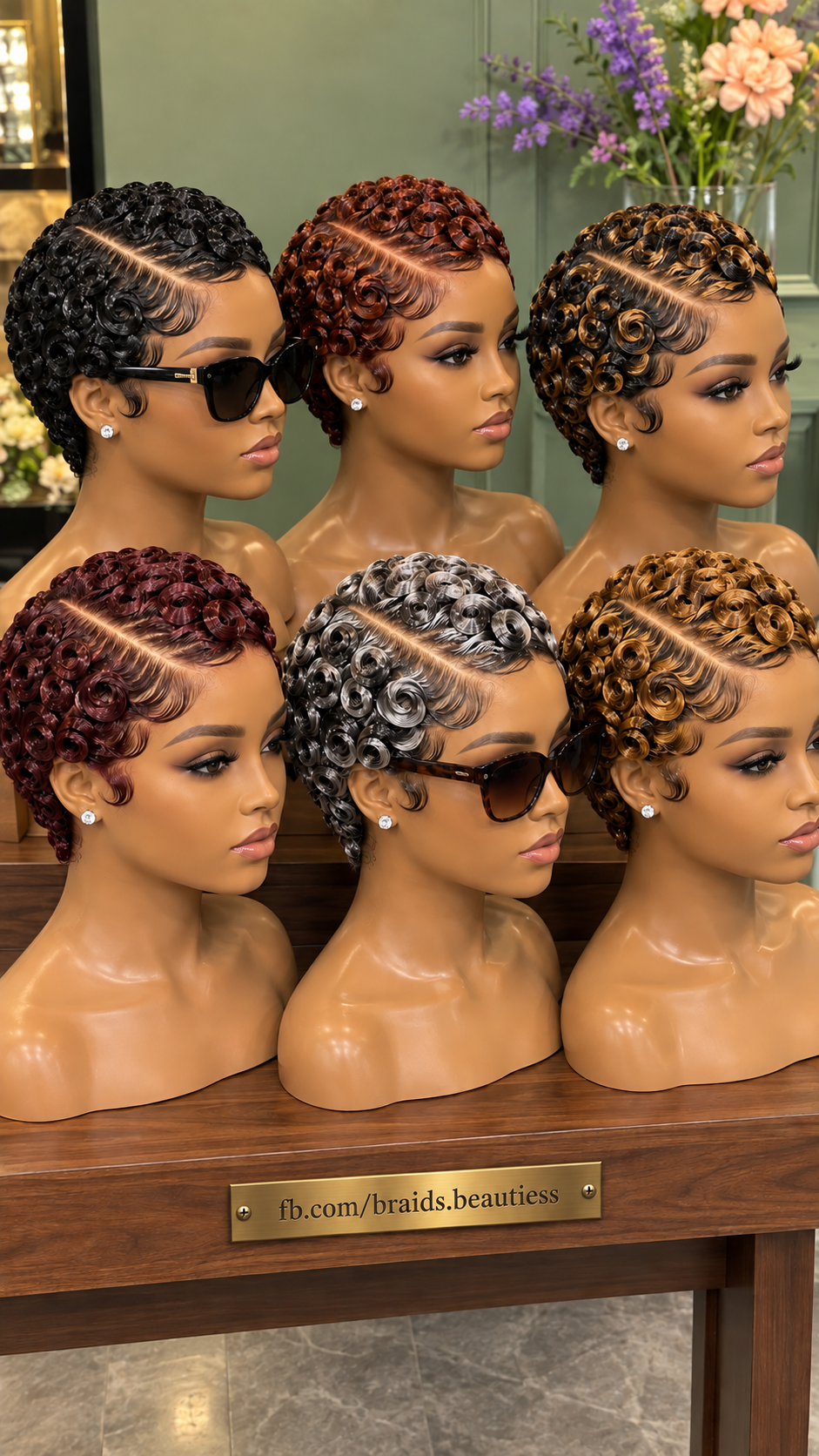
This six-piece pixie wig display brings together one recognizable construction in several highly distinctive colors. Each unit combines compact circular ringlets, a precise diagonal parting and sculpted feather-like temple waves. The silhouette remains close to the head while the dense curl work across the crown provides dimension and shine.
The collection includes glossy jet black, warm copper, black with honey-gold accents, deep burgundy, smoky silver-black and rich golden brown. Because the basic curl structure remains consistent, the display is particularly useful for seeing how color alone can dramatically alter the appearance of the same general pixie concept.
The Circular Crown Pattern Defines the Collection
The most recognizable characteristic is the concentration of small circular curls across the crown. These are not loose waves or conventional spiral curls. Each section has been formed into a compact ring with a visible center, creating dozens of individual glossy loops.
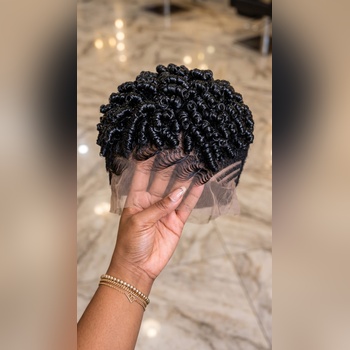
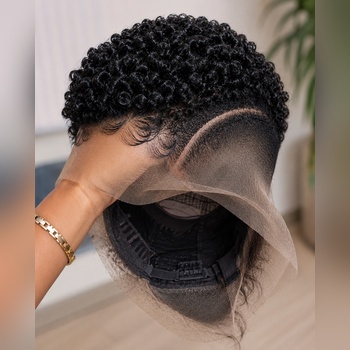
The rings overlap closely enough to produce substantial coverage while still remaining individually visible. This balance matters when commissioning a similar wig. If the curls are made too large, the hairstyle loses its intricate surface. If they are packed too tightly, the separate circular shapes can disappear into one dense mass.
Ask a stylist for a dense crown of individually visible polished ringlets, and provide a close reference photograph so the intended curl diameter is clear.
A Strong Diagonal Parting Creates the Signature Shape
Every unit uses a pronounced diagonal division beginning near the frontal area and travelling backward across the top. This line separates the dense ringlet section from the flatter sculpted strands along the temple.
The exposed parting adds visual structure and prevents the curls from covering the entire frontal perimeter. It also makes the sweeping side work much easier to see.
When ordering a custom version, specify the direction of the parting rather than simply requesting a side part. The angle and length of this division contribute significantly to the finished appearance.
Feathered Temple Waves Add Fine Detail
Beneath the diagonal parting, numerous fine strands have been molded into long curved sweeps. Several layers follow one another, creating a feather-like effect that travels toward the temple and ear area.
This is one of the most labor-intensive-looking details in the style because the individual strand lines remain visible. The waves should appear intentional and separated rather than becoming one thick section of hair.
A stylist recreating this treatment will need control over both strand direction and product placement. Excess styling product can make the fine waves appear heavy, while insufficient hold may allow them to lose their carefully arranged curves.
Jet Black Gives the Ringlets Maximum Contrast
The jet black option emphasizes the architecture of the hairstyle. Bright reflections travel across the raised surfaces of the ringlets while their centers remain considerably darker, giving the circular forms a deep three-dimensional appearance.
Black also makes the fine temple strands particularly noticeable against the scalp-toned base. For buyers who want the strongest emphasis on curl shape rather than color variation, this version offers a useful reference.
Copper Creates a Warmer Reflective Finish
The copper version transforms the same compact ringlets with warm reddish-brown reflections. Light catches the outer edges of each curl, creating a luminous appearance without requiring additional length or volume.
This shade works particularly well with the highly polished curl surface because different sections can appear slightly darker or brighter depending on their direction toward the light.
When discussing the color with a seller, send the photograph rather than relying on “copper” alone. Copper wig shades can range from orange-red to deeper brown-based tones.
Black And Honey Accents Produce Extra Depth
One unit combines a dark base with honey-gold sections distributed throughout the ringlets. The darker hair remains clearly present, allowing the lighter pieces to act as highlights rather than turning the entire wig blonde.
The contrast makes individual curls particularly easy to distinguish. Golden sections catch the light immediately while the black portions create depth between them.
For a custom order, clarify that you want distributed honey-gold accents over a dark foundation rather than a uniform golden color.
Burgundy Offers a Deep Red Alternative
The burgundy unit introduces a wine-red tone while retaining enough depth to preserve the shadows inside the ringlets. Under stronger light, the red becomes much more visible; in darker sections, it approaches a deep reddish brown.
This makes burgundy useful for someone who wants noticeable color while maintaining the strong contrast needed to showcase the circular curl pattern.
Smoky Silver Changes the Character of the Ringlets
The silver-black version has a dramatically different visual effect. Metallic gray and silver tones run through the compact curls while darker sections remain underneath and between them.
Instead of relying on warm reflections, this version produces cooler highlights. The circular construction is still clearly recognizable, but the silver surface gives the crown a more metallic appearance.
If requesting this variation, reference both the silver tone and the darker depth visible beneath it. A completely uniform pale silver unit would not reproduce the same contrast.
Golden Brown Keeps the Palette Warm
The golden-brown option sits between deeper brunette shades and brighter honey tones. Its ringlets reflect warm caramel and amber notes while retaining darker areas within the curls.
This type of dimensional brown can be easier to coordinate with different wardrobes than a very bright blonde while still making the ringlet pattern considerably more visible than an all-black version.
Why the Hairline Work Matters So Much
The frontal styling does not simply stop where the curls begin. Carefully arranged strands extend toward the perimeter and form repeated curved sweeps. This creates continuity between the crown, parting and temple.
When purchasing a similar wig, examine close-up photographs of the hairline rather than judging only the crown. Two units can use almost identical ringlets yet look completely different if one has detailed perimeter work and the other has a basic frontal finish.
How to Describe This Wig to a Custom Stylist
Start with the silhouette: request a compact pixie unit with a rounded ringlet crown and close-fitting sides. Then describe the crown as numerous small circular curls with a glossy, individually separated finish.
Next, specify a long diagonal parting and layered feather-like temple waves. Send photographs showing the front and profile so the stylist can see exactly how far the sculpted sections extend.
Finally, choose the desired color variation. If selecting a highlighted option, mark which colors should remain dominant and which should function only as accents.
Where a Similar Unit Can Be Made
Look for wig stylists who regularly work with pixie units, precision curl setting and lace customization. A conventional salon may be able to cut a wig, but this design requires detailed setting and molded perimeter work in addition to cutting.
Search local wig studios, specialist hair salons and independent custom wig makers. Before booking, send the reference photograph and ask whether they have previously created compact ringlet pixie units.
Request examples of their own work whenever possible. Close photographs of the hairline and crown will reveal more about their technique than distant model photographs.
Steps for Ordering the Style Online
Begin by choosing the color from the six visible directions: jet black, copper, highlighted black and gold, burgundy, silver-black or golden brown. Save the specific reference you want rather than sending the entire collection without identifying your preference.
Next, provide your required cap size and ask the seller which measurements they need. Confirm the hair material, cap construction, approximate density and customization services before paying.
Ask whether the circular curls and temple waves will arrive already set. Some sellers provide a base pixie wig that still requires professional styling, while others offer a completed custom unit.
Before shipment, request clear photographs of the actual finished wig if the seller offers approval photos. Compare the crown density, parting direction, color distribution and perimeter work with your reference.
Questions Worth Asking Before Booking
Ask whether the appointment includes both cutting and curl setting. Confirm whether the stylist works on wigs supplied by customers or requires you to purchase the base unit through the salon.
You should also establish whether lace customization, cap adjustment and final fitting are separate services. Getting these details before the appointment makes it easier to compare quotations accurately.
If you want one of the multi-tone versions, ask whether the color is created before styling or whether a pre-colored unit will be used.
Estimated Price Ranges for Similar Pixie Units
| Category | Estimated Price | Typical Option |
|---|---|---|
| Premium Custom | $450–$900+ | Higher-grade human hair with detailed hand setting, color work and extensive perimeter customization |
| Standard Custom | $250–$500 | Human-hair pixie with custom ringlets, parting and sculpted temple styling |
| Basic Human Hair | $140–$300 | Human-hair foundation requiring simpler customization or additional salon finishing |
| Premium Synthetic | $80–$180 | Higher-quality fiber with pre-set compact curls and stronger shape retention |
| Basic Synthetic | $40–$95 | Lower-cost fiber option with less detailed hand customization |
These figures are broad estimates rather than prices for the exact wigs shown. Final cost depends on hair material, color processing, cap construction, stylist labor, region and the amount of customization requested.
Preserving the Circular Curl Formation
The crown should be handled differently from a loose curly wig. Avoid brushing through the ringlets because conventional brushing can dismantle their circular formation.
When the wig is removed, place it on an appropriately sized stand and avoid pressing other items against the crown. Individual curls that become displaced can be addressed separately rather than disturbing the entire arrangement.
Use styling products suitable for the wig’s actual hair material. Human hair and heat-resistant synthetic fibers can have very different maintenance requirements, so follow the manufacturer’s care instructions.
Protecting the Sculpted Side Waves
The fine temple work is especially vulnerable to friction. Repeated touching, tight storage or careless handling can separate the narrow strand groups that create the feathered appearance.
Hold the unit by its cap or sturdier areas whenever practical. If the temple waves need resetting, working section by section will help preserve their original direction.
For synthetic hair, verify heat tolerance before applying any heated tool. When uncertain, professional restyling is safer than experimenting with high temperatures.
Choosing Between the Six Color Directions
Rather than treating these colors as completely different hairstyles, consider how each shade changes the visibility of the same details. Jet black emphasizes contrast and shine. Copper and golden brown emphasize warmth. Burgundy provides deep red dimension. Silver introduces cooler reflections, while the black-and-gold combination makes individual highlighted curls especially prominent.
The best ordering reference is the exact color photograph closest to the result you want. Save that image, identify the shade distribution you want preserved and send it together with close views of the parting and temple work.
Search Terms
Jet Black Circular Ringlet Crown · Copper Ringlet Pixie · Burgundy Glossy Ringlets · Smoky Silver Black Curls · Honey Gold Highlighted Ringlets · Golden Brown Circular Curls · Diagonal Pixie Parting · Feathered Temple Wave Pattern