
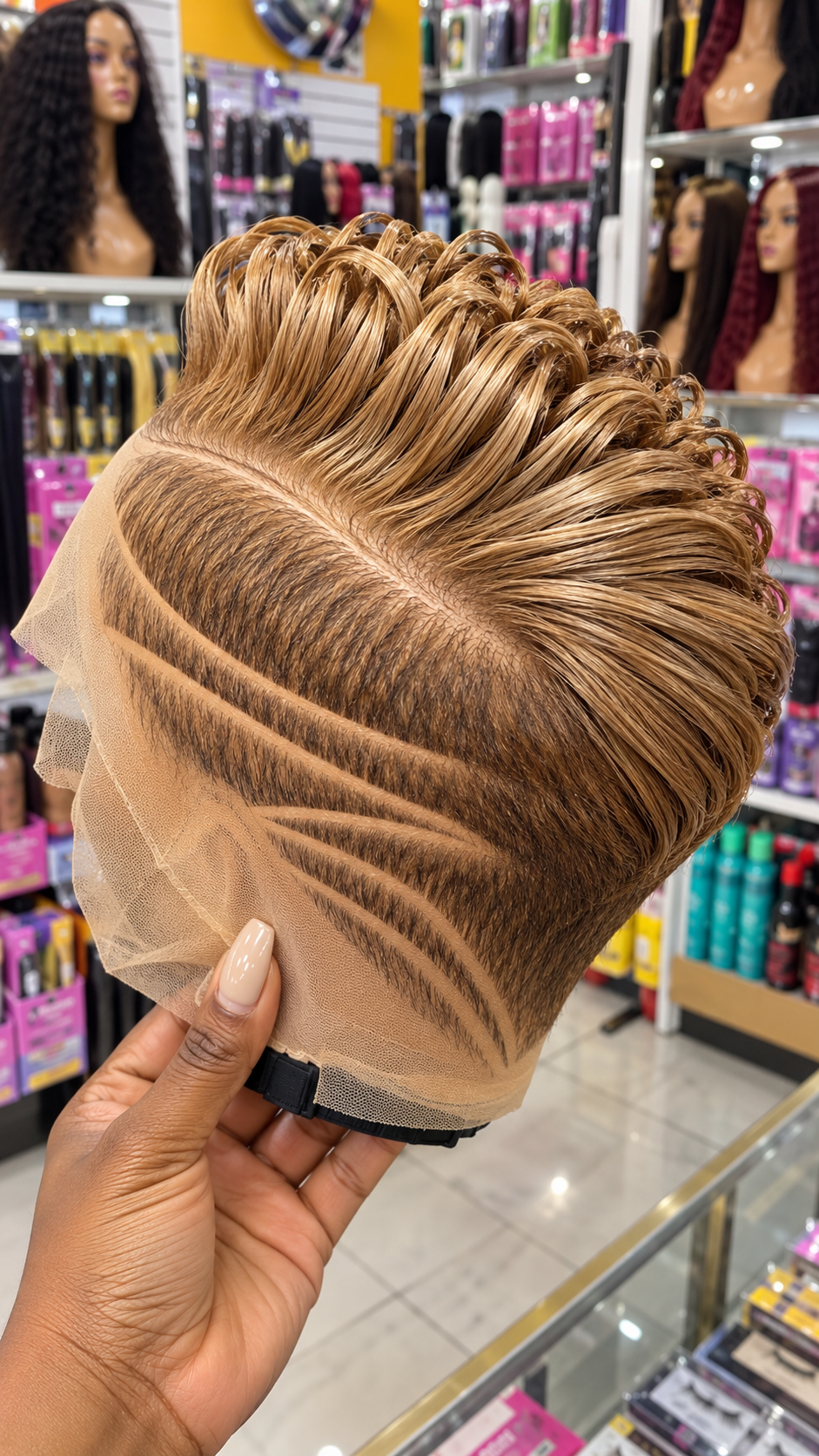
Golden blonde hair rises from a long side part and bends back into broad loops across the crown. The sections sweep in the same direction, so the top has the flow of a brushed-back pixie even with several distinct curls. The brightest gold appears where the hair bends toward the light. Deeper caramel tones show underneath the loops and around their roots, giving the crown depth without breaking up its warm color.
The visible side is cut close in appearance, with pale curved lines running through the short brown and blonde hair. One long sweep crosses the panel below the part. Shorter lines fan downward near the lower edge, leaving narrow bands of hair between them. From this angle, the eye follows the upper part across the wig before returning to those curves. The two details give the style a clear profile from the tallest curl to the short hair near the temple.
The golden blonde pixie wig is held by hand, with excess beige lace visible along the front and side. A dark band can be seen at the bottom of the opening. The photo gives a useful view of the styled surface and part of the edge, while the complete cap and the opposite side would need their own views. For a similar piece, the fitting should establish where the side design lands beside the ear and how high the blonde loops sit once the cap is on.


The Profile Is the Best Place to Start
A side photograph tells you more about this hairstyle than a straight-on listing photo. It shows how much hair rises above the part and how much space the maker has left below it. Here, the short panel is broad enough to give the longest curve room to sweep across it. The smaller lines begin farther down and turn toward the edge. If you are comparing wigs, look at that spacing before comparing the number of curves. A simpler design can still capture the look when the lines are long enough to follow and the surrounding hair lies close.
At a fitting, identify where the ear opening and temple sit before you judge the pattern. A design that looks centered on a display form may sit farther back on your head. Bring the glasses or sunglasses you wear most often and check where the arms cross the panel. If the frames cover the shorter lines, you might prefer to have those lines end a little higher. A made-to-order piece gives the stylist an opportunity to plan that placement before the side is finished.
Decide how you want the opposite side and nape to look. The reference offers one clear profile, and that is enough to establish the main idea. You can keep the opposite side close and plain, ask for a single corresponding curve or carry some of the blonde farther down. Request a rear view of the proposed design if you often wear an open neckline. That view will show where the close side blends into the back and whether the lower edge follows the shape you expected.
How the Loops Give the Blonde Its Depth
Each large section rises away from the part before bending inward. The fronts of the loops are long and broad, while the openings are easier to see from the side or slightly above. That is why the crown can look like a swept crest from one angle and a row of separate curls from another. When discussing the set with a stylist, point to the wide, uninterrupted surface on the front of each loop. That detail distinguishes this look from a crown filled with smaller upright ringlets.
The hair looks warm gold through the upper turns, with caramel and brown visible lower down. The darker side has fine lighter strands running through it, so the transition continues below the part. When ordering, ask the maker to show the proposed crown and side shades together. A blonde sample can look warm on its own and take on a cooler cast next to a deep brown. The two samples side by side give you a better sense of how the finished part will look.
A straight swatch is useful for choosing color. If the maker can show a curved sample as well, look at where the brightest strands fall when the hair bends. The raised loops can place much of the gold in direct light, while the roots and inside of each curve remain in shade. In a daylight video, watch the wig as it turns away from the window. That is a good moment to judge whether you prefer the balance of gold and caramel or want one tone to be more noticeable indoors.
How To Order This Style
Look for a custom wig studio, a short-wig boutique or a salon that shows close side work in its portfolio. Beauty supply shops can be helpful for trying on a short base and comparing blonde shades in person. When you contact a seller, ask to see examples of raised loop curls and patterned sides from the same angle as the reference. A unit may have the crown you want and still leave too little room around the temple for the side design. Send the profile to the seller before you choose the base.
For a custom order, state your preferred side from your own perspective and mark it on the image if necessary. Describe the length and direction of the main part, the warm blonde crown and the shorter fan of lines below the long curve. Add your head measurements and tell the maker how high you want the top to sit. If the photographed lines are your priority, ask how the maker will create the visible spaces between them and what the short hair will look like at the edge of each curve.
Before paying, request a front view, both profiles, a rear photograph and a clear image of the full cap interior. Confirm the fiber, cap size, lace shade, usable lace area and whether the lace will arrive trimmed. For a finished piece, ask for a video of the actual wig under ordinary light. For a custom piece, agree on when you can approve the color and side profile, which adjustments are included and how long production will take. If the seller and installer are different people, share the agreed design with both.
To have the look done locally, contact a wig stylist who works with sculpted short cuts and book a consultation before reserving the full service. Tell the salon whether you are bringing a finished wig for fitting or a base that needs color, cutting and a loop set. For a version on your own hair, look for a short-hair stylist who can coordinate with a barber or who has examples of curved line work. The crown length and the lower pattern should be planned together, especially when the top will also be colored.
Choosing Lace Coverage Around the Lower Curves
The most useful cap measurement for this style is the distance between the main part and the lowest curve you want to show. Brown-toned beige lace is visible in the photograph, but that view does not establish its full dimensions or grade. Ask the seller to mark the proposed part and side design on an interior photo. That can help you see whether both details fall on a suitable area of the cap and whether the edge will sit where you expect once the wig is fitted.
A lace-front wig can work when its usable lace reaches the intended part and extends far enough toward the temple. A frontal may offer more room across the front and along the visible side, depending on its width and depth. A closure can suit a fixed part if its position and the rest of the cap support the side finish you want. Full lace may be useful for a custom design that extends farther around the head or for a wearer who expects to change the direction of the style later. Compare actual dimensions and examples of finished work, since construction labels alone leave a lot of room for variation.
For a glueless fitting, ask the maker to show how the band, adjustable straps or other attachments hold the cap in place. The visible band in the image offers only a partial look at the interior. Follow the seller’s measuring method and include ear-to-ear and front-to-nape measurements if requested. At a fitting, look down and turn in both directions. Watch whether the lowest arc shifts toward the ear when you move. If it does, have the stylist check the fit before changing the design or trimming the lace.
An adhesive installation can provide additional hold on a compatible lace unit. Agree on the position of the lower curves before the stylist secures the front, and check that the lace shade works against your skin at the side. Ask which removal product is compatible with the adhesive and how to release the edge without tugging on the short hairs. Tell the installer how often you plan to remove the wig so you can choose a routine that suits your schedule and the amount of handling the side will receive.
Ordering Height, Length and Density by Area
Ask about the finished height of the blonde loops alongside the listed strand length. A broad loop needs enough hair to rise from the part, bend and return toward the crown. Much of that length disappears into the curve once it is set. If you like the wide loops but want a lower shape, ask whether they can tilt farther toward the back. That preserves their width while changing the amount of lift you see from the front and profile.
The top and side call for different amounts of hair. A fuller crown helps each broad section retain a visible surface, but crowding the roots can cover the part or close the spaces between loops. The short side needs enough coverage to make the lines distinct, with finer hair near the edge so the pattern follows the shape of the cap. When discussing density, ask where the maker would add or remove fullness. A single percentage can tell you less than an explanation of how the hair is distributed across the two areas.
When approval photos arrive, compare a front view with a profile taken at eye level. In the front view, check that the crest rises where you want it and that the brighter blonde falls in the part of the crown you expected. From the side, check the open spaces in the loops, the width of the short panel and the way the smallest arcs approach the edge. Give feedback on the specific area that needs adjustment. One loop tipped a little farther back may reveal more of the part without changing the overall height.
Illustrative Prices for the Complete Look
These USD ranges are examples for budgeting. Materials, color work, customization, supplier, location and installation all affect an actual quote. Ask for the delivered price and whether the cost includes the blonde loop set, the short patterned side and the first fitting. If you plan to buy a base and book the styling separately, ask the salon to assess the fiber and lace before you commit to the purchase.
| Tier | Illustrative Price Range | Potential Scope |
|---|---|---|
| Budget | USD 20–50 | Ready-made synthetic blonde pixie with a fixed crown shape and a simple side. |
| Value | USD 50–115 | Pre-styled synthetic unit with a warmer rooted blend, more lift at the crown or a visible part. |
| Mid | USD 100–200 | Short human-hair base with color, loop setting and temple work potentially billed separately. |
| Premium | USD 180–340 | Custom styling on a standard cap with agreed color placement and a planned side design. |
| Salon-Grade | USD 340–650+ | Made-to-measure construction with tailored lace placement, custom blonde work and curves positioned for the wearer. |
Price the detail that made you choose the style. If the gold crown matters most, a ready-made piece in the right shade may leave room in your budget for a fitting and a simpler side treatment. If the curves are essential, confirm that the quote includes their placement and shaping. A lower-priced base can take more salon time if the hair is too short to form broad loops or the cap gives the stylist little room near the temple. An itemized quote makes it easier to see where that extra work falls.
Care for the Blonde Crown and the Short Side
After each wear, inspect the front loop and the lowest curve. The crown is most exposed to pressure from headwear, while the short side can rub against glasses or a headphone pad. Lift the wig by a sturdy part of the cap and keep your fingers off the lace edge as much as possible. If a loop has tilted, support it at the base and use your fingers to settle it in the direction of the set. Check the side from eye level so you can see whether any short strands have crossed the exposed lines.
For frequent wear, check the cap and lace once a week for perspiration and buildup. Set the wash interval according to wear, residue, fiber and the maker’s instructions. During cleaning, support the lace and handle the patterned side gently. Blot excess moisture and dry the wig on a form that supports its shape without stretching it. Ask the stylist whether the side needs to be laid back into direction before drying. If adhesive was used, follow the compatible removal instructions before cleaning the lace.
Use care products suited to the actual fiber and the way the blonde was produced. For color-treated human hair, ask the colorist what is suitable for preserving a warm gold tone. Synthetic fibers have their own product and temperature limits. Check the maker’s instructions before using heat or steam to restore a loop. If the blonde looks dull, inspect the wig in daylight after it is fully dry. A layer of residue can change how the gold reflects light and make the short strands beside the curves harder to see.
Keep a photograph of the first fitting for future touch-ups. A side view should show the point where the long curve ends and the fan begins. Another view from slightly above should show how the crown loops turn back. Book a reset when several loops lose their shape or when the short side needs more work than you can do with a gentle adjustment. Between wears, store the wig away from prolonged direct sun. For travel, use a firm case with room above the loops and light support inside the cap. Check that the lace rests unfolded and that nothing presses against the lower side.
Wearing a High Crown With an Open Profile
This pixie gives golden blonde plenty of room to show even though the haircut stays short. The raised loops add height, and the close side leaves space for the ear and neckline. It can suit an occasion where you want the profile to show alongside earrings or a high collar. For everyday wear, test the front under the lighting you use most often and check the side with any glasses or headwear you regularly put on.
The style asks for care in two places. Pressure can change the shape of the crown, and a small shift in the cap can move the side pattern into a different position. A fixed part and deliberate side design also limit how far you can redirect the hair. Before leaving the fitting, remove the unit and put it on yourself. Check that the longest line lands where you like it and that the front loop still sits at the right height. That trial gives you a clear idea of what it takes to wear the style on an ordinary day.
Search Terms
golden blonde loop curl pixie wig · caramel rooted blonde pixie · short blonde wig with curved side lines · swept back blonde loop curls · golden pixie with close patterned sides · blonde lace wig with long side part · sculpted blonde crest wig · blonde pixie with fanned temple lines