
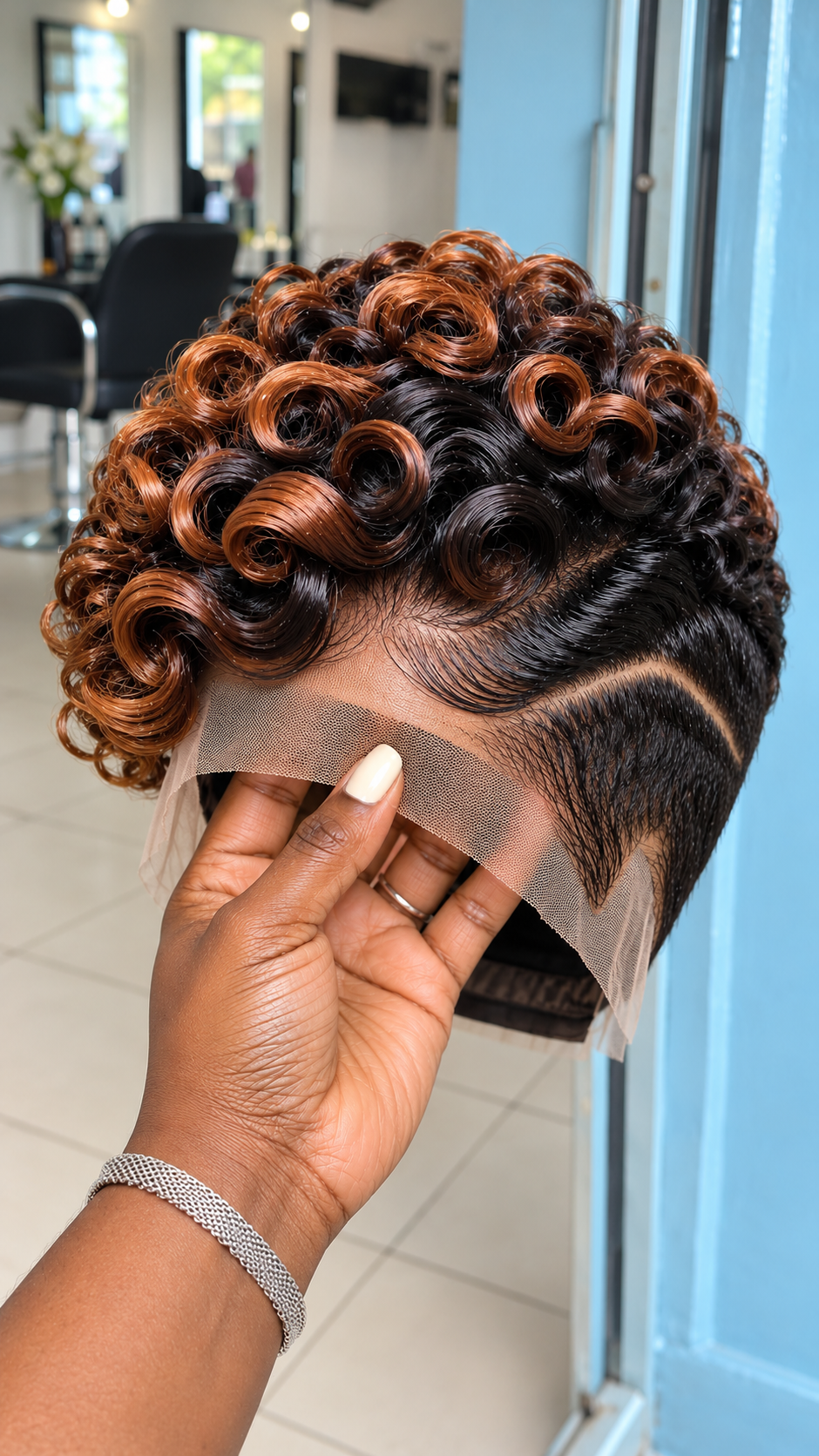
Copper curls tumble across a dark brown foundation in this expressive short hairstyle. Their rounded, open shapes give the crown fullness, while the closely arranged side brings the hair back toward the head. A broad wave follows the temple above a curved exposed channel, creating an elegant contrast between generous curls and a compact lower section.
The color is particularly effective because it follows individual curls. Some sections glow copper from their outer curve to their ends, while neighboring curls remain deep brown. That alternating placement makes the pattern easier to appreciate and gives the top depth. The hairstyle feels rich and decorative without needing long hair around the shoulders.
The key to recreating this look is preserving the contrast between the curled top and closely styled side. Too much fullness at the temple could hide its distinctive shape. Equally, making every curl the same bright shade would lose the darker intervals that give the copper its impact.
Rounded Curls With a Generous Front
The curls across the top have open centers and broad, ribbonlike surfaces. They overlap without forming a completely uniform pattern, with larger curves near the front and smaller curls around the outer edges. This variation gives the hairstyle movement while maintaining a rounded silhouette.
The front carries noticeable fullness and extends farther than the close side. When discussing a recreation, ask for an arrangement that allows the curls to sit above the forehead without becoming a long fringe. A fitting photograph will help establish where that front section should fall on you.
A stylist should consider the finished curl size before cutting. Hair that is shortened too early may not have enough length to form these broader curves. Ask to approve a sample section first, especially if the base wig is being cut from a longer style.
Copper Placement That Keeps the Dark Base Visible
The copper is distributed through selected curls rather than covering the whole unit. Deep brown remains prominent beneath the lighter sections and across much of the visible side. This creates a clear connection between the curled crown and the darker temple.
For a custom order, describe the color as copper accents through a dark brown base. Specify whether you want the brighter pieces concentrated near the front, spread across the crown, or placed as closely as possible to the reference. These choices affect how the hairstyle looks from different angles.
Request color footage in daylight before approving the result. Warm indoor lighting can make copper appear more golden, while cool lighting may make the brown look almost black. A neutral background and an unfiltered video will help you judge the balance between the two shades.
The Side Wave Gives the Style Its Shape
A broad, closely laid wave travels across the visible temple. Beneath it, a curved channel separates the upper section from shorter hair below. The lower hair narrows toward a pointed temple section, giving the side a deliberate outline.
This detail contributes more than decoration. It creates a quieter area beside the fuller crown and keeps the hairstyle from appearing equally bulky everywhere. The curve also echoes the movement of the curls above, connecting two very different lengths.
Ask the stylist to preserve the width and direction of that side wave. Replacing it with extra ringlets or several additional lines would produce a different design. If you want changes, agree on them before any hair is removed from the temple.
Finding the Right Length and Density
The image shows a short finished silhouette, but it does not reveal an exact strand length. Curled hair occupies space differently from straight hair, so a length label alone will not tell you whether a unit can achieve this shape.
Ask for enough usable length across the top to form broad curls, with less bulk around the lower sides. The maker should explain how the hair will be distributed and whether the unit is already cut for this arrangement. An evenly dense base may need substantial shaping.
A density percentage also cannot be confirmed from the photograph. Instead of choosing the highest number available, discuss the appearance you want when the wig is fitted. The crown should feel full, while the side remains close enough for its wave and curved division to stay visible.
Get The Details On This Wig
Look for a wig studio, beauty supplier, or custom maker that can show short curly units with detailed side styling. Ask to see fitted examples alongside in-hand photographs. Both views are useful, but a fitted view makes the proportions easier to assess.
You can contact a business by phone, direct message, or WhatsApp and send this photograph as a reference. Explain that the copper curl placement and close side wave are your priorities. Ask whether the business can supply the complete style or only a suitable base unit.
If purchasing a base separately, have your chosen stylist approve it first. The fiber, lace area, available length, and hair distribution need to support the intended cut. Buying an unsuitable unit can leave little room to reproduce the exposed side detail.
The photograph does not identify a verified seller. Request current footage of the actual unit being offered, a written description, and a complete quote. Confirm production time, delivery arrangements, and the terms for custom work before making payment.
Understanding the Lace and Cap
Untrimmed tan lace is visible across the front and around the side. Part of the darker interior can also be seen beneath the hair. The lace needs to be assessed during fitting so the finished hairline sits in the intended position.
The image does not establish the lace grade or complete cap construction. Ask the seller for the lace measurements and clear interior photographs. Check that the available lace area extends far enough to support the exposed temple arrangement.
A lace frontal may accommodate this design when its dimensions are suitable. A smaller closure gives a more limited styling area and may require an adapted side arrangement. Discuss these options with the maker rather than choosing a construction name without considering the actual placement of the hair.
Planning a Glueless Fit or Adhesive Installation
A glueless version may be possible with an appropriate cap and secure fit, but that cannot be confirmed from the photograph. Provide your head measurements and explain how often you intend to remove the wig. Ask how the front and side edges are designed to remain in position.
The close temple makes fit especially noticeable. A cap that shifts can move the side wave away from its intended location, while excessive tension may pull the lace unevenly. A fitting appointment gives the stylist an opportunity to assess those issues before trimming.
For adhesive wear, book an installer experienced with short lace styles and exposed sides. Request instructions for the specific adhesive and removal product used. Support the lace during removal and follow the product directions rather than pulling the unit away from the hairline.
Choosing a Fiber That Matches Your Routine
The photograph cannot confirm whether the hair is human hair, synthetic fiber, or a blend. Shine and curl shape are not reliable proof of material. Have the seller identify the fiber in writing and supply its care instructions.
A preset synthetic unit may suit someone who wants to keep a consistent curl arrangement. Ask what happens after washing, whether the curls need resetting, and which products are compatible. Heat-friendly synthetic fiber still has a specific temperature limit.
A human-hair version can offer different styling possibilities, but maintaining these broad curls may require setting work after washing. Consider your available time and access to a stylist. The most practical choice is the one you can maintain comfortably.
Where to Have the Hairstyle Created
A specialist in short wigs is a useful starting point because this look combines cutting, color placement, curling, and close side work. Ask whether one person handles the complete process or whether the salon divides those services between specialists.
During the consultation, show the curls and temple separately. Explain that the upper section should remain rounded and full while the side lies close. Ask to see the shape before the final products are applied so adjustments can be made without disturbing a completed set.
For a natural-hair interpretation, consult a short-hair stylist and, if needed, a barber for the side detail. Your existing length, growth direction, and previous color services will affect the approach. Agree on what can reasonably be achieved in the first appointment.
Budgeting for the Complete Result
The finished cost depends on the base unit and the services needed to create the design. Custom copper placement, temple work, lace preparation, and a professional curl set may be charged separately. Ask for an itemized quote to understand the complete purchase.
The following USD amounts are illustrative budgeting examples, not verified prices for the photographed wig or current offers from a supplier. Actual prices vary by location, material, construction, and included services.
| Tier | Illustrative Price Range | Potential Scope |
|---|---|---|
| Budget | $30–$80 | Ready-made synthetic short curls with a simpler copper and brown color arrangement. |
| Value | $80–$170 | More detailed ready-styled unit, potentially with lace and limited fitting adjustments. |
| Mid | $170–$330 | Selected fiber and construction options with some custom cutting, color, or curl work. |
| Premium | $330–$600 | More extensive customization of fit, copper placement, hairline, and side styling. |
| Salon-Grade | $600–$950+ | Bespoke creation and specialist finishing with an agreed consultation or fitting package. |
Include delivery, installation, and later maintenance in your spending plan. Compare what each quote includes rather than assuming that a higher unit price covers every appointment. Ask whether any fitting corrections are included after delivery.
Keeping the Curls Arranged Between Wears
Handle the unit from the cap and support its weight from underneath. Avoid lifting it by the front curls or pulling on the exposed lace. Those areas contribute strongly to the appearance and deserve gentle handling.
Before wearing it, check for curls that have become flattened or caught beneath neighboring sections. Guide them back along their existing direction with your fingertips. Brushing through the full crown can separate the broad curl surfaces and change the arrangement.
Add products only when needed and only if they suit the confirmed fiber. Heavy oil or repeated layers of styling product can reduce the distinction between the copper ribbons and darker curls. If the hair feels coated, cleaning may be more useful than another application.
A Washing and Maintenance Schedule
Check the unit weekly for residue, odor, and buildup around the cap. Washing frequency depends on wear, perspiration, and product use. Regular wear may require cleaning after a couple of weeks, while occasional wear can allow a longer interval. Follow the maker’s directions for the actual unit.
Before the first wash, photograph the curl placement and side wave from several angles. These references will help if the style needs rebuilding. Ask whether the seller expects the curl pattern to remain after washing or recommends a professional reset.
Use the approved cleansing method and avoid rubbing the curls together. Follow the recommended drying process without placing pressure on the crown. Do not introduce heated tools until the fiber and its permitted temperature have been established.
Book a touch-up when the side wave loses its shape or the crown becomes difficult to arrange. A stylist can assess whether the unit needs cleaning, a new set, or a small adjustment. Avoid repeatedly trimming the short side at home, since removing hair changes the existing outline.
Daily Wear and Storage
This hairstyle keeps the lower sections away from shoulders and collars, while the fuller top provides a dressed appearance. Copper pairs attractively with cream, chocolate brown, olive, and muted gold. Small earrings leave the temple detail easy to appreciate.
The main practical tradeoff is that broad curls can be compressed by tight hats, crowded storage, or firm headrests. Leave space around the crown when the wig is off. A suitable stand should support the cap without stretching it or forcing the lace out of shape.
For travel, use a structured container with enough room for the front and crown. Once unpacked, allow time to inspect the curls and reposition any displaced sections. With a comfortable fit and a manageable care routine, the combination of copper ribbons and a close side wave can remain the focal point of a distinctive short hairstyle.
Search Terms
copper ribbon curl wig · dark brown pixie with copper curls · short curly wig with side wave · copper highlighted lace pixie · rounded curls with curved temple part · brown and copper short ringlets · curly pixie with close temple · short lace wig with sculpted side