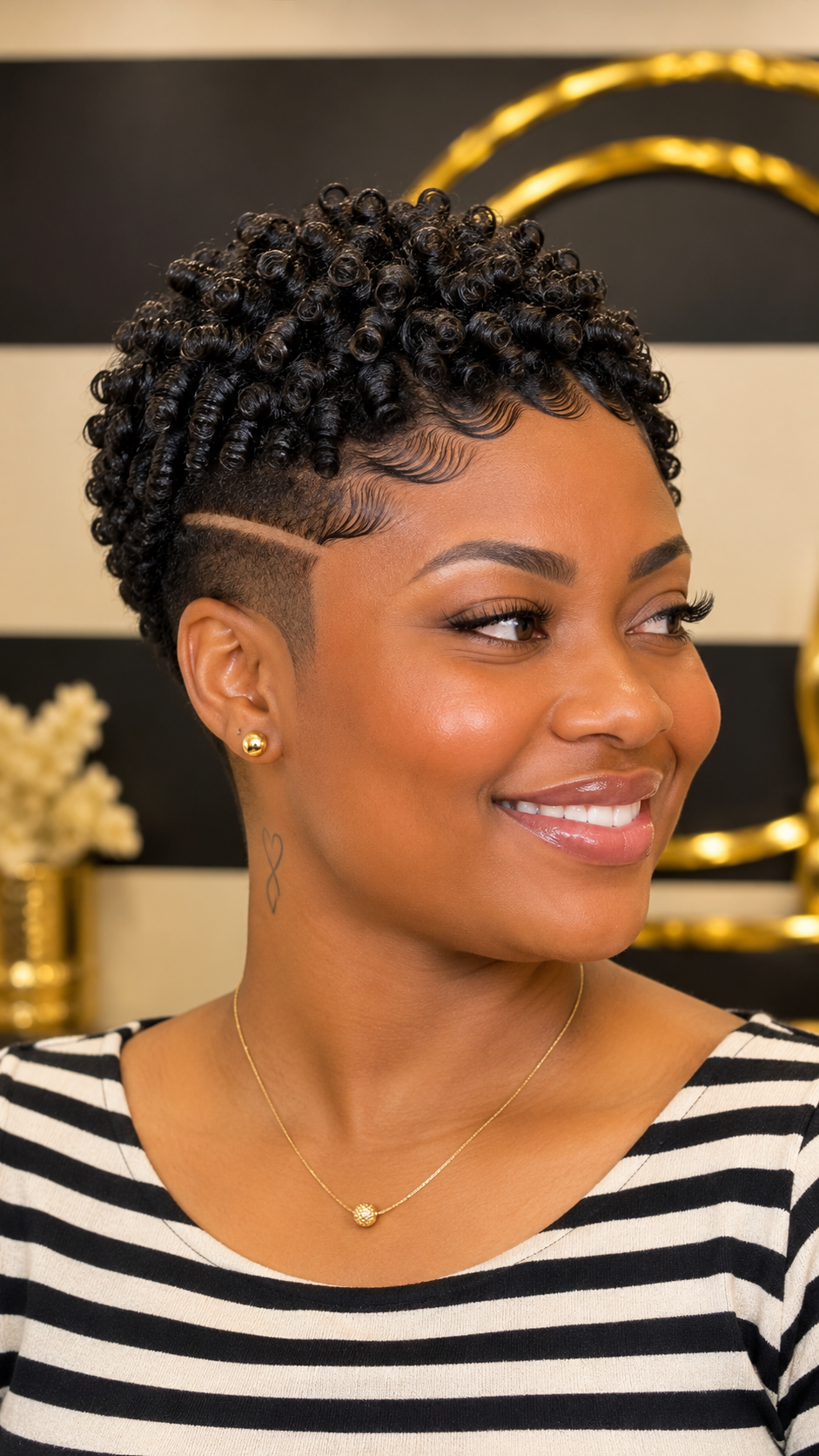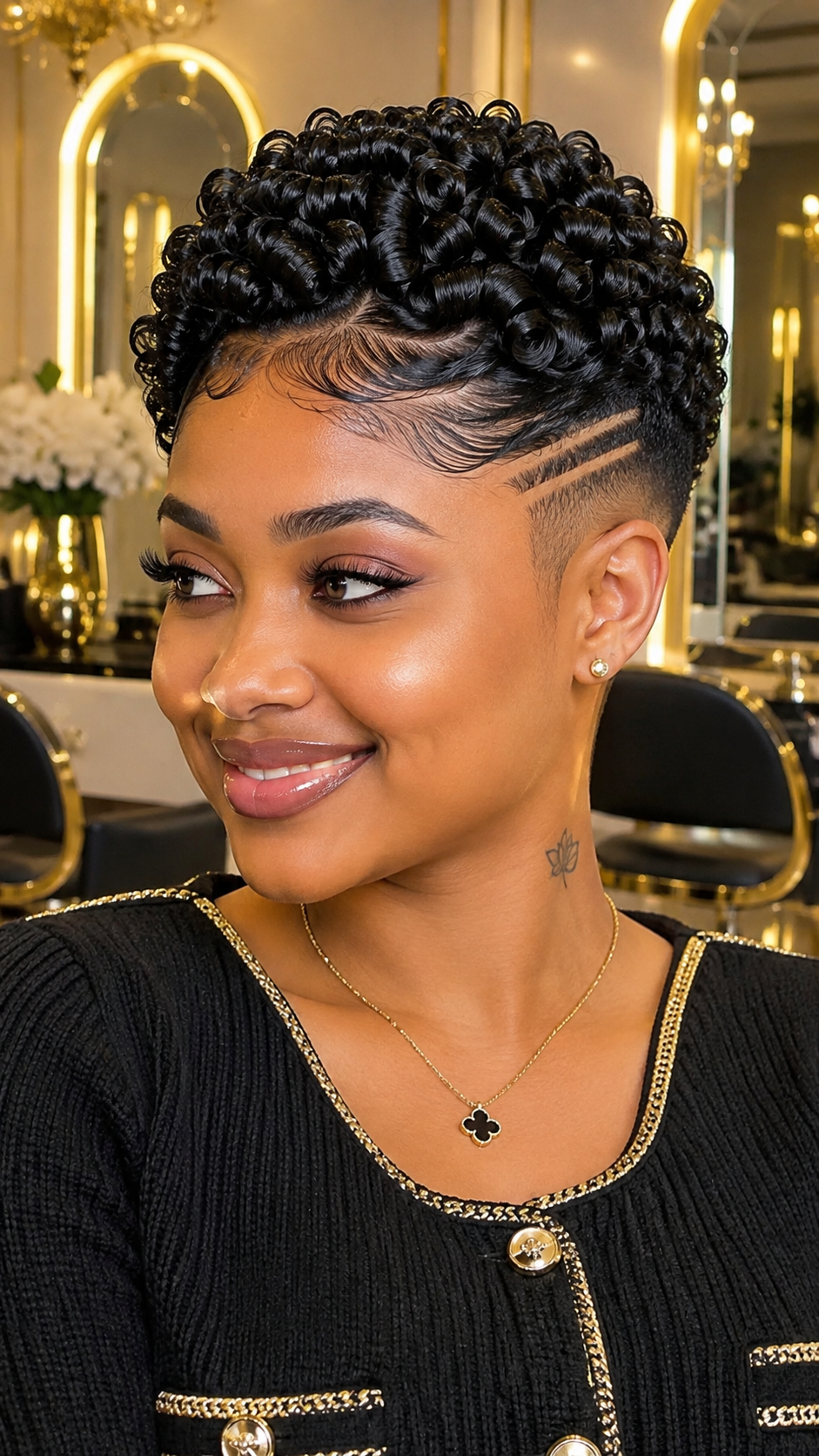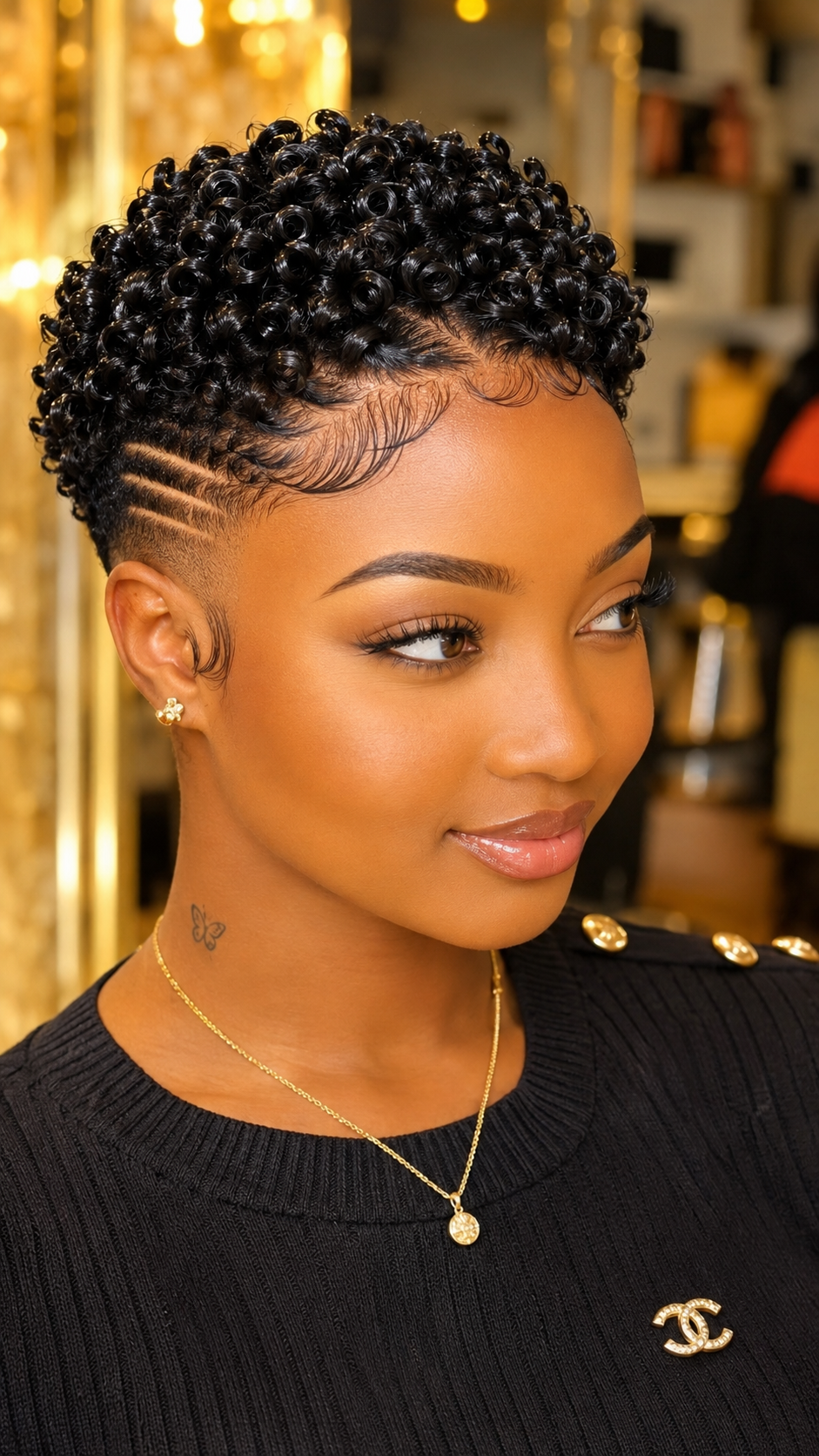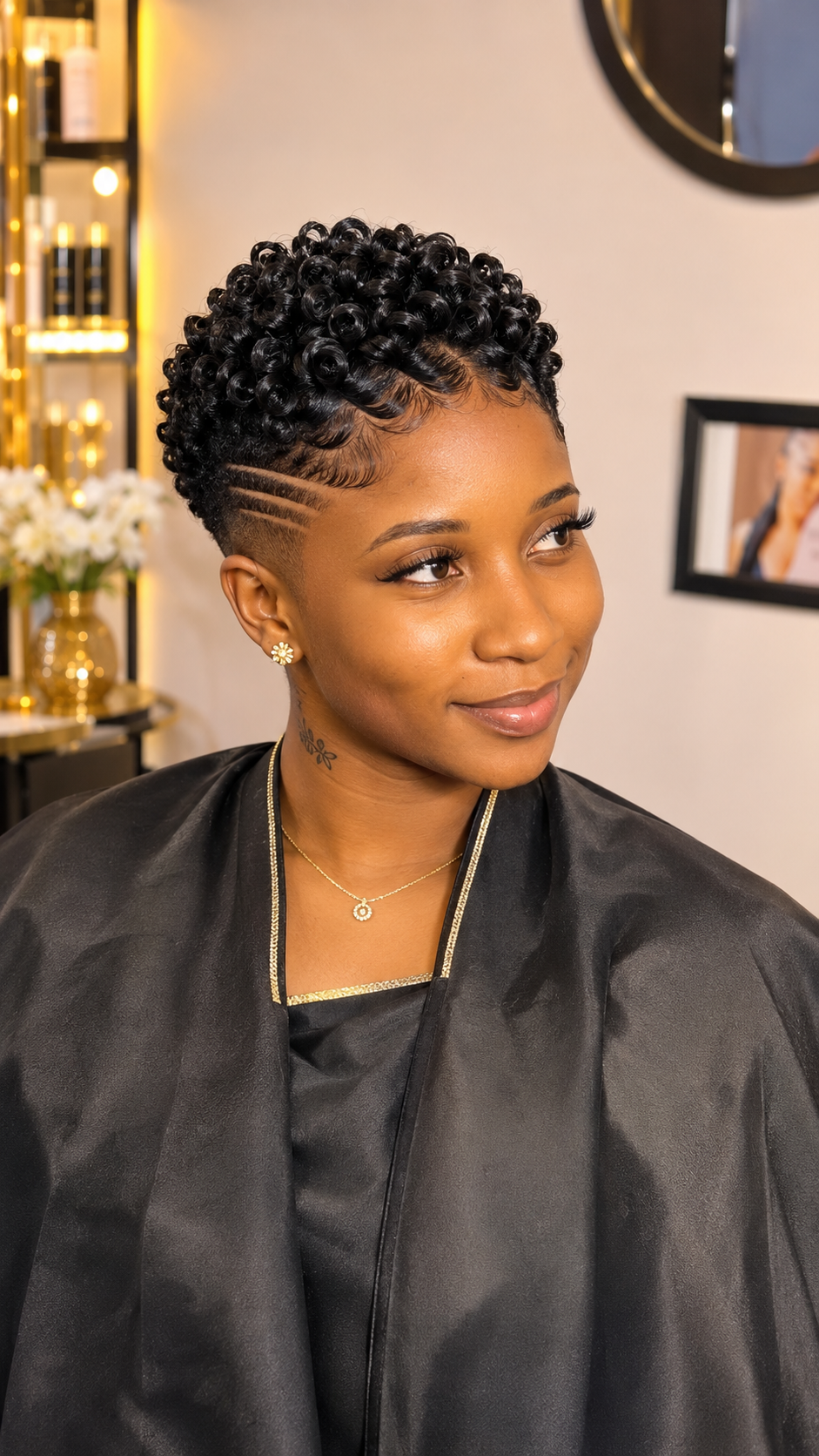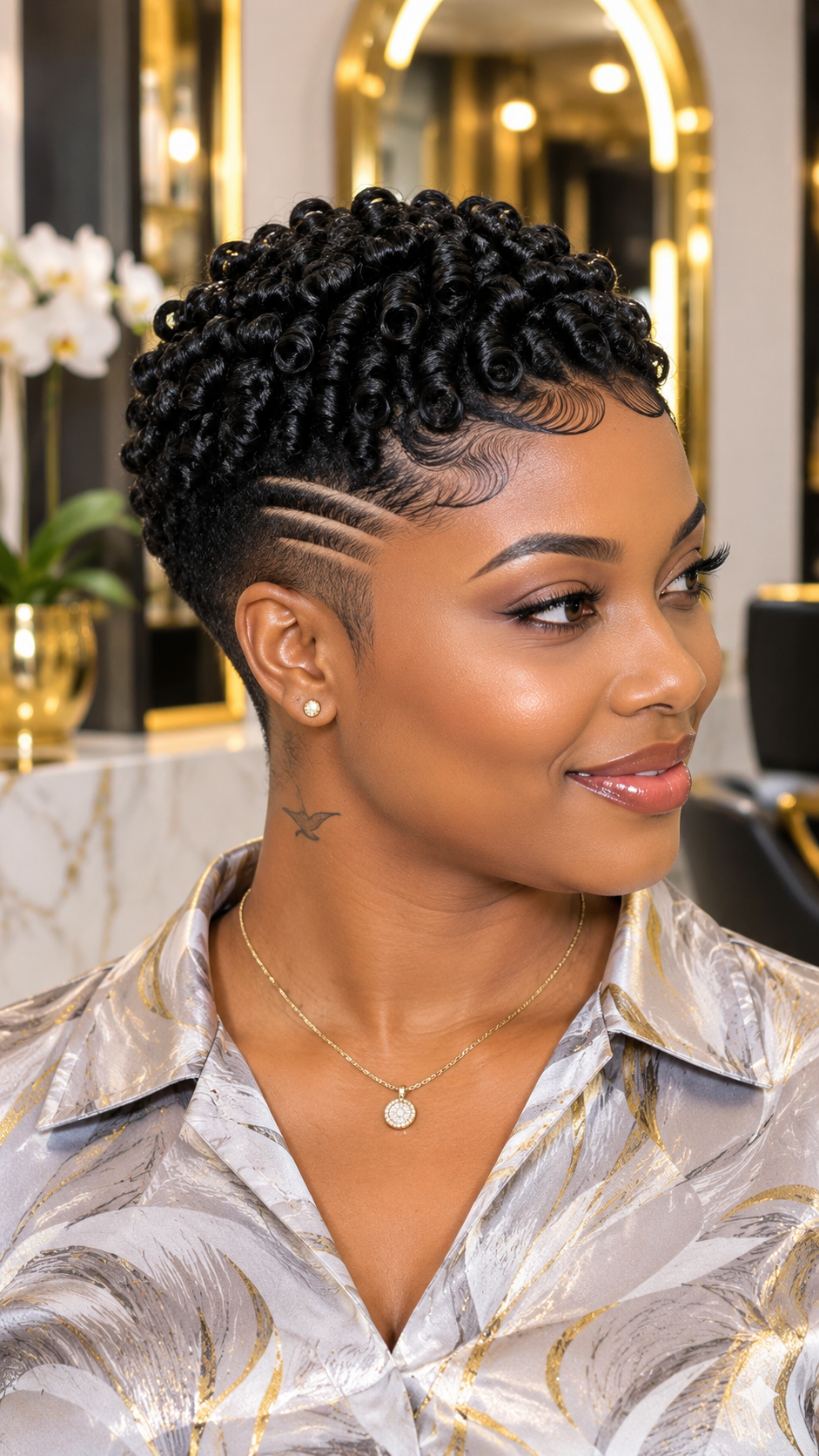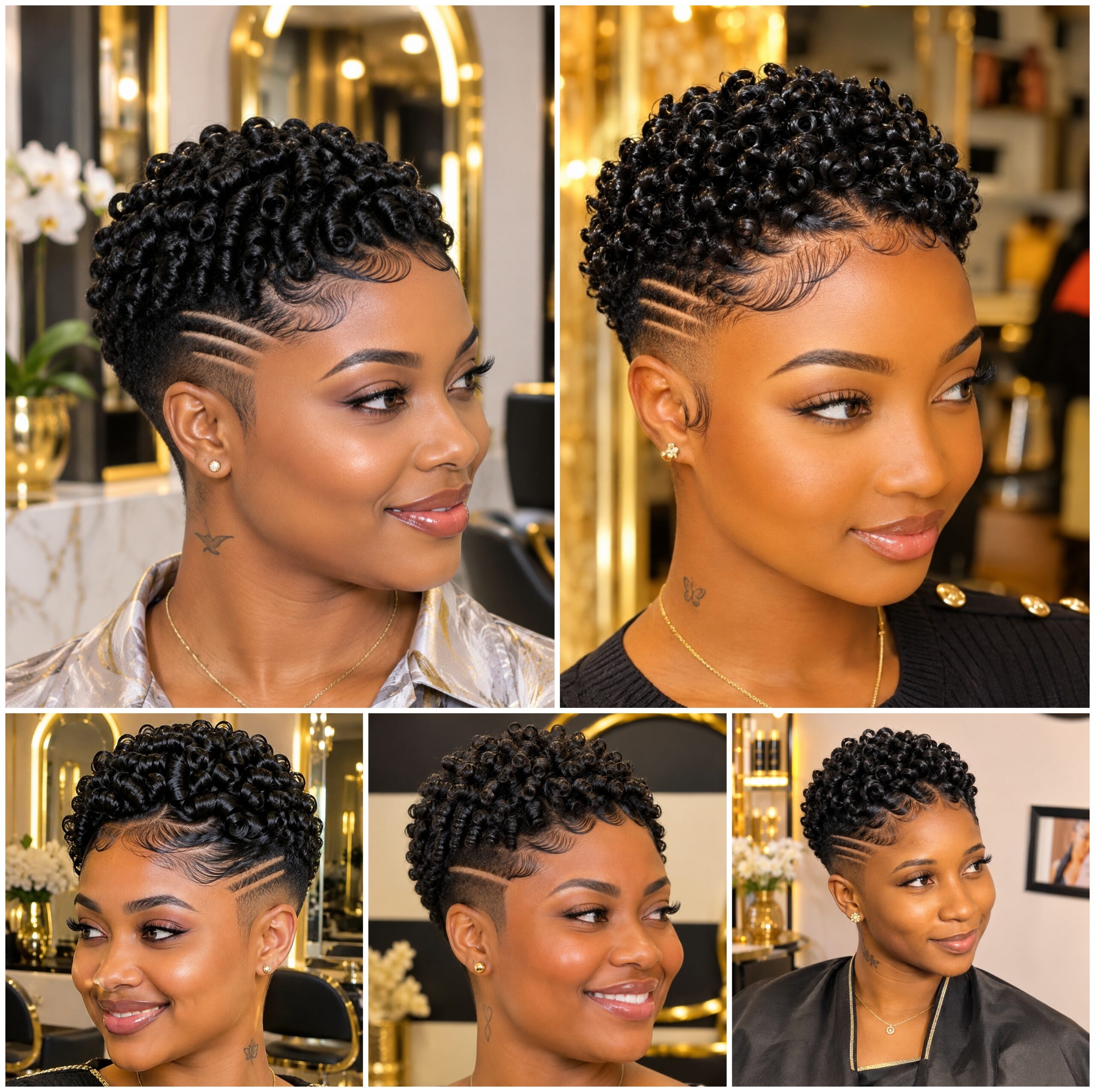
Short coily fades bring together the beauty of natural-looking curls and the precision of a carefully shaped haircut. With a rounded crown of compact coils, closely tapered sides, and distinctive split temple stripes, this hairstyle offers a striking combination of softness and sharp detailing. It is particularly appealing to women who enjoy short hair with visible texture, carefully arranged edges, and an expressive barber-inspired finish.
The main attraction is the contrast between the fuller coils on top and the shorter hair around the temples and ears. The crown maintains a rounded shape, while the faded sides create a compact silhouette that follows the natural contours of the head. Decorative temple stripes introduce another level of detail, giving an otherwise simple pixie cut a more individual appearance.
This hairstyle can be recreated on suitable natural hair or incorporated into a professionally constructed wig. The best approach depends on the desired curl pattern, preferred color, installation requirements, and maintenance routine.
The Beauty of a Short Coily Crown
The crown is the defining element of this hairstyle. Small, closely arranged coils create fullness without requiring long hair or heavy extensions. Their rounded formations introduce movement and dimension across the top of the head.
Unlike loose curly hairstyles, compact coils remain relatively close to the scalp. This allows the crown to appear full while maintaining short pixie proportions.
For a glossy finish, the individual curls should remain recognizable rather than being brushed into a fluffy surface. A stylist can help determine whether finger coiling, a suitable curl-setting technique, or another method will achieve the desired appearance.
The finished result should preserve the natural curve of the crown while maintaining enough separation between the coils to display their shapes.
Understanding the Faded Sides
The fade provides an important contrast to the curly upper section. Hair around the temples and ears becomes progressively shorter, creating a gradual transition between the crown and lower sides.
A low fade can preserve more coverage around the head, while a higher fade creates stronger contrast. For this particular hairstyle, the fade should remain proportional to the rounded coil crown.
The goal is not simply to remove length. The barber must create a gradual transition that complements the shape of the head and provides a suitable foundation for the temple detailing.
For women who prefer a softer appearance, a subtle taper may be more appropriate than a very high fade.
Split Temple Stripes Create the Signature Detail
The most distinctive characteristic is the split stripe design positioned around the temple area. Instead of a single continuous decorative line, the design uses separated sections or closely arranged line segments to create a more intricate effect.
The exact shape can vary according to the chosen reference and the available hair length. Some designs use parallel stripes with small interruptions, while others incorporate angled segments that follow the curve of the temple.
The stripes must remain clearly visible against the shorter surrounding hair. If the fade is too long, the pattern may become difficult to distinguish.
A professional barber experienced in precision hair designs is particularly important for this detail. Poorly positioned lines can alter the balance of the hairstyle or create uneven results.
Balancing the Coils and Temple Design
The hairstyle works because its different elements complement one another. The coils bring roundness and softness, while the fade and split stripes introduce structure.
Maintaining this balance requires attention to crown height, side length, and the placement of the decorative lines.
An excessively tall crown may overpower the compact sides. Similarly, a large temple design may distract from the curl pattern.
A successful interpretation keeps the curls full enough to create dimension while allowing the stripes to remain a distinctive finishing detail.
Choosing the Right Coil Pattern
Not all curls create the same appearance. Some hair forms naturally compact spirals, while other textures require additional shaping to produce clearly recognizable coils.
Finger coils are one option for creating small, rounded curls on suitable hair. The stylist works with individual sections, encouraging them to form consistent spiral shapes.
The diameter of each coil affects the final silhouette. Smaller coils create a denser crown, while larger curls produce a more open appearance.
When requesting this hairstyle, explain whether you prefer tightly formed glossy coils or softer natural curls. Showing a reference photograph is the most reliable way to communicate the desired result.
Black, Brown, and Other Color Choices
Jet black is a popular choice for short coily hairstyles because it emphasizes the contrast between the curly crown and closely cropped sides.
Natural black and deep chocolate brown also provide attractive options for women who prefer darker shades.
Warm copper, burgundy, or golden brown can introduce additional personality to the curls. However, the chosen color should not make the temple design difficult to see.
When working with a custom wig, the color can be selected before styling. For natural hair, professional consultation is important before chemical coloring, particularly if the hair has already been processed.
Where To Get This Hairstyle Done
A salon specializing in natural curly hair, short pixie cuts, and precision fading is a suitable place to recreate this look.
For the temple stripes, an experienced barber may provide the most accurate results. Some salons offer both hairstyling and barbering services, allowing the entire hairstyle to be completed in one appointment.
Before booking, share a reference photograph and explain the desired coil size, fade height, and split stripe arrangement.
Appointments can often be arranged through telephone calls, WhatsApp, Facebook, Instagram, or online salon booking systems.
Ask whether washing, curl setting, cutting, and decorative detailing are included in the quoted service price.
Natural Hair or a Custom Pixie Wig?
Both approaches can produce attractive short coily styles, but they offer different advantages.
Natural hair allows a barber to create a true fade and precision-cut stripes directly into the shorter sections. The stylist can then shape the crown using techniques appropriate for the individual’s hair texture.
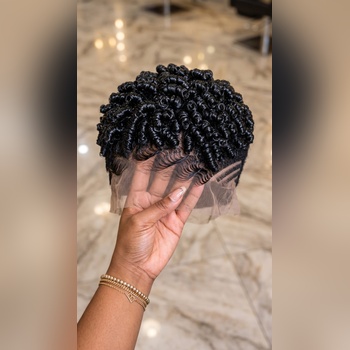
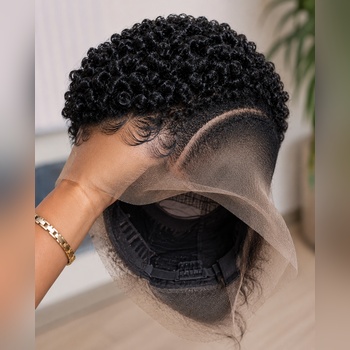
A custom wig offers an alternative for women who do not want to cut their natural hair. The wig maker can arrange short coils and create a faded appearance through specialized construction and styling.
However, producing convincing stripe details on a wig requires planning. The foundation must support the design without exposing unwanted construction elements.
Anyone commissioning a wig should confirm that the maker has experience with short barber-inspired hairstyles.
Where To Buy Similar Pixie Wigs
Comparable wigs may be available through specialist wig boutiques, independent hair vendors, beauty supply shops, and online retailers.
Useful search descriptions include short coily fade wig, black finger coil pixie, tapered curly pixie wig, and short curly wig with temple stripes.
Ready-made options may provide a similar crown shape, but the exact split stripe pattern can be harder to find.
Custom production may be preferable when the decorative lines are essential to the desired appearance.
Before purchasing, request photographs showing the front, both sides, back, and interior construction. This helps establish whether the advertised style matches your expectations.
How To Order This Style
Start by contacting a reputable wig maker or salon and providing a clear reference image.
Explain that the hairstyle requires a compact coil crown, closely faded sides, and carefully positioned split temple stripes.
Specify the desired color and whether the curls should have a glossy or more natural finish.
For wigs, discuss cap size, hair density, construction, and the preferred installation method.
Ask whether the temple stripes will be created through hair placement, trimming, or another professional technique.
Before payment, confirm the total cost, delivery arrangements, estimated production requirements, and return or alteration policies.
Choosing the Right Wig Cap
A comfortable and correctly sized cap is important for short pixie wigs because the hairline and sides remain highly visible.
Some wigs use lace-front constructions, while others incorporate closures or specialized foundations. The appropriate option depends on the styling requirements.
A frontal may offer greater flexibility around the front hairline, while a closure generally provides a smaller lace area.
Glueless units can be convenient when designed with suitable securing features and correctly fitted to the wearer.
However, not every short curly wig is automatically suitable for adhesive-free installation.
The supplier should confirm the actual construction rather than relying on assumptions about lace quality or cap design.
Choosing the Right Crown Density
The upper section needs sufficient hair to create compact coils without becoming excessively bulky.
Too little density can leave gaps between the curls. Excessive density may hide their individual formations and make the crown appear unnecessarily large.
The sides require a different balance because they should remain closely shaped.
For custom production, discuss how hair density will vary between the crown and faded sections.
Photographs of completed units are often more informative than numerical density descriptions alone.
Choosing the Correct Hair Length
The visible length of coiled hair differs from its stretched length. Short strands can appear even shorter once formed into tight spirals.
For this hairstyle, the finished crown height matters more than the original strand measurement alone.
The coils should create noticeable fullness while preserving the compact pixie silhouette.
If the crown is too long, the hairstyle may resemble a curly mohawk or another high-volume cut. If it is too short, the coils may become difficult to distinguish.
Ask the stylist to recommend a length that suits the desired curl size and overall shape.
Illustrative Price Ranges for Coily Fade Wigs
The cost of a comparable wig depends on the material, construction, curl-setting work, and complexity of the temple design. The following prices are illustrative US dollar budgeting estimates, not verified quotations.
| Wig Tier | Estimated Price | Typical Options |
|---|---|---|
| Budget | $35–$100 | Basic synthetic curly pixies with simplified tapered styling. |
| Value | $90–$220 | Higher-grade synthetic wigs with compact coils and shaped sides. |
| Mid | $180–$420 | Selected human-hair or premium alternative wigs with professional curl setting. |
| Premium | $380–$850 | Custom coily crowns, detailed temple designs, and tailored construction. |
| Salon-Grade | $750–$1,450+ | Specialist custom wigs with individual sizing, detailed hair placement, and professional finishing. |
Actual prices vary by location, supplier, and included services. Hair coloring, installation, shipping, and future maintenance may involve additional charges.
Preparing Natural Hair for the Cut
Before cutting, the stylist should examine the condition of the scalp, hairline, and existing hair length.
The hair may need cleansing and gentle detangling before the crown is shaped.
Discuss the desired fade height and stripe placement before any significant length is removed.
If the hairline is delicate or the scalp is sensitive, the barber should adjust the technique accordingly.
Creating the temple stripes should not involve unnecessary pressure or repeated cutting over irritated skin.
A thorough consultation helps establish realistic expectations and reduces the likelihood of removing more hair than intended.
Maintaining the Finger Coils
Short finger coils require gentle care to preserve their spiral shapes.
For natural hair, suitable moisturizing products and curl-setting techniques may help maintain the definition between appointments.
Aggressive brushing can separate the coils and create a fluffier appearance.
Instead, follow a routine appropriate for your hair texture and the products used during styling.
A stylist can recommend how frequently the curls should be refreshed.
For wigs, the care method depends on whether the hair is human, synthetic, or blended.
Human Hair and Synthetic Wig Maintenance
Human-hair wigs may offer flexibility for washing and professional restyling, but carefully arranged coils can require resetting after cleaning.
Some synthetic wigs retain their manufactured curl pattern when washed according to the supplier’s instructions.
Heat compatibility varies between fibers. Heated styling tools should only be used when the manufacturer confirms they are suitable.
For either material, avoid heavy product buildup that could weigh down the crown.
Regular inspection of the cap, hairline, and securing components also helps identify maintenance needs.
Keeping the Fade Looking Fresh
On natural hair, a fade gradually loses its original shape as the shorter sections grow.
Periodic barber appointments can help restore the transition between the crown and sides.
The appropriate schedule depends on individual hair growth and how sharply the wearer prefers the fade to appear.
For a wig, avoid attempting to recreate the fade with ordinary clippers unless a qualified specialist has confirmed that the construction allows it.
Cutting into a wig foundation can cause irreversible damage.
Refreshing the Split Temple Stripes
Decorative stripes may become less noticeable as natural hair grows around them.
A barber can refresh the lines while preserving their original direction and spacing.
For split stripe designs, accuracy is particularly important because the separated sections contribute to the overall pattern.
Repeatedly widening the lines may change their appearance or reduce the amount of hair between them.
For wigs, ask a specialist whether the design can be restored through careful styling rather than additional cutting.
Nighttime Protection
For natural hair, a satin bonnet or suitable scarf may help reduce friction while sleeping.
Avoid compressing the crown excessively because this can flatten the coils.
For wigs, a suitable stand can help preserve their rounded shape when they are not being worn.
Store the unit away from unnecessary heat, pressure, and friction.
After washing, allow it to dry according to the manufacturer’s instructions before putting it into storage.
Fashion and Jewelry Pairings
Short coily fades coordinate beautifully with casual clothing, office outfits, and elegant occasion wear.
The compact silhouette keeps the ears and neckline visible, making stud earrings, small hoops, and delicate necklaces attractive choices.
Black hairstyles pair easily with cream, white, beige, olive green, burgundy, and colorful African print fabrics.
Women choosing copper or blonde coils may prefer clothing that complements those warmer shades.
Because the temple stripes already introduce decorative detail, elaborate hair accessories are generally unnecessary.
Advantages of This Short Hairstyle
The hairstyle combines a compact silhouette with attractive crown volume and distinctive side detailing.
Its short length can be convenient for women who dislike hair falling around their shoulders.
The coils provide decorative texture, while the fade offers a closely shaped finish.
Split temple stripes introduce individuality without requiring an elaborate overall haircut.
A custom wig can also provide an alternative for women who want to experience the appearance without permanently cutting their natural hair.
Practical Considerations Before Choosing the Style
Short coily fades require maintenance to preserve their shape and decorative details.
Natural-hair versions need periodic barbering, while the coils may require regular refreshing.
Custom wigs can involve additional costs when precise temple patterns and specialized construction are requested.
The cap must fit correctly to maintain the intended position of the hairline and side design.
Women should consider their styling preferences, budget, scalp comfort, and maintenance routine before committing to the hairstyle.
A Distinctive Combination of Coils and Precision Artistry
This short hairstyle demonstrates how rounded coils and decorative barbering can work together beautifully. The full crown creates softness, while the closely faded sides establish a compact silhouette.
The split temple stripes introduce a memorable finishing detail, making the hairstyle recognizable without overwhelming the curl pattern.
For women seeking a similar result, the essential elements are the small coily crown, carefully blended fade, and precisely placed split temple stripes.
With professional styling, suitable maintenance, and thoughtful attention to proportions, this hairstyle offers an attractive combination of short-hair elegance, defined curls, and creative side detailing.
Search Terms
Short coily fade haircut · Black finger coil pixie hairstyle · Split temple stripes haircut · Short tapered coil wig · Coily crown with shaved side design · Women’s curly fade with temple lines · Short black pixie with split stripes · Finger coil fade hairstyle for women