
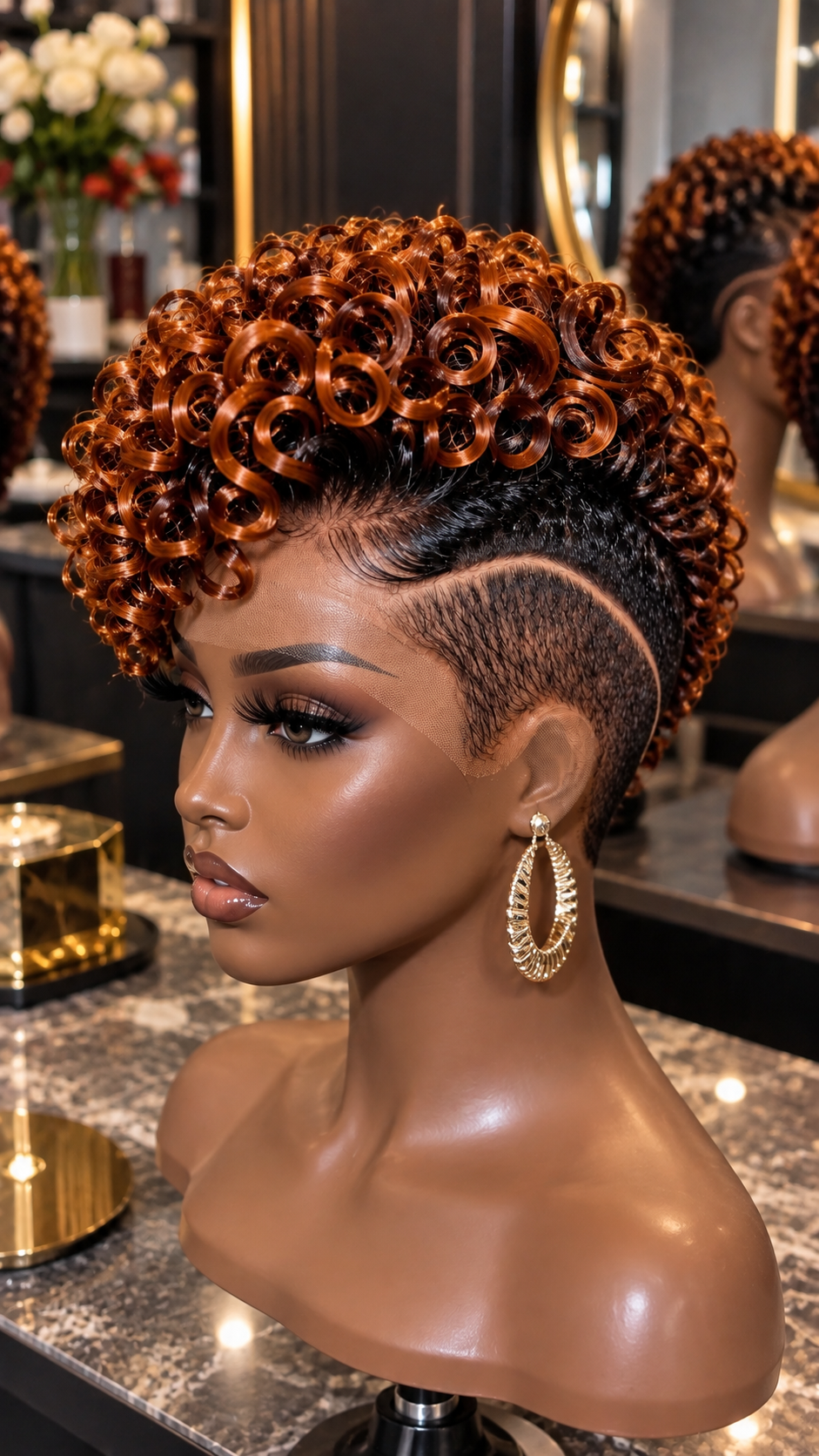
Some pixie wigs rely mainly on color, while others depend on the cut or curl pattern. This copper-and-black design works differently because its identity comes from the relationship between several highly visible elements. The crown carries a dense collection of glossy copper ringlets, the lower side stays dark and closely cropped, a sweeping curved line separates the two zones, and the front perimeter is shaped with dramatic black finger-wave detailing. Seen from the side, the wig has an architectural profile without becoming bulky. The copper curls create height and brightness above the darker foundation, while the exposed side gives the entire silhouette a lighter, more directional appearance.
The image is particularly useful for anyone shopping for a custom wig because it shows the piece already positioned on a dark-skinned mannequin head from a close side angle. The lace is still visible across the forehead and temple, so this is clearly a stage before final trimming and installation. That makes it possible to study details that are often hidden in finished promotional photographs: where the lace begins, how the side section is arranged, how the copper curls transition into black hair, and how much of the visual effect depends on precise placement.
This is therefore not a style that should be ordered by asking only for a “copper pixie wig.” A successful recreation requires attention to ringlet diameter, copper placement, black side coverage, the sweeping side line, finger-wave direction and the overall crown silhouette. Those details are what separate this piece from dozens of other copper pixie designs.
The Crown Uses True Ring Shapes Rather Than Loose Spirals
The first detail to examine is the curl construction. Across the crown, the hair has been formed into compact circular rings with clearly visible hollow centers. These curls sit close together, creating a dense surface without turning into one continuous mass. Some rings face almost directly toward the viewer, while others sit at an angle. That variation allows the copper color to catch the light from several directions.
There is also a noticeable difference between the larger curls near the upper front and the smaller pieces surrounding the sides and rear. This variation is useful because it keeps the crown visually active. A wig made entirely from identical rings could appear too repetitive, whereas this arrangement gives the impression of carefully placed individual sections.
When commissioning the style, show the wig maker a close crop of the crown and specify that you want structured circular ringlets rather than loose corkscrew curls. The distinction matters. Loose spirals hang downward and create length; these rings remain compact and build volume outward and upward.
Burnished Copper Becomes Brighter Against the Dark Foundation
The copper shade is especially striking because it is surrounded by black. The upper curls range visually from deep reddish copper in their shadowed interiors to brighter burnt-orange copper where the strands reflect the salon lighting. The darker hair underneath prevents the color from overwhelming the entire design.
This placement also gives buyers room to personalize the shade while preserving the same concept. Someone who prefers deeper colors could request auburn-copper rings over a natural-black foundation. A brighter interpretation could move toward cinnamon or fiery copper. The important point is maintaining enough difference between the crown and the lower section for the two-level color composition to remain visible.
Color photographs should ideally be reviewed under more than one lighting condition before a custom order is finalized. Warm salon lighting can intensify copper and red pigments. Ask the seller for a daylight photograph or neutral indoor photograph of the actual hair whenever color accuracy is important.
A Sweeping Side Division Frames the Ear Area
Instead of using several parallel lines as the main side decoration, this particular wig is dominated by one long curved separation. It begins near the temple and sweeps backward in an arc above the ear. The curve follows the contour of the head, visually dividing the darker upper side from the closely cropped section below.
This is an important distinction when sending the image to a stylist. The line is not simply a straight shaved stripe. Its curvature is part of the composition. It rises and falls with the side profile and helps direct attention toward the copper crown.
The dark cropped area inside and below the curve also needs sufficient density to remain visible. If it is made too sparse, the side may resemble exposed lace rather than an intentional undercut-inspired panel. A custom wig maker should therefore plan the side pattern as part of the construction rather than trying to add it after the crown has already been completed.
The Front Finger Waves Prevent the Side From Feeling Severe
Directly above the curved side division, black hair is arranged into a large sweeping wave. A second wave extends across the temple and toward the lace perimeter. These sections provide an important visual bridge between the compact side and the circular copper crown.
The wave pattern is wider and flatter than the curls above it. That contrast gives the viewer somewhere for the eye to rest before reaching the dense ringlets. It also emphasizes the transition from black to copper without requiring another color.
During installation, these perimeter waves should be treated carefully. Excessive repositioning can alter the intended direction. If you purchase the wig pre-styled, photograph the original arrangement before wearing it so a stylist can refer back to the placement during future maintenance.
The Silhouette Is Higher at the Crown Without Becoming Oversized
Viewed from the side, the crown forms a rounded dome that rises above the darker side section. The height comes from stacked curls rather than long hair. This makes the wig visually substantial while keeping the perimeter compact.
That proportion can be particularly useful for buyers who like statement curls but do not want hair extending onto the neck or shoulders. The eye is directed upward, and the exposed side keeps the overall shape from appearing excessively heavy.
Before ordering, decide whether you want to preserve this crown height. Reducing the number of curls can make the profile flatter, while adding too much density can turn the ring pattern into a much larger rounded shape. If the photograph represents your target, tell the maker that the goal is a concentrated dome of ringlets rather than maximum volume.
What Can Actually Be Confirmed About the Lace
The photograph clearly shows a lace perimeter extending beyond the front and temple. Hair has been placed through the lace around the hairline and wave area, and the excess material has not yet been completely removed. This gives the buyer a useful look at the pre-installation condition of the unit.
What the photograph does not establish is the commercial grade of that lace. It would therefore be inaccurate to label the wig HD lace solely from this image. A seller should confirm whether the unit uses Swiss lace, another lace type or a particular lace specification.
If you plan to order a similar piece, ask whether the lace comes uncut and whether customization is included. Also confirm whether the seller expects the customer or installer to trim the perimeter. Because the finger-wave work sits close to the lace edge, an inexperienced trim could interfere with the intended hairline design.
The Best Stylist for This Wig Needs More Than Basic Installation Skills
A stylist recreating this piece needs experience in several areas at once. Ringlet construction is one requirement, but so is sculpted perimeter work. The stylist must also understand how to position the dark side panel and curved separation so that they remain convincing when the wig is worn.
When searching locally, look for a custom pixie wig stylist, sculpted curl wig maker, finger-wave wig specialist or a salon that specifically displays custom pixie units in its portfolio. Examine side-profile photographs, not only front-facing client images.
For installation alone, choose someone comfortable working around pre-styled lace. Explain that you want the existing side design preserved. The installer should assess placement before cutting the lace because moving the unit forward or backward can change where the curved line sits relative to the ear.
Building an Accurate Custom Order Brief
A good order brief should describe the wig in sections. Begin with the crown: dense copper circular ringlets with visible openings and a rounded silhouette. Then describe the base: deep black around the side and lower perimeter. Next identify the side treatment: one prominent curved separation above the ear rather than a collection of random decorative lines. Finally, mention the large black finger waves at the front and temple.
Include photographs showing the profile whenever possible. If you only send a frontal reference, the maker may reproduce the copper curls while missing the most distinctive part of the side construction.
Your order brief should also include measurements. Follow the seller’s instructions for circumference, front-to-nape length, ear-to-ear distance and any other dimensions they require. Never assume that “average cap” will automatically fit comfortably.
Choosing Between Human Hair and Synthetic Fiber
The image itself does not reliably establish the exact fiber or hair material, so buyers should treat that as a separate purchasing decision. Human hair may offer more flexibility for professional recoloring and future reshaping, but a highly sculpted design can still require substantial maintenance to restore its original ring pattern.
A quality synthetic option may retain pre-formed curls well, depending on the fiber and manufacturing method. However, heat tolerance varies. If you intend to refresh the rings with styling tools, obtain the permitted temperature range directly from the manufacturer.
Rather than assuming that one material is automatically superior, consider how you plan to use the wig. Frequent restyling may favor one construction, while someone who wants to preserve the original ring pattern for occasional wear may prioritize shape retention.
Price Guide for Commissioning This Copper-and-Black Design
| Wig Category | Estimated Price Range | Services to Confirm |
|---|---|---|
| Premium Custom | $475–$900+ | Custom measurements, individualized copper work, ring-by-ring crown styling, sculpted side construction and perimeter wave detailing |
| Standard Custom | $290–$480 | Personalized cap sizing, copper crown coloring, curved side treatment and pre-styled front waves |
| Basic Human Hair | $170–$320 | Hair quality, density, lace specification, coloring cost and whether ring styling is included |
| Premium Synthetic | $95–$190 | Fiber quality, heat tolerance, curl retention, cap adjustment and side customization |
| Basic Synthetic | $50–$110 | Pre-set curl pattern, fiber appearance, cap construction and available color combinations |
These figures are general planning ranges and are not a quoted price for the exact wig shown. Location, hair source, fiber type, labor, cap construction and the amount of custom styling can all change the final cost.
Why Side Photographs Should Be Mandatory Before Shipping
For this wig, approving only a front photograph would be risky. Much of the workmanship is located around the temple and ear. Ask the seller to provide left and right profiles, a top view and a rear view before dispatching a custom order.
From the profile, check the relationship between the copper crown and black lower section. The curved division should remain clearly visible and should follow a deliberate path. Inspect the finger waves to make sure they have not been hidden beneath the curls.
The top photograph should reveal whether the rings are distributed across the crown or concentrated only in areas that happen to appear in promotional photos. A rear photograph will show how the copper sections conclude and whether the silhouette remains balanced from behind.
Maintaining the Copper Rings Without Destroying Their Arrangement
This crown should not be brushed as though it were loose curly hair. The individual rings are part of the styling pattern. Running a brush through them can turn carefully constructed circles into an entirely different curl formation.
For routine care, remove loose surface debris gently and address individual curls only when necessary. If the wig is human hair and needs substantial reshaping, a stylist familiar with molded curls can rebuild the rings section by section. For synthetic fiber, follow the manufacturer’s care instructions and never apply heat unless the fiber is confirmed as heat-compatible.
Store the wig upright on a suitable head form. Leave enough space above and around the crown so neighboring items do not compress the curls. A large breathable storage box can also work when the crown is properly supported.
Keeping Copper Hair Rich Between Salon Visits
Warm copper shades can be visually demanding because even subtle color changes are noticeable. Product residue can reduce the reflective quality of the curls, while inappropriate washing routines may alter both color appearance and curl placement.
Ask the wig maker for a care routine matched to the actual hair or fiber used. Human-hair units may need products formulated for color-treated hair, while synthetic units generally require products intended for synthetic fibers. Avoid transferring a care routine from one wig to another without confirming that the materials are comparable.
If the copper begins to look different over time, professional assessment is preferable to experimenting with random dyes or color-depositing products. The black-and-copper separation is central to this design, so accidental staining of the dark side or lace could be difficult to correct.
Planning the First Fitting Appointment
Bring or send the reference photograph when booking the fitting. Tell the installer that the side profile is a major part of the desired result. Before any permanent trimming or securing, check the wig while looking straight ahead and then from the side.
The crown should sit at the intended height, the copper curls should remain balanced over the top, and the curved dark side section should align naturally around the temple and ear. Small placement changes can have a surprisingly large effect on a design with this much side detail.
If adhesive is part of your preferred installation method, discuss skin compatibility and removal procedures with the professional performing the service. Buyers who prefer removable wear should ask the maker what adjustment and security options are built into the cap rather than assuming a particular attachment system.
How to Recognize a Poor Recreation Before Accepting It
A recreation can match the copper color and still miss the essence of this wig. One warning sign is a crown made from loose curls rather than recognizable rings. Another is an all-copper side that eliminates the dark contrast visible in the reference.
Also examine the side division. If it has become a straight horizontal stripe, the profile will look substantially different. The broad black wave above the line should remain visible instead of disappearing beneath the copper crown.
Finally, look at proportion. The curls should create height, but the wig should still read as a compact pixie silhouette. Excessive length at the rear or oversized curls around the perimeter can shift the design toward a completely different hairstyle.
Search Terms
Copper Ringlet Pixie Wig · Black Undercut Copper Wig · Burnt Copper Circular Curl Wig · Curved Side Line Pixie Wig · Copper Crown Finger Wave Wig · Black Side Copper Ringlet Wig · Sculpted Copper Lace Pixie · Copper Ring Curl Crown Wig
A Purchase Checklist Specific to This Design
Before paying a deposit, confirm the exact copper shade with the maker and decide how much black you want to remain visible. Verify that the crown will use circular ringlets rather than hanging spirals. Show the stylist where the curved side division should travel and point out the black finger-wave section above it.
Next, confirm the practical specifications separately: cap measurements, hair or fiber material, actual lace type, production schedule, shipping method, alteration policy and return conditions. If the wig is being custom colored and styled for your measurements, ask whether the order becomes final once production begins.
For an online purchase, request completion photographs before shipping. Do not approve the unit solely because the copper color looks attractive. Compare the crown, side profile, wave placement and overall silhouette with the original reference independently.
What Makes This Copper Pixie Worth Recreating
The strongest quality of this design is not any single detail. It is the deliberate contrast between circular and curved forms. The crown uses dozens of compact copper rings, while the side uses one sweeping separation and broad black waves. Bright copper occupies the highest portion of the hairstyle, while deep black visually anchors the perimeter. The result has drama without requiring long hair or an oversized silhouette.
For a buyer, that means accuracy depends on choosing a wig maker who understands construction as well as color. The stylist should be able to explain how the crown will be formed, how the black side will be preserved and how the curved line will be positioned. A consultation that discusses only “copper” and “pixie” is not detailed enough for this reference.
With the right stylist, careful measurements and clear reference photographs, this can become a distinctive custom wig for clients who want a compact style with highly visible craftsmanship. Preserve the burnished copper ringlets, dark sculpted side, sweeping curved separation, black finger waves and rounded crown height, and the finished piece will retain the visual character that makes this particular wig stand apart.