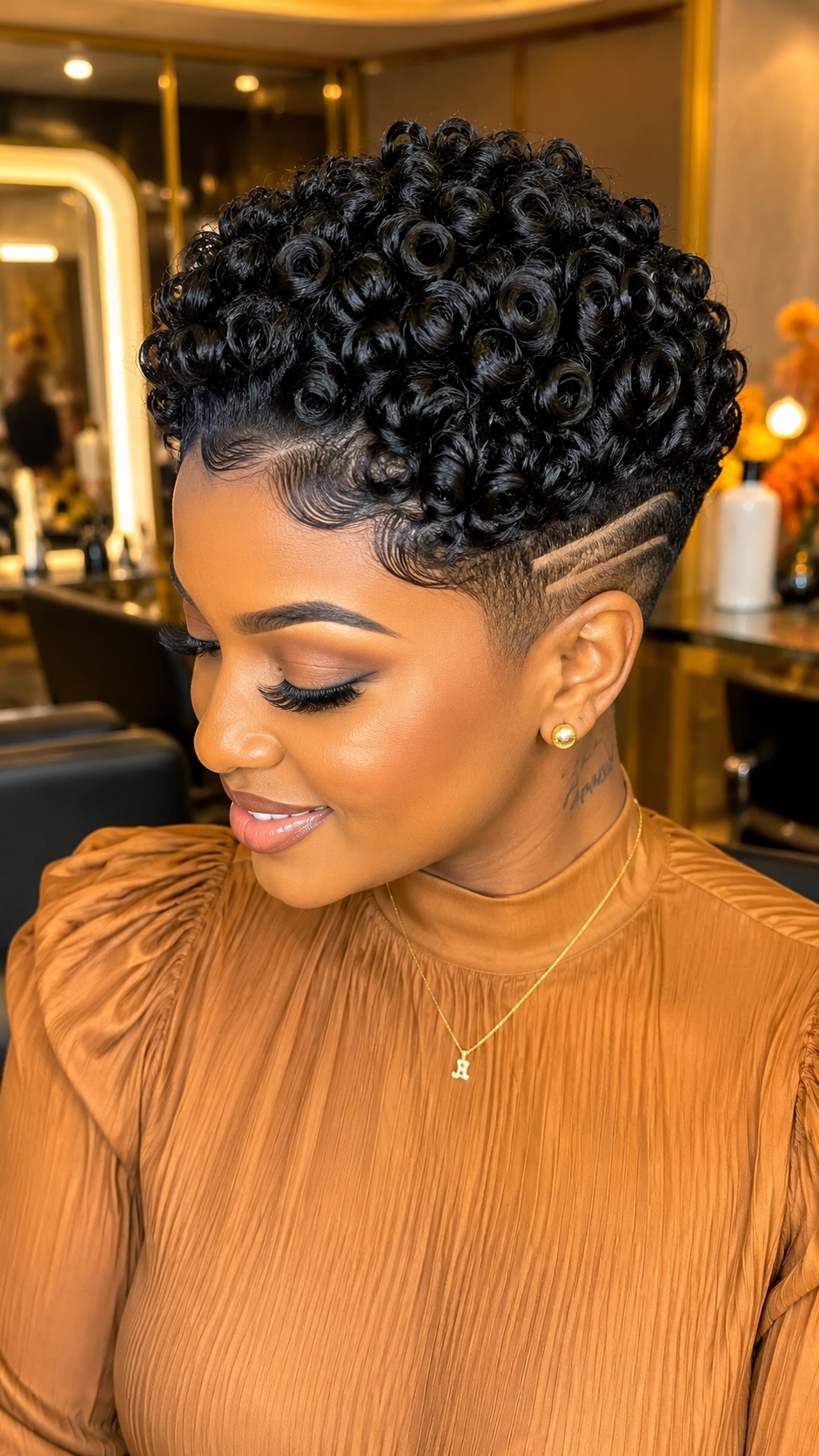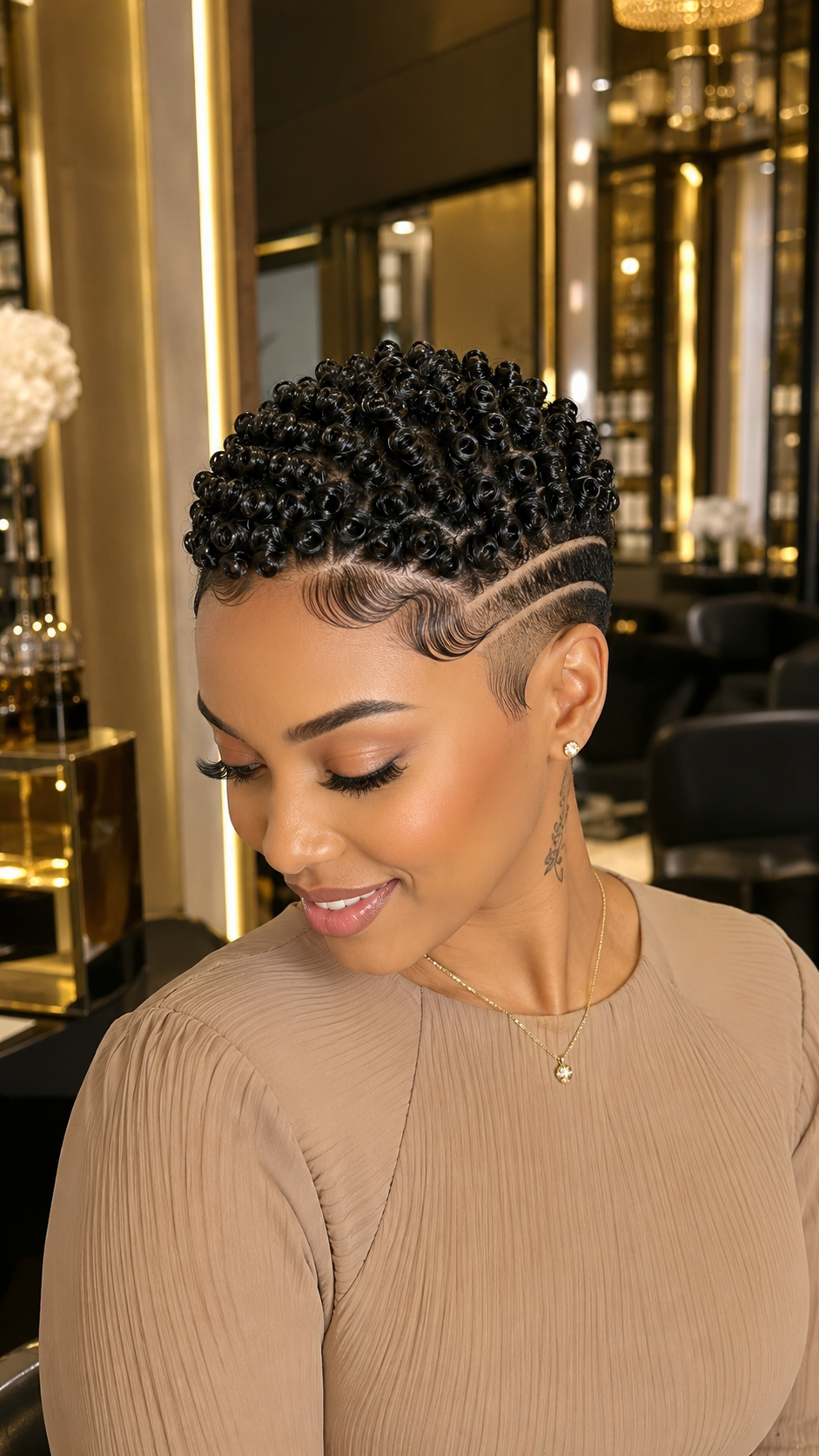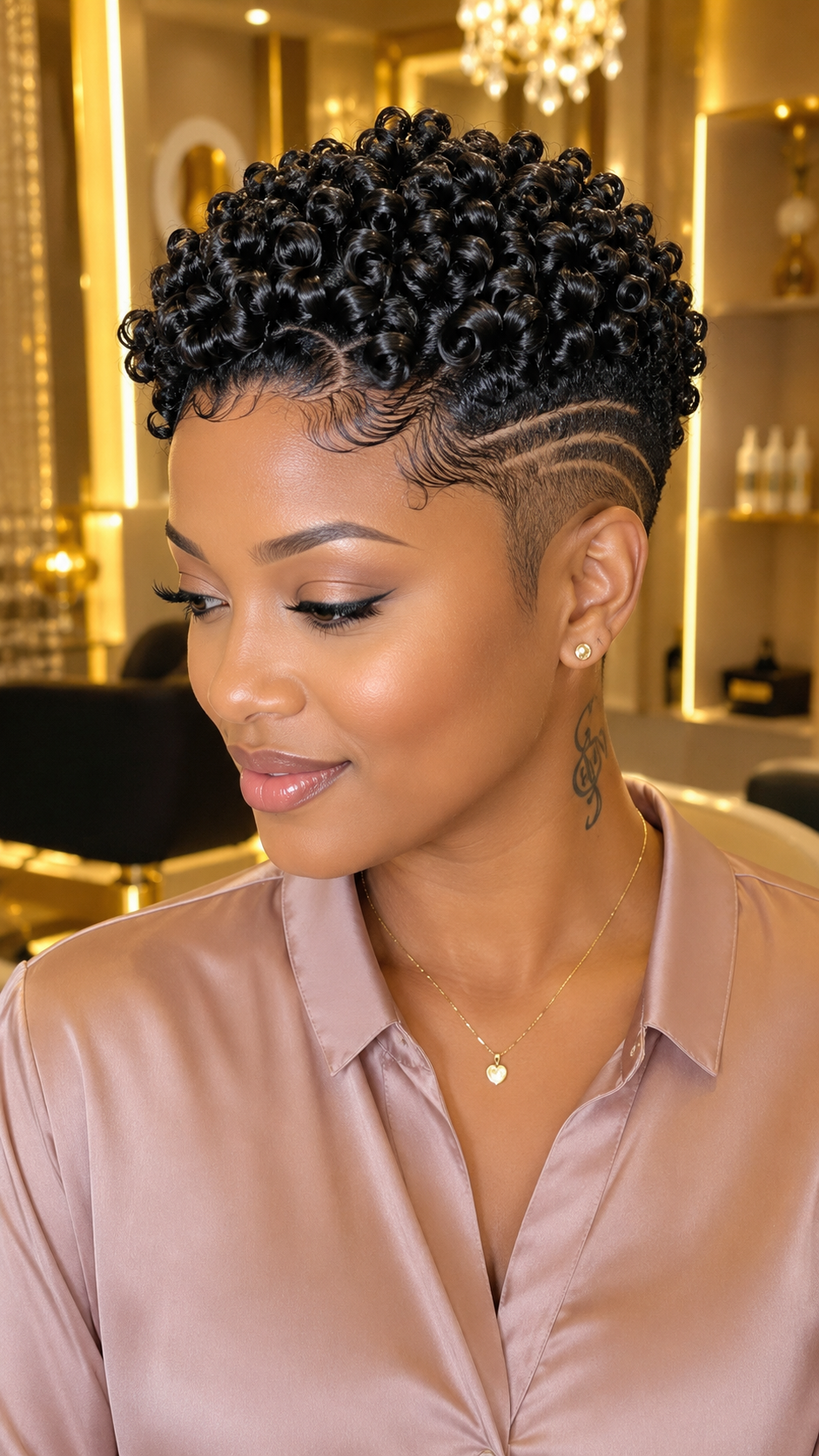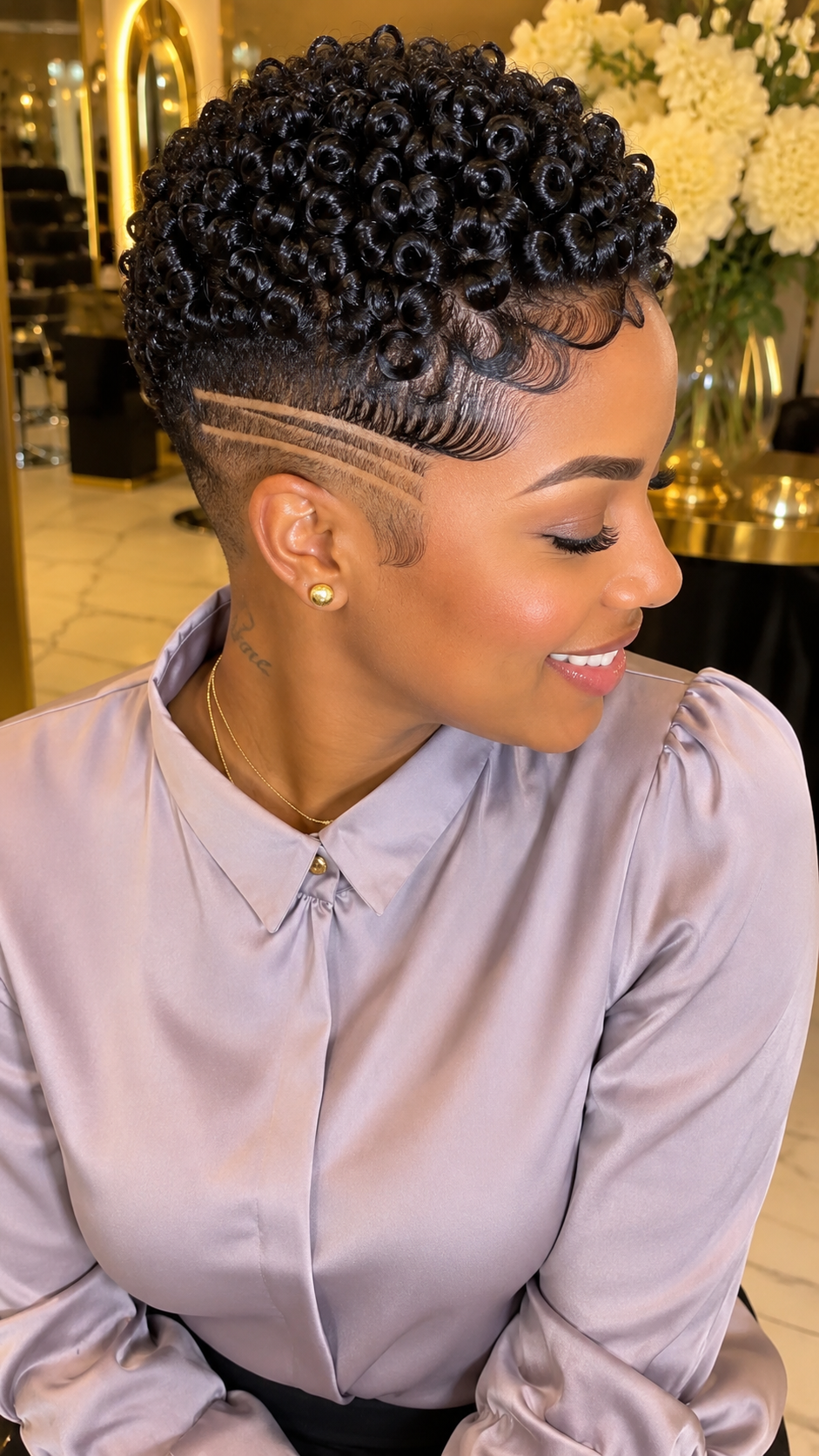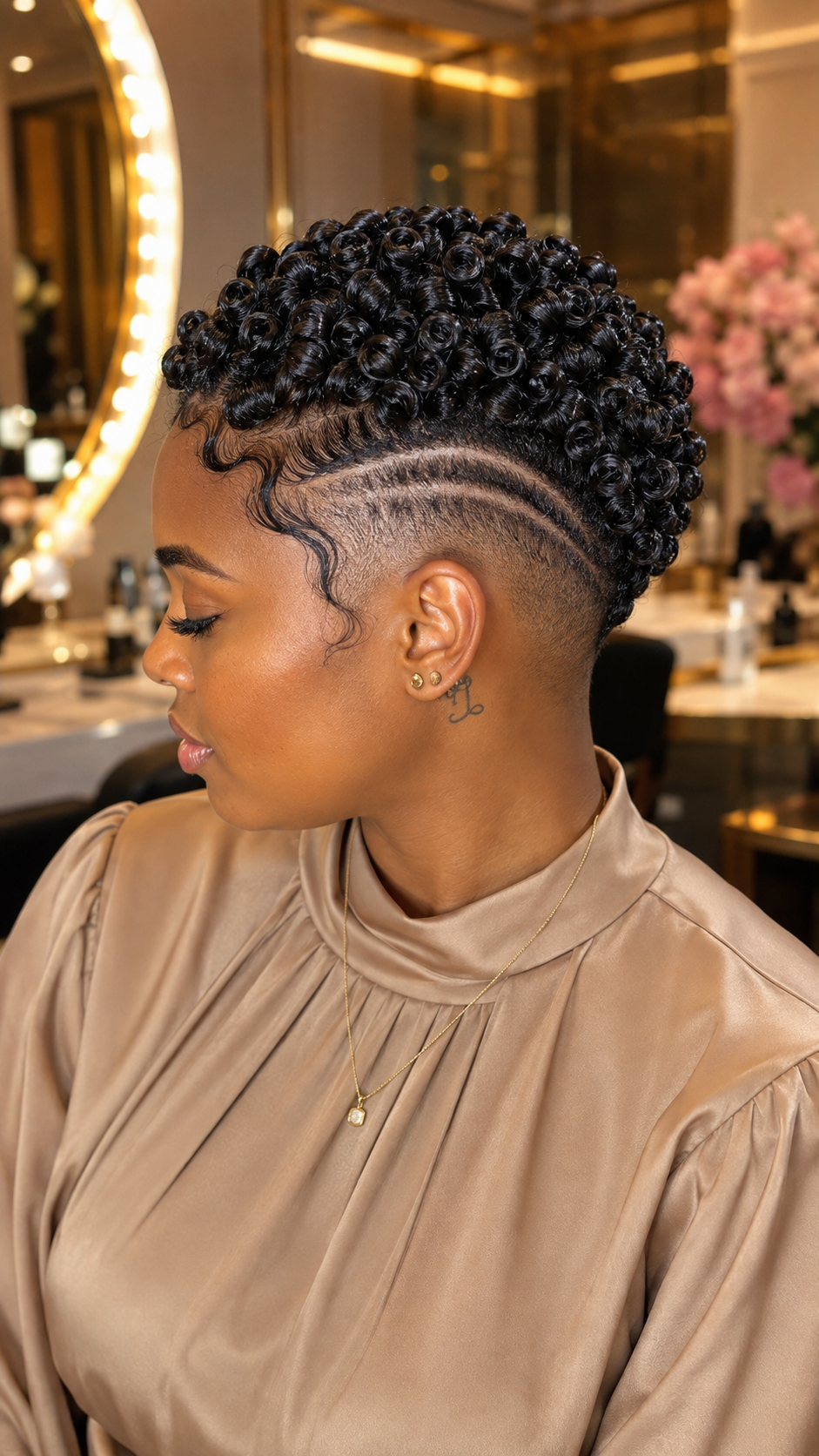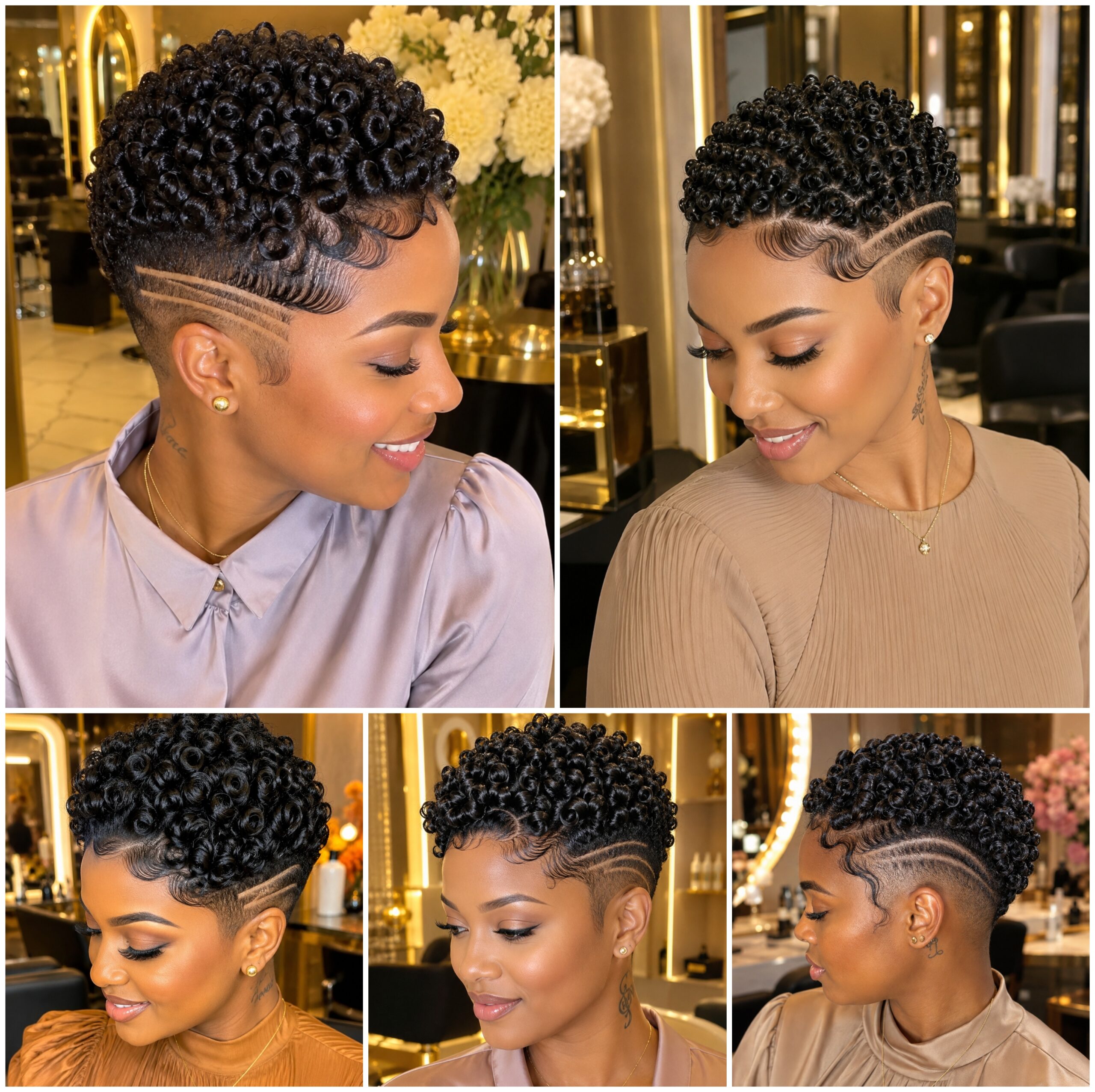
A loop curl crown combined with tapered sides and a rippled front hairline creates a hairstyle with three distinct areas of detail. Rounded loops provide volume across the upper section, the taper reduces weight around the sides and back, and carefully shaped ripples introduce movement directly along the front hairline. Together, these elements produce a compact silhouette that remains interesting from both frontal and side angles.
The most important part of recreating this look is keeping each section visually connected. The curls should not appear detached from the tapered perimeter, and the front ripples need to flow naturally into the surrounding texture. When the proportions are carefully controlled, the hairstyle can maintain substantial crown definition without becoming bulky around the face.
This design can be created on suitable natural hair or interpreted as a customized wig style. The exact technique depends on hair texture, construction, and desired maintenance, but reference photographs should clearly communicate the loop pattern, crown height, taper depth, and front hairline design.
Forming Distinct Loops Across the Crown
The upper section relies on curls that bend into recognizable loops rather than falling as long spirals. These rounded formations create a layered surface across the crown and allow light to reflect from several directions.
Curl size should remain reasonably consistent throughout the main section. Oversized loops can make the crown appear too heavy, while extremely small coils change the character of the texture. Medium-small loops provide enough definition to remain visible while supporting a compact overall shape.
Density is equally important. The curls should overlap enough to prevent obvious gaps, but individual formations still need visible separation. Packing too much hair into a small area can hide the loop structure and make the crown appear like one continuous mass.
The front and upper-side curls can be positioned to complement the contour of the head, helping the crown transition naturally toward the shorter perimeter.
Creating Movement Along the Front Hairline
The rippled front hairline gives this hairstyle much of its personality. Instead of leaving the front edge completely straight, small controlled waves travel along the hairline and create a flowing pattern beneath the curls.
These ripples should remain proportional to the hairstyle. Extremely large waves may compete with the loop curls, while tiny details can become difficult to see. A few clearly shaped bends generally provide enough movement without making the front area overly complicated.
The design should also follow the natural direction of the hairline. On natural hair, a stylist can adapt the ripple placement to the client’s existing growth pattern. For a customized wig, the maker needs to consider how the front density and construction will support the intended shape.
A close reference image of the frontal area is particularly useful when requesting this detail because small differences in direction can noticeably change the finished appearance.
Balancing the Taper Beneath the Curls
The tapered perimeter provides contrast against the fuller crown. Hair gradually becomes closer through the sides and toward the lower back while retaining enough transition length to connect with the curls above.
A successful taper should not create a sudden shelf underneath the loop section. The reduction in density needs to happen progressively so the upper volume appears naturally supported by the shorter sides.
For natural hair, a barber familiar with coily and curly textures can establish the taper according to the wearer’s head shape. The upper curls can then be refined without sacrificing the intended silhouette.
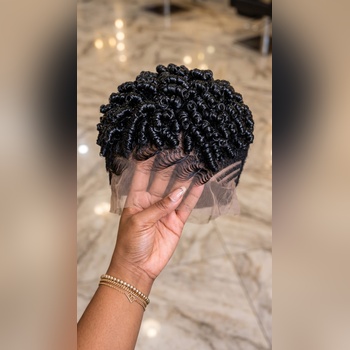
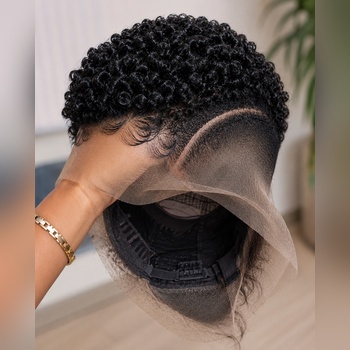
For wig construction, the side sections should ideally be planned with reduced density. Attempting to create an extremely close taper from a heavily constructed curly wig may require extensive cutting and can produce different results from a unit designed specifically for this profile.
Enhancing the Loop Pattern with Gloss
Reflective shine helps reveal the direction of each loop. Because the curls bend back toward themselves, light can create highlights along several parts of the same curl, increasing the appearance of depth.
On natural hair, appropriate moisture and styling products can help maintain curl separation while controlling unwanted frizz. Product choice should be based on individual texture and porosity rather than applying excessive amounts purely to increase shine.
Wig care depends on the material used. Human hair may offer greater restyling flexibility depending on its processing, while synthetic fibers have their own maintenance requirements. Heat should only be used when the manufacturer confirms that the particular fiber can safely tolerate it.
Mirror-like glossy hair, a silky reflective finish, healthy-looking shine, individually visible strands, and clearly separated loops can make the texture particularly noticeable in close photographs.
Choosing Natural Hair or a Customized Wig
Natural hair can work well when the existing length and texture support the loop formations. A barber can shape the tapered perimeter, while a stylist works on the crown and frontal ripples. Depending on the salon, these stages may be completed by one professional or separate specialists.
A custom wig offers another approach for someone who wants the same visual proportions without maintaining a permanent taper. The maker can concentrate density across the crown and reduce it through the sides during construction.
When commissioning a wig, send several reference angles rather than relying on the hairstyle name alone. Terms describing curly tapered styles can represent many different curl structures and silhouettes.
Clearly identify the loop curl size, crown height, close side profile, and rippled frontal design before the order is finalized.
Comparing Custom Wig Price Categories
The final cost of a customized unit depends on hair or fiber quality, construction, density, labor, customization, seller location, and shipping. These categories provide a practical way to compare options without treating any amount as a universal fixed price.
| Option | Price Level | Typical Work |
|---|---|---|
| Premium Custom | Highest | Personalized construction, controlled density, detailed loop formation, tapered shaping and specialized frontal work |
| Standard Custom | Upper-mid | Customized crown proportions, curl selection, side shaping and additional frontal styling |
| Basic Human Hair | Mid to upper | Human-hair base with simpler shaping and fewer structural adjustments |
| Premium Synthetic | Lower to mid | Higher-grade synthetic fiber with established curl structure and customized cutting |
| Basic Synthetic | Entry | Ready-made construction with limited customization |
What to Discuss Before Booking a Stylist
Show the stylist a clear photograph before the appointment and identify the sections that matter most. Explain that the upper area should contain rounded loop curls rather than loose waves and that the sides need a gradual taper.
The frontal ripples should also be discussed separately. Ask whether the stylist can reproduce the direction and scale shown in the reference rather than adding a completely different edge pattern.
For natural hair, a salon or barber experienced with Afro-textured hair is generally the most relevant place to start. Review previous work showing tapered curly cuts and detailed frontal styling before booking.
If different specialists will handle the barbering and curl work, determine the appropriate order of appointments beforehand so one stage does not interfere with another.
Ordering a Similar Style from a Wig Maker
When searching for a wig online, concentrate on construction photographs rather than product names alone. Look for units that provide enough crown density for rounded curls without carrying excessive bulk through the sides.
Contact the seller when side or frontal photographs are missing. Ask whether the density can be customized and whether the front section can support the requested rippled appearance.
A practical custom-order sequence begins with choosing the hair or fiber type and confirming the color. Next, provide accurate measurements when requested and send several hairstyle references. Specify the loop size, crown height, tapered side profile, and frontal ripple placement.
Before paying, confirm production time, customization details, shipping costs, alteration options, and the seller’s policy for custom products.
Protecting the Curl Shape Between Styling Sessions
Loop curls can lose their structure when they are repeatedly brushed or compressed. Maintenance should therefore focus on preserving the existing formations rather than constantly restyling the entire crown.
For natural hair, follow a moisture routine appropriate for the individual’s texture. Loose sections can often be reshaped individually instead of disturbing curls that are still holding their form.
A wig should be stored so the crown remains free from pressure. A suitable wig stand can help preserve the upper silhouette and reduce flattening during periods when the unit is not being worn.
Always follow material-specific care instructions. Human hair and synthetic fiber can react differently to products, washing techniques, and heat.
Adjusting Color and Crown Height
The basic silhouette allows several variations without losing the relationship between the loops, taper, and frontal ripples. A lower crown creates a compact appearance, while slightly longer loops increase height and make the upper texture more prominent.
Natural black and deep brown shades emphasize the overall shape. Warmer tones such as caramel brown, honey, copper, ginger, or auburn can make individual loop formations easier to distinguish under light.
Multi-tone versions can also work when color placement follows the curl structure. Selected highlighted loops can create depth while darker roots or tapered areas maintain visual contrast.
Color choices should be confirmed with the stylist or seller because lighting conditions can make photographs appear different from the actual hair shade.
Preparing Useful References Before Ordering
A strong reference set should include the hairstyle from several directions. The frontal image should clearly display the rippled hairline and crown width, while a side photograph should show how the curls connect with the taper. A rear or three-quarter view helps communicate how the shorter perimeter continues around the head.
When speaking with the stylist, identify the visual priorities: rounded loop curls, concentrated crown volume, individually visible strands, a gradual taper, and clearly shaped ripples along the front edge.
The final result depends on keeping these elements connected. The loop curls provide the main texture, the tapered sides control the silhouette, and the rippled front hairline creates the distinctive detail around the face.
Search Terms
Loop Curl Crown · Rippled Front Hairline · Tapered Loop Curls · Curly Crown Taper · Ripple Hairline Design · Glossy Loop Curls · Tapered Sides With Loops · Sculpted Front Hair Ripples