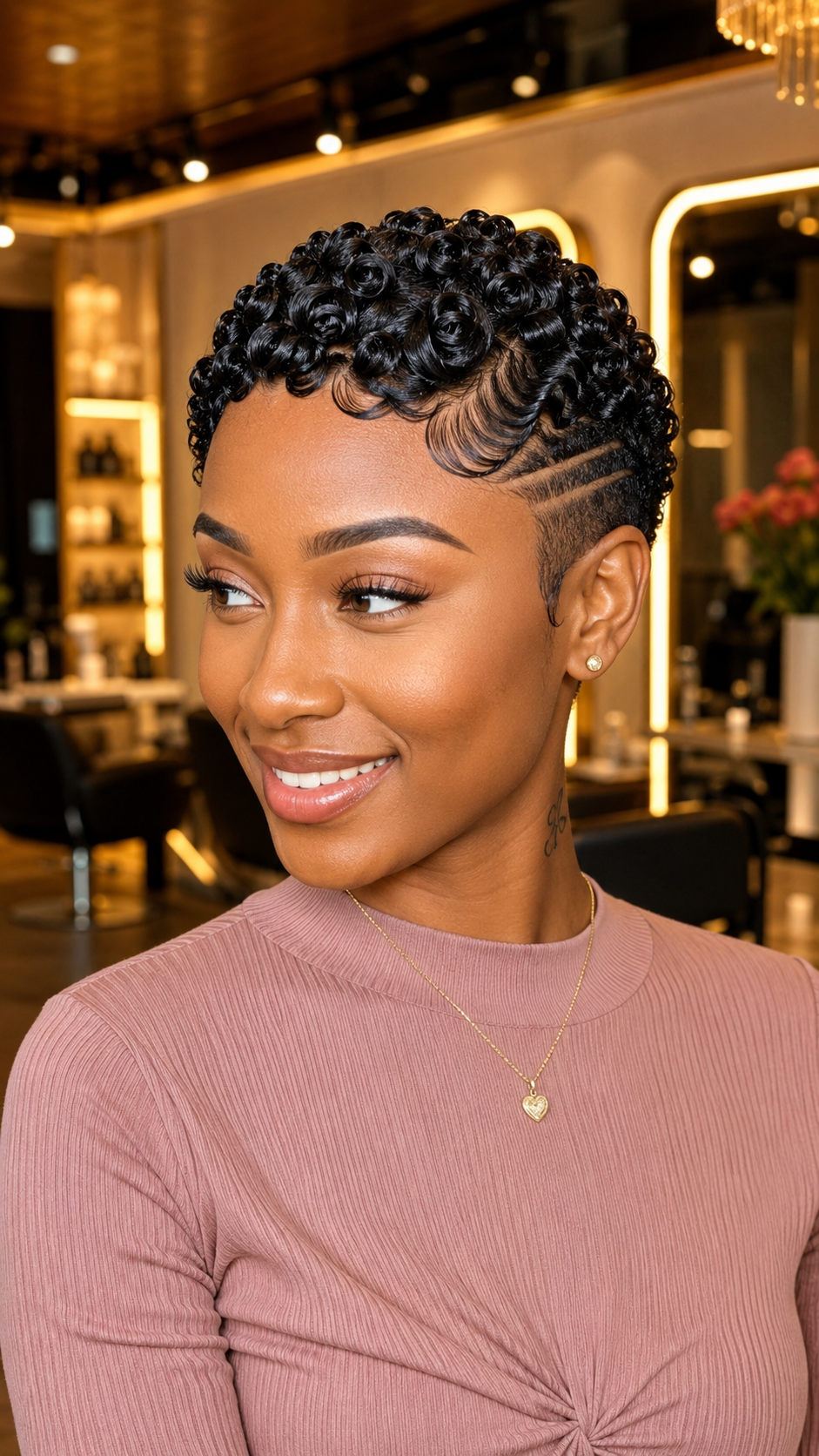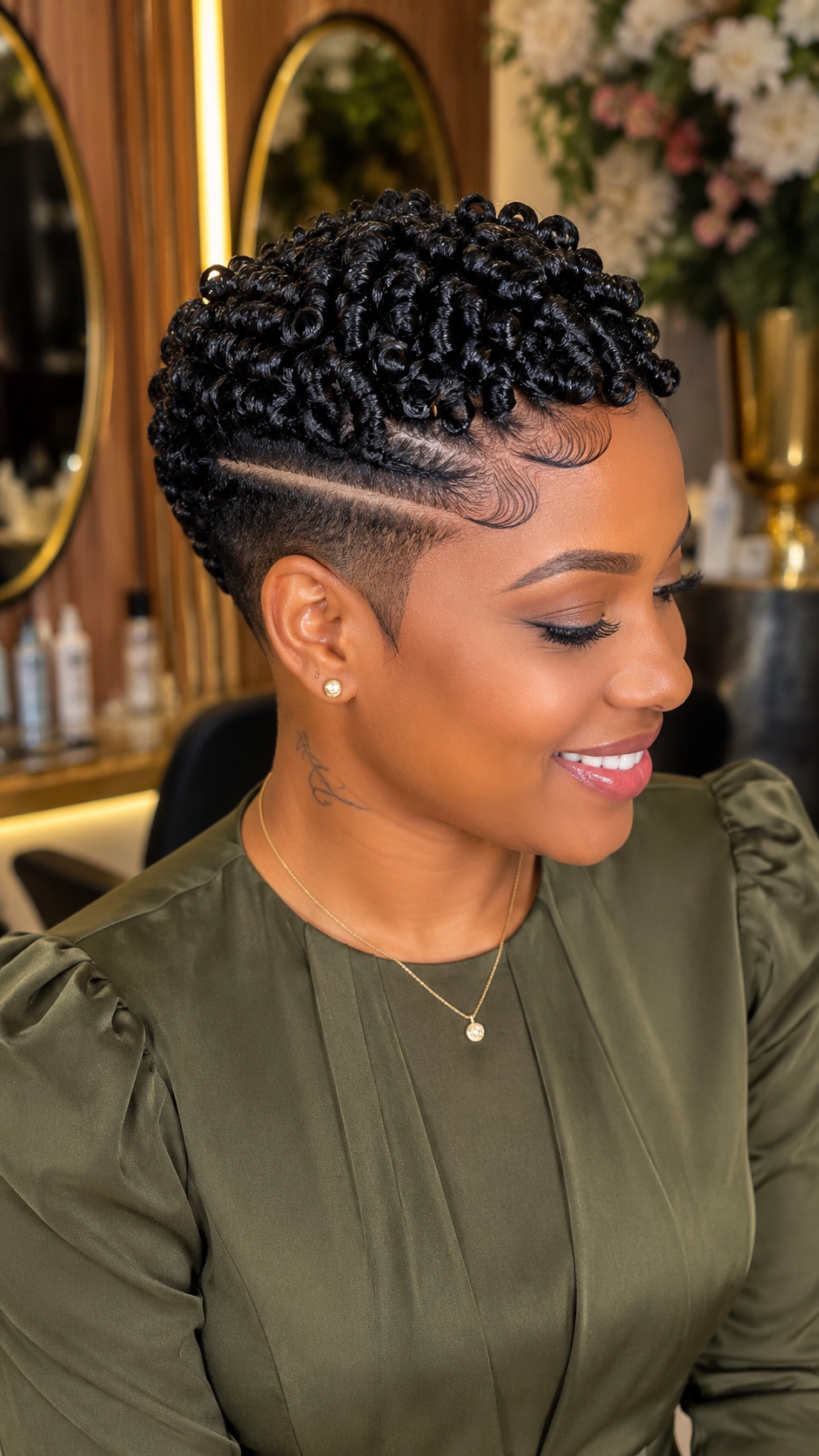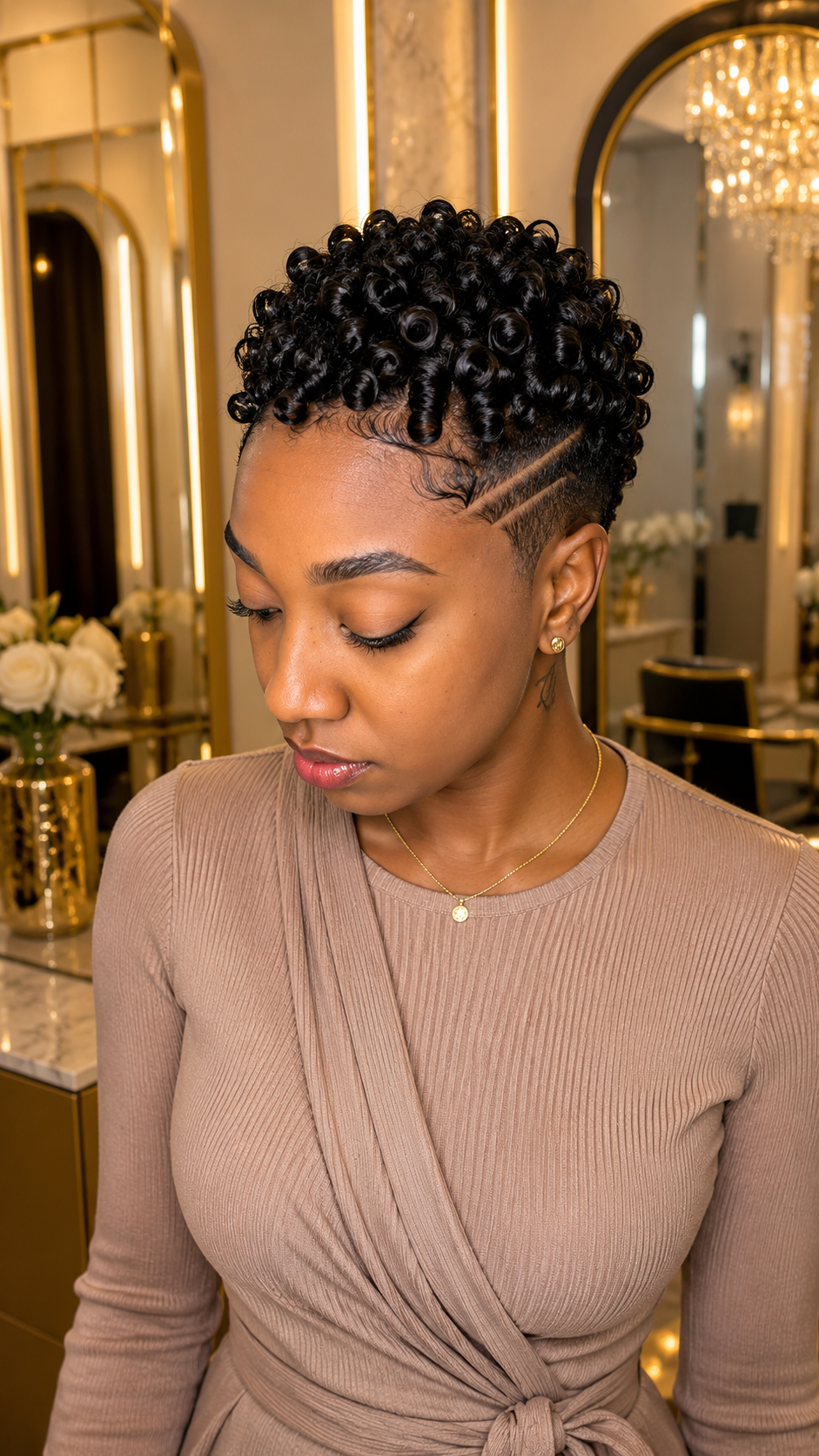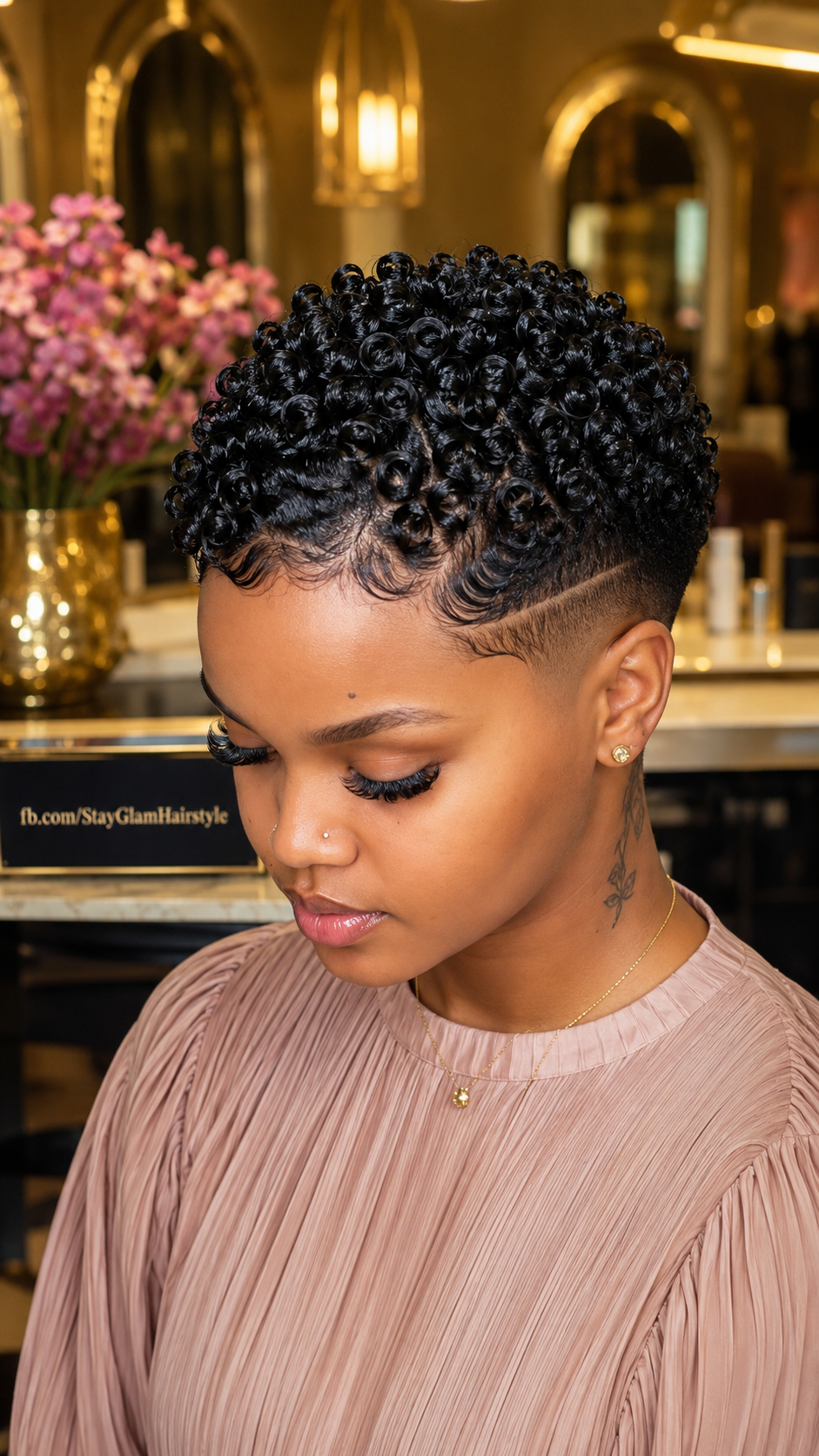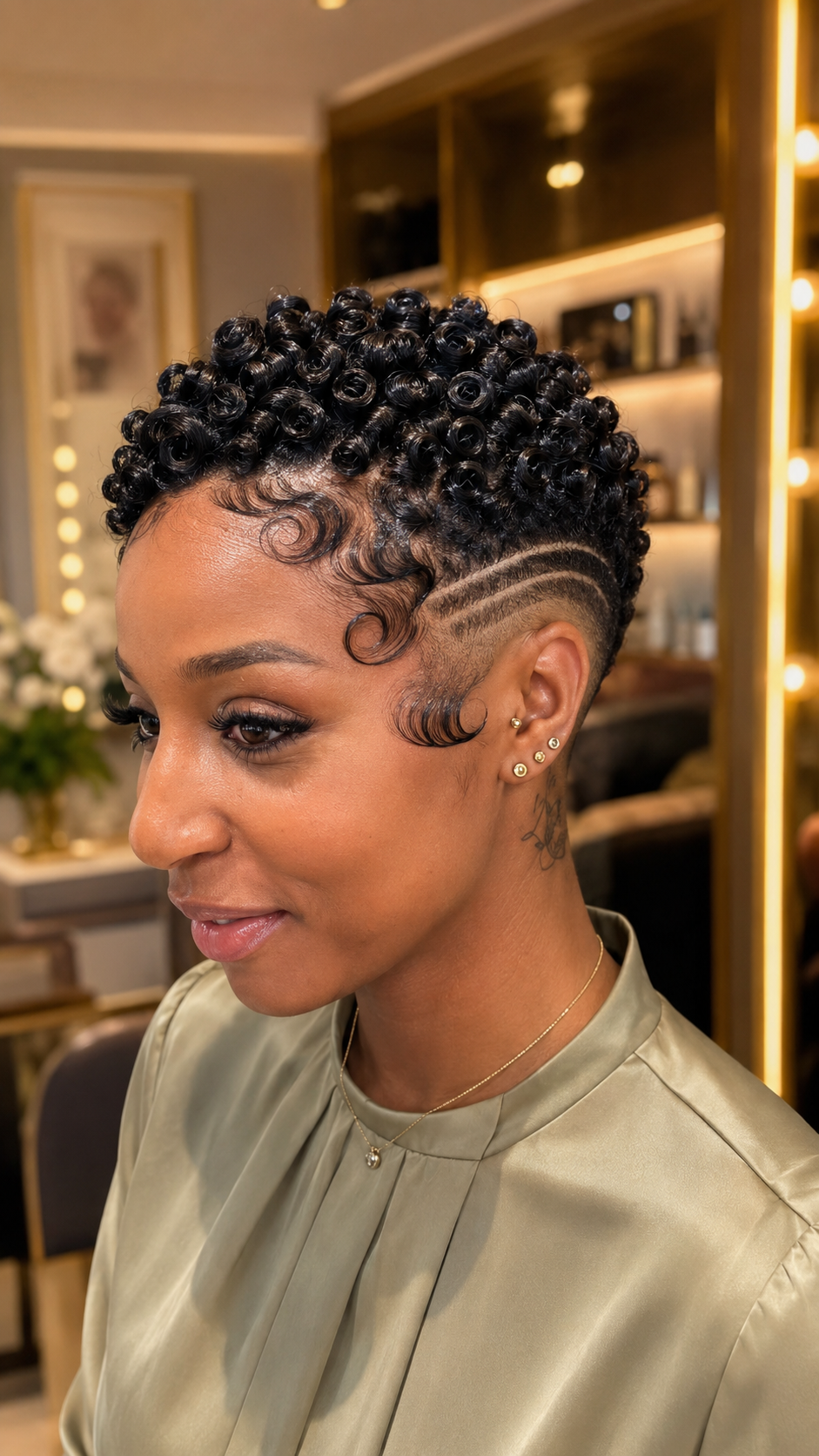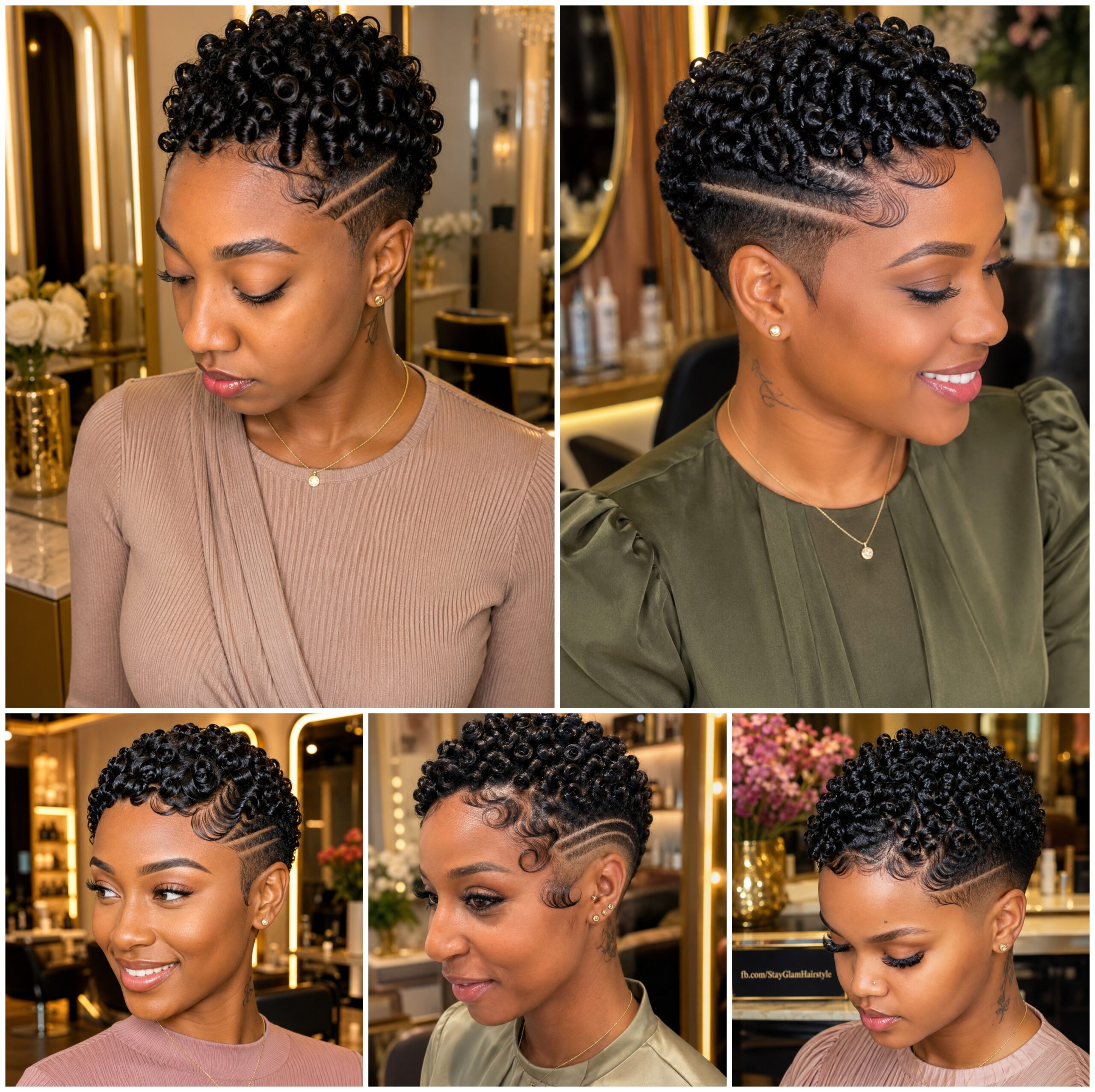
A compact coiled crown paired with faded sides and a single arched line creates a hairstyle where texture and precision share the attention. The upper section carries tightly arranged coils with concentrated volume, while the sides gradually become closer toward the temple and lower perimeter. The curved side accent introduces a distinctive detail that follows the shape of the head rather than cutting across it with a straight geometric line.
The strength of this look comes from proportion. The coils should remain full enough to form a recognizable crown, but they also need visible separation so the texture does not become one dense surface. Beneath them, the fade reduces weight and exposes the arched design. Keeping these areas connected is essential for achieving a balanced profile.
This hairstyle can be recreated on suitable natural hair or interpreted as a customized wig. In either case, reference photographs should clearly communicate the coil size, crown height, fade depth, and exact direction of the curved side detail.
Constructing a Compact Coiled Crown
The upper section relies on closely arranged coils that create volume without excessive height. Individual curls should remain identifiable, particularly around the front and upper sides where the texture meets the faded perimeter.
Coil diameter influences the entire silhouette. Larger curls can create more open space and movement, while very small coils produce a denser appearance. Medium-small coils work particularly well when the goal is a compact crown with plenty of visible circular texture.
Density also requires careful control. Too much hair can cause neighboring coils to overlap until their individual shapes disappear. Too little density can leave gaps and weaken the rounded crown. Strategic distribution is therefore more important than simply maximizing the amount of hair.
The highest volume generally remains toward the center and upper crown before gradually decreasing near the sides. This helps the curls connect naturally with the faded sections below.
Using the Fade to Frame the Upper Texture
The fade creates the contrast that makes the coiled crown appear more prominent. Hair progressively becomes closer as it approaches the lower side, temple, and area around the ear.
A gradual transition is important because an abrupt reduction can make the crown look disconnected. The upper edge of the fade should blend into the textured section while still creating enough contrast for the difference in length to be obvious.
On natural hair, a barber experienced with coily textures can adapt the fade to the wearer’s head shape and density. The exact starting point does not need to be identical for everyone.
When recreating the appearance on a wig, the side density should ideally be considered during construction. A heavily filled curly unit may require significant modification before it can achieve the same close profile.
Why the Arched Side Line Matters
The arched line gives the side profile its recognizable signature. Instead of traveling straight through the faded section, the line follows a curved path that complements the rounded forms of the coils above.
Placement is important. The curve should remain clearly visible without extending so high that it cuts into the main crown. Its thickness should also remain controlled. An overly wide channel can overpower the hairstyle, while a very faint line may disappear quickly as natural hair grows.
A barber can adjust the arc according to the temple area and head shape. Some versions may use a gentle curve, while others can have a more pronounced arch. Keeping the design to one strong line allows the side detail to remain noticeable without competing with the texture above.
Achieving Glossy Separation Between the Coils
A reflective finish can make compact coils substantially easier to see. Light follows the bends of individual strands, producing small highlights throughout the crown and emphasizing the circular pattern.
On natural hair, appropriate moisture and styling products can support coil formation while controlling unwanted frizz. Excessive product should be avoided because it can weigh down smaller curls and reduce their spring.
Wig care depends on the material used. Human hair and synthetic fibers require different approaches, particularly when heat is involved. Synthetic hair should only be exposed to heated tools when the manufacturer specifically confirms that the fiber is heat-safe.
Mirror-like glossy hair, a silky reflective finish, healthy wet-look shine, individually visible strands, and ultra-defined texture can make the coiled crown particularly striking in close photographs.
Natural Hair Versus a Customized Wig
Natural hair is a practical option when the existing texture and length can support the required coils. A barber can create the fade and arched detail, while the upper section can be shaped according to the desired coil size and crown height.
A custom wig offers an alternative for someone who wants the appearance without maintaining a permanent fade on their natural hair. The maker can concentrate density across the upper section and deliberately reduce it through the sides.
Not every curly wig will provide a suitable starting point. Units constructed with uniform heavy density can be difficult to transform into a convincing faded silhouette. Asking the maker about side-density customization before ordering can prevent this problem.
Price Categories for a Custom Version
The price of a customized unit can vary according to hair material, construction method, density, labor, curl preparation, and the amount of personalized shaping required. Seller location and shipping can also affect the final cost.
| Option | Price Level | Typical Customization |
|---|---|---|
| Premium Custom | Highest | Personalized construction, detailed density control, coil preparation, precision tapering and extensive finishing |
| Standard Custom | Upper-mid | Customized crown proportions, selected curl structure and tailored side shaping |
| Basic Human Hair | Mid to upper | Human-hair base with simpler cutting and fewer structural modifications |
| Premium Synthetic | Lower to mid | Higher-grade synthetic fiber with established coils and customized perimeter shaping |
| Basic Synthetic | Entry | Ready-made construction with limited personalization |
What to Explain to Your Barber or Wig Stylist
A clear side photograph is particularly important for this design. The stylist needs to see not only the coils but also where the fade begins and how the arched line travels through the side area.
Explain that the crown should remain compact and rounded with individually visible coils. The sides should gradually decrease in length rather than changing abruptly. Point out that only one curved accent is required and show the preferred position of the arch.
For natural hair, search for a barber whose portfolio includes Afro-textured fades and precision line work. If the same professional does not style coils, a curl specialist can handle the upper section separately.
Sending the reference before booking allows the salon to confirm whether all stages can be completed during the same appointment.
Finding a Similar Wig Online
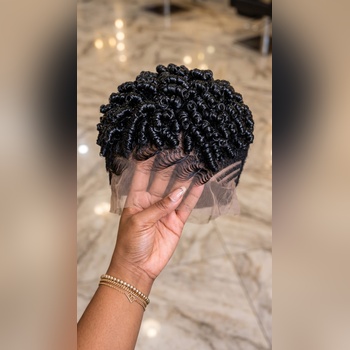
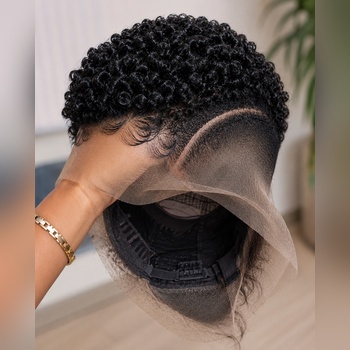
When shopping online, look beyond the main front-facing photograph. Side and rear views provide much more information about whether the unit can support this silhouette.
The crown should contain enough density for compact coils, while the temple and side areas should be suitable for significant reduction. If the listing only shows a heavily curled unit from the front, contact the seller and request additional information before purchasing.
Useful searches can combine terms describing the actual appearance, such as coiled pixie wig, tapered coil wig, curly fade wig, or coiled crown wig. Product names vary considerably between sellers, so photographs and construction details should carry more weight than terminology alone.
A Better Way to Place a Custom Order
Begin by selecting the preferred hair or fiber type and confirming the color. Provide accurate head measurements when requested and send several photographs of the desired hairstyle.
Specify the approximate coil diameter, crown height, and amount of side reduction. Point out the arched line separately so the maker understands that it is an important part of the design rather than an optional styling detail.
Before paying, confirm production time, shipping charges, customization limitations, alteration options, and return conditions. Customized wigs often have different policies from ready-to-ship products.
If the maker offers progress photographs, check the relationship between the crown and sides before focusing on smaller finishing details. The silhouette should already resemble the intended tapered profile.
Maintaining the Coils and Side Detail
Frequent brushing can disturb compact coils, so maintenance should focus on preserving their existing formation. Individual curls that begin to loosen can often be reshaped without disturbing the entire crown.
Natural hair should be maintained according to its individual moisture needs and the products recommended by the stylist. The faded area will require periodic barber attention as new growth gradually reduces the contrast.
The arched line will also become softer as hair grows. A barber can follow the existing channel during maintenance rather than creating a new design in a different position.
For wigs, storage should protect the crown from compression. A suitable wig stand can help preserve its rounded form between wears, while material-specific care instructions should be followed when washing or restyling.
Exploring Color Without Hiding the Coil Pattern
Natural black and deep brown shades emphasize the overall silhouette and create strong contrast around the faded sides. Warmer shades can make the individual coils more visible under direct light.
Caramel brown, honey tones, copper, auburn, ginger, and burgundy can all create different interpretations of the same structure. Multi-tone versions can also work when color placement follows selected coils instead of covering the crown with excessive variation.
If ordering online, ask for an actual color reference whenever possible. Lighting, camera processing, and screen settings can make the same hair shade appear noticeably different across photographs.
Preparing References That a Stylist Can Actually Use
Collect a front view, full side profile, and rear or three-quarter photograph whenever possible. The front communicates crown width and coil placement, while the side view reveals the fade and exact arched design. The rear image shows how the shorter perimeter continues around the head.
Identify the main priorities clearly: compact coils, concentrated upper volume, close faded sides, one visible arched line, and a gradual connection between the textured crown and perimeter.
These details are particularly useful for custom wig orders because they allow the maker to plan density before construction begins. For natural hair, they give the barber a clear visual target while still allowing adjustments for the wearer’s hairline, density, and head shape.
Search Terms
Coiled Pixie Fade · Arched Side Hair Line · Coiled Crown Fade · Curved Side Line Haircut · Glossy Coil Crown · Tapered Coiled Pixie · Curly Fade With Arch Line · Coiled Top Faded Sides