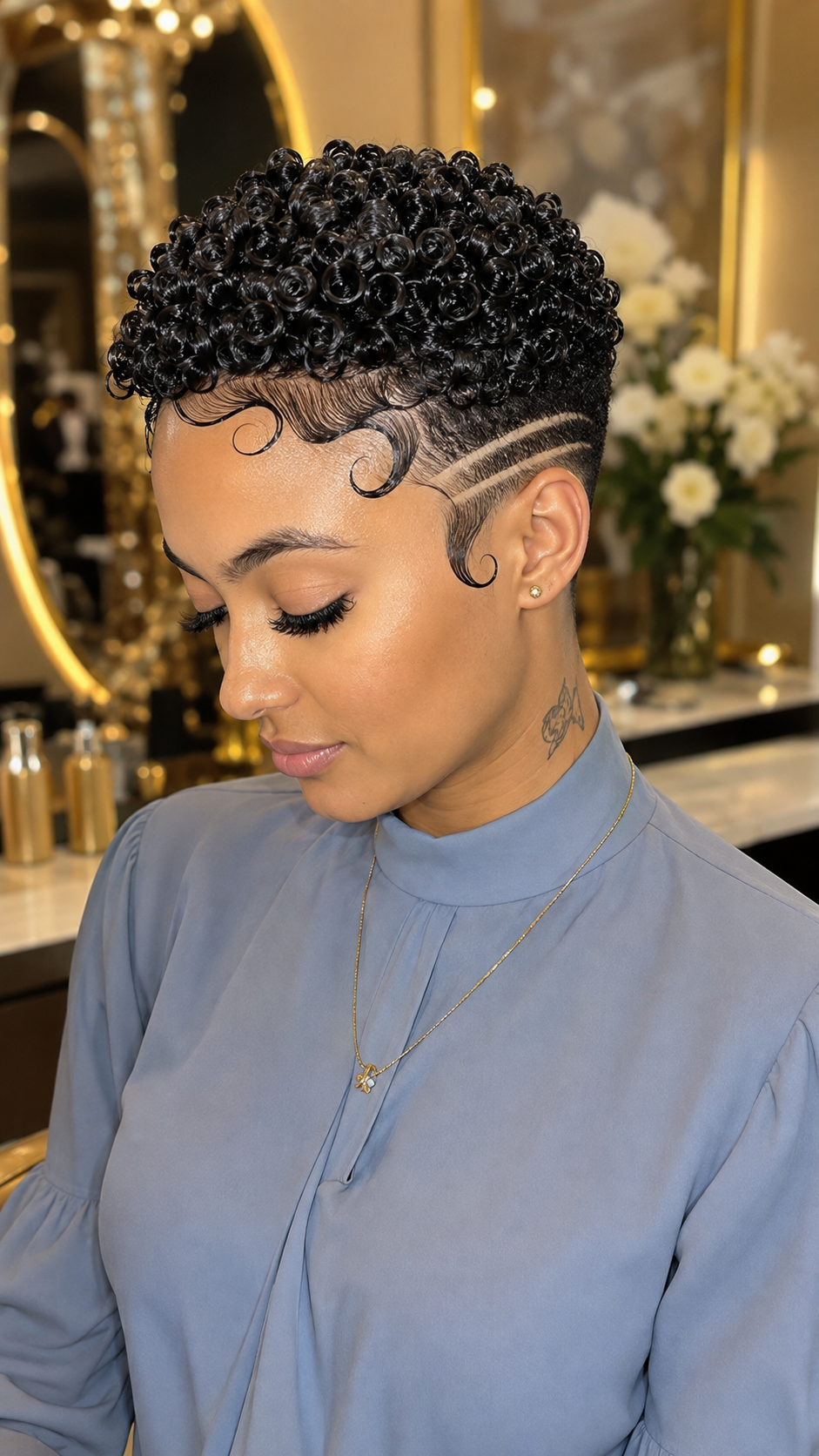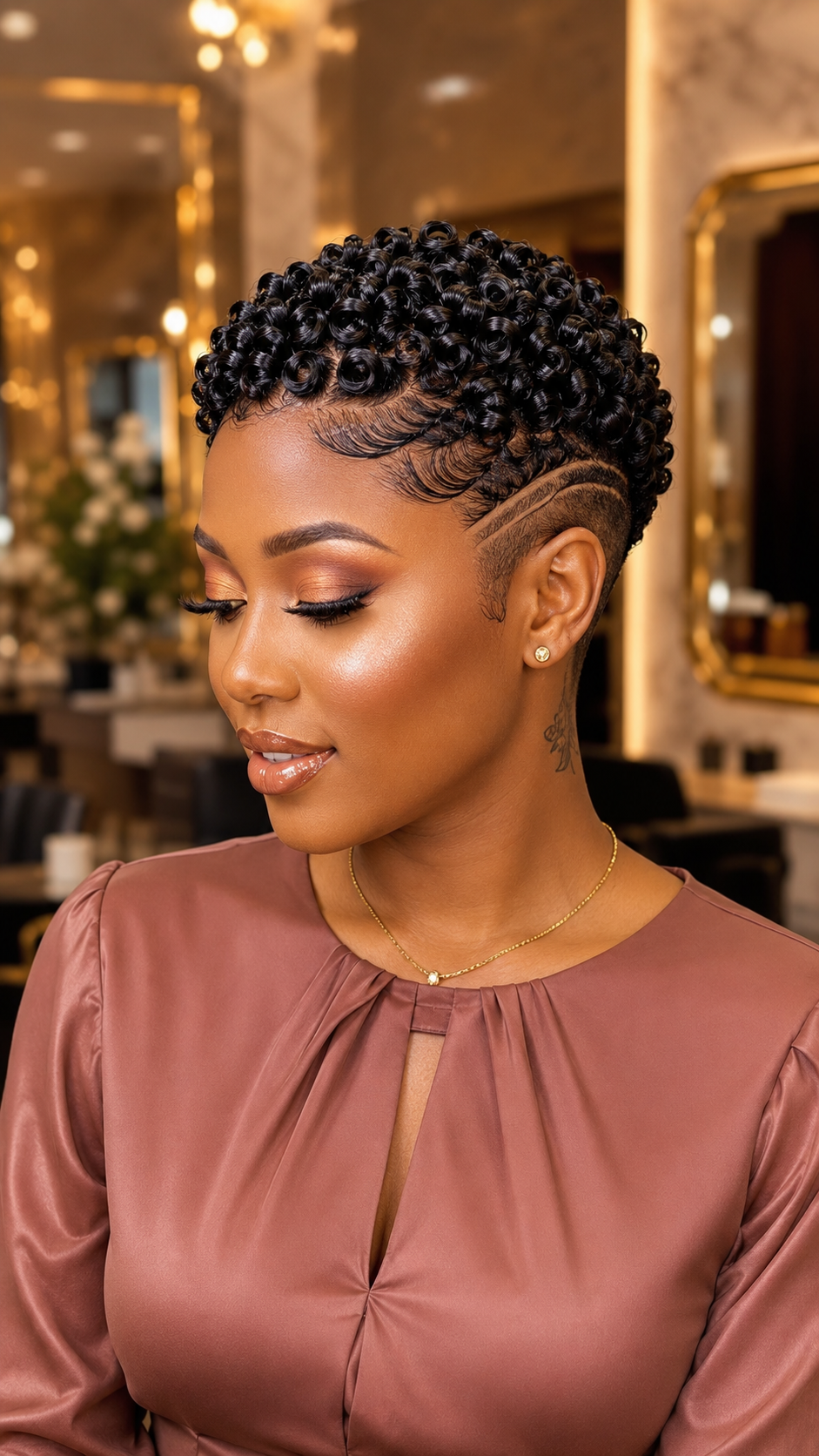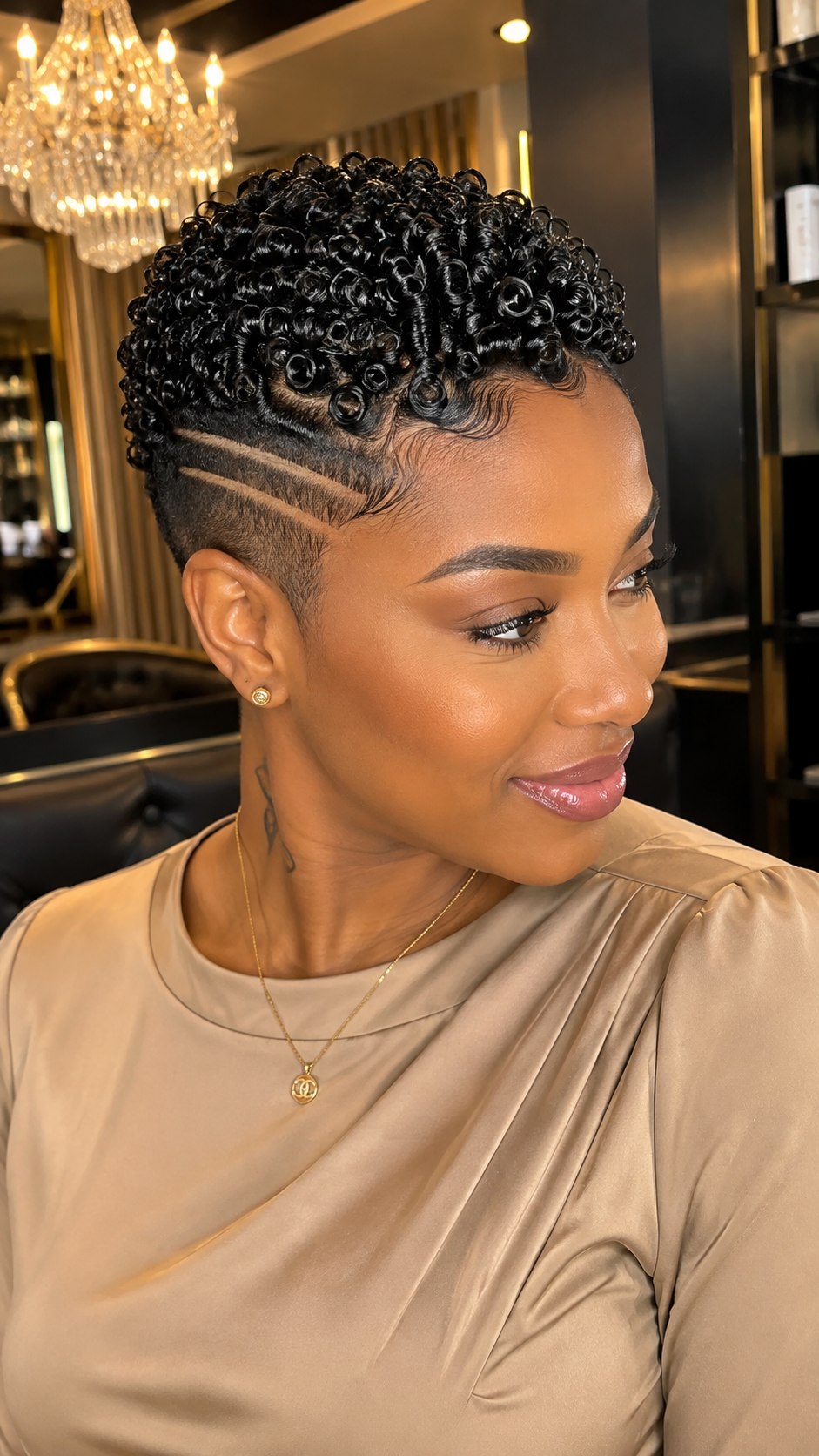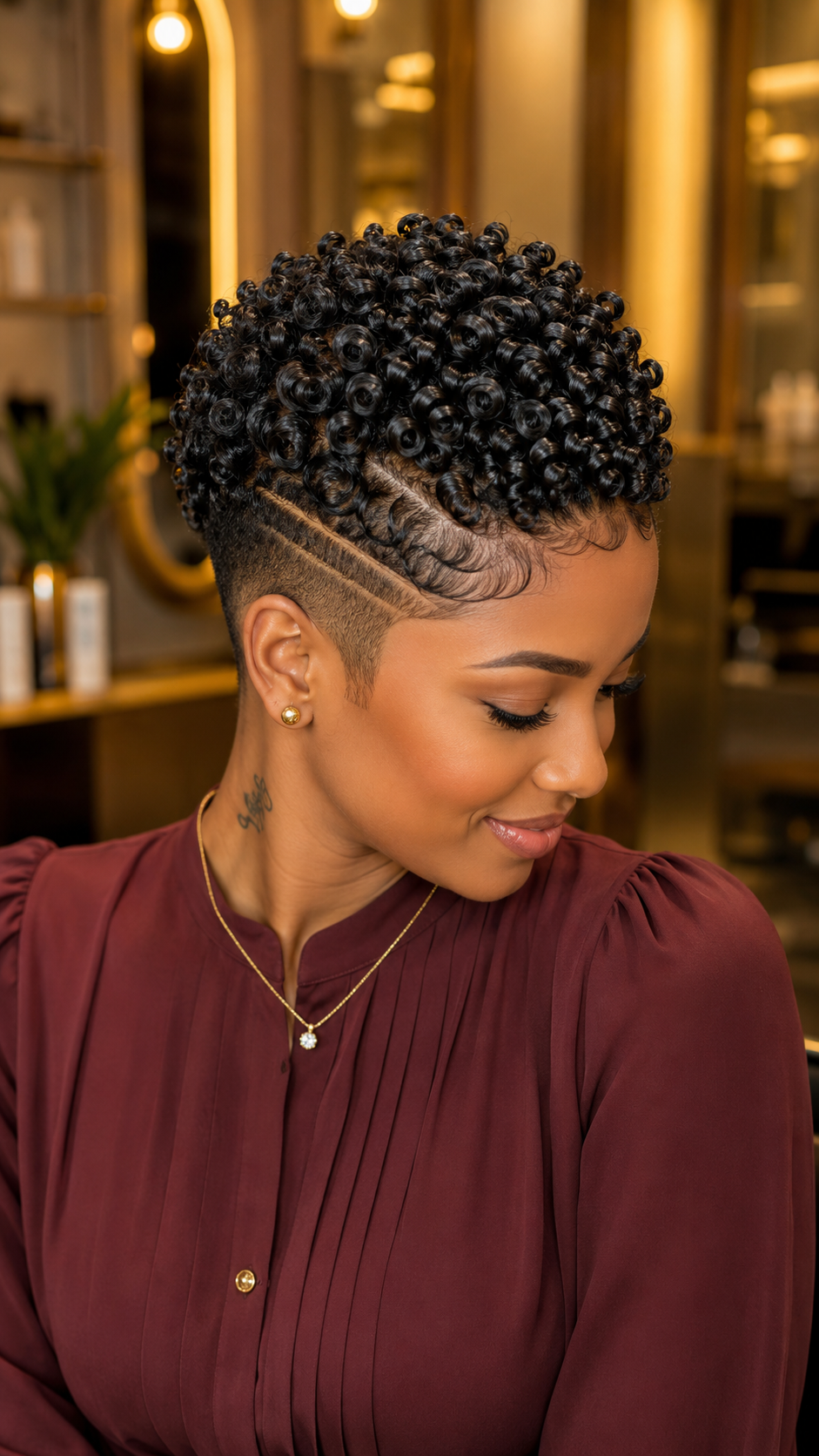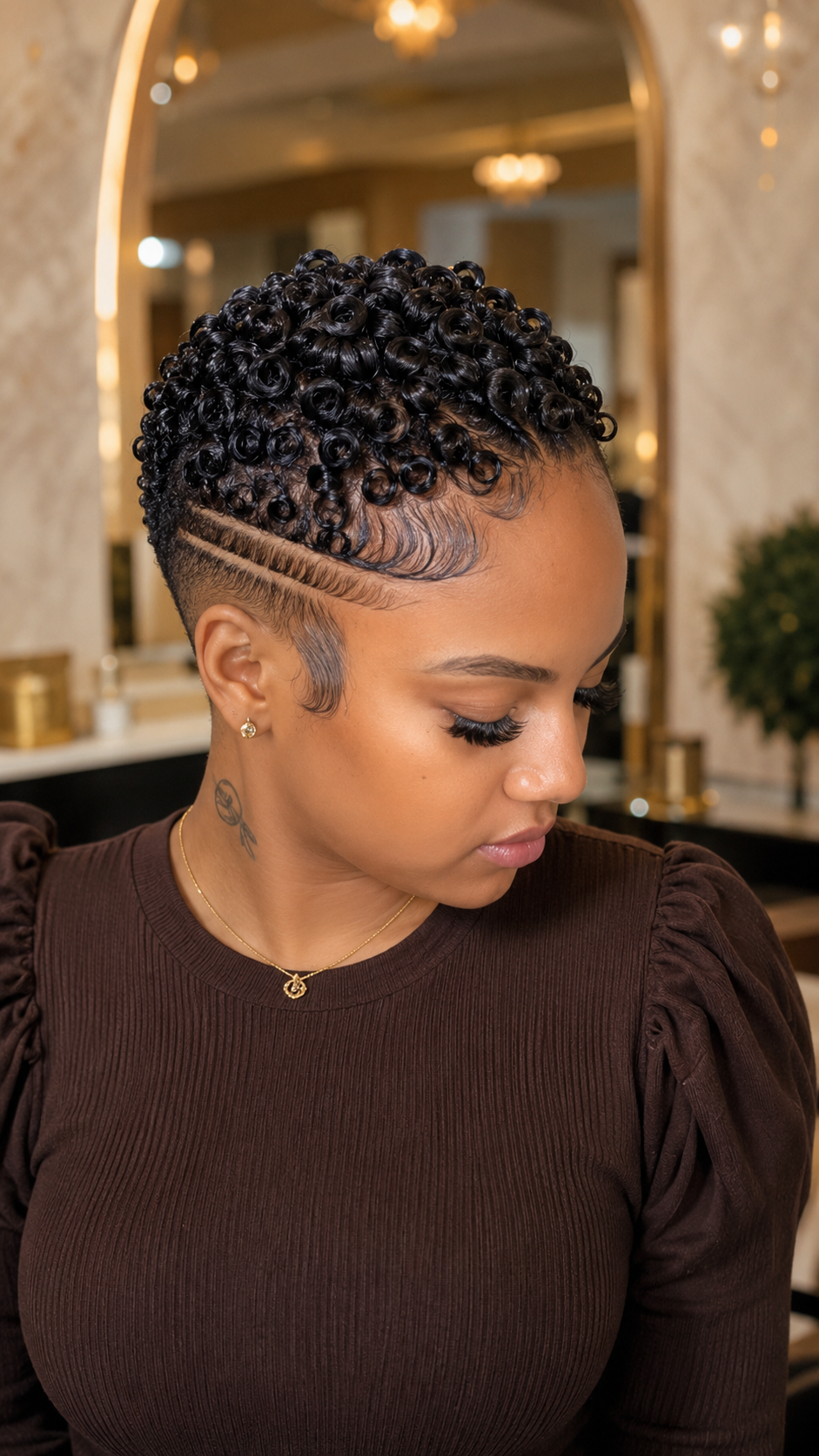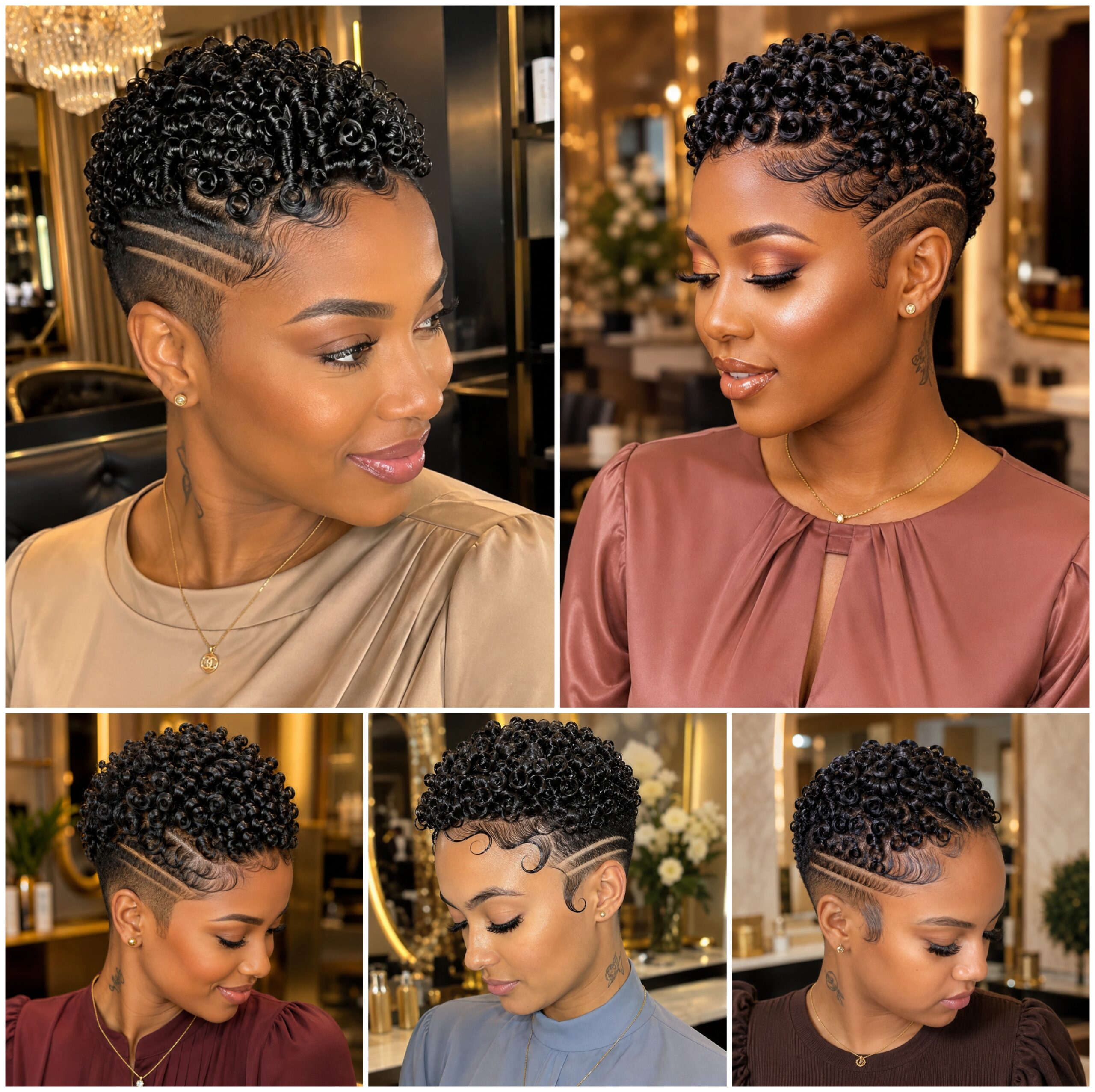
A finger coil crown paired with three precise razor lines creates a hairstyle where rounded texture meets sharp side detailing. The upper section is built around compact, individually shaped coils, while the closely tapered sides provide enough contrast for both the crown and razor design to remain clearly visible. Three parallel accents along the side add a distinctive finishing element without taking attention away from the coils.
The proportions are especially important with this look. The crown needs sufficient height and density to create a full silhouette, but the coils should remain separated rather than blending into one heavy mass. Below them, the sides gradually become closer before the three razor details introduce a crisp geometric contrast.
This combination can be created on suitable natural hair or used as a reference for a customized wig. The method will differ between the two, but curl size, crown density, taper placement, and the spacing of the three side lines should all be planned carefully.
Shaping the Finger Coils Across the Crown
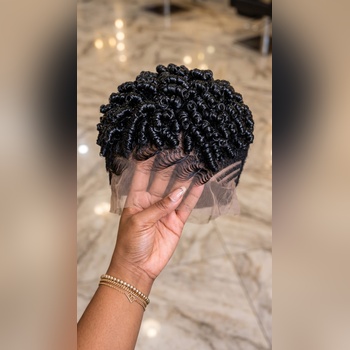
The crown is formed from numerous compact coils rather than loose curls. Finger coiling allows small sections of hair to be shaped individually, producing recognizable circular patterns throughout the upper area.
Consistency matters, but the coils should not appear unnaturally identical. Slight differences in direction help create depth while the overall arrangement maintains a rounded silhouette. The front coils can sit slightly forward, while sections farther back follow the natural contour of the head.
Density also needs careful control. Too little hair can leave noticeable spaces between the coils, while excessive density can hide their individual shapes. A well-balanced crown appears full at first glance while still allowing the viewer to identify separate curls.
Why Three Razor Lines Transform the Side View
The triple razor detail gives the hairstyle its strongest side-profile signature. Instead of relying on a single carved accent, three narrow lines sit within the tapered area and create a repeating visual rhythm.
Spacing is essential. The lines need enough separation to remain individually recognizable. If they are positioned too closely together, they may appear like one large shaved section. Excessive spacing can make them feel disconnected from one another.
The angle can also be adapted to the shape of the head. Slightly diagonal lines often work naturally with the direction of a taper, while gently curved versions can create a softer relationship with the circular coils above.
For natural hair, an experienced barber can determine the appropriate depth according to density and scalp visibility. The lines should complement the hairstyle rather than dominate the entire side.
Connecting a Full Crown to Closely Tapered Sides
The transition between the finger coils and the lower perimeter determines whether the hairstyle looks balanced. The upper section should remain visibly fuller, while the hair becomes progressively closer through the sides and toward the ear.
An abrupt reduction directly beneath the crown can make the upper hair appear disconnected. A gradual taper creates a more natural bridge between the textured top and razor detailing below.
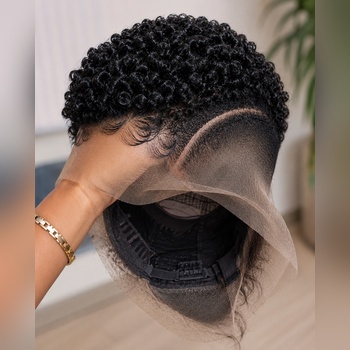
When this hairstyle is recreated as a wig, side density requires particular attention. A heavily constructed curly unit may contain too much hair around the temples to reproduce the same close profile without extensive modification.
A custom maker can instead plan reduced side density from the beginning, leaving enough coverage to maintain a believable appearance while preserving the contrast with the crown.
Giving the Coils a Rich Reflective Finish
Shine helps reveal the circular construction of finger coils. As light moves across the hairstyle, reflective points appear along different sections of each curl, making the texture more noticeable.
On natural hair, suitable moisturizing and styling products can support curl formation while controlling unwanted frizz. Product quantity should remain balanced because excessive application may weigh down smaller coils.
For wigs, care depends on the material. Human hair and synthetic fibers require different handling, and heat should never be applied to synthetic hair unless the manufacturer confirms that the specific fiber is heat-safe.
A glossy surface, individually visible strands, strong coil separation, and healthy-looking shine can emphasize the texture without sacrificing the rounded shape of the crown.
Natural Hair or Custom Wig Construction?
Natural hair is a practical route when the wearer’s texture and available length can support finger coils. A barber can establish the taper and triple razor design before or alongside the final curl work.
A custom wig provides an alternative for someone who wants the appearance without maintaining shaved detailing on their natural hair. For the most convincing result, the unit should be constructed specifically around the intended silhouette rather than relying on a standard curly wig with uniformly heavy density.
When discussing a custom unit, provide photographs showing the front, full side, and rear. Explain the preferred coil diameter, crown height, taper depth, and placement of all three lines.
Price Guide for Different Construction Levels
Custom wig pricing varies according to material, construction method, labor, density, customization, and seller location. Shipping and additional fitting services can also influence the final cost, so the categories below are better used for comparison than as fixed prices.
| Option | Price Level | Typical Work |
|---|---|---|
| Premium Custom | Highest | Personalized construction, detailed density control, coil formation, precision tapering and advanced finishing |
| Standard Custom | Upper-mid | Customized crown shape, curl selection and tailored side density |
| Basic Human Hair | Mid to upper | Human-hair base with simpler shaping and fewer construction adjustments |
| Premium Synthetic | Lower to mid | Higher-grade synthetic fiber with established curls and customized cutting |
| Basic Synthetic | Entry | Ready-made construction with limited personalization |
Finding a Stylist Who Can Handle Both Elements
For natural hair, look for a barber or salon with experience in coily textures, tapered cuts, and precision razor designs. A portfolio is particularly useful because the quality of line work can be difficult to judge from a general service description.
The professional should understand both sides of the hairstyle: maintaining enough upper length for defined finger coils and producing accurate detailing through the closely shaped perimeter.
When booking, send the reference photograph in advance. Ask whether the stylist can complete the coils, taper, and three-line design during the same appointment. In some cases, a curl specialist and barber may handle different stages.
Ordering a Similar Wig Online
When shopping online, examine the construction rather than choosing a unit solely because its product name includes words such as curly or pixie. Look for side photographs showing how much density remains around the temple and lower perimeter.
The upper section should provide sufficient hair for compact coils, but excessive side density can make the tapered appearance difficult to reproduce. Contact the seller when the listing does not clearly show these areas.
For custom orders, begin by selecting the hair or fiber type and color. Provide the requested head measurements, send the hairstyle reference, specify the desired crown height and coil size, and explain that the sides need significantly reduced density.
The triple razor effect should also be discussed before payment. Ask whether the maker can reproduce it during construction or whether the side detailing should be completed later by a local wig stylist.
Keeping Finger Coils Defined Between Wears
Finger coils benefit from minimal unnecessary manipulation. Repeated brushing can separate the curl formation and gradually turn clearly shaped coils into a less organized texture.
Natural hair should be maintained according to its moisture needs and the recommendations of the stylist. Individual coils that become loose may be reshaped without necessarily rebuilding the entire crown.
A wig should be stored in a way that protects the upper silhouette. A suitable wig stand can prevent the crown from becoming compressed between wears. Avoid packing the unit tightly beneath other items for extended periods.
Always follow material-specific care instructions. Human hair and synthetic fibers should not automatically receive identical products, washing methods, or heat treatments.
Refreshing the Triple-Line Detail
On natural hair, new growth gradually reduces the visibility of razor lines. A barber can refresh the existing design while also restoring the surrounding taper.
Following the original channels is generally preferable when the intention is to preserve the same design. Changing the placement during every appointment can eventually create an inconsistent side pattern.
The maintenance interval depends on individual hair growth and how crisp the wearer prefers the detailing to remain. Someone who likes highly visible lines may choose more frequent barber visits than someone comfortable with a softer appearance between appointments.
Customizing the Look Without Losing Its Identity
The hairstyle can be personalized through crown height, coil diameter, taper depth, and color while preserving its central structure. A lower crown creates a compact profile, while slightly longer coils add more visible movement.
Natural black and deep brown shades emphasize the silhouette and razor work. Caramel, honey brown, copper, auburn, burgundy, or other carefully placed tones can make individual coils more noticeable by increasing contrast between neighboring strands.
When using multiple colors, placement should support the circular texture rather than overwhelm it. Selected highlighted coils can create dimension while allowing the triple side detail to remain visible.
Preparing the Right Reference for Your Appointment
A front photograph alone does not provide enough information for this design. The stylist should ideally receive a front view showing crown proportions, a side view clearly displaying all three lines, and a rear angle demonstrating how the taper continues around the head.
Highlight the elements that matter most: compact finger coils, concentrated crown volume, closely tapered sides, three distinct razor lines, and visible separation between individual curls.
For a custom wig, confirm these details before construction begins. For natural hair, allow the stylist to adapt exact proportions to the wearer’s existing density, hairline, and head shape while preserving the recognizable structure of the reference.
Search Terms
Finger Coil Crown · Triple Razor Hair Lines · Tapered Finger Coils · Triple Side Line Design · Glossy Finger Coils · Coily Crown With Razor Lines · Three Line Side Detail · Finger Coil Taper