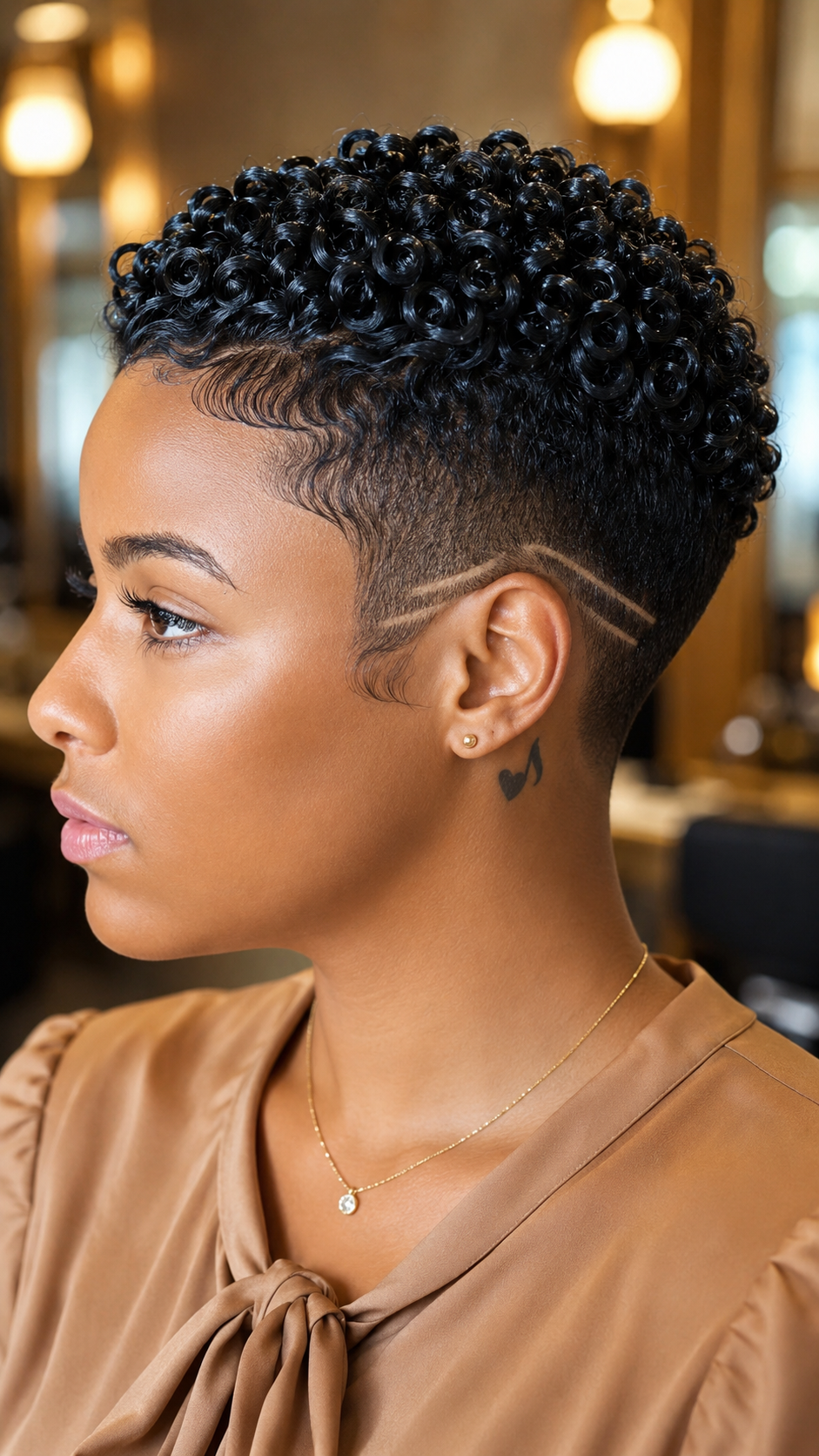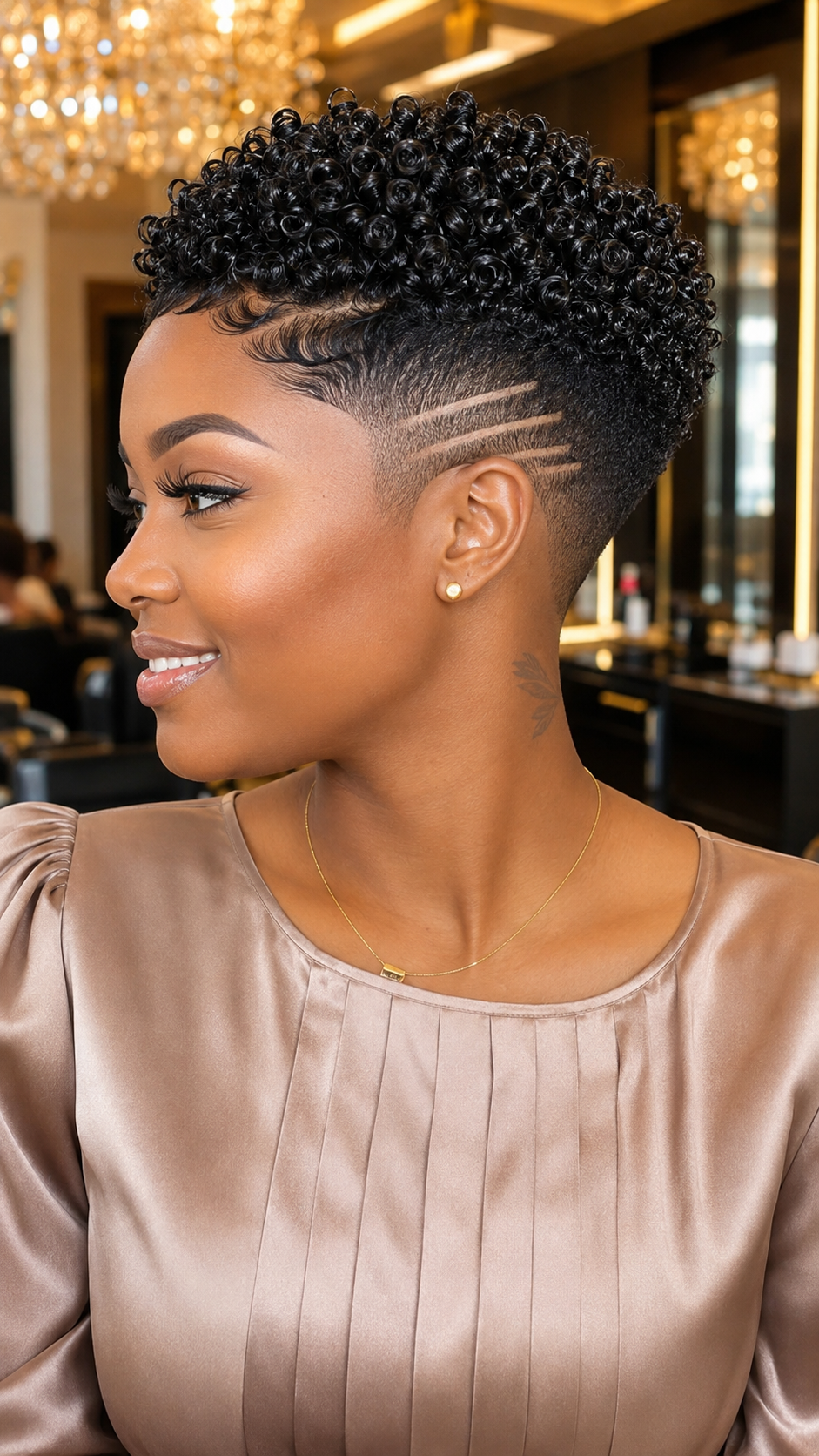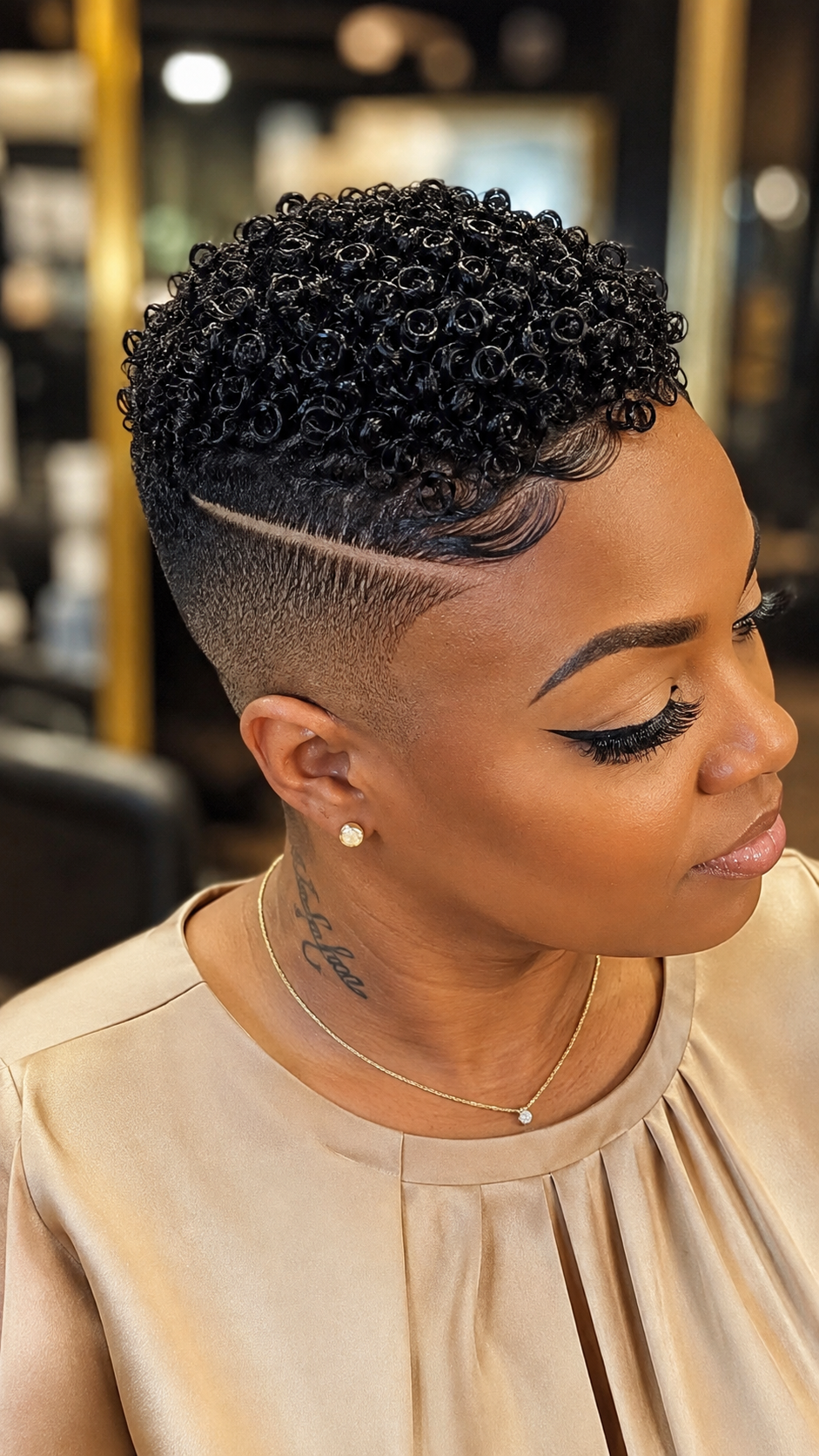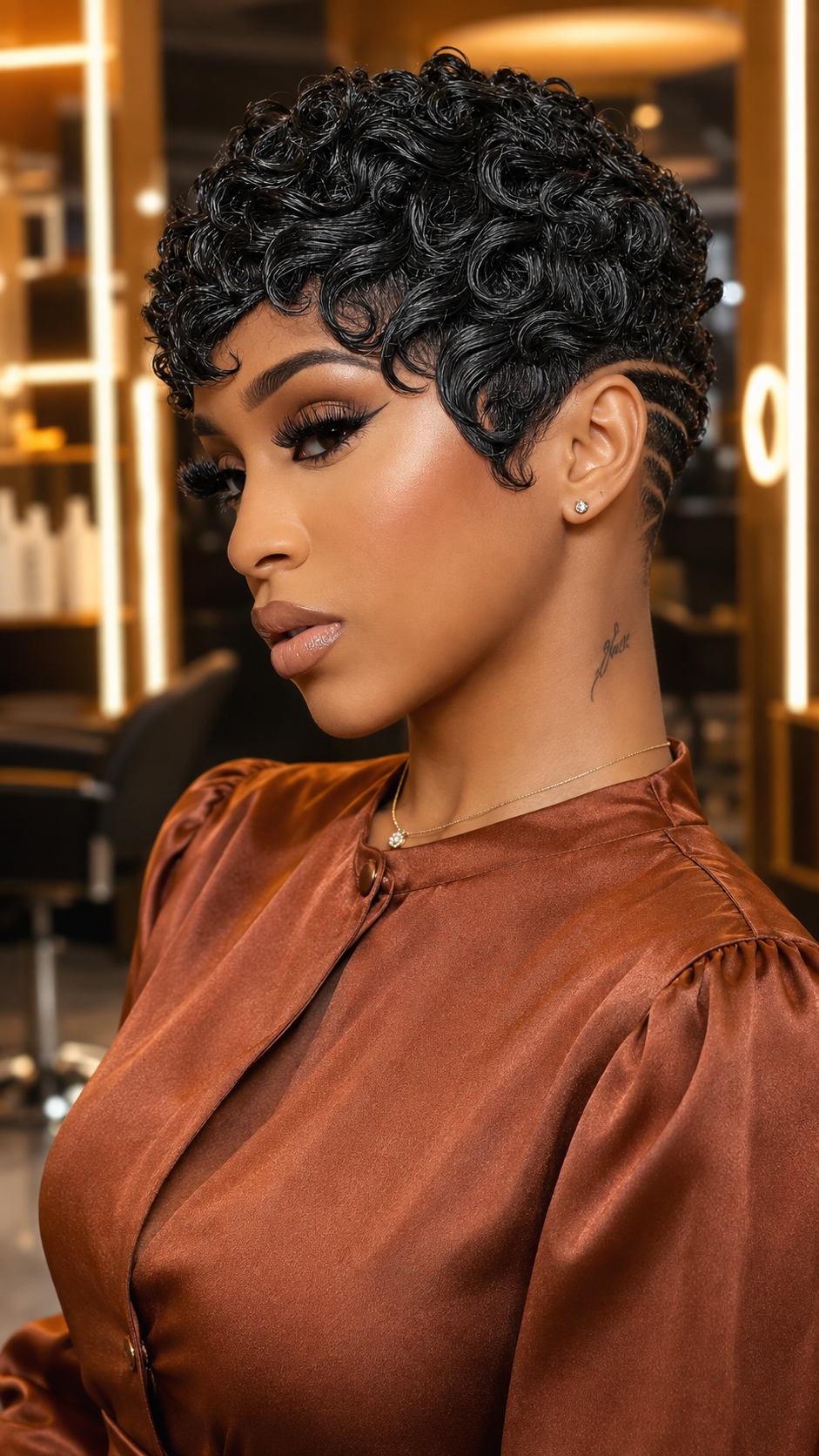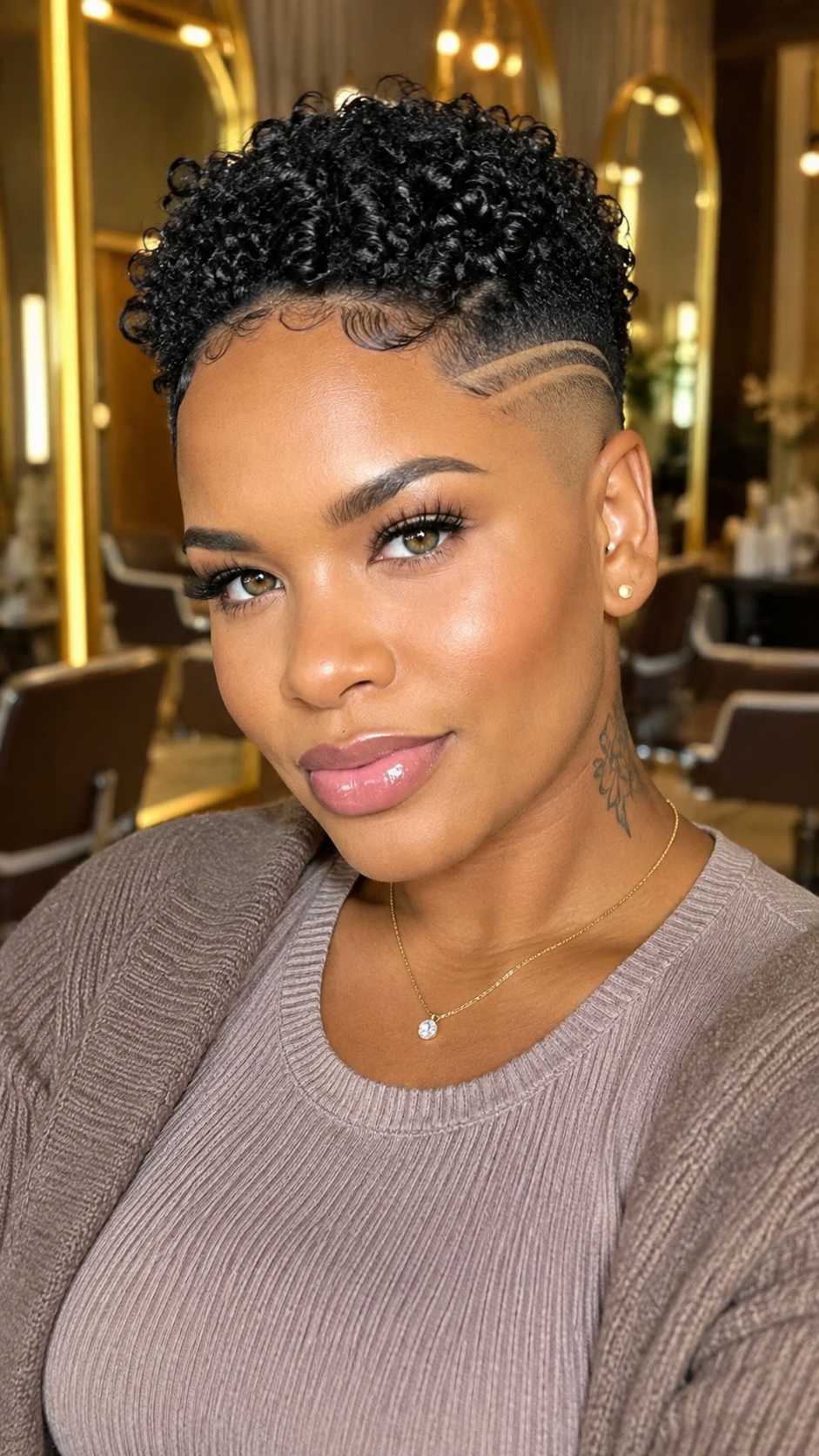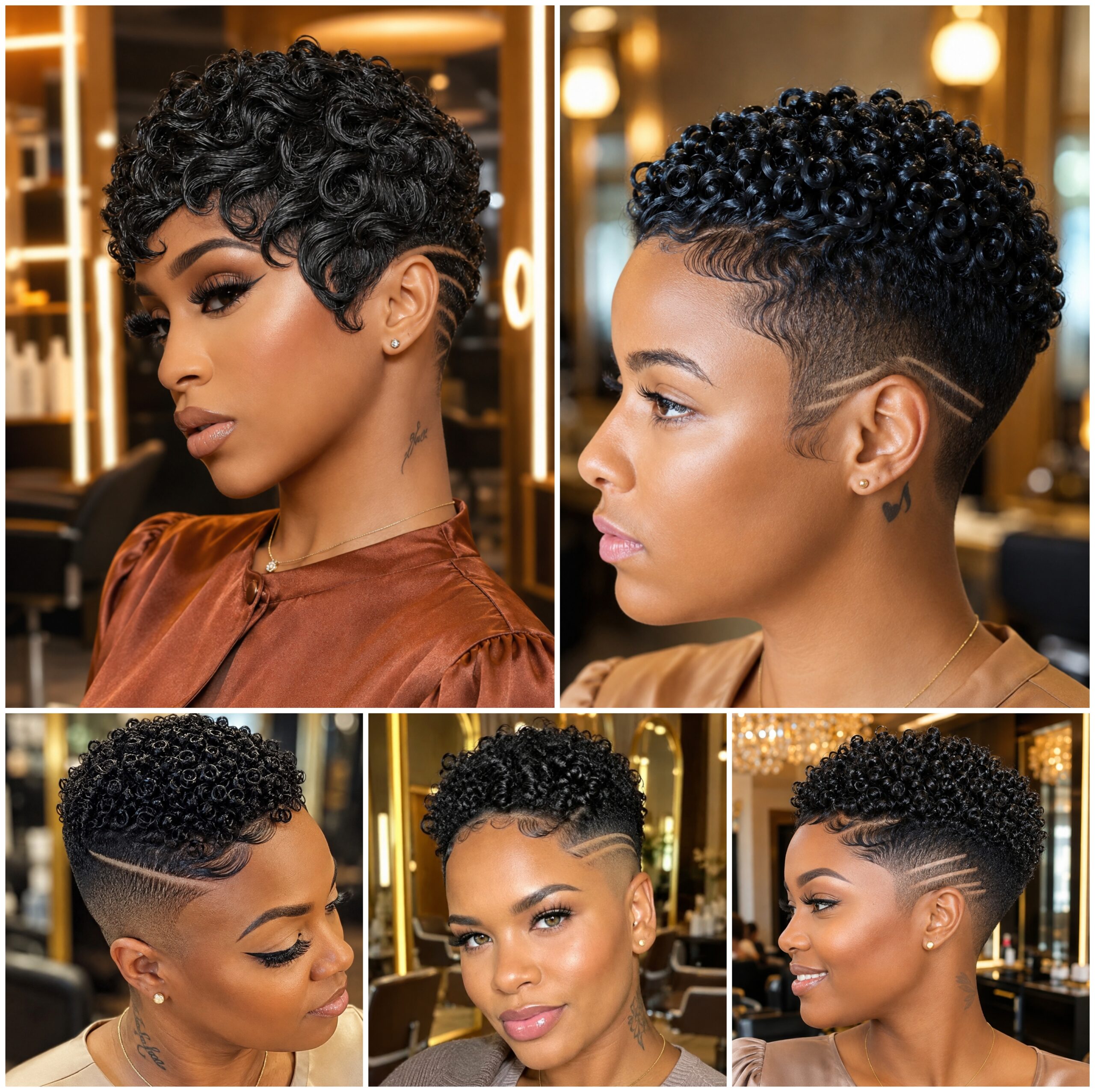
A short curly pixie becomes especially striking when a softly faded silhouette is paired with carefully shaped finger waves around the front hairline. The combination keeps natural curl movement visible through the crown while giving the forehead and temple area a more sculpted appearance.
The curly crown can remain naturally formed or be enhanced with finger styling depending on the existing pattern. Leave-in conditioner, styling foam, or lightweight curl cream helps maintain moisture and separation without weighing down shorter hair. The goal is to preserve bounce through the top while keeping the front section controlled enough for wave styling.
Shaping the Curly Pixie Crown
A compact rounded crown creates the classic pixie silhouette, while leaving slightly more length toward the front provides additional volume. The best length depends on curl shrinkage, density, and how much contrast is desired between the crown and faded sides.
Styling products should be distributed through damp hair before individual curls are shaped. Smaller sections can create more visible curl separation, whereas larger sections provide a softer and fuller appearance.
Allowing the curls to dry before excessive manipulation helps reduce frizz. Once dry, individual sections can be gently repositioned with the fingers rather than brushing through the entire crown.
Creating Finger Waves Along the Front
Finger waves require controlled placement along the hairline. Styling mousse or a flexible-hold gel can be applied to the front before using a fine-tooth comb and fingers to form flowing S-shaped curves.
The waves can extend across the entire forehead or remain concentrated near one temple. A slightly asymmetrical pattern can work particularly well with a pixie cut because it creates contrast against the fuller curls behind it.
Using too much edge product may leave the front stiff or create visible buildup. A small amount of product with enough hold to preserve the wave pattern generally produces a more natural-looking result.
Choosing the Fade
A low fade keeps more natural density around the upper sides and creates a gradual transition into the curly crown. This option works well for women who prefer a softer side profile.
A closer fade provides stronger contrast and makes the finger-wave front more noticeable. The shortest section can remain concentrated around the temples and ears while gradually increasing in length toward the crown.
The fade height should complement the natural hairline rather than forcing every haircut into the same shape. An experienced barber can adjust the transition according to head shape, curl density, and the desired pixie silhouette.
Where to Get the Style Done
An Afro hair salon, natural hair studio, curl specialist, or barber experienced with women’s pixie fades is a good place to start. Useful searches include finger wave stylist near me, curly pixie barber for women, natural hair salon near me, and women’s Afro fade stylist.
Look through recent client photographs before booking. Ideally, the stylist should show experience with both natural curl shaping and finger-wave work because the two sections require different techniques.
Appointments are commonly arranged through WhatsApp, Instagram, salon websites, or online booking platforms. Send a reference photograph beforehand and mention the desired crown length, fade height, and front wave pattern. Ask whether cleansing, conditioning, curl styling, fading, and finger-wave setting are included in the service.
Finding a Similar Wig
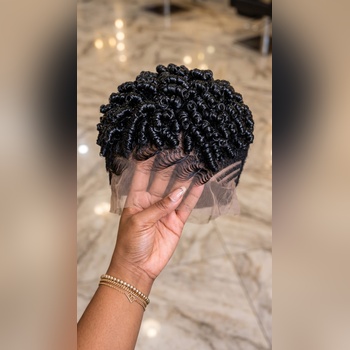
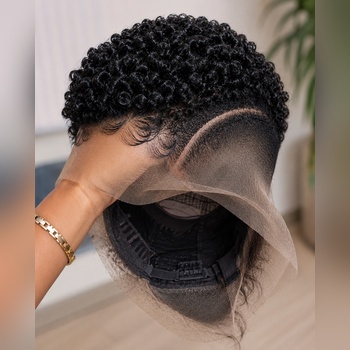
Women who prefer a removable alternative can explore custom wig makers, beauty supply stores, and retailers specializing in short curly units. Search phrases such as finger wave pixie wig, short curly pixie wig for Black women, curly lace front wig, and short natural hair wig can help locate comparable options.
Human-hair lace wigs provide greater flexibility for shaping the front because the hairline can be customized with styling mousse or gel. A well-constructed lace front can also help recreate the appearance of carefully laid waves around the forehead.
Before ordering, check the cap size, curl density, crown length, lace shade, hairline construction, and side profile. For custom orders, sending front and side reference photographs can help the wig maker understand both the crown shape and desired wave placement.
Maintaining the Curls and Waves
Refresh the crown with a light water mist, leave-in conditioner, or styling foam whenever the curls begin losing their shape. Individual curls can be reshaped with the fingers instead of repeatedly restyling the entire pixie.
The front waves may need a small amount of mousse or gel between wash days. Wrapping the hairline gently with a satin scarf at night can help preserve the pattern while reducing friction.
The faded sides will gradually lose their original contrast as the hair grows. Occasional barber appointments can restore the blend while leaving the curly crown largely untouched.
A softly curled crown, closely shaped sides, and flowing hairline waves create an attractive balance between natural texture and detailed styling. With moisture-focused care and occasional professional maintenance, the look can remain flattering and manageable between appointments.