
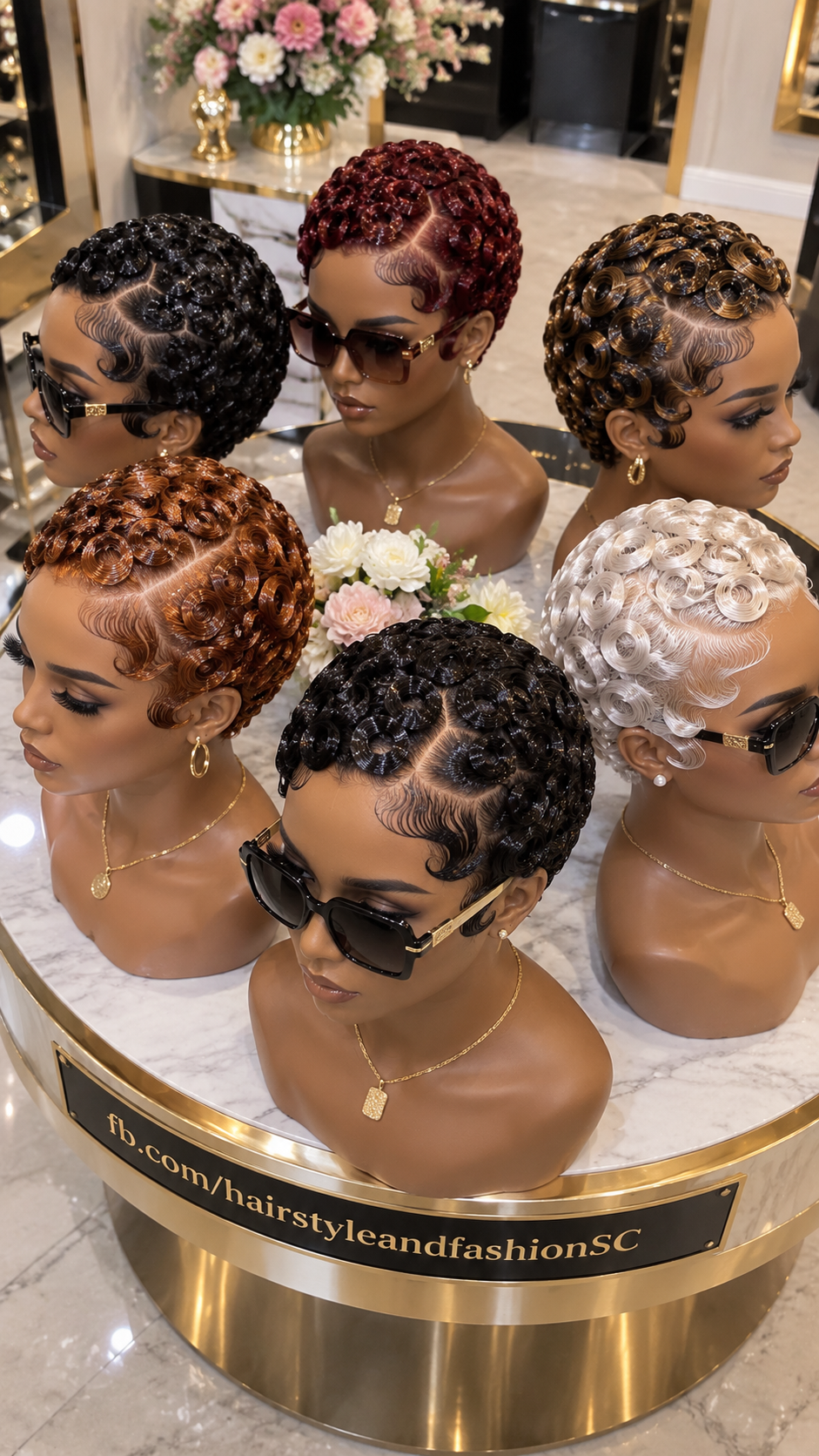
This six-piece collection combines high-gloss circular ringlets, curved exposed parting, sculpted finger-wave sections and compact pixie proportions. The visible color range includes jet black, deep burgundy, copper auburn, black with warm caramel ribbons and an icy pearl-silver option. Instead of relying on shaved geometric patterns, these wigs get much of their character from the way the curls, parting and sweeping frontal strands interact.
The styling is especially detailed around the forehead and temple. Dense ringlets occupy most of the crown, while selected sections beside the part are pressed into broad directional waves. This produces a softer side profile than the heavily tapered designs while still giving the wigs strong visual structure.
Circular Ringlets Cover Most of the Crown
The dominant texture consists of numerous small and medium ringlets positioned close together. Many form complete circular shapes with visible openings, while tighter curls fill the spaces between the larger sections.
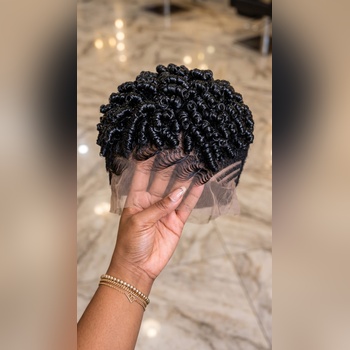
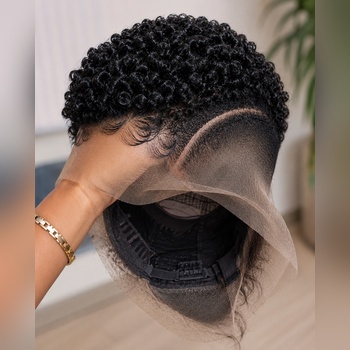
The curls remain compact enough to preserve a pixie silhouette. They create fullness across the top without developing into long spirals or a tall rounded dome.
For a custom recreation, describe the texture as densely arranged polished ringlets with clearly visible circular formations. This is more specific than simply requesting curly hair and helps establish the correct scale.
Curved Parting Gives the Crown Its Direction
Several units show a pronounced part beginning near the frontal area and travelling diagonally through the crown. The line follows a gentle curve rather than appearing perfectly straight.
Hair on either side follows different directions. Ringlets remain concentrated across the fuller crown, while strands beside the exposed part transition into flatter sculpted sections.
This means the part should be established before the final curl arrangement. Changing its position after styling could disturb the balance between the ringlet crown and sweeping side work.
Large Finger-Wave Sections Sweep Across the Temple
The most recognizable detail appears around the temple, where numerous fine strands are grouped into broad sweeping curves. These sections are substantially larger than ordinary edge styling and occupy a visible portion of the frontal side.
Each wave contains many individually separated strands following the same direction. The strands bend together and then transition into smaller curls near the perimeter.
When explaining the style to a wig maker, request elongated sculpted finger-wave panels rather than simple baby hairs. That distinction is important for reproducing the proportions seen here.
Jet Black Creates Strong Curl Depth
The black versions show how much dimension can be created without contrasting color. Their curl interiors remain extremely dark while polished outer strands reflect narrow highlights.
This contrast makes the individual rings easy to distinguish even where the crown becomes densely packed. The sculpted frontal sections also remain visible because light follows their long parallel strands.
For an all-black version, precise curl separation and controlled shine are more important than adding extra color.
Burgundy Produces Rich Wine And Cherry Reflections
The burgundy unit contains a deep red foundation with brighter reflections appearing across raised curls. Depending on the direction of the light, individual ringlets shift between wine, cherry and darker berry tones.
The dimensional effect comes primarily from the shape of the curls rather than separate highlight streaks. Darker areas remain visible between neighboring ringlets, preventing the crown from appearing uniformly red.
When ordering, provide the reference photograph because the desired shade is substantially deeper than a bright primary red.
Copper Auburn Adds Warm Metallic Dimension
The copper-auburn variation combines warm brown depth with brighter reddish-copper reflections. The color becomes particularly noticeable around the circular upper curls where multiple surfaces catch the light.
Deeper brown remains visible inside the curls and near the base. This prevents the color from becoming excessively orange and helps preserve the dimensional appearance.
A useful custom description is rich copper auburn with deeper brown shadow through the curl interiors.
Caramel Ribbons Trace Individual Dark Curls
One of the wigs uses a dark foundation with caramel-brown accents running through selected ringlets. The lighter strands follow the actual curl direction instead of appearing as large isolated patches.
This placement allows the warm color to trace the circular movement of the hair. Some ringlets appear predominantly black, while others contain clearly visible caramel ribbons.
If ordering this color combination, ask the stylist to keep the dark foundation dominant. Excessive lightening would remove much of the contrast visible in the reference.
Pearl Silver Creates the Brightest Crown
The lightest unit appears icy silver to pearl blonde under the display lighting. Because the strands are pale, individual circular curls and sweeping frontal sections become particularly easy to see.
Subtle darker shadows remain between the curls, giving the light crown necessary depth. A completely uniform white shade would create a flatter appearance.
For human-hair versions, ask about the coloring process and maintenance requirements associated with achieving such a pale result.
The Front Perimeter Uses Several Curl Sizes
The curls immediately surrounding the forehead are not identical to those deeper in the crown. Some become slightly larger and flatter as they approach the sculpted wave section, creating a gradual transition.
Smaller curls are also positioned around the temple and ear to prevent an abrupt ending. This variation gives the perimeter a more integrated appearance.
When evaluating a custom unit, inspect the transition rather than judging only the center of the crown.
The Side Remains Compact Without Losing Texture
Although these wigs are not built around an extremely exposed side panel, the lower perimeter remains significantly closer than the ringlet crown. This keeps the silhouette controlled around the temple and ear.
Small curls and molded strands continue through this area rather than leaving a completely bare-looking side. The result preserves the pixie proportion while maintaining visible texture.
A stylist should avoid leaving excessive bulk around the ears because that can make the crown appear wider and heavier than the reference.
The Ringlet Arrangement Continues Toward the Rear
The circular curls extend beyond the frontal section and continue through the back of the crown. This helps maintain fullness from side and three-quarter viewing angles.
Rear curls can be slightly smaller while still preserving the overall texture. The important point is that the crown should not become noticeably sparse behind the frontal ringlets.
For custom orders, request a rear photograph before shipment whenever the seller provides approval images.
Gloss Makes the Sculpted Texture Easier to Read
The hair shows a mirror-like glossy finish, silky reflective surface, healthy wet-look shine, individually visible strands and ultra-defined texture. The reflective quality helps distinguish neighboring ringlets across the densely styled crown.
It is equally important through the finger-wave sections because highlights reveal the direction of the fine parallel strands.
A lightweight finishing product is preferable for maintenance. Excessive oil can cause separate curls to stick together and reduce the crisp circular pattern.
How to Explain This Design During a Consultation
Start by requesting a compact pixie crown covered with numerous small polished ringlets. Explain that the curls need visible circular openings and should remain relatively close to the head.
Next, identify the curved parting and request broad finger-wave-inspired sections extending toward the temple. Mention that the lower perimeter should remain compact while preserving small curls and sculpted strands.
Finally, select one specific color from the display and use that unit as the primary reference instead of asking the stylist to combine several color patterns.
Choosing a Stylist for This Curl Construction
Look for a wig stylist experienced with precision pixie work, molded curls and finger-wave styling. A portfolio containing compact ringlet wigs is more relevant than one consisting primarily of long curly installations.
Send the reference before booking and ask whether the stylist can reproduce both the circular crown and broad frontal wave sections.
If you already own a base wig, provide clear photographs of its current length and density so the stylist can determine whether it is suitable for this type of customization.
Where to Look for a Comparable Wig
Custom wig studios, independent wig makers and specialist pixie sellers are useful places to search. Focus on sellers who show detailed crown and side photographs rather than only frontal model images.
Describe the style using its actual visible characteristics: compact ringlet crown, curved part, broad finger-wave panel and close perimeter.
Ask whether the wig will arrive fully styled. Some sellers may provide an appropriate pixie foundation but require the final ringlet and wave work to be completed by a local stylist.
Ordering a Custom Version Step by Step
Begin by choosing the hair material and preferred color. Provide the cap measurements requested by the wig maker and identify which side should contain the prominent parting.
Send the reference photograph and discuss ringlet diameter, crown density and finger-wave placement separately. If the design needs to face the opposite direction, clearly request a mirrored construction.
Confirm the cap type, production time and included styling services before payment. Request frontal, crown and side approval photographs whenever that service is available.
Estimated Pricing for Similar Custom Wig Work
| Category | Estimated Range | Typical Configuration |
|---|---|---|
| Premium Custom | $475–$950+ | Premium human hair, custom coloring, extensive hand-set ringlets, precision parting and sculpted wave work |
| Standard Custom | $275–$525 | Human-hair pixie with compact ringlet crown, curved part and professionally molded frontal sections |
| Basic Human Hair | $150–$310 | Human-hair foundation requiring additional professional curl setting and perimeter sculpting |
| Premium Synthetic | $90–$195 | Higher-grade fiber with structured ringlets and stronger pre-set curl retention |
| Basic Synthetic | $45–$105 | Lower-cost fiber option with simpler ringlet formation and limited customization |
These are broad estimates for comparable custom work rather than prices for the exact wigs shown. Hair material, color processing, cap construction, stylist location and the amount of hand sculpting can substantially affect the final quotation.
Inspect the Parting and Curl Placement Before Approval
Check that the exposed part remains crisp and follows the intended curve through the crown. Ringlets on either side should appear deliberately positioned rather than randomly crossing the division.
Next, examine the density from front to rear. Individual curls should remain visible even in the fullest areas, and the rear should contain enough texture to preserve the rounded silhouette.
For two-tone units, confirm that the accent color follows selected curls instead of forming irregular blocks.
Protect the Finger-Wave Sections During Storage
The broad temple waves depend on carefully grouped strands and can lose their shape if repeatedly brushed or pressed against other objects.
Store the wig on an appropriately sized stand and leave enough clearance around the frontal and side sections. Avoid placing another wig directly against the sculpted waves.
If these sections loosen significantly, professional resetting can restore their direction more accurately than aggressive brushing.
Keep the Ringlets Intact Between Wears
Avoid combing directly through the crown. The circular formations depend on controlled strand placement, and routine brushing can quickly transform them into a looser texture.
If only a few curls become disturbed, reset those sections rather than restyling the entire crown. This helps preserve the original density and arrangement.
For synthetic units, confirm heat tolerance before using heated tools. Human-hair wigs should also be handled conservatively to retain the original curl formation.
Search Terms
Curved Part Ringlet Pixie · Sculpted Finger Wave Side · Jet Black Circular Ringlets · Burgundy Glossy Pixie Curls · Copper Auburn Ringlet Crown · Black Caramel Curl Ribbons · Pearl Silver Ringlet Pixie · Sweeping Temple Wave Curls