
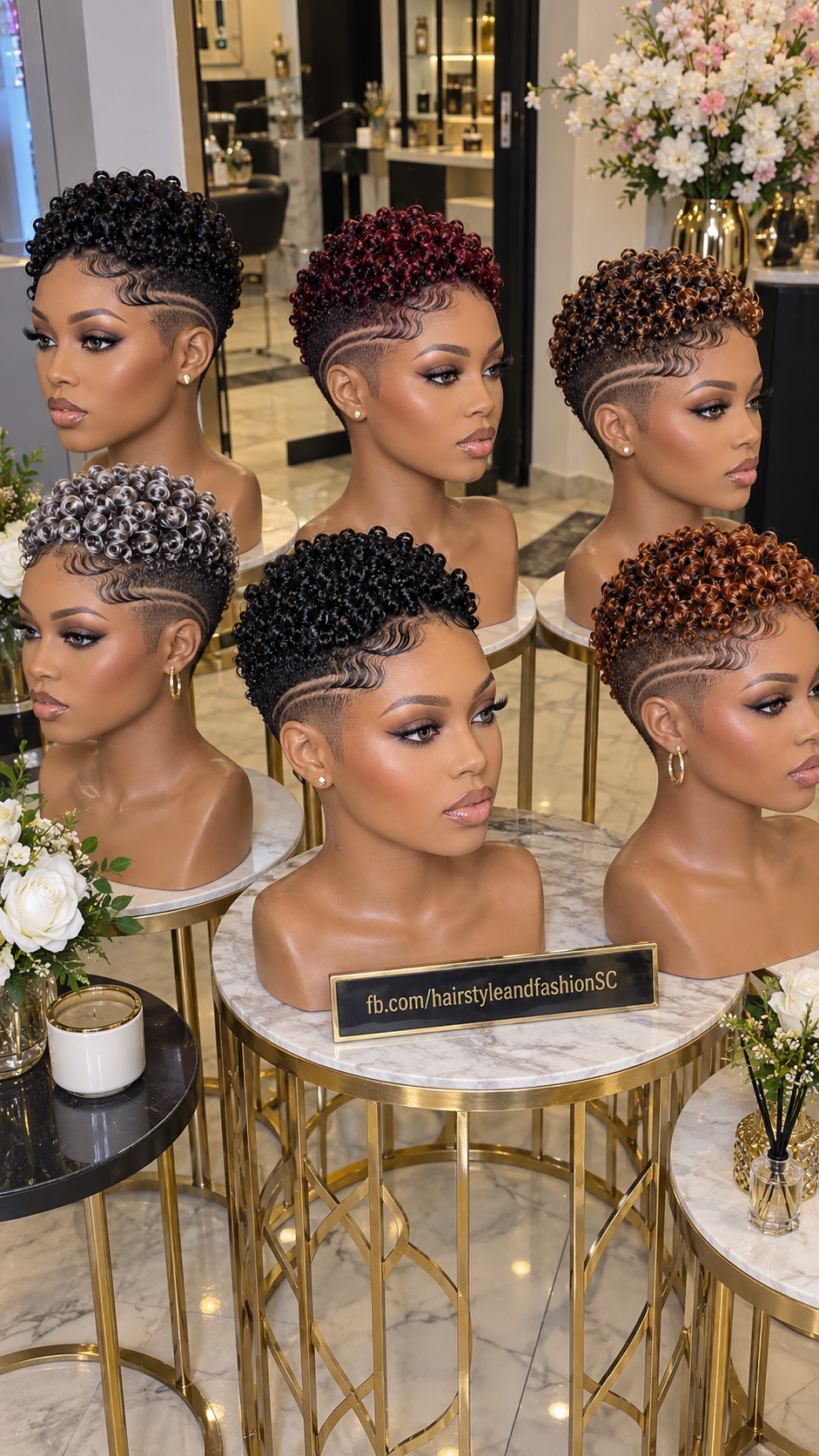
This six-piece pixie wig collection combines densely arranged glossy ringlets, sweeping temple waves, closely tapered sides and curved side detailing. The display includes jet black, burgundy red, smoky silver, copper auburn and black with warm caramel accents. Although the colors vary, each unit follows a similar silhouette: the curl concentration remains on the crown while the sides become progressively closer around the temple and ear.
The strongest visual contrast comes from the relationship between the small circular curls and the sculpted side sections. The crown provides volume and shine, while the flatter temple strands create a controlled transition into the taper. The exposed curved side detail then gives the lower section a sharper profile without competing with the ringlets above.
Compact Ringlets Build the Upper Shape
The crown is composed of numerous small and medium ringlets positioned close together. Many curls have clearly visible circular openings, while tighter coils fill the gaps between them. This creates a dense surface without requiring long hair.
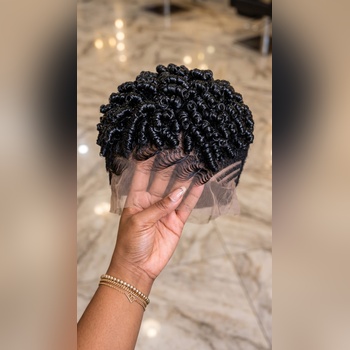
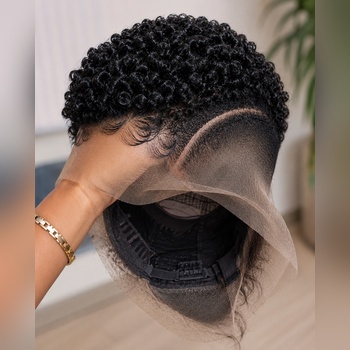
The ringlets remain relatively close to the head and form a rounded upper silhouette. They do not extend upward into tall loops or fall outward like longer spiral curls.
When requesting a comparable unit, describe the crown as compact polished ringlets with visible circular openings and high curl density. This gives a stylist more useful information than simply requesting a curly pixie.
Sweeping Temple Waves Separate the Crown From the Taper
Immediately beneath the ringlets, fine strands are arranged into long directional curves. These temple waves travel backward and downward, following the shape of the head before meeting the close side.
The waves occupy more space than ordinary edge styling. Their parallel strands are clearly visible and form an intentional decorative panel between the ringlet crown and the tapered section.
For a custom recreation, these sweeping strands should be discussed separately from the crown curls because they require a flatter and more controlled styling technique.
The Side Taper Creates a Stronger Crown Profile
The sides are dramatically closer than the upper curls. This reduction in volume makes the crown appear fuller while keeping the overall silhouette compact.
The taper follows the temple and ear rather than maintaining one uniform length. Hair becomes progressively closer as it moves downward, creating a more natural transition through the lower perimeter.
If an existing wig is being customized, the stylist should first determine whether enough density can be removed from the sides without compromising the cap or surrounding hair.
A Curved Side Division Adds Definition
A narrow exposed line follows the contour beneath the sculpted temple section. Its path curves backward rather than running horizontally across the side.
The line provides separation between the upper directional strands and the closest portion of the taper. On some units the detail appears slightly more pronounced, while others use a subtler version of the same idea.
When ordering, select one specific mannequin as your side-design reference. This is preferable to combining line details from several units in the display.
Jet Black Creates Strong Reflective Ringlets
The jet black versions emphasize shape rather than color contrast. Narrow reflections travel around the circumference of individual curls, while their interiors remain significantly darker.
This creates enough separation for the numerous black ringlets to remain individually visible. The polished temple waves also show their direction clearly because light follows the grouped strands.
For this color, maintaining curl separation and surface gloss is especially important because there are no contrasting highlights to define the texture.
Burgundy Brings Deep Berry Tones to the Crown
The burgundy version contains dark wine-red depth with brighter berry reflections across the exposed curls. The color becomes more intense on raised portions while shadowed areas remain substantially deeper.
This variation naturally emphasizes the ringlet pattern. Individual curls shift between darker burgundy and brighter red depending on their position relative to the light.
Use the image as a color reference when commissioning the unit because burgundy shades can vary considerably between suppliers.
Smoky Silver Gives the Ringlets a Cool Metallic Look
The silver variation uses a cool mixture of pale silver and deeper gray. The lighter strands make the ringlet construction particularly visible, while darker areas around the roots and curl interiors provide necessary contrast.
The result reads closer to smoky silver than uniform white platinum. This darker dimension helps the compact curls retain depth.
For human-hair versions, ask the wig maker about the coloring process and recommended maintenance because substantial lightening may require additional care.
Copper Auburn Adds Warm Red-Brown Dimension
The copper unit combines rich auburn depth with brighter copper reflections across the crown. The small curls reveal several shades as they turn through the light.
The warm color also contrasts effectively with the close side, where reduced density naturally creates deeper-looking areas.
When discussing the shade with a colorist, request a rich copper-auburn direction rather than a flat bright orange tone.
Caramel Accents Trace the Shape of Dark Ringlets
One variation introduces warm caramel-brown strands through a darker crown. The lighter color follows selected curls rather than covering the entire upper section evenly.
This placement helps reveal the direction of individual ringlets. Caramel reflections become visible along the raised portions while the dark foundation remains dominant between them.
For a similar two-tone effect, request selective caramel ribbons instead of broad blonde sections.
The Front Hairline Uses Controlled Curved Strands
Along the frontal perimeter, the styling becomes flatter before transitioning into the raised curls. Fine strands follow deliberate curved directions instead of projecting randomly into the forehead area.
This creates a cleaner visual connection between the crown and temple work. The frontal curves are particularly noticeable on the black and silver units because of their strong tonal contrast.
A stylist should preserve this difference between the flatter perimeter and circular crown rather than curling every section identically.
Curl Density Continues Toward the Back
The ringlet pattern extends beyond the frontal crown and remains substantial toward the rear. This maintains the rounded silhouette from multiple viewing angles.
A balanced rear is important because excessive concentration at the front could create a top-heavy appearance. Smaller curls can be used toward the back to maintain density while controlling bulk.
For a made-to-order wig, request a rear three-quarter approval photograph in addition to the frontal view.
The Finish Depends on Strong Strand Separation
The collection displays mirror-like glossy hair, silky reflective finish, healthy wet-look shine, individually visible strands and ultra-defined texture. This finish helps each ringlet remain recognizable even where the crown is densely packed.
The temple waves also benefit from strand separation. Their smooth parallel direction should remain visible rather than turning into one solid molded section.
Use lightweight finishing products during maintenance. Excess oil can collect between neighboring curls and reduce their definition.
How to Describe This Pixie Wig to a Stylist
Begin with the upper section and request a dense crown of compact circular ringlets. Explain that individual curl openings should remain visible and that the crown should stay relatively close rather than becoming excessively tall.
Next, request elongated sculpted temple waves followed by a close tapered side. Mention the narrow curved division visible between the styled upper section and lower taper.
Finally, select the color separately and provide the exact mannequin reference corresponding to your preferred shade.
Choosing a Salon for This Construction
Look for a stylist whose portfolio includes pixie wigs, precision ringlet setting, molded temple work and close side shaping. Experience with only long curly wigs may not translate directly to this type of construction.
Send the reference photograph before booking and ask whether the complete crown and side work can be completed during the same service.
If the side detailing requires separate precision work, confirm whether the salon handles it internally or recommends a barber experienced with wigs.
Finding a Similar Wig Online
Search specialist pixie wig sellers, independent custom wig makers and salons offering finished units. Look closely at side photographs because the tapered profile and temple detailing are major parts of this design.
When contacting a seller, specify compact ringlets, sweeping temple waves, close sides and curved side detailing. Include your preferred color reference.
Ask whether the product arrives fully styled. Some sellers may provide a suitable pixie foundation that still requires professional curl setting and side customization.
Steps for Ordering the Wig
Choose your preferred hair material and color, then provide the cap measurements requested by the wig maker. Identify which side should display the curved detailing and confirm whether the reference needs to be mirrored.
Discuss ringlet diameter, crown density, taper depth and temple-wave placement separately. This helps prevent important structural details from being overlooked.
Confirm the cap construction, production time and included styling services before payment. For custom orders, request frontal, profile and rear approval photographs whenever possible.
Price Guide for Comparable Custom Pixie Wigs
| Category | Estimated Range | Typical Configuration |
|---|---|---|
| Premium Custom | $475–$950+ | Premium human hair, custom coloring, intensive ringlet setting, precision taper and detailed temple sculpting |
| Standard Custom | $275–$525 | Human-hair pixie with compact ringlet crown, close sides and professional wave shaping |
| Basic Human Hair | $150–$310 | Human-hair foundation requiring additional ringlet setting, tapering and perimeter customization |
| Premium Synthetic | $90–$195 | Higher-grade fiber with pre-set ringlets and stronger shape retention |
| Basic Synthetic | $45–$105 | Lower-cost fiber option with simpler curls and limited precision customization |
These ranges are general estimates for comparable custom work rather than prices for the exact wigs pictured. Hair quality, color processing, cap construction, stylist location and the amount of manual sculpting can significantly affect the final cost.
Inspect the Side Proportions Before Accepting the Wig
Check the relationship between the ringlet crown, sculpted temple section and close taper. The transition should remain clearly visible without producing an abrupt step between lengths.
The curved side division should follow the head contour and remain relatively narrow. It should complement the hairstyle rather than becoming the dominant element.
A direct profile photograph is the most useful angle for assessing these proportions before final delivery.
Check the Ringlets From Above and Behind
A frontal view can make a crown appear fuller than it actually is. Inspect the top and rear to confirm that the ringlet density continues consistently across the complete upper section.
Individual curls should remain recognizable throughout the crown. Sparse rear areas or oversized curls can significantly alter the intended rounded silhouette.
For highlighted versions, verify that the accent color is distributed through the crown rather than concentrated only at the front.
Maintaining the Temple Waves
Avoid aggressive brushing around the sculpted side because the fine strands depend on controlled direction. Repeated brushing can separate them and remove the sweeping pattern.
If the waves begin to loosen, targeted professional resetting is preferable to redesigning the complete side at home.
Keep a clear profile photograph of the original styling so the intended curvature can be reproduced during future maintenance.
Protecting the Ringlet Crown Between Wears
Store the wig upright on a suitable stand and avoid compressing the upper curls. Tight storage can flatten the ringlets and alter the rounded crown shape.
Do not routinely brush through the curls. When individual ringlets loosen, concentrate maintenance on those sections rather than disturbing the entire crown.
Before applying heat to synthetic hair, verify its heat tolerance. Human-hair units should also be styled conservatively to preserve the original formation.
Search Terms
Compact Ringlet Crown Pixie · Sweeping Temple Wave Panel · Curved Side Taper Detail · Smoky Silver Ringlet Crown · Burgundy Sculpted Pixie Curls · Copper Auburn Ringlet Top · Black Caramel Curl Accents · Jet Black Close Side Pixie