
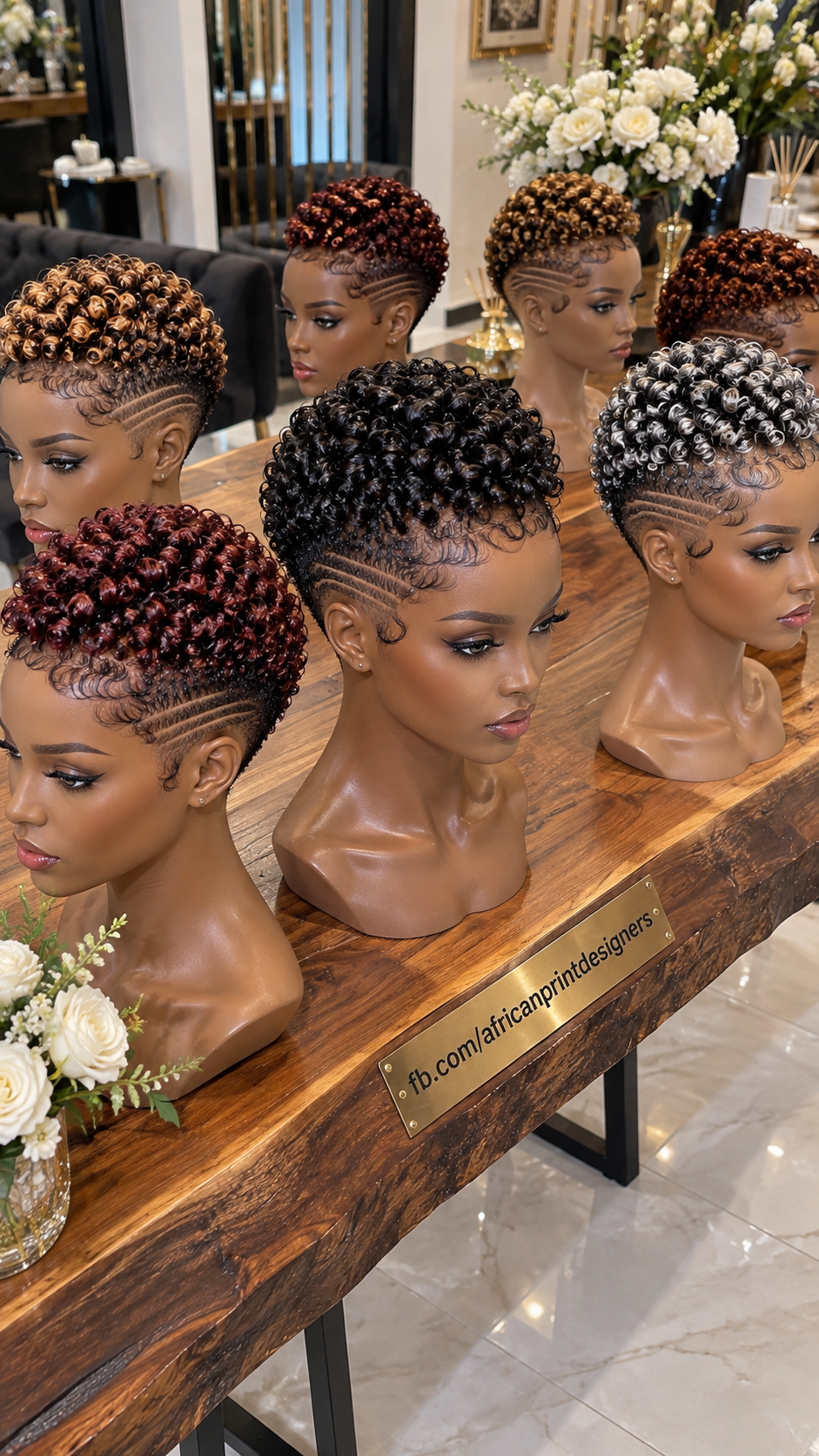
This seven-piece pixie wig collection combines compact glossy ringlet crowns, closely tapered sides, sculpted temple strands and multiple parallel side lines. The visible colors include jet black, burgundy, copper auburn, caramel brown, black with honey-toned accents and a striking black-and-silver combination. The overall construction remains consistent across the display: dense curls stay concentrated through the upper crown while the sides become dramatically closer around the temple and ear.
The defining element in this collection is the side work. Several units display three narrow parallel lines running backward through the tapered area, while others use closely related curved variations. This creates a strong barber-inspired profile beneath the ringlet crown without requiring excessive length or volume.
Tight Ringlets Create a Dense Upper Crown
The upper section contains numerous small ringlets positioned tightly together. Most curls form compact loops or circular spirals rather than loose waves, creating a dense surface while preserving the pixie proportions.
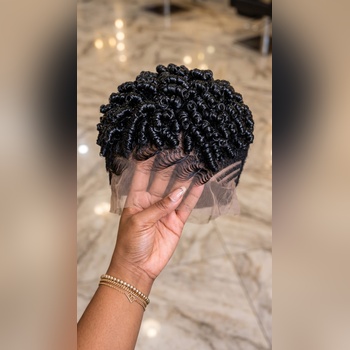
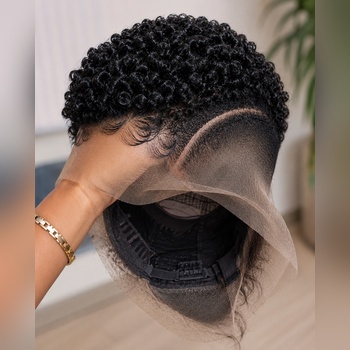
The curls are not perfectly identical in diameter. Slight variations between smaller coils and wider loops prevent the crown from looking mechanically repetitive and give the hairstyle a more natural sense of depth.
For a custom recreation, ask for dense compact ringlets with clearly separated curl openings. Large loose spirals would produce a noticeably different silhouette.
Triple Parallel Lines Shape the Side Profile
The side detailing is especially prominent on the frontal units. Three narrow exposed lines travel backward through the close tapered section, following a gentle curve around the head.
Small strips of closely cropped hair remain between the lines. This separation is important because it allows each line to remain individually visible instead of becoming one broad shaved panel.
When requesting this detail, specify three slim parallel side lines with consistent spacing. A direct side photograph should accompany the request because the curvature and placement determine much of the finished appearance.
The Close Taper Makes the Curl Crown Look Fuller
The sides contain substantially less volume than the upper ringlets. This contrast makes the crown appear fuller even though the curls themselves remain relatively compact.
The taper also creates the clean surface needed for the line pattern. If too much density remains around the temple, the individual stripes become difficult to distinguish.
For a custom unit, crown density and side taper depth should be discussed together rather than treated as separate styling decisions.
Jet Black Emphasizes Shine and Curl Separation
The jet black versions depend on reflection to reveal their texture. Narrow highlights travel around the outer surfaces of the curls while their centers remain dark, creating visible separation throughout the crown.
The black color also produces strong contrast around the tapered side. The exposed lines become especially noticeable against the dark cropped hair surrounding them.
This version works particularly well when the ringlets remain highly polished and individually recognizable.
Burgundy Gives the Crown Deep Red Dimension
The burgundy units combine deep wine-colored shadows with brighter cherry and berry reflections across the raised curls. Because every ringlet turns through the light differently, the crown displays several red intensities without requiring obvious separate streaks.
The darker base areas preserve depth between neighboring curls. This prevents the saturated color from becoming visually flat.
When ordering this shade, send the reference photograph rather than requesting generic red, since the intended result is considerably deeper and richer.
Copper Auburn Adds Warm Reflective Depth
The copper-auburn versions introduce warm red-brown color across the crown. Bright surfaces reveal copper and cinnamon reflections while the recessed sections remain deeper auburn.
This tonal movement works naturally with the compact ringlet pattern. Every circular curl creates several reflective surfaces, allowing the color to shift subtly throughout the crown.
A stylist should retain darker depth rather than processing the entire unit into one bright copper tone.
Caramel Brown Brings Out the Curl Pattern
The caramel-brown variation appears lighter and warmer than the deeper copper units. Golden-brown reflections travel through the ringlets while darker brown remains visible closer to the base.
This combination makes the individual curl openings particularly easy to distinguish. It also creates strong visual contrast against the closely tapered side underneath.
For a similar custom shade, request warm caramel brown with sufficient darker depth to preserve the ringlet definition.
Black and Silver Creates a High-Contrast Crown
One of the most distinctive units combines a dark foundation with silver or pale gray accents through the upper curls. The lighter strands follow the curl direction instead of appearing as large disconnected patches.
This placement allows silver sections to trace individual ringlets while the black foundation remains visible underneath. The result has considerably more contrast than a uniform gray crown.
When ordering, specify that the silver should appear as integrated curl accents rather than covering the entire wig evenly.
Honey Accents Add Warmth to Dark Curls
Several warm-toned sections show darker foundations combined with honey or caramel reflections. These lighter strands are distributed through selected ringlets, helping emphasize their circular movement.
The dark base remains important because it creates depth between the highlighted curls. Too much light color would reduce the contrast and change the overall appearance.
A useful color instruction is dark brown or black with selective honey-caramel curl accents.
Sculpted Temple Strands Bridge the Two Lengths
Between the ringlet crown and tapered side, fine strands are molded into sweeping directional curves. These sections sit flatter than the upper curls and create a gradual transition into the close side.
The individual strands remain visible within each sweep, producing a feathered effect rather than one solid molded section.
This temple work should be preserved during customization because removing it would create a much more abrupt transition between the crown and taper.
The Side Lines Follow a Gentle Backward Curve
The decorative stripes do not travel perfectly horizontally. They angle slightly backward and follow the contour of the head, helping them integrate with the overall pixie silhouette.
The lines are most prominent near the temple and gradually become less dominant toward the rear. This prevents the side pattern from overpowering the crown.
During a consultation, show the stylist the exact profile you prefer because even a small change in angle can noticeably alter the finished design.
The Lower Perimeter Stays Extremely Compact
Below the decorative lines, the hair remains very close to the foundation. There is almost no unnecessary bulk around the ear, allowing the upper curls to remain the dominant texture.
This close lower section also makes the side lines easier to see from a three-quarter angle. The effect would be significantly weaker if the perimeter were left fuller.
Cap positioning should be checked carefully so the side detailing sits at an appropriate height when the wig is worn.
The Rear Should Continue the Taper Gradually
The side taper should transition naturally toward the back rather than stopping suddenly behind the ear. The lower rear can remain close while the ringlet crown continues above it.
This produces a narrow base supporting a fuller upper silhouette. A balanced transition is especially important when the wig will be photographed from multiple angles.
For custom orders, request a rear three-quarter photograph before final approval whenever possible.
Gloss Gives the Small Ringlets Better Definition
The hair displays a mirror-like glossy finish, silky reflective surface, healthy wet-look shine, individually visible strands and ultra-defined texture. This finish helps prevent the numerous compact curls from visually merging together.
Black ringlets show narrow reflective highlights, while copper, caramel and silver sections reveal additional tonal variation as they turn through the light.
Use lightweight finishing products during maintenance. Excessive oil can collect between the curls and reduce their crisp circular appearance.
How to Request This Pixie Construction
Start by asking for a compact crown containing numerous small polished ringlets. Explain that the curls should remain dense but individually visible rather than becoming one continuous curly surface.
Next, request closely tapered sides with three narrow parallel lines. Add sculpted temple strands between the crown and side design so the transition remains controlled.
Finally, select one specific color treatment from the reference. Keeping the structural instructions and color request separate can make the order easier for the stylist to interpret.
Where to Have This Wig Professionally Customized
Look for a wig stylist experienced with pixie units, precision curl setting and close side shaping. Because the side contains detailed line work, experience with barber-inspired wig customization is particularly useful.
Send the reference before booking and ask whether the stylist handles both the ringlet setting and side detailing. Some salons may use separate specialists for these stages.
If you already own a base wig, provide clear photographs of its crown length and side density so the stylist can determine whether it can be reshaped appropriately.
Finding a Similar Wig to Buy
Custom wig studios, independent wig makers and specialist pixie sellers are suitable places to search. Prioritize sellers whose portfolios include direct side photographs because the line work is a major part of this design.
When contacting a seller, specify compact glossy ringlets, close tapered sides, triple parallel lines and your chosen color direction.
Confirm whether the wig arrives fully customized. A standard curly pixie may still require professional tapering, curl setting and side detailing after purchase.
Ordering and Booking the Custom Version
Select the hair material and preferred color first. Provide the measurements requested by the wig maker and identify which side should display the decorative lines.
Discuss ringlet size, crown density, taper depth and line spacing separately. If the reference needs to be reversed, clearly request a mirrored version before production begins.
Confirm cap construction, expected production time and included styling services before payment. Request frontal, side and rear approval photographs whenever the seller provides that option.
Price Guide for Comparable Ringlet Pixie Wig Work
| Category | Estimated Range | Typical Configuration |
|---|---|---|
| Premium Custom | $475–$950+ | Premium human hair, custom coloring, intensive ringlet setting, precision taper and detailed triple-line work |
| Standard Custom | $275–$525 | Human-hair pixie with compact ringlet crown, close sides and professional line detailing |
| Basic Human Hair | $150–$310 | Human-hair foundation requiring additional curl setting, tapering and side customization |
| Premium Synthetic | $90–$195 | Higher-grade fiber with structured ringlets and stronger pre-set curl retention |
| Basic Synthetic | $45–$105 | Lower-cost fiber option with simpler curls and limited precision side customization |
These are broad reference ranges for comparable custom work rather than prices for the exact wigs pictured. Hair quality, coloring, cap construction, location and the amount of hand styling can significantly affect the final quotation.
Check the Three Lines Before Final Approval
Inspect the side directly rather than relying only on frontal photographs. All three lines should remain individually visible with narrow strips of hair separating them.
The curves should follow a related direction and maintain controlled spacing. One line becoming substantially wider or crossing another can change the entire side pattern.
Keep a clear profile photograph of the original design for future maintenance appointments.
Inspect Curl Density Across the Complete Crown
Check the wig from above and behind to make sure the ringlet density continues beyond the frontal area. A full-looking front can sometimes hide a noticeably thinner rear crown.
Individual curls should remain recognizable throughout the upper section. On two-tone units, the accent color should also continue naturally rather than being concentrated in only one area.
A crown and rear three-quarter photograph can reveal these details before the wig is shipped.
Maintaining the Side Detail Between Appointments
Fine hairs can gradually move across the exposed lines. When refreshing the design, avoid repeatedly making the stripes wider simply to restore visibility.
The goal should be to preserve their original width, spacing and curvature. Excessive enlargement can remove too much of the tapered panel and permanently alter the proportions.
Professional maintenance is particularly useful when several parallel lines need to remain evenly spaced.
Protecting the Ringlets During Storage
Store the wig upright on an appropriately sized stand with enough space around the crown. Avoid compressing the upper curls against shelves, boxes or other wigs.
Do not brush through the compact ringlets during routine care. If individual curls loosen, targeted resetting is preferable to disturbing the entire crown.
Before applying heat to synthetic hair, confirm its heat tolerance. Human-hair versions should also be handled conservatively to preserve the original ringlet arrangement.
Search Terms
Triple Side Line Ringlet Pixie · Compact Glossy Curl Crown · Black Silver Ringlet Accents · Burgundy Tapered Pixie Curls · Copper Auburn Ringlet Top · Honey Caramel Curl Highlights · Close Tapered Triple Lines · Sculpted Temple Curl Waves