
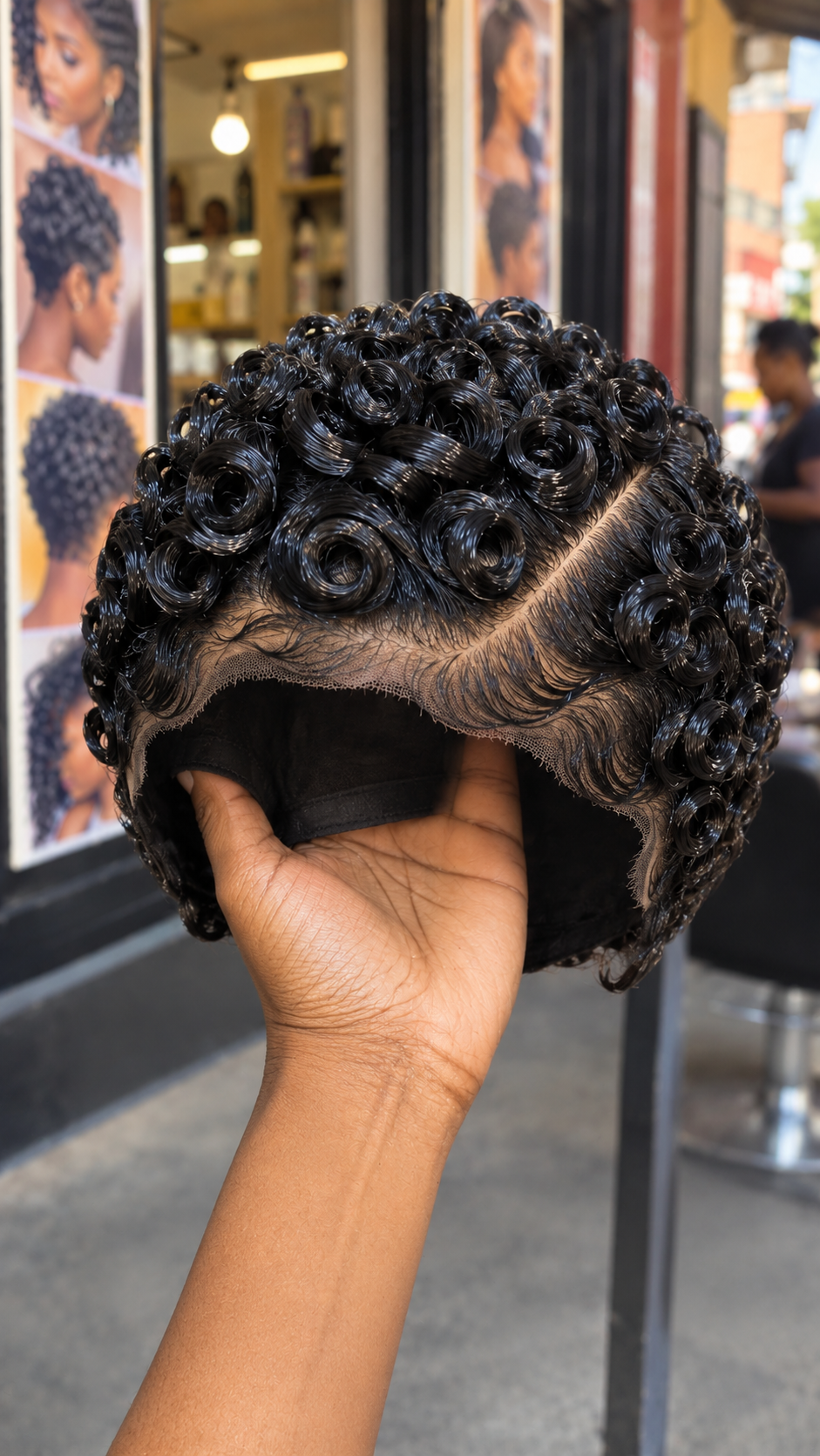
A long side part cuts through this glossy black pixie, separating a generous crown of circular curls from a closer section above the temple. The contrast gives the haircut its direction. Most of the fullness sits on one side of the part, where broad curls overlap and turn toward the forehead. On the other side, the hair lies close for a short distance before opening into smaller circles. The result is a short hairstyle with a clear shape and plenty to admire up close.
The curls have rounded openings and layered ridges, with individual strands following each turn. Their sizes vary across the crown, and several face different directions. Larger curls occupy the upper front, while smaller ones follow the visible sides. This variation makes the surface feel lively without losing its rounded outline. The black shade brings the arrangement together, with daylight tracing the outer edges of the curls and leaving their centers in softer shadow.
Along the front, fine hairs form shallow waves over the brown lace. The wave beside the part is wider and more pronounced, then narrows toward the temple. The wig is supported by one hand from underneath, revealing part of the dark interior. That presentation makes the curl placement and hairline easy to inspect, while a fitting on the wearer will establish exactly where the part, front waves and side curls should sit.


The Appeal of an Uneven Balance
The side part gives this black curly pixie wig an appealing imbalance. The fuller side carries most of the crown curls, while the narrower side provides a quieter area close to the part. That difference keeps the hairstyle from looking equally rounded in every direction. When trying a similar unit, look at how the fullness relates to your face. You may prefer the larger curls above one eye, or you may want them positioned farther back so more of the forehead remains open.
Part direction should be decided before a custom maker begins the final set. Use your own left and right when describing the placement, and mark the reference if needed. A photograph can be mirrored, especially when it comes from a phone. Ask for a front view of the proposed direction on a head form. The maker can then show how the fuller section will fall and where the closer section begins before you approve the arrangement.
The part also needs to remain visible once the curls are finished. In the reference, it forms a continuous line between the two main areas of hair. If the curls beside it are too large or sit too far inward, they may cover that separation. Discuss the spacing along the part with your stylist. A little room at the roots can preserve the line while allowing the curls to retain their generous size.
Choosing the Crown Height and Curl Size
The largest curls sit prominently through the upper front, where their open centers are easy to see. They provide the hairstyle with its main volume. Smaller curls finish the visible sides, helping the outline return toward the head. If you want a lower version, ask the maker to adjust the angle of the larger curls. Their diameter can remain substantial even when they sit closer to the base, which helps preserve the look without adding unwanted height.
For more fullness, consider where you want the extra lift. A little height through the upper crown may be enough to create a stronger silhouette. Adding hair around the entire perimeter can make the wig wider near the ears and reduce the distinction between the two sides of the part. Request a profile photograph when comparing options. It will show how far the crown projects and whether the side curls remain close enough for your preferred proportions.
The visible curls resemble short, open rosettes, with broad outer ridges turning toward their centers. They differ from tiny coils and loose, elongated ringlets. Use close photographs when discussing the curl pattern with a seller, because product names can cover several different finishes. Ask whether the unit will arrive with this type of sculpted set or whether a stylist must create it after delivery. That detail affects both your budget and the time needed before the first wear.
A Front Wave That Follows the Part
The longer wave beneath the part follows the direction of the hair above it. Fine strands curve downward and then turn back toward the side, creating a scalloped edge. Near the center of the forehead area, the waves are shallower and more delicate. This gradual change in scale helps the hairline connect with the larger curls. At a fitting, assess the whole front together so one section does not appear much heavier or lower than the rest.
Try the wig at the hairline position you expect to use before any lace is trimmed. Look straight ahead, then turn slightly to each side. Check how the deepest curve sits above your brow and whether the temple area feels comfortable. If you wear glasses, bring them to the appointment. Their arms can touch the lower curls, and the stylist can make small adjustments so the side detail remains visible without being pushed out of place.
Where To Buy This Wig
Similar styles can be sourced through specialist wig boutiques, custom wig studios and beauty supply shops with a strong selection of short units. Look for clear examples of side-part sculpted curls in the seller’s work. A boutique may offer a ready-made piece with suitable proportions, while a custom maker can discuss the exact crown height and front wave. Send the reference with your inquiry and identify the long part, larger crown curls and closer temple section.
For a custom order, include your measurements, preferred part side and the amount of forehead you want to show. Explain whether you like the prominent sheen in the photograph or prefer a softer finish. Ask for a daylight view of the proposed black shade, since strong indoor lighting can change how reflective the hair appears. Discuss the back and nape separately. The reference emphasizes the front and upper surface, so a rear photograph is needed to agree on the complete cut.
Before paying, request views of the front, both profiles, the back and the full cap interior. Confirm the fiber, cap size, lace shade, usable parting area and attachment components. A short video of the actual unit can show whether the curls keep their shape as it turns. For custom work, establish when approval photographs will be provided and what adjustments are included. Get the production time, delivery cost and alteration terms in writing so the finished order can be checked against a clear brief.
To book a local appointment, contact a stylist experienced in short wig fittings and molded curl sets. Send photographs of the reference and the wig you intend to bring. Ask whether the booking includes fitting, lace finishing and any curl adjustments. If you want a related hairstyle on your own hair, arrange a consultation with a short-hair specialist. They can assess the length available for the larger circles and explain how the part and closer side would work with your existing cut.
Cap Options for a Long Side Part
The brown lace is visible at the front of the pictured unit, with a dark interior beneath it. Ask the seller for complete underside photographs to establish the construction and available parting space. A lace-front wig can accommodate this design when the lace extends far enough behind the hairline. The useful measurement is the area supporting the intended part. Ask the seller to show where that area ends relative to the crown curls and the closer side section.
A frontal can provide working space across the forehead and near the temples, depending on its dimensions. A closure may suit a fixed side part when the line stays within its usable area. Show the maker the full length and angle of the reference part so they can assess compatibility. Full-lace construction can offer more possibilities for changing direction later. Compare these choices according to your intended style, fitting needs and how much restyling you expect to request over time.
For a glueless installation, check the adjustable straps, elastic band and other attachment components. Follow the maker’s measuring instructions, including circumference and any requested ear-to-ear or front-to-nape dimensions. During fitting, turn your head and look down to see whether the unit remains comfortably positioned. The part and front wave should return to the same place without repeated adjustment. If the cap shifts or feels tight at the sides, ask the stylist to review its size and the position of the attachments.
Adhesive-based fitting is another option for a compatible lace unit when additional hold suits your routine. Agree on the final position before the edge is secured. Ask the stylist which remover matches the adhesive and how to release the lace gently. Explain whether you plan to remove the wig frequently or wear it for longer intervals. That information helps the stylist demonstrate a suitable care routine and show how to protect the fine hairs near the front during removal.
Density That Leaves the Curls Easy to See
The finished length of a sculpted pixie can be difficult to judge from an inch measurement alone. Hair folds into each circular curl, using length that becomes less obvious after setting. Ask about the diameter of the finished curls and the height of the crown alongside the advertised length. A profile view is particularly useful. It shows whether the largest curls sit at the height you want and how the shorter side meets the area around the ear.
Density should support the fuller crown while leaving the part clear. Too much hair beside the line can cover it, and excessive fullness through the front can make the wave look thick. Ask the maker how they distribute the hair between the two sides. If you prefer more volume, discuss adding it selectively through the fuller section. The closer side can remain lighter, preserving the contrast that gives this pixie its direction.
Illustrative Pricing for a Side-Part Curly Pixie
The following USD ranges are illustrative budgeting examples. Actual prices vary with fiber, cap construction, customization, supplier and location. Delivery, installation and later curl resets may be separate charges. Confirm whether the quoted amount includes the finished curl arrangement, because a basic short unit may need additional cutting and setting before it resembles the reference.
| Category | Illustrative Price Range | Potential Scope |
|---|---|---|
| Premium Custom | USD 285–580+ | Made-to-measure cap with a planned side part, individual curl placement and fitted front waves. |
| Standard Custom | USD 160–290 | Standard cap adapted for the requested part direction, crown height and compact side finish. |
| Basic Human Hair | USD 95–180 | Short human-hair base that may require a separate cut, sculpted set and fitting appointment. |
| Premium Synthetic | USD 45–105 | Pre-styled short unit with distinct circular curls and a more detailed molded front. |
| Basic Synthetic | USD 20–45 | Ready-made pixie with a fixed curl arrangement and simpler parting or hairline details. |
Compare the cost of the complete result. A ready-made unit with the right part and curl pattern may need only a fitting and minor front adjustments. A lower-priced base with a different part could require more extensive work, provided its construction allows it. Show the proposed purchase to your installer before ordering. For a custom piece, record the agreed part direction, crown height and forehead coverage so the approval photographs can be assessed against those details.
Maintaining the Crown and Front Waves
During daily handling, hold the stronger areas of the cap and avoid lifting the unit by its curls. If one circle moves, guide its outer ridge in the direction it was set and let it settle. Work on that section individually so neighboring curls retain their positions. Check the lower side after wearing glasses or headphones. Repeated contact can loosen the smaller curls even when the upper crown still looks neatly arranged.
For frequent wear, inspect the inside edge and front lace weekly for perspiration and product residue. Let actual wear, buildup, fiber type and manufacturer instructions determine the washing schedule. Support the lace during cleaning and avoid rubbing the curls together. Blot excess moisture gently, then dry the wig on a suitable stand with the front free from pressure. If adhesive was used, release it with the compatible remover before cleaning residue from the underside.
Human hair may allow a wet reset or another styling method selected for its condition. Ask your stylist how the circles were formed and which touch-ups are suitable at home. Synthetic fibers vary in their response to heated tools, steam and reshaping, so follow the specific unit’s instructions. If several curls open or the front wave loses its outline, arrange a professional reset. Repeated layers of styling product can hide the fine strand detail and make cleaning more involved.
Store the unit on a stand that supports the cap without stretching it. Leave space around the sides and front so the waves can rest in their original shape. Keep it away from prolonged direct sunlight and use care products suited to the fiber. If you order a colored version, ask for separate color-maintenance instructions. Light shades can show residue readily, while processed human hair may need products chosen for its condition.
For transport, choose a firm case with clearance above the tallest crown curls. Light support inside the cap can help preserve its form, and the lace edge should remain unfolded. Unpack the wig when you arrive and inspect the part and front waves on a stand. Take reference photographs when the style is freshly finished. Those views give you and your stylist a practical record for restoring the balance between the fuller crown and the closer side.
Choosing This Pixie for Regular Wear
The short length keeps hair clear of the shoulders, while the long part and rounded crown make the hairstyle expressive from the front and profile. It can suit someone who enjoys a consistent, polished look with an open neckline. Once the fit is established, the part provides a useful reference for placing the unit each time. The front waves then return to their intended position, helping the style feel familiar between salon visits.
The detailed set requires careful handling. Tight headwear can flatten the crown, and friction near the ears may disturb the smaller curls. A fixed side part also limits how far the style can be moved in the opposite direction. Before leaving a fitting, practice putting the wig on yourself and check both profiles. Ask what a reset involves and how to recognize when one is due. A comfortable cap and a manageable care routine will help preserve the shape you chose.
Search Terms
glossy black side part pixie · short circular curl wig · curly pixie with fuller crown · black rosette curls with side waves · long side part short wig · sculpted black curls and fine hairline · rounded pixie with open curls · short lace wig with forehead waves