
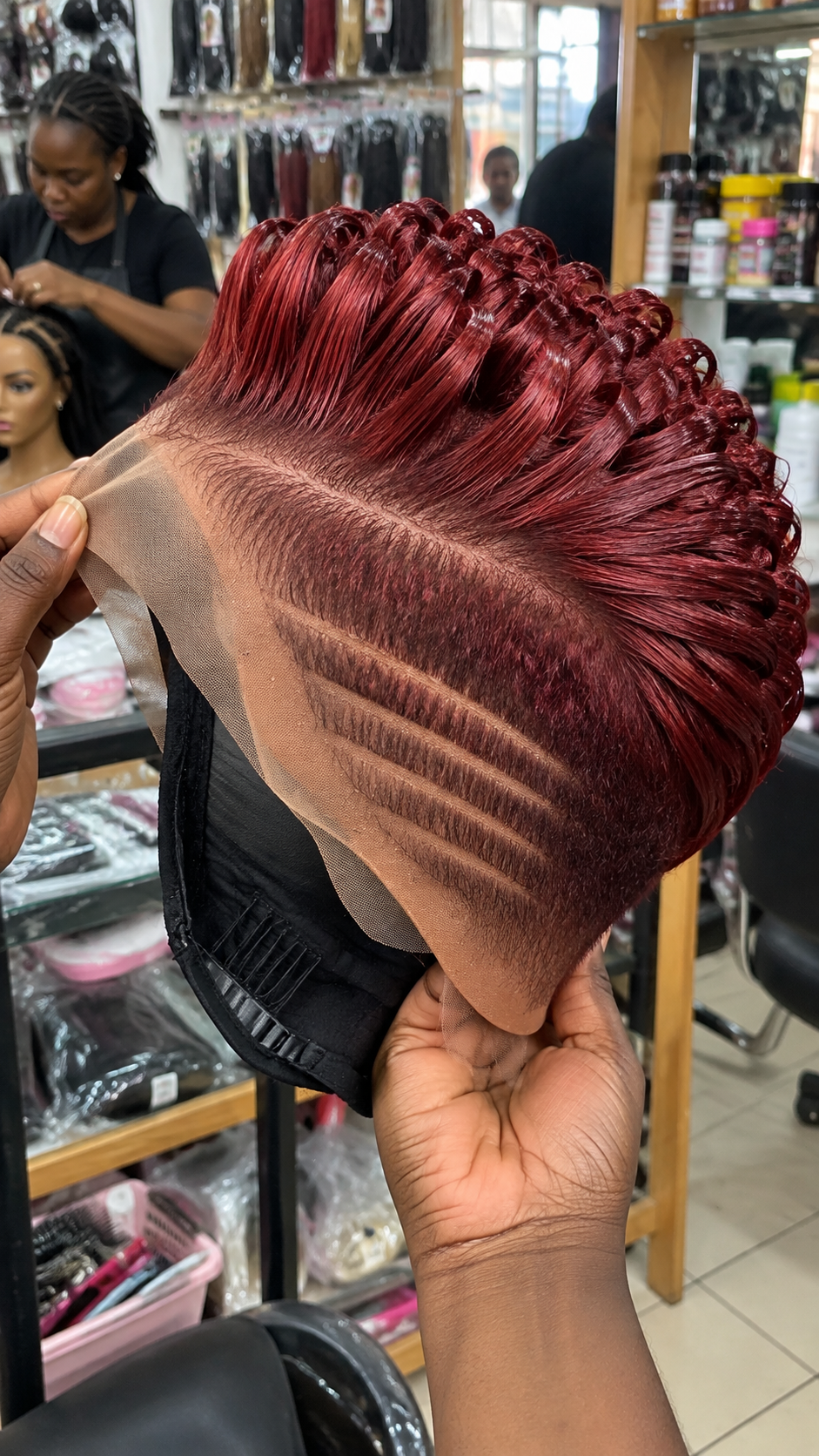
This burgundy pixie wig combines a rich wine-red color with a highly controlled looped crown, a long diagonal part and three parallel line details across the close-cut side. The photograph also reveals the wig construction clearly: extended lace is visible around the perimeter, while the inside shows a dark cap and an internal comb. Because the unit is being held away from a mannequin, both the exterior styling and part of the internal construction can be examined at the same time.
The hairstyle is especially recognizable because the crown is not made from ordinary loose curls. Wider sections of hair rise from the part, bend backward and form repeated sculpted loops. The front sections stand higher and more upright, while the loops gradually turn toward the rear. This creates a continuous directional pattern across the crown instead of a collection of unrelated curls.
The burgundy color strengthens that effect. Bright salon light catches the raised sections and produces vivid red reflections, while the recessed areas remain considerably darker. The result moves visually between deep wine, cherry burgundy and darker red depending on the angle of the strand. For anyone ordering a similar unit, the color, loop structure, part position and triple-line side detail should all be treated as separate specifications.
The Wine-Red Color Changes With Every Curve
The photographed wig uses a deep burgundy family rather than a bright primary red. On the upper loops, direct reflections reveal brighter cherry-red and ruby tones. Between the loops and near the close side, the shade becomes deeper and more wine-like. This natural variation gives the hairstyle dimension without requiring obvious blonde or contrasting highlights.
Color terminology can vary substantially between wig suppliers. One seller may call a shade burgundy, while another may describe a similar color as wine red, dark cherry or mahogany red. For that reason, customers should send the photograph and ask for an actual sample or unfiltered photograph of the available hair rather than ordering solely from a shade name.
If a colorist is creating the shade specifically for you, discuss whether you want the brighter red reflections visible in the photograph or a darker wine result. The lighting used for product photographs can intensify red tones, so viewing a sample in daylight is useful before approving the final color.
Wide Loop Sections Create Height Without A Large Silhouette
The crown is formed from broad polished sections rather than tiny ringlets. Each section rises from the base, travels upward and then bends backward into a loop. These loops overlap slightly while remaining visually separate. Their consistent direction produces a streamlined appearance even though the crown has noticeable volume.
At the front, the loops stand relatively high. Moving toward the back, they lean farther down and begin following the rounded shape of the head. This gradual change in angle keeps the profile balanced and prevents the upper section from appearing like a row of identical curls.
When communicating with a stylist, the distinction between a loop and a conventional curl matters. Request broad sculpted loops with visible separation and backward movement. A generic request for a curly pixie may result in tight ringlets or soft curls that have a completely different appearance.
The Diagonal Part Defines Where The Crown Begins
A long exposed part runs diagonally along the side of the wig. It forms a clear border between the raised burgundy crown and the close-fitting lower section. The line is particularly visible because the surrounding strands are directed neatly away from it.
The hair above the part immediately rises toward the sculpted loops, while the hair below remains close to the base. This difference in volume makes the diagonal division appear stronger and helps establish the overall direction of the hairstyle.
Part placement should be confirmed before a custom wig is styled. Moving the part higher would reduce the width of the crown, while positioning it lower would change the proportion of the side panel. Reversing it to the opposite side would also reverse the direction of the entire upper arrangement.
Three Parallel Side Lines Add A Graphic Detail
Below the main diagonal part, the photograph shows three narrow parallel lines. They follow a similar diagonal direction and remain separated by thin sections of burgundy hair. This repeated line pattern adds visual detail to an otherwise monochromatic side.
The lines should not be confused with the larger part above them. The upper part separates two major styling zones, while the three lower lines function as decorative detailing. Their spacing and angle contribute significantly to the recognizable appearance of this particular wig.
If you want this feature recreated, send the stylist a close view of the side and specifically request three parallel lines. Mention their approximate position beneath the primary part. A vague request for a side design could result in curves, zigzags or a completely different number of lines.
The Close Side Makes The Burgundy Crown Look Fuller
The side section is kept very close to the base, creating strong contrast with the elevated loops above it. This is an important proportion of the hairstyle. If the lower section carried substantially more volume, the sculpted crown would lose some of its visual impact.
The close area also gives the three decorative lines enough surrounding space to remain visible. Because the hair is still present between the lines, the design looks integrated rather than appearing as one large exposed panel.
A stylist recreating the look should plan the close side, line placement and crown together. These elements depend on one another. Changing the height of the side can alter where the lines sit in relation to the ear and where the raised crown begins.
The Visible Lace Gives Buyers Useful Construction Information
A generous section of lace can be seen extending beyond the styled perimeter. This confirms that lace is part of the photographed construction, but the photograph does not establish its exact commercial grade. It should therefore not automatically be described as HD lace.
When ordering, ask the seller what lace material is actually used, which lace shades are available and whether the lace arrives uncut. Also ask how far the lace extends around the unit. These details are more reliable when supplied directly by the wig maker than when inferred from a photograph.
If professional installation is planned, consider showing the photograph to the installer before trimming anything. A stylist can determine how much lace should remain during fitting and how the perimeter should be prepared for the intended installation method.
The Interior Shows A Dark Cap And Securing Comb
The underside of the wig is visible near the lower-left portion of the photograph. A black internal cap can be seen along with at least one securing comb. This is valuable when comparing custom units because the buyer can discuss both styling and practical fit.
Only the visible components should be treated as confirmed. Other attachment points may exist outside the photographed angle. Ask the seller for a complete interior photograph if cap construction is important to your purchase.
Customers who do not like using wig combs should discuss alternative securing methods before ordering. Depending on the cap design, a wig maker may offer straps, elastic or other fitting options. The appropriate choice depends on the individual unit and how it will be worn.
Accurate Measurements Support A Better Pixie Fit
Compact pixie units benefit from careful sizing because the hairstyle follows the head closely. A cap that is significantly too large can affect the placement of the part and side design, while an overly tight cap can be uncomfortable and may prevent the wig from sitting as intended.
Follow the wig maker’s own measurement guide. Common measurements can include circumference, front to nape, ear to ear and temple to temple, but different makers may use different construction methods. Do not substitute measurements from another seller unless the new maker confirms that they use the same system.
If possible, have a wig stylist assist with measurements before ordering an expensive custom unit. Save the measurements and ask the seller to confirm the requested cap size before production starts.
Questions To Confirm Before Paying For This Burgundy Design
- Can you reproduce the deep wine-red color shown in the reference?
- Will the crown use broad backward-sweeping loops rather than small ringlets?
- Can the diagonal part be positioned on my preferred side?
- Can you reproduce three parallel decorative lines below the main part?
- What hair or fiber material will be used?
- What type and shade of lace is supplied?
- Will the lace arrive uncut?
- Which cap measurements do you require?
- What internal securing components are included?
- Will the loops arrive completely styled?
- How should the burgundy hair be maintained between wears?
- What happens if the cap requires an adjustment after delivery?
Premium Custom / Standard Custom / Basic Human Hair / Premium Synthetic / Basic Synthetic
No verified price is displayed in the photograph, so the exact selling price of this particular wig cannot be determined from the image. The figures below are general budgeting examples only. A real quotation can change according to hair material, cap construction, coloring, density, lace selection, labor and the amount of customization required.
| Category | General Planning Range | Typical Cost Considerations |
|---|---|---|
| Premium Custom | $350–$750+ | Individual cap sizing, custom burgundy coloring, advanced loop setting and detailed side work |
| Standard Custom | $220–$450 | Selected shade, customized part direction, sculpted crown and decorative line placement |
| Basic Human Hair | $140–$300 | Hair grade, density, cap construction and additional styling labor |
| Premium Synthetic | $80–$180 | Higher-grade fiber, richer color options and stronger preset shape retention |
| Basic Synthetic | $45–$100 | Stock sizing, standard color selection and fewer custom styling options |
Get The Color Approved Before The Crown Is Finished
Burgundy is one of the areas where communication can easily go wrong. Before the stylist spends time creating the sculpted crown, confirm that the base color is acceptable. Ask for a photograph under neutral indoor light and another near natural daylight if possible.
If the shade appears too purple, too brown or too bright red, discuss adjustments before final styling. Once the loops are arranged and heavily set, additional color work may require the crown to be disturbed and restyled.
For online orders, save screenshots of the approved shade and the seller’s written description. This gives both parties a clearer reference for the agreed color direction.
Buying A Base Unit And Booking A Local Stylist
You do not necessarily need to purchase the entire finished look from one seller. Another option is buying an appropriate burgundy base unit and booking a local wig stylist or barber experienced with sculpted pixie work.
Before purchasing the base, send this photograph to the stylist and ask whether the available length, density and construction are suitable. The stylist needs enough usable hair through the upper section to create the repeated loops while keeping the side sufficiently close for the decorative lines.
Ask for a complete quotation covering cutting, loop setting, part definition and side detailing. Separating the price of the base wig from the styling service makes it easier to understand the total budget.
Protecting The Burgundy Finish From Premature Fading
Rich red shades can require thoughtful maintenance. Follow the care instructions provided for the actual hair or fiber in the wig. Avoid assuming that products designed for one material are suitable for another.
If the unit is made from color-treated human hair, ask the stylist which cleansing products they recommend and how frequently the wig should be washed. Excessive washing and unsuitable products can affect both the color and the sculpted finish.
When the wig is not being worn, store it away from prolonged direct sunlight. This also helps protect the styled crown from environmental exposure while keeping the unit ready for its next wear.
Keep The Loops Supported During Storage
The upper design depends on deliberate strand grouping. Crushing the crown inside a small bag can flatten the loops and cause them to separate. A mannequin head or suitable wig stand provides a better option when the goal is to preserve the finished shape.
Leave enough space around the crown so the raised sections are not pressed against a shelf or another wig. If the unit must be transported, ask the stylist how they recommend protecting the loops during travel.
Avoid brushing directly through the sculpted sections. If several loops become loose, photograph the original arrangement before making adjustments. A wig stylist can use the reference to rebuild the intended direction.
Check Material Compatibility Before Applying Heat
The polished loops may eventually need refreshing, but the correct method depends on the material. Human hair and synthetic fibers can have very different heat tolerances. Some synthetic fibers can be permanently damaged at temperatures routinely used on human hair.
Before applying a curling iron, flat iron or other heated tool, obtain the material specification and recommended temperature from the seller. If that information is unavailable, professional restyling is the safer option.
Heat is also only one part of recreating the appearance. The loops must be positioned in the correct direction and allowed to retain their broad curved shape. Making them tighter would noticeably change the original design.
Photograph The Wig From The Side Before Accepting A Custom Order
A straight front photograph would not provide enough information to evaluate this hairstyle. The most important features—the diagonal part, triple side lines and backward direction of the loops—are easier to inspect from the side or a slightly elevated three-quarter angle.
For a remote custom order, request photographs from the front, both sides, rear and above before shipping. Compare those photographs with the original reference and check the number and placement of the side lines.
Also inspect the crown progression. The front loops should transition naturally toward the back rather than suddenly changing direction. Multiple photographs make it easier to spot differences before the unit leaves the stylist.
Search Terms
Burgundy Sculpted Pixie Wig · Wine Red Loop Curl Wig · Triple Side Line Pixie Wig · Deep Side Part Burgundy Wig · Sculpted Loop Crown Wig · Cherry Burgundy Pixie Wig · Lace Front Burgundy Pixie Wig · Swept Loop Pixie Wig
Turning The Photograph Into A Clear Wig Order
The easiest way to order a similar wig is to break the reference into individual decisions. Begin with the color: a deep burgundy or wine-red family with brighter reflections across the raised strands. Next specify the crown: broad sculpted loops that rise near the front and gradually sweep backward. Then identify the long diagonal part and the three parallel decorative lines positioned beneath it.
Construction should be discussed separately from appearance. Lace is visibly present in the photograph, and a dark internal cap with a securing comb can also be seen. However, the exact lace grade and hair material cannot be established from appearance alone. Ask the seller to provide those specifications directly rather than assuming them.
Finally, confirm measurements, cap size, part direction, burgundy shade, crown density, loop size, side-line placement, internal securing features, production time and maintenance instructions. Request photographs of the completed unit before shipment whenever possible. With those details documented, the stylist has a much more precise target than a simple request for a burgundy pixie wig, and the finished order has a better chance of preserving the distinctive combination of glossy loops, deep parting and triple graphic lines shown in the reference.