
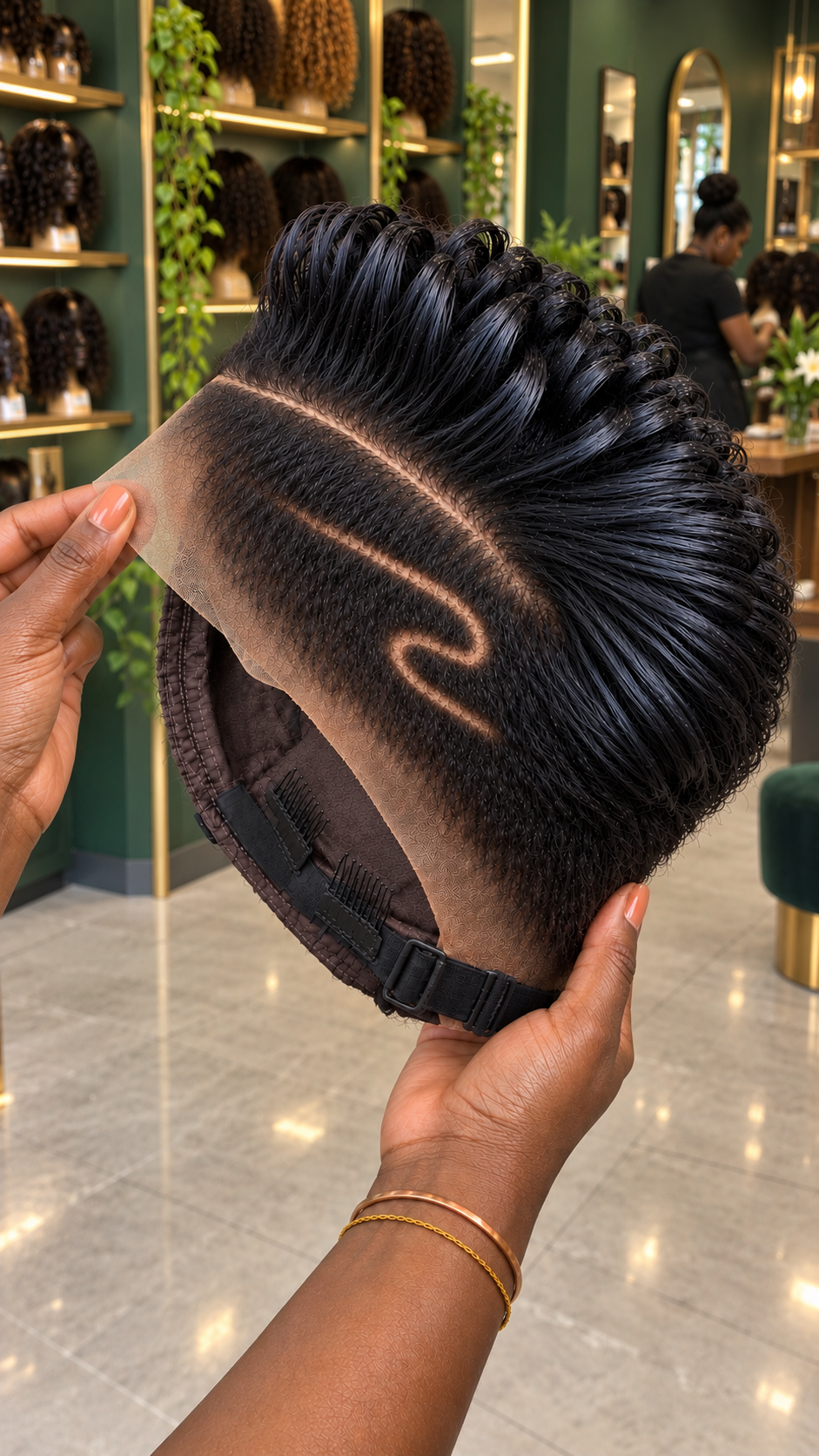
This black pixie wig combines a glossy sculpted crown, sweeping loop formations, a strong diagonal part and an unusual graphic side design. The photograph is particularly useful as a custom-order reference because the wig is being held away from a mannequin, allowing several construction details to remain visible at the same time. The dark cap, internal combs, adjustable strap, extended lace area and styled exterior can all be seen. Rather than guessing about how the unit might be assembled, a buyer can use these visible elements when discussing a similar piece with a wig stylist or seller.
The hairstyle itself is dominated by long polished sections that rise from the part and curve backward into repeated loops. These loops gradually change direction as they move toward the rear, creating a continuous sculpted crown. The lower side is kept much closer to the base, which increases the contrast between the elevated upper section and the flatter perimeter. A carved geometric line adds another recognizable detail: a long diagonal line travels through the side before bending into a smaller angular loop.
The color remains consistently dark throughout the visible exterior. Instead of relying on highlights, the wig uses reflected light to reveal its structure. The glossy strands catch the salon lighting along each curved section, making the black hair appear dimensional while preserving a monochromatic appearance.
The Elevated Crown Uses Repeated Sweeping Loops
The upper section is not arranged as a collection of small circular ringlets. The visible hair is divided into broader sections that rise upward, bend over and travel toward the back. Each section forms a controlled loop, and the repetition of these loops creates the recognizable crown silhouette.
The front loops stand relatively upright before gradually leaning farther backward. Toward the rear, the sections become more horizontal and merge into a rounded shape. This progression prevents the crown from looking like identical curls placed in rows. Instead, the direction changes naturally across the head.
When requesting this style, show the stylist the complete photograph and specifically point out the broad loop construction. Asking only for a curly pixie could produce small ringlets or conventional curls, which would not match the reference. The width, direction and height of these sculpted sections should be agreed before styling begins.
A Long Diagonal Part Separates The Crown From The Side
A prominent part runs diagonally from the front area toward the back of the wig. This line establishes a clear boundary between the elevated crown and the close-fitting side section. Because the surrounding hair is black, the exposed part creates strong visual contrast and becomes an important component of the design.
The hair immediately above the part is directed upward into the crown loops. Below it, the hair remains much flatter and follows the shape of the base. This difference in direction makes the part appear even more pronounced.
Part placement should be discussed early in a custom order. Moving the part higher, lower or to the opposite side would alter the proportions of both the crown and the graphic side section. A stylist should know which side is intended before cutting and setting the unit.
The Graphic Side Line Gives This Wig A Distinctive Identity
One of the most recognizable details is the line pattern visible below the main part. A narrow diagonal line travels across the side and then changes direction near the lower section, forming a smaller angular loop. This creates a graphic element without adding another hair color.
The line is surrounded by very close dark hair, allowing the lighter exposed area to remain visible. Its shape is deliberately asymmetrical and follows the general direction established by the larger part above it.
If this element is essential, provide the stylist with a close crop of the side design in addition to the full photograph. Explain that the line placement should remain separate from the main diagonal part. A generic request for shaved lines may not communicate the exact geometry shown in the reference.
Deep Black Keeps Attention On Shape And Shine
The wig uses a rich black color without obvious contrasting highlights. This allows the sculpted shape to become the primary visual element. Light reflecting from the strands creates narrow bright areas along the loops, while the spaces between them remain considerably darker.
For buyers comparing dark shades, it can be useful to request samples of natural black, raven black and deep espresso. Under salon lighting these shades may appear similar, but daylight can reveal brown, neutral or cooler undertones.
If the goal is to stay close to this reference, avoid introducing strong blonde or copper highlights unless intentionally changing the design. The photograph demonstrates that the crown already has considerable visual variation through direction and reflected light alone.
The Close Side Creates Contrast With The Fuller Upper Section
The lower side carries far less volume than the crown. This difference gives the upper loops room to stand out and keeps the overall silhouette compact around the perimeter. The transition begins directly beneath the diagonal part and continues toward the lower edge of the unit.
For a custom wig, the stylist needs to balance these two areas carefully. Leaving too much volume below the part would reduce the impact of the crown, while removing too much could make the side design look disconnected from the rest of the hairstyle.
Ask the stylist to preserve enough hair around the graphic line to keep the pattern readable. The line should appear integrated into the side section rather than floating inside a completely bare area.
The Visible Lace Should Be Discussed Before Installation
The photograph clearly shows lace extending beyond the styled hair area. This is useful information for a buyer, although the image alone does not establish a specific commercial lace grade. It would therefore be inaccurate to describe the unit as HD lace without confirmation from the seller or manufacturer.
Before ordering, ask what lace material is actually used, what color options are available and how much lace is supplied around the perimeter. Also ask whether the lace arrives uncut. If you intend to have the wig professionally installed, the stylist may prefer to trim and customize the lace during the appointment.
Matching lace to the wearer is a separate decision from choosing the hairstyle. Request photographs of the actual lace options whenever possible rather than assuming that every unit uses the same shade or material.
Internal Combs And An Adjustable Strap Are Visible
The inside of the wig can be seen clearly in the lower portion of the photograph. Internal combs are positioned inside the cap, and an adjustable strap with a buckle is also visible. These components provide useful information when discussing how the wig is intended to sit on the head.
Buyers should still confirm the complete cap specification with the seller. A photograph from one angle may not show every internal component. Ask how many combs are included, where they are positioned and what adjustment range the strap provides.
If you prefer not to use internal combs, mention that before ordering a custom unit. Some wearers choose different securing methods, and a wig professional can discuss which approach is appropriate for the intended fit and use.
Cap Measurements Matter With A Close-Fitting Pixie Shape
A compact hairstyle can make poor fit more noticeable because there is less hanging hair available to disguise the shape of the cap. Accurate measurements are therefore important. Follow the seller’s measuring instructions rather than relying only on a general small, medium or large label.
Typical measurements may include head circumference, front-to-nape distance, ear-to-ear dimensions and temple-to-temple measurements. Use the exact measuring method requested by the wig maker because different businesses may build their caps differently.
For a custom unit, ask the seller to confirm the submitted measurements in writing before construction begins. If you are unsure about measuring yourself, a local wig stylist or salon may be able to assist.
Questions To Send The Wig Maker Before Ordering
- Can you recreate the broad swept loop structure across the crown?
- Can the long diagonal part remain as prominent as the reference?
- Can you reproduce the angular graphic line below the main part?
- Which black shade is closest to the photographed wig?
- What hair or fiber material will be used?
- What lace material and lace shade are available?
- Does the lace arrive uncut?
- How many internal combs are included?
- Is an adjustable strap included in the cap?
- Which head measurements do you require?
- Will the crown arrive fully styled?
- What is the recommended method for restoring the loops after wear?
Premium Custom / Standard Custom / Basic Human Hair / Premium Synthetic / Basic Synthetic
No selling price is visible in the photograph, so the exact cost of this wig cannot be determined from the image. The ranges below are general budgeting examples rather than prices for the photographed unit. Material, cap construction, density, lace choice, stylist labor and customization can all affect the final quotation.
| Category | General Planning Range | Possible Cost Factors |
|---|---|---|
| Premium Custom | $350–$750+ | Individual sizing, advanced crown shaping, custom side design and detailed cap work |
| Standard Custom | $220–$450 | Custom parting, sculpted loops, selected black shade and perimeter work |
| Basic Human Hair | $140–$300 | Hair grade, density, cap type and additional salon styling |
| Premium Synthetic | $80–$180 | Higher-grade fiber, preset sculpted shape and stronger curl retention |
| Basic Synthetic | $45–$100 | Standard cap sizing, stock color and fewer customization options |
Ordering Online Starts With A Precise Reference List
When contacting an online seller, send this photograph and immediately identify the elements that matter most. State that you want the dark monochromatic color, elevated loop crown, long diagonal part and angular side-line pattern. This prevents the seller from focusing only on the general pixie silhouette.
Ask for photographs of comparable work before paying for a highly customized version. Ideally, those photographs should include the crown and side rather than only a front-facing model. The side is particularly important here because both the main part and the graphic line contribute heavily to the design.
Confirm the material, cap measurements, lace specification, internal securing components, total cost, production period and shipping terms in writing. Also check whether customized wigs can be altered or returned. Policies often differ between stock units and individually prepared orders.
A Local Wig Stylist Can Handle Final Crown Shaping
Some customers may prefer to purchase an appropriate base wig and have the sculpted work completed locally. Before buying the base, show this photograph to the stylist. Ask what hair length and density they need to form the broad crown loops while maintaining the close-fitting side.
The stylist can also determine whether the desired graphic line can be created convincingly with the selected unit. Not every base construction will provide the same freedom around the side and perimeter.
Book enough time for detailed shaping rather than treating the appointment like a basic curl service. The loops need deliberate placement, and the side pattern must align with the main diagonal part.
Maintaining The Sculpted Crown Between Wears
Because the crown depends on repeated raised loops, storage should protect those shapes from compression. Keep the wig on a suitable mannequin head or stand and leave enough clearance around the upper section. Avoid placing other wigs or objects directly against it.
Do not brush through the sculpted loops unless you intend to reset them. Separating the grouped strands would change the appearance significantly. Instead, follow the maintenance instructions provided for the actual hair or fiber used in the unit.
If one section loses its curve, determine whether heat can safely be used before attempting a repair. Human hair and synthetic materials can require very different methods. When uncertain, having the original stylist refresh the crown is safer than experimenting with an unknown material.
Protecting The Side Pattern During Routine Care
The graphic side section should also be handled carefully. Heavy product buildup can reduce the contrast around the carved lines, while aggressive brushing can disturb the direction of the surrounding strands. Use only the amount of styling product recommended by the wig professional.
If the side begins to lose its shape after repeated wear, take photographs before attempting to alter it. These images can help a stylist restore the original placement of the line and surrounding hair.
For professional maintenance, bring the original reference image to the appointment. The stylist can compare the current unit with the intended part position, crown direction and graphic side geometry.
Search Terms
Black Sculpted Pixie Wig · Swept Loop Crown Wig · Deep Side Part Pixie Wig · Graphic Side Line Wig · Glossy Black Curl Wig · Sculpted Crown Pixie Wig · Adjustable Strap Pixie Wig · Lace Front Sculpted Pixie Wig
Building The Order Around The Details Visible In The Photograph
This wig works because several distinct elements are coordinated rather than competing with one another. The broad crown loops create height and movement, the diagonal part establishes direction, the close side provides contrast and the angular line gives the design its most unusual detail. Deep black keeps the entire composition unified while reflected light reveals the individual strands.
The photograph also provides useful construction clues. Lace is visibly present, as are internal combs and an adjustable strap. Those elements can be discussed with a seller without claiming specifications that cannot be verified visually. In particular, the exact lace grade, hair material and fiber composition should come from the product information or wig maker rather than assumptions based on appearance.
Before paying for a custom order, confirm the crown shape, part direction, side-line geometry, black shade, material, lace specification, cap measurements and internal securing system. Ask whether the wig arrives fully styled and request care instructions for maintaining the sculpted loops. Taking these steps turns a visual reference into a much clearer production brief and gives the stylist specific details to follow when creating a similar black sculpted pixie wig.