
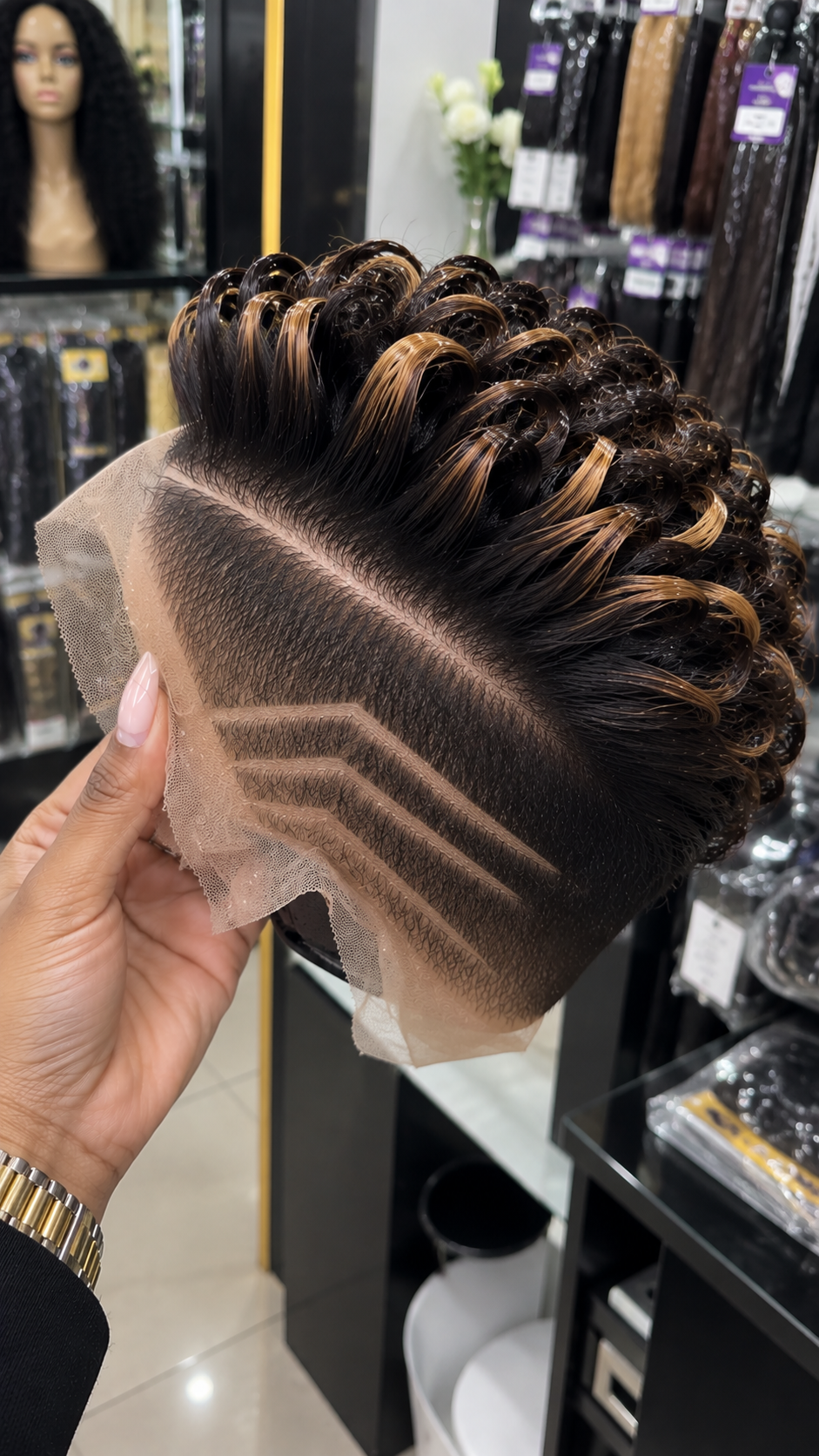
Three sharply angled side markings can change the entire identity of a wig, especially when the crown carries a contrasting color arrangement. This black-and-honey-blonde unit brings those elements together through a closely fitted dark side, three tapered arrow-like carved channels and a raised crown of elongated ribbon loops. The blonde is concentrated along selected upper strands rather than distributed evenly through the hair. As a result, the eye follows the warm ribbons backward before returning to the distinctive geometry below.
The photograph shows a wig being held before installation. Beige-brown lace extends beyond the hair-bearing edge, and a portion of the dark cap is visible beneath the lower perimeter. The upper sections have already been arranged into sculpted loops, while the side markings appear completed. These observations are useful when assessing the amount of styling included in a potential purchase, although the image cannot establish whether the hair is human or synthetic, whether the lace is HD grade, or whether the wig is designed for adhesive-free installation.
The Three Side Markings Create a Recognizable Signature
The strongest identifying detail is the arrangement of three narrow exposed channels across the lower side. They begin near the forward perimeter, bend into angular paths and taper toward the rear. The upper marking travels farthest, while the two lower paths create a descending sequence.
Unlike ordinary parallel barber lines, these markings contain pronounced directional changes. Their pointed shapes create an arrow-like impression without becoming identical geometric copies.
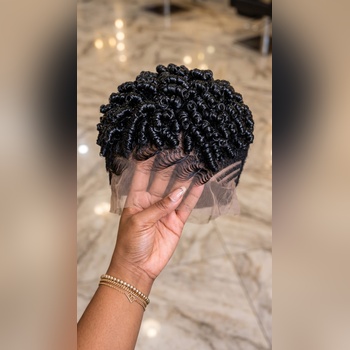
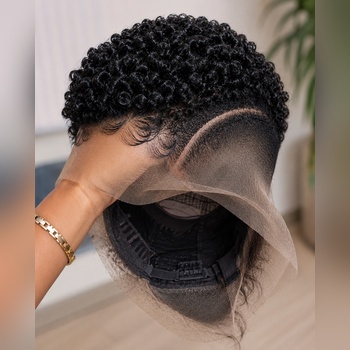
Each channel is surrounded by closely arranged dark hair. The retained sections are essential because they create the contrast that makes the three individual paths readable. If too much hair were removed between them, the markings would begin merging into a single exposed area.
Anyone commissioning this exact design should provide a direct side photograph. A written instruction requesting three shaved lines would be insufficient because it would not communicate the changes in direction, unequal lengths or tapered endpoints.
The Side Artwork Should Be Mapped Before Any Hair Is Removed
A professional reproducing this pattern needs to establish the available side area before making permanent changes. The crown boundary sits relatively high, leaving a substantial dark panel underneath. The three markings occupy the lower portion of that panel.
The upper channel should be positioned first because it determines how much room remains for the two lower paths. The middle marking then needs enough surrounding hair to remain separate from both neighbors. The lowest marking should taper without consuming the entire lower perimeter.
This sequence is particularly important on a wig. Unlike natural hair, removed strands do not grow back. A mistake in spacing may require replacement or reconstruction rather than a simple waiting period.
For custom work, a temporary visual plan or approval photograph before final cutting can reduce the risk of irreversible changes.
Honey Blonde Is Concentrated Where the Crown Bends
The color arrangement is different from an ordinary evenly highlighted wig. Deep black remains dominant around the roots, along the close side and inside the recessed portions of the crown. Warm honey-blonde strands appear primarily across selected raised ribbons.
Those lighter sections follow the physical direction of the hair. They rise with the forward loops, bend backward and become visible again where the strands turn toward the light.
This makes the color part of the styling architecture. The blonde does not merely brighten the wig; it helps reveal the path of individual ribbon sections.
A buyer should specify black roots with selective honey-blonde ribbons rather than requesting an all-over blonde-and-black mixture. Broad conventional highlights could produce a different visual balance.
The Crown Uses Long Folded Sections Instead of Circular Finger Coils
The upper hair is arranged into elongated open loops. Individual strands travel together in relatively broad bands before bending backward, creating ribbon-like surfaces.
This construction differs from compact finger-coil wigs with dozens of small circular openings. Here, several larger arches establish the main silhouette, while smaller curled pieces gather toward the rear.
The front loops stand more upright, giving the crown height. Farther backward, the sections lean with the cap and gradually become more compact.
This progression prevents the upper hair from appearing excessively bulky. The wig has a raised crown, but its largest formations do not continue unchanged around the entire back.
Dark Roots Create the Shadow Beneath the Blonde
The black foundation is important to the color composition. Without it, the honey-blonde ribbons would have less contrast and the open spaces between loops would become less noticeable.
Deep roots also connect the upper crown to the dark side. Although the two areas use different lengths and styling techniques, the shared black foundation makes them appear part of one unit.
When choosing hair for a custom version, a buyer should ask whether the blonde sections are already incorporated into the foundation or will be colored afterward.
That distinction can influence cost, maintenance and the amount of processing the hair receives.
The Rear Crown Becomes Smaller and More Interlocked
Moving toward the back, the long ribbon sections gradually give way to smaller looped ends. These tighter formations follow the rounded contour and help the upper styling settle closer to the cap.
The blonde continues through selected strands, but the deeper black becomes more prominent within the overlapping sections.
This gives the rear a darker, more intricate appearance than the forward crown. It also prevents the warm highlights from creating one uninterrupted bright surface.
A rear three-quarter photograph is valuable when approving a custom order. It reveals whether the maker has completed this transition carefully rather than concentrating exclusively on the more visible front loops.
The Close Side Must Remain Dark Enough to Support the Carving
The side beneath the crown consists of fine, closely arranged dark strands. The hair is compact but not entirely absent. That retained density provides the background against which the three carved channels become visible.
If the side were made substantially lighter, the exposed markings could lose contrast. If it were left too long, strands might fall across the channels and obscure their shape.
The ideal reproduction therefore requires controlled side density rather than simply removing as much hair as possible.
For future maintenance, repositioning displaced strands may be preferable to repeatedly cutting the same areas.
The Upper Crown Boundary Has a Different Purpose From the Lower Carving
A narrow separation beneath the ribbon crown creates a visual division between long upper hair and the compact side. This boundary should not be confused with the three decorative markings farther down.
The upper separation establishes where the crown begins. The lower channels provide the geometric identity.
Keeping those purposes separate is important during customization. Enlarging the upper boundary unnecessarily could reduce the dark panel available for the three arrow-like markings.
A skilled maker should assess the entire side composition before adjusting any individual path.
The Lace Perimeter Is Still Available for Final Customization
Untrimmed lace extends beyond the visible hairline and side. This indicates that the unit has not yet been fully fitted to a wearer.
For a customer planning professional installation, the extra lace can be useful. The stylist can position the cap, evaluate the crown height and check where the three side markings fall before determining the final trimming route.
The photograph shows mesh, but its commercial grade cannot be confirmed. A fine appearance does not automatically establish that it is HD lace.
Buyers should ask the seller about the actual lace material, available shades and whether the delivered unit will retain its untrimmed perimeter.
Cap Sizing Determines Where the Arrow Pattern Will Sit
The side markings are fixed to the wig foundation. If the cap shifts forward, the entire design moves toward the face. If it sits too far backward, the pointed ends move farther behind the temple.
Accurate sizing therefore affects appearance as well as comfort.
For made-to-order units, follow the manufacturer’s measurement instructions. Circumference alone may not provide enough information when a detailed side design needs to sit in a particular position.
A wig stylist can assist with measurements before ordering and assess whether a standard cap is likely to fit correctly.
Buying This Design Requires More Than Matching the Blonde Shade
A seller may offer a similar black-and-blonde wig without reproducing the three side markings or elongated crown loops. Another may create the correct carving but use ordinary curls instead of broad folded ribbons.
Before purchasing, identify which elements are essential. For this reference, the defining combination is black roots, selective honey-blonde crown ribbons, a raised backward loop arrangement, compact dark sides and three angular tapered channels.
Ask the seller whether the photograph represents an available finished unit, a previous custom order or an example that must be recreated.
If the wig is made to order, request written confirmation of the included customization work and an approval photograph before shipment.
Not every professional specializes in both sculpted crowns and carved side designs. A wig maker may be experienced with lace construction and ribbon loops, while a barber may have stronger precision-cutting skills.
When separate specialists are involved, the order of work matters.
The cap should be constructed and fitted before final side refinement. The crown boundary can then be established, followed by the three lower channels.
If the unit arrives with the carving already completed correctly, additional cutting may be unnecessary. Preserving the existing design is often safer than attempting to make it more dramatic.
Online Approval Should Focus on the Side Before the Front
For this particular wig, a direct side photograph provides more identifying information than a conventional front portrait. It shows the three carved paths, the dark panels between them and the relationship between the lower geometry and the raised crown.
An elevated photograph should follow, showing the black-and-blonde ribbon placement and spacing between the loops.
A rear view can verify how the larger arches transition into smaller curled sections.
If the seller advertises a particular cap construction, request an additional underside photograph. The visible image does not establish every interior component.
Color Matching Should Account for Salon Lighting
The lighter strands appear honey-blonde with warm golden reflections. Depending on illumination, they may also read as caramel or light amber.
Customers should avoid selecting a color solely from a strongly lit photograph. Ask for a neutral-light image of the actual hair or available color sample.
The intended result is a warm blonde that contrasts with the black foundation without becoming extremely pale platinum.
For a human-hair unit, the colorist should also consider how the blonde was achieved. Previously lightened strands may require more conservative heat and chemical treatment.
Estimated Costs for a Custom Triple-Arrow Ribbon Wig
The price of this style is influenced by several independent tasks: preparing the foundation, creating the black-and-honey-blonde arrangement, forming the ribbon crown and executing the three side markings.
A relatively compact wig can therefore involve substantial labor despite using less length than a conventional long hairpiece.
| Category | Estimated Price Range | Typical Customization Scope |
|---|---|---|
| Premium Custom | $345–$625+ | Higher-grade hair, personalized cap sizing, selective honey-blonde color placement, individually arranged ribbon loops, precision triple-arrow carving and lace preparation. |
| Standard Custom | $210–$370 | Prepared black-and-blonde crown, established side markings and standard cap options with limited individual adjustments. |
| Basic Human Hair | $125–$230 | A human-hair foundation that may require separate highlighting, crown construction, barber detailing and fitting. |
| Premium Synthetic | $85–$170 | A pre-colored, pre-set interpretation with sculpted loops and potentially simplified side customization. |
| Basic Synthetic | $40–$95 | A budget alternative where color placement, loop separation, side geometry or cap construction may be less elaborate. |
These figures are illustrative budgeting estimates, not verified prices for the photographed wig. Actual quotations depend on hair or fiber, seller location, labor, cap construction, color processing, shipping and installation.
Before comparing offers, ask whether the price includes the completed side design and crown setting. An unfinished base may require enough additional salon work to exceed the cost of a prepared custom unit.
Human Hair Offers Flexibility but Requires Color Awareness
A human-hair version can be useful when the wearer expects future professional restyling. Individual ribbon loops may be reconstructed as they relax, provided the hair remains suitable for the required technique.
The blonde sections may have undergone additional processing, so they should not automatically receive the same heat treatment as darker, minimally processed hair.
When refreshing the color, preserve the black root foundation and selective blonde placement. Applying a lighter shade throughout the entire crown would change the original design.
Synthetic Fiber May Preserve the Loop Arrangement Longer
A quality pre-set synthetic version can be practical for customers who prefer to retain the original shape with less frequent professional reconstruction.
However, heat tolerance varies between fibers, and major recoloring may not be practical. Confirm the material before using heated tools or attempting chemical alterations.
The better option depends on whether the wearer values future styling freedom or the ability to preserve a pre-arranged crown.
Maintenance Should Protect the Carved Geometry First
The three side channels are among the least forgiving parts of this wig. If a ribbon loop becomes displaced, a stylist may be able to reset it. If a carved channel is widened excessively, restoring the missing hair is much more difficult.
For that reason, side maintenance should begin with inspection rather than cutting.
Use the original side photograph to compare the paths. Check whether fine strands have moved across the exposed areas and whether the dark sections between them remain intact.
Only consider additional cutting when it is genuinely necessary. Wig hair does not grow back, so routine recarving can gradually destroy the intended geometry.
The Blonde Ribbons Need Section-by-Section Care
Broad brushing through the crown can disturb the open loops and mix neighboring sections. Instead, the hair should be maintained according to its individual ribbon arrangement.
Before washing, photograph the crown from above. Record where the blonde sections rise, where they bend backward and where smaller rear curls begin.
During cleansing, minimize unnecessary friction and follow instructions appropriate for the confirmed hair or fiber.
After drying, restore only the sections that have changed. Rebuilding every loop after every wash can create avoidable wear.
Excess Shine Product Can Hide the Blonde Placement
The crown already has a reflective appearance. Heavy oils or waxes may cause neighboring ribbons to adhere together, reducing the visible dark spaces between them.
Product buildup can also make the blonde appear darker and less distinct from the black foundation.
Use only the amount recommended for the material. When residue affects the appearance, appropriate cleansing may be preferable to adding another layer of shine product.
Installation Should Preserve the Original Crown-to-Side Ratio
During the first fitting, the stylist should check how the crown sits above the compact side. The raised loops need enough height to remain recognizable, while the dark side should stay close to the head.
The three arrow-like markings should also remain visible from a natural side angle.
Once the position is established, the lace can be prepared for the wearer. Avoid altering the crown or carving until the cap is sitting correctly.
This reduces the risk of making permanent changes to compensate for what is actually a fitting problem.
Storage Requires Clearance Around the Raised Loops
The forward ribbons stand noticeably above the foundation, making them vulnerable to compression. Store the wig on a suitable stand or mannequin head with enough clearance for the upper sections.
The side should not be pressed against a hard surface because displaced strands can obscure the carved channels.
Make sure the cap and lace are completely dry before storage. For travel, use packaging that protects the crown without flattening the loops.
The Real Value Lies in Coordinating Color and Geometry
This wig combines two different forms of visual movement. The crown uses warm honey-blonde ribbons to reveal the direction of broad backward loops. The lower side uses three tapered angular channels to create a recognizable graphic pattern against dense black hair.
Neither component should overwhelm the other. Too much blonde could reduce the dark shadow inside the crown. Excessively wide carving could weaken the side panels. Additional volume could obscure the carefully controlled transition between the two areas.
For buyers, the most useful inspection points are the placement of the blonde ribbons, the open loop structure, the compact rear curls, the spacing of the three carved paths, the density of the dark side and the condition of the untrimmed lace.
For wig businesses, this design benefits from product photography that shows the complete side rather than relying only on a frontal portrait. Accurate construction information, separate pricing for customization when applicable and clear fitting instructions can help customers understand what makes this particular black-and-blonde unit different from ordinary highlighted wigs.
Search Terms
honey blonde ribbon loop wig · black root golden blonde crown · triple arrow side design wig · angular carved lace wig · tapered three line wig · black blonde sculpted crown · backward honey ribbon curls · untrimmed lace side design wig