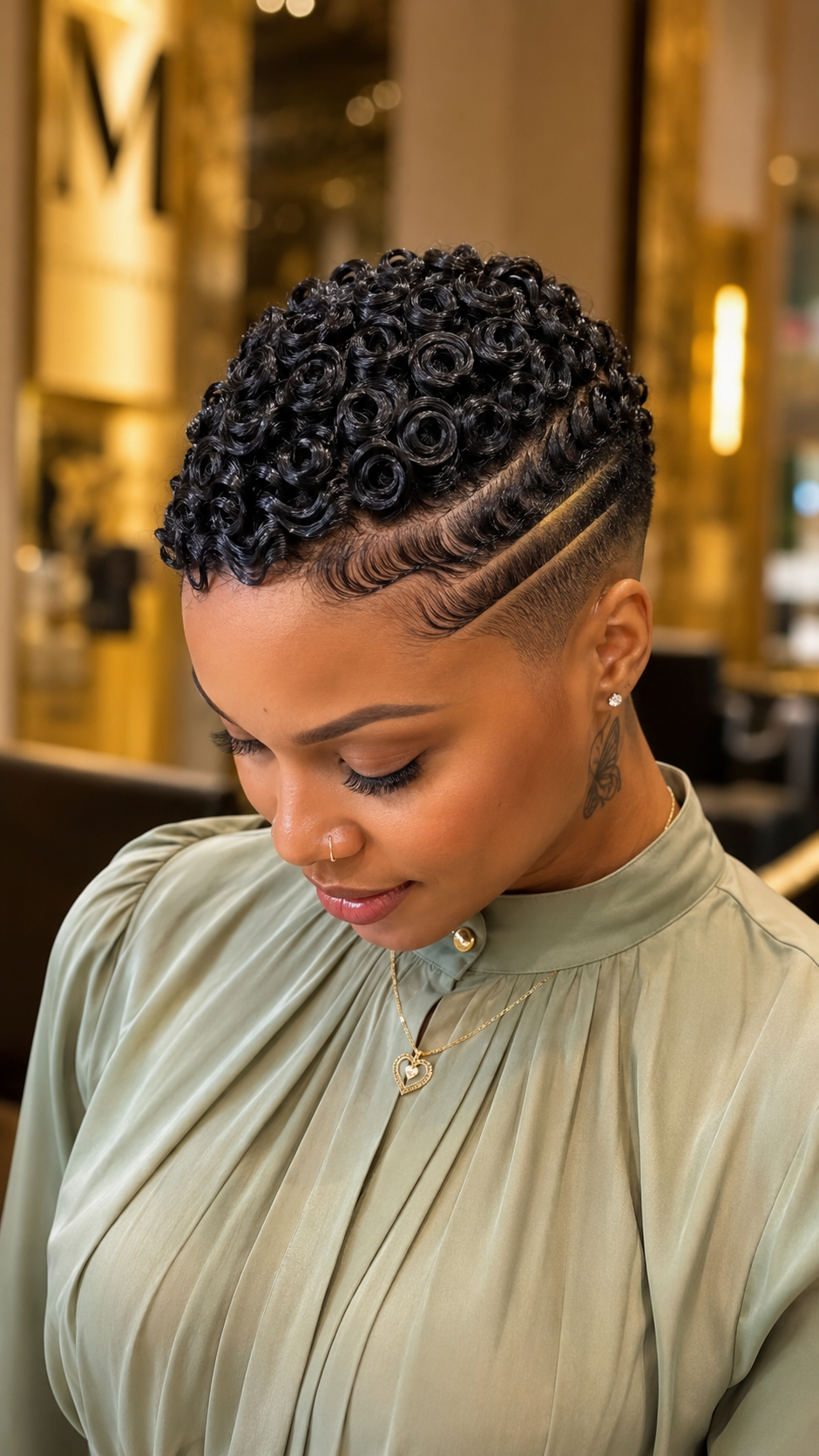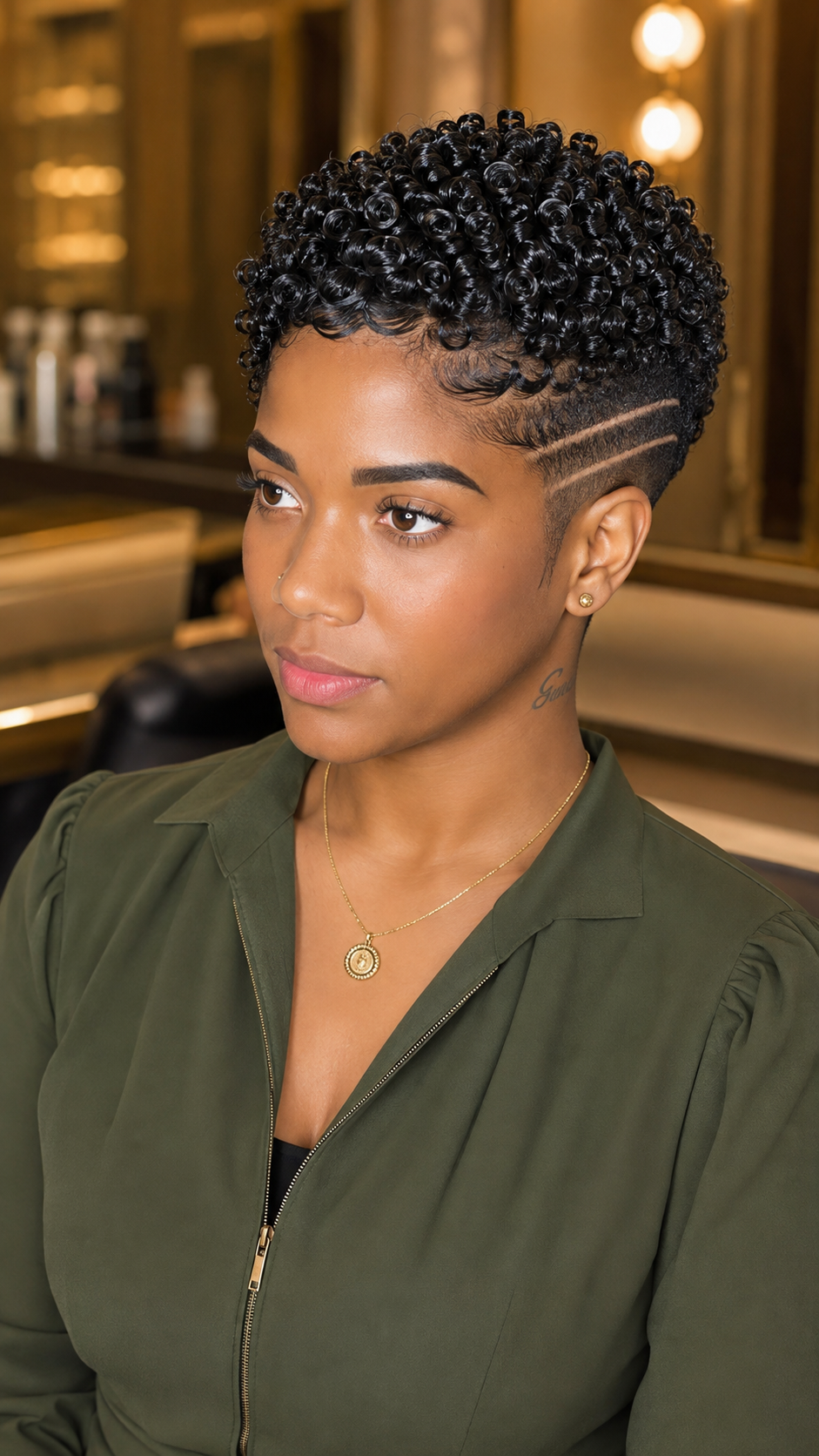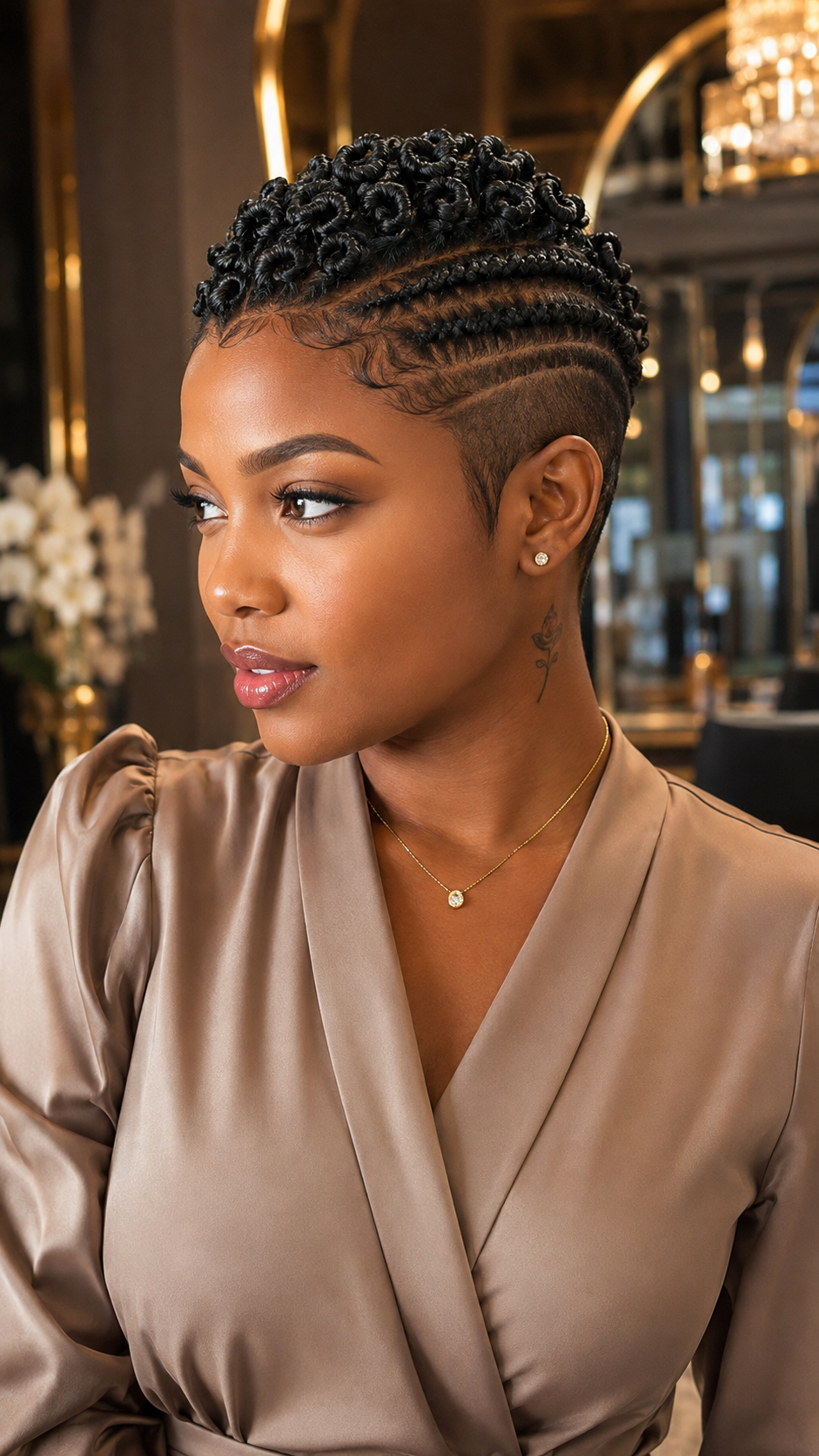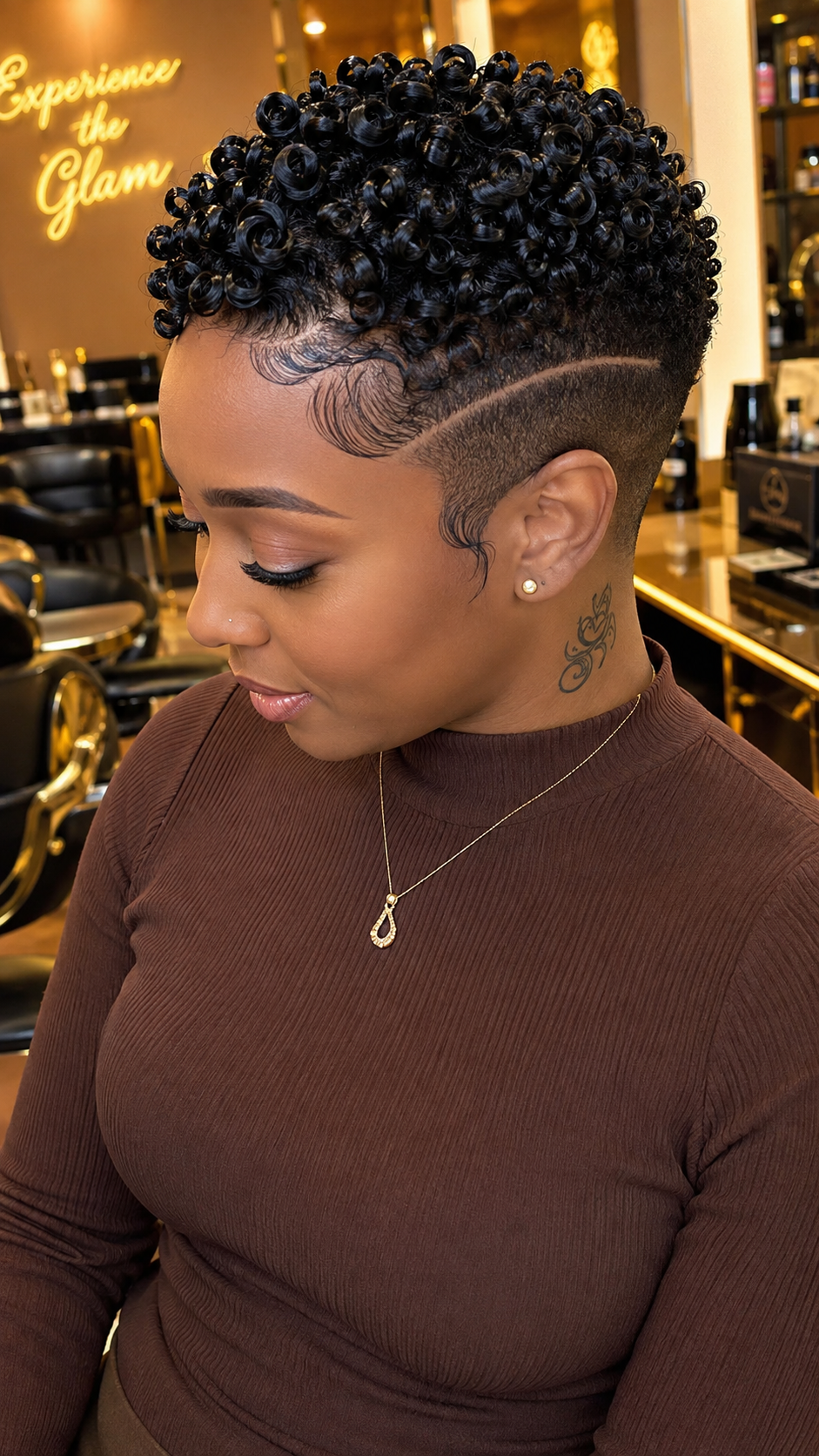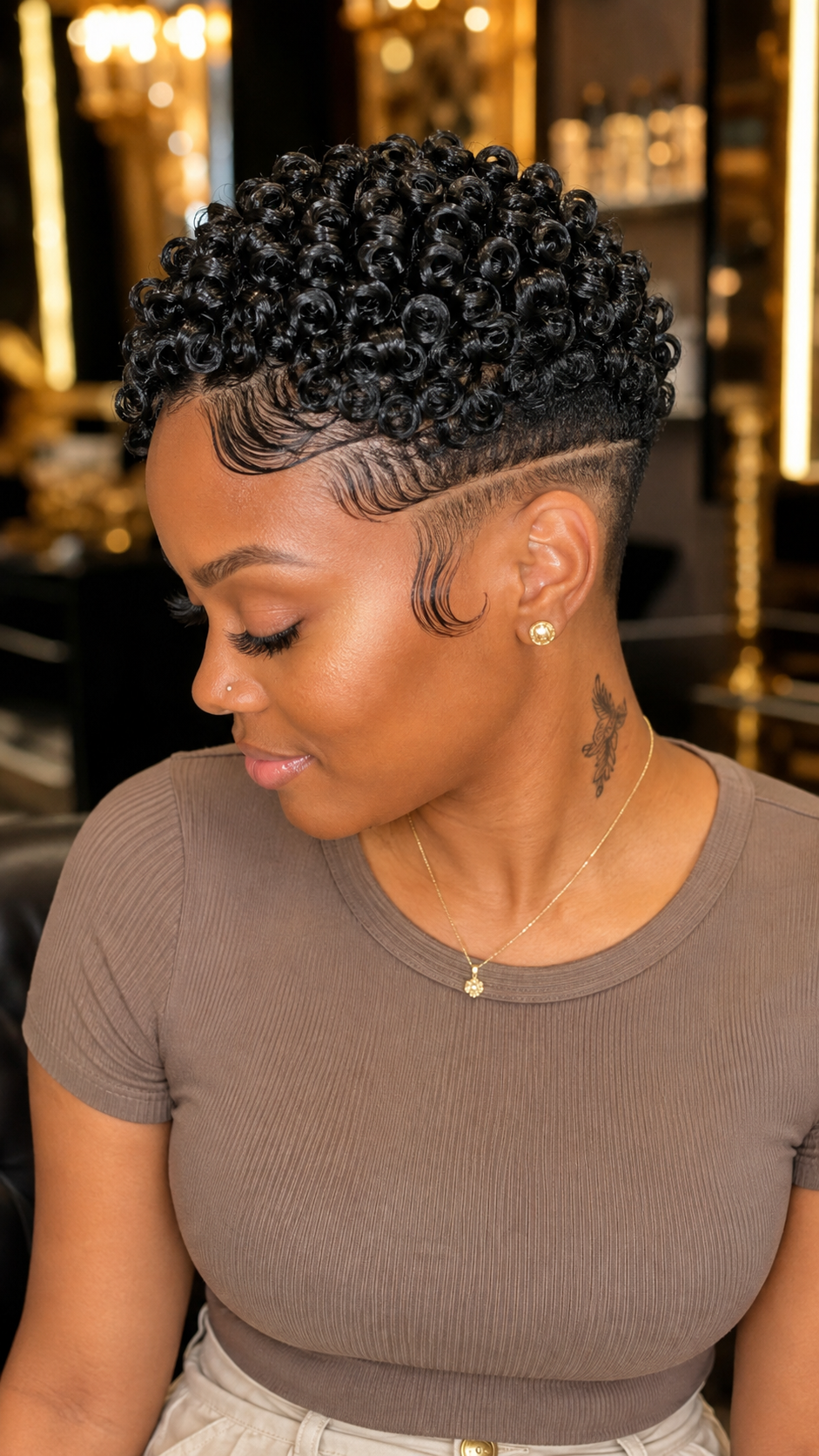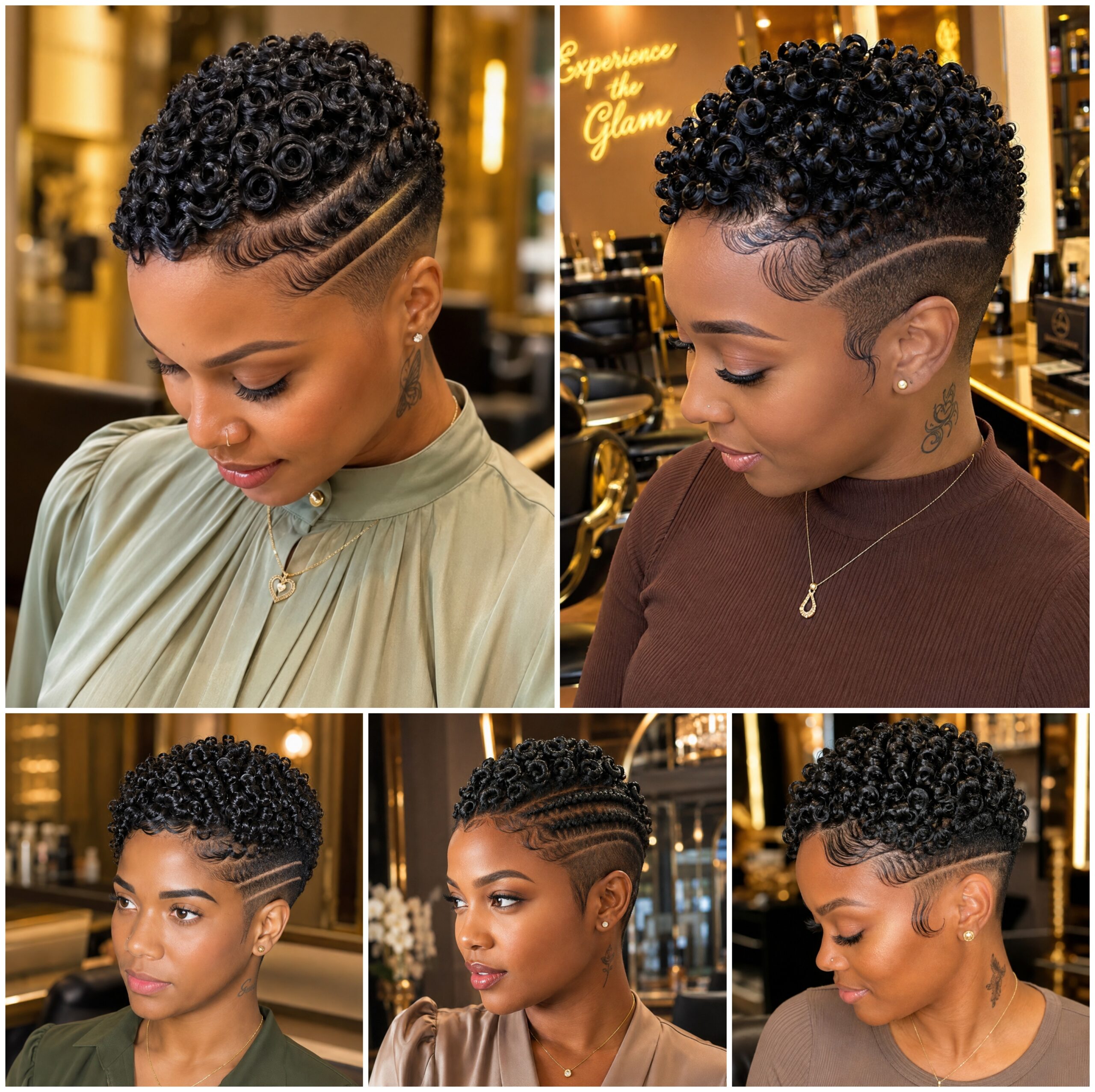
A compact ringlet crown with plain tapered sides puts the focus almost entirely on texture, shape, and proportion. The upper section is filled with small, closely arranged ringlets that create a rounded crown, while the sides gradually reduce in length without carved lines or additional patterns. This simplicity gives the curls more visual importance and creates a hairstyle that can be appreciated from the front, side, and rear.
The absence of side designs is an important part of the look. Instead of using razor lines to attract attention around the temples, the hairstyle relies on the contrast between a dense curly top and a closely shaped perimeter. The result is a clean silhouette where individual ringlets remain the strongest visual element.
This style can be recreated on suitable natural hair or used as a reference for a customized wig. In either version, the most important details are ringlet size, crown density, upper height, and the gradual transition into the tapered sides.
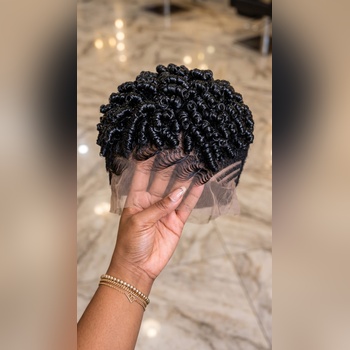
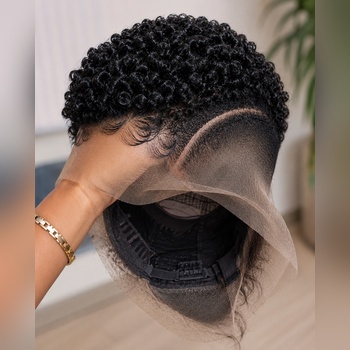
Building a Compact Crown Without Excess Height
The crown should appear full without becoming excessively tall. Small ringlets are arranged closely across the upper section, producing concentrated texture while maintaining a compact shape around the head.
Ringlet diameter influences how dense the finished hairstyle appears. Larger curls leave more visible space between sections and create a looser silhouette. Smaller ringlets allow more texture to fit within the same area and are particularly useful for achieving the tightly packed appearance associated with this design.
The stylist should avoid making every curl point in exactly the same direction. Slight variations create depth and prevent the crown from appearing artificial. At the same time, the overall placement should maintain a rounded profile without isolated curls extending far beyond the intended shape.
Careful trimming around the outer crown can help establish the final silhouette after the ringlets have been formed.
Keeping Individual Ringlets Easy to See
A dense crown does not mean the curls should blend together. Visible separation between neighboring ringlets is essential because it allows the circular texture to remain recognizable.
On natural hair, a stylist may work with small sections and shape them individually according to the existing curl pattern. The amount and type of styling product should depend on texture, porosity, and the desired hold.
Too much product can make compact curls heavy and reduce their movement. Too little control may allow frizz to obscure the ringlet pattern. The objective is to support the curl formation while maintaining visible strand detail.
A reflective surface can also improve definition. Light following the curves of individual ringlets makes the pattern easier to distinguish, particularly in close-up photographs.
Why Plain Tapered Sides Suit This Crown
The sides are intentionally free from carved lines, elaborate patterns, or decorative channels. This allows the gradual taper itself to provide the contrast beneath the textured crown.
Hair becomes progressively closer as it moves toward the lower sides and around the ears. The transition should remain gradual so there is no harsh shelf between the curls and the shorter perimeter.
A plain taper also offers flexibility for someone who prefers a less decorated side profile. The hairstyle can still have a strong identity because the difference between the dense ringlets and close sides creates enough visual contrast on its own.
For natural hair, a barber experienced with curly and coily textures can adapt the taper to the wearer’s head shape and natural density rather than applying exactly the same fade position to every client.
Adding Gloss Without Weighing Down the Curls
Shine can make small ringlets especially noticeable because reflective highlights follow their circular shapes. The goal is to enhance the texture without using so much product that the curls become heavy or sticky.
For natural hair, appropriate moisture and styling products can help create a healthy-looking reflective surface while controlling unwanted frizz. Product selection should be based on the individual’s hair characteristics.
Wigs require material-specific care. Human hair and synthetic fiber should not automatically be treated with the same products or heat settings. Synthetic units should only be exposed to heat when the manufacturer confirms that the particular fiber is heat-safe.
Mirror-like glossy hair, a silky reflective finish, healthy wet-look shine, individually visible strands, and ultra-defined texture can emphasize the compact ringlet formation without changing the fundamental silhouette.
Recreating the Look on Natural Hair
Natural hair can provide an excellent foundation when the existing length and texture support small ringlets. The upper section needs enough length to create recognizable curls while the perimeter is gradually reduced.
A barber can establish the tapered sides before the final crown shaping, depending on the stylist’s preferred workflow. The upper hair can then be divided into manageable sections and formed into compact ringlets.
Because curly and coily hair can shrink as it dries, final crown height should be judged with the finished texture in mind. Cutting too aggressively before understanding the shrinkage pattern may result in a crown that becomes shorter than intended.
Reference photographs are useful during the appointment because they communicate the desired proportions more accurately than a general request for a curly tapered hairstyle.
Creating the Same Silhouette as a Custom Wig
A customized wig can provide a similar appearance without requiring the wearer to maintain closely tapered natural sides. The construction should concentrate density across the crown while deliberately reducing bulk through the perimeter.
This is different from simply purchasing a heavily curled wig and cutting the sides extremely close afterward. The underlying construction determines how much hair can safely be removed while preserving suitable coverage.
When commissioning a unit, send front, side, and rear references. Explain that the crown should remain compact and densely curled while the sides stay plain, close, and free from decorative razor patterns.
Ask the maker whether side density can be adjusted during construction. This can provide greater control over the finished proportions than attempting extensive modifications after the unit is completed.
Price Levels for a Customized Version
Pricing varies according to the chosen material, construction technique, labor, density, customization, and seller location. Shipping, fitting, and additional styling can also affect the total cost.
| Option | Price Level | Typical Work |
|---|---|---|
| Premium Custom | Highest | Personalized construction, advanced density placement, detailed ringlet preparation, taper shaping and extensive finishing |
| Standard Custom | Upper-mid | Customized crown proportions, selected curl structure and tailored side density |
| Basic Human Hair | Mid to upper | Human-hair base with simpler shaping and fewer structural adjustments |
| Premium Synthetic | Lower to mid | Higher-grade synthetic fiber with established ringlets and customized perimeter cutting |
| Basic Synthetic | Entry | Ready-made curly construction with limited personalization |
Choosing a Barber or Wig Stylist
For natural hair, look for professionals who regularly work with Afro-textured curls and tapered cuts. Their portfolio should ideally contain examples where the upper texture remains full while the sides are reduced without creating an abrupt transition.
For a wig, search for makers who have experience with cropped curly units and controlled side density. A portfolio containing only long wigs does not necessarily demonstrate experience with compact tapered construction.
Send the hairstyle reference before booking or ordering. Mention that no side lines or decorative patterns are required. This prevents a stylist from adding details that are not part of the intended design.
Local searches such as “ringlet taper stylist,” “curly pixie barber,” “Afro curl specialist,” or “custom curly wig maker” can help locate relevant professionals when combined with a city or neighborhood name.
Shopping Online for a Similar Ringlet Wig
Online product names can vary significantly, so photographs should guide the search. Look for a unit with enough upper density to create compact ringlets and a construction that can support reduced side volume.
Side and rear photographs are particularly useful. A front-facing product image may make a wig appear suitable even when substantial bulk is hidden around the perimeter.
Before purchasing, ask whether the seller can customize crown height and side density. Confirm the hair or fiber type, color, measurements, production time, shipping charges, and return conditions before placing a custom order.
For customized work, keep the instructions straightforward: compact ringlets across the crown, rounded upper proportions, gradual tapering, and plain sides without carved designs.
Maintaining the Ringlets Between Styling Sessions
Repeated brushing can disturb small ringlets and gradually reduce their separation. Maintenance should focus on preserving existing curls rather than repeatedly combing through the entire crown.
On natural hair, individual sections that loosen can often be reshaped separately. Moisture needs and product frequency vary according to texture and porosity, so follow the routine recommended by the stylist.
For wigs, storage can make a significant difference. A suitable wig stand helps prevent the crown from becoming compressed and protects the rounded silhouette between wears.
Washing and restyling methods should always match the material. Human hair and synthetic fibers can react differently to water temperature, products, friction, and heat.
Using Color to Reveal the Ringlet Pattern
Natural black and deep brown create a strong, concentrated silhouette and work particularly well when the objective is to emphasize shape. Warmer shades can reveal more of the individual curl structure under direct light.
Caramel brown, honey, copper, auburn, ginger, or burgundy can bring additional dimension to the crown. Multi-tone coloring can also highlight selected ringlets when the shades are distributed carefully.
Color should support the texture rather than overpower it. A deeper base combined with strategically lighter curls can increase visual separation while preserving the compact character of the hairstyle.
Preparing Clear Instructions Before Booking
A useful reference set should show the hairstyle from the front, side, and rear. The front demonstrates crown width and ringlet density, while the side reveals the transition into the taper. A rear photograph helps the stylist understand how the shorter perimeter continues around the head.
Identify the essential elements clearly: compact individual ringlets, concentrated crown volume, a rounded upper silhouette, gradual tapering, and plain sides without razor lines.
Keeping the instructions focused makes it easier for a barber or wig maker to reproduce the intended appearance rather than adding unnecessary design elements. In this hairstyle, the ringlets provide the visual detail while the understated taper creates the foundation that allows the crown to stand out.
Search Terms
Compact Ringlet Crown · Plain Taper Sides · Tapered Ringlet Crown · Rounded Ringlet Top · Glossy Compact Ringlets · Curly Crown Taper · Plain Side Taper Hair · Dense Ringlet Top