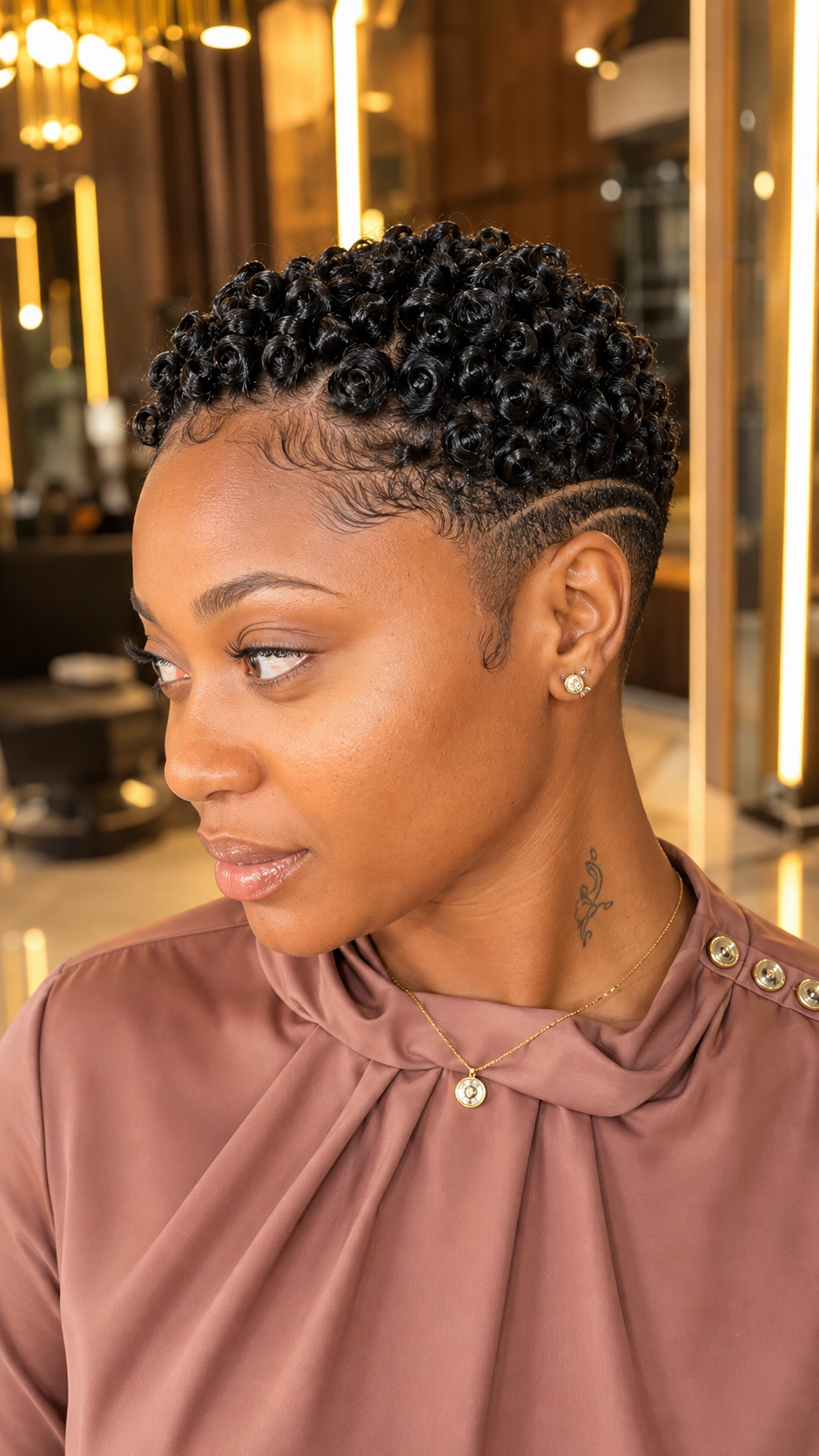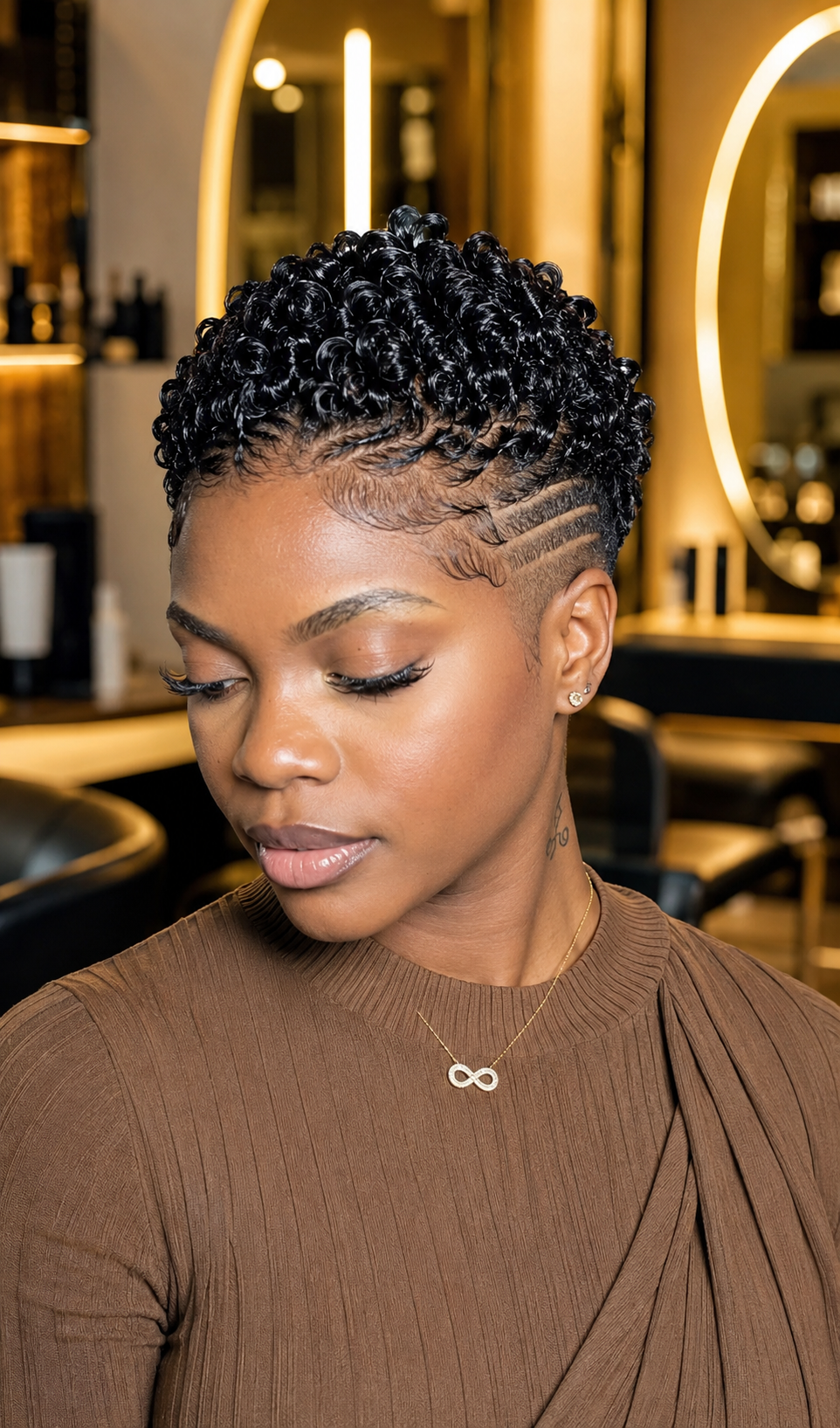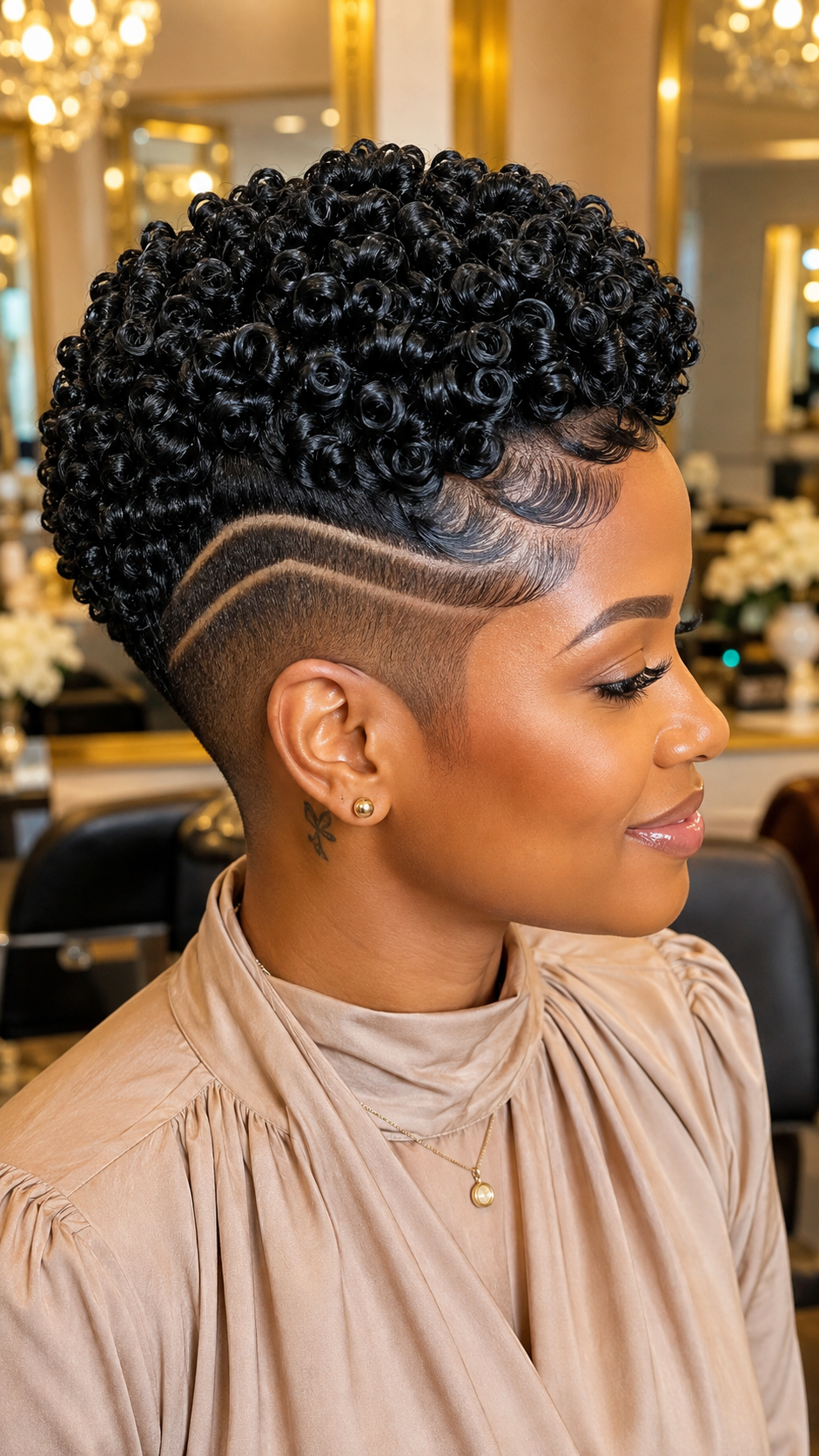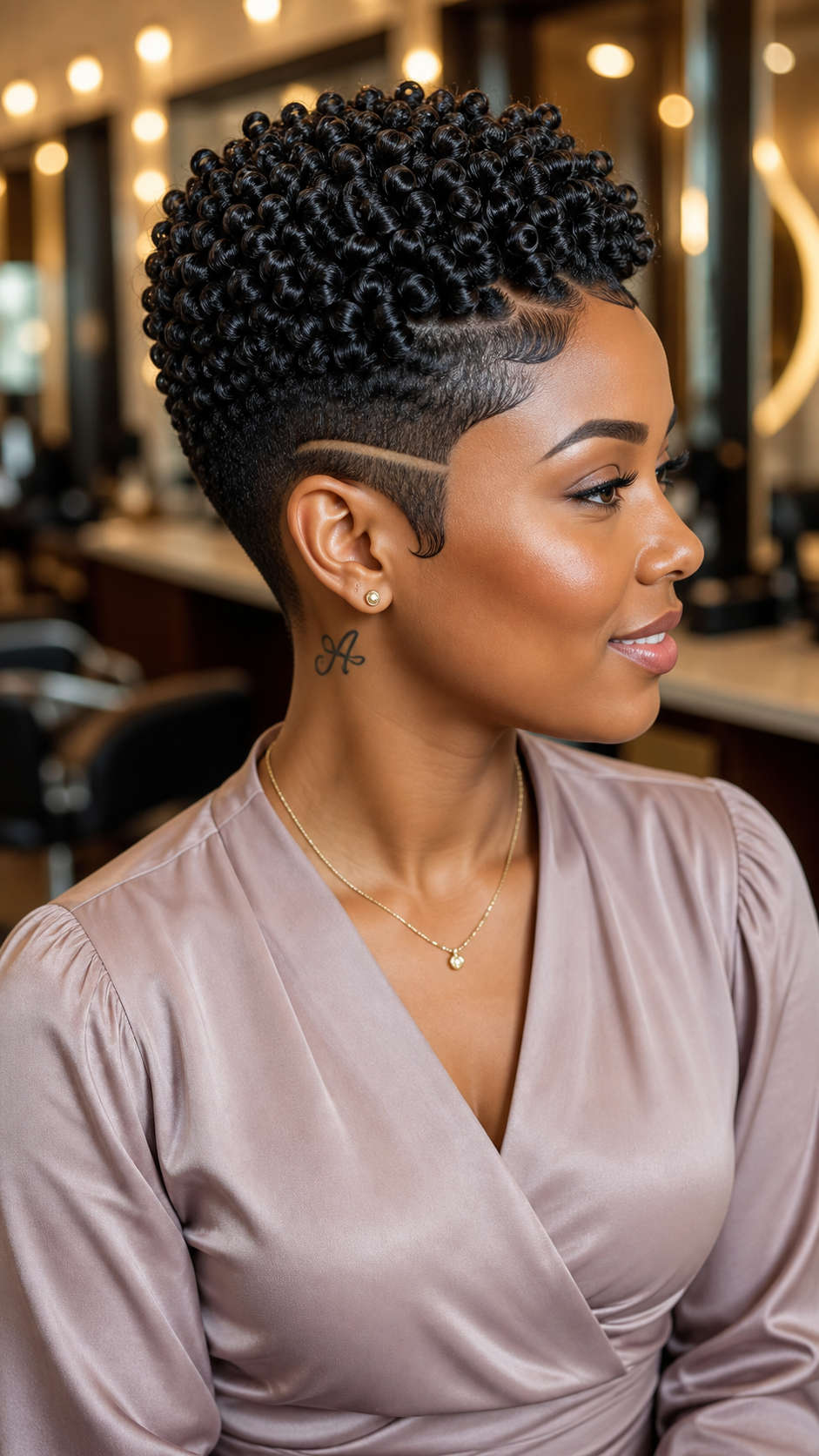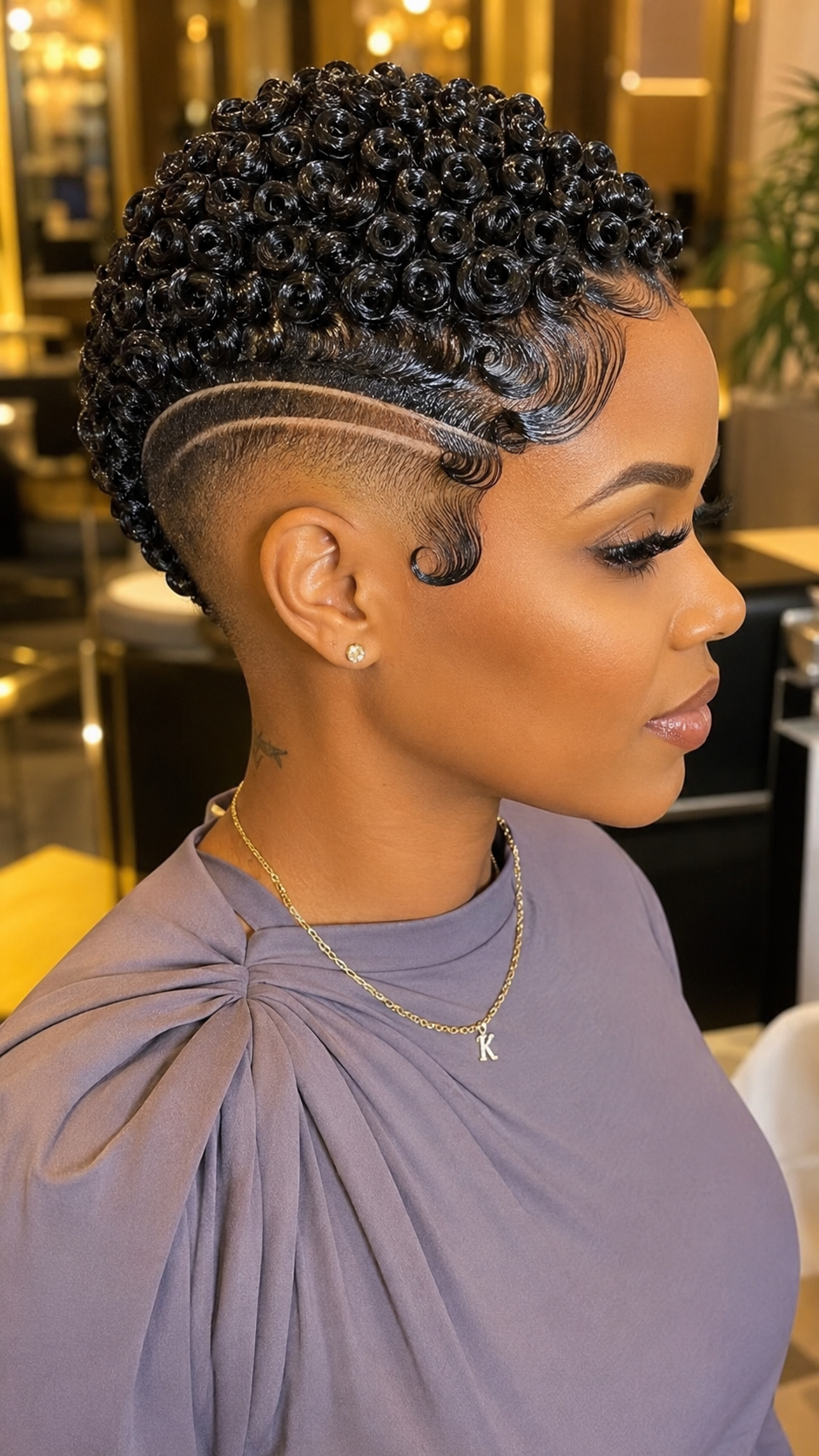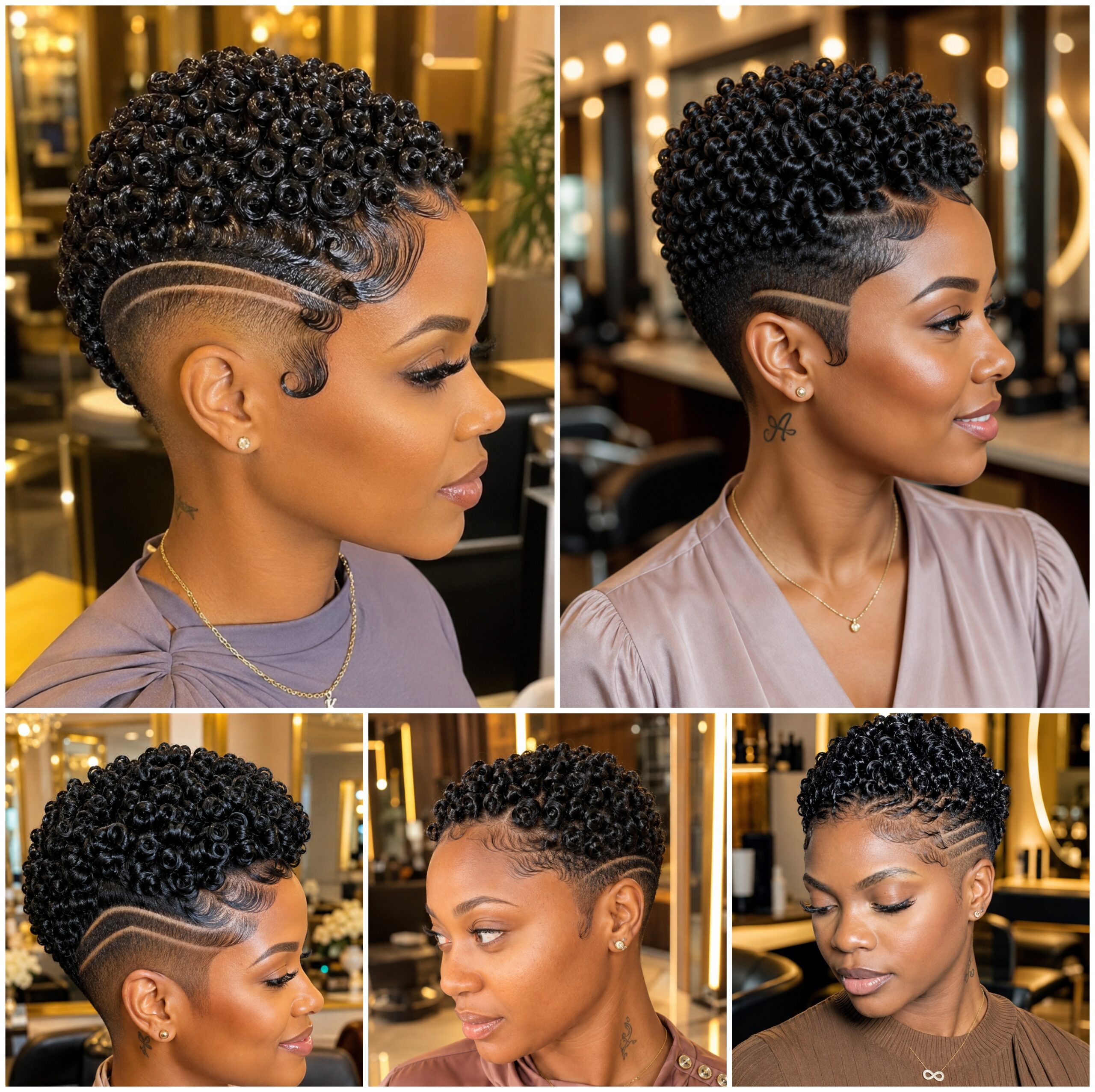
A finger curl crown combined with tapered sides and a sweeping side design creates a hairstyle where soft circular texture meets precise barber detailing. The upper section carries compact finger-shaped curls with concentrated volume, while the sides gradually become closer toward the temple and lower perimeter. A flowing carved accent travels through the tapered area, adding movement to the profile without overwhelming the curls above.
The hairstyle works best when all three elements remain balanced. The finger curls should be individually recognizable, the taper needs a gradual transition, and the sweeping side detail should follow the natural contour of the head. When these proportions are carefully controlled, the design remains interesting from several viewing angles rather than depending entirely on the front.
This look can be recreated on suitable natural hair or interpreted as a customized wig. The styling methods will differ, but curl diameter, crown height, taper depth, and the direction of the side design should be established before the work begins.
Forming Individual Finger Curls Across the Crown
The upper section relies on compact curls shaped into clearly visible circular formations. Unlike loose waves, finger curls have a more concentrated structure and can create considerable texture within a relatively small crown area.
Curl diameter influences both density and silhouette. Larger curls create a more open appearance, while smaller formations allow additional texture to fit across the crown. Medium-small curls are particularly useful for maintaining a compact profile while preserving enough size for each curl to remain visible.
Direction should vary slightly throughout the crown. Making every curl identical can produce an overly uniform appearance, while completely random placement may disturb the overall shape. Controlled variation creates depth while maintaining a rounded upper silhouette.
The curls near the perimeter should also connect naturally with the shorter sections below rather than ending abruptly above the taper.
Creating a Sweeping Accent Through the Side
The carved side design gives this hairstyle its distinctive profile. Instead of using a simple straight line, the detail follows a longer sweeping path through the tapered section. Its flowing direction complements the circular movement of the curls above.
Placement is particularly important. The design needs enough surrounding close-cut hair to remain visible, but it should not extend so far upward that it removes part of the main crown. A barber can adjust the curve according to the temple area and individual head shape.
The width of the carved channel should remain controlled. A very wide design can dominate the entire profile, while an extremely fine line may quickly become difficult to see as natural hair grows.
A strong reference photograph is valuable because the phrase “sweeping side design” can describe many different curves. Showing the exact direction reduces the chance of receiving a completely different pattern.
Connecting the Taper to the Curled Top
The taper provides the foundation beneath the textured crown. Hair gradually reduces in length as it travels toward the lower sides and around the ears, creating contrast without producing a disconnected appearance.
The transition area requires particular attention. Cutting extremely close immediately beneath the curls can create a shelf between the upper and lower sections. Leaving too much bulk, however, reduces the visibility of both the taper and sweeping design.
For natural hair, an experienced barber can determine where the transition should begin according to density and head shape. The final proportions can then be refined once the upper curls have settled into their intended form.
For wigs, reduced side density is easier to control when it is considered during construction rather than created entirely through aggressive cutting afterward.
Enhancing Curl Definition with Reflective Shine
Finger curls become especially noticeable when individual strands reflect light. Highlights following the circular bends help separate neighboring curls visually and give the crown additional depth.
On natural hair, appropriate moisture and styling products can support curl formation while reducing unwanted frizz. Heavy application should be avoided when it causes smaller curls to lose bounce or separation.
Human-hair wigs and synthetic units require different maintenance. Heat should never be assumed safe for synthetic fiber unless the manufacturer specifically identifies the material as heat-resistant.
Mirror-like glossy hair, a silky reflective finish, healthy wet-look shine, individually visible strands, and ultra-defined texture can emphasize the finger curl pattern while preserving the compact crown shape.
Natural Hair and Custom Wig Possibilities
Natural hair can be an excellent foundation when the existing texture and length allow the required curls to be formed. The sides can be tapered by a barber, while the crown is shaped into individual finger curls using methods appropriate for the wearer’s hair.
A custom wig offers another approach for someone who wants the same silhouette without maintaining closely cut natural sides. The maker can concentrate density across the upper section while deliberately reducing hair around the perimeter.
Not every ready-made curly wig is suitable for this conversion. A unit with extremely heavy side density may require extensive reconstruction before it can reproduce a convincing tapered profile.
When commissioning a wig, provide multiple reference angles and discuss whether the sweeping side effect can be incorporated into the finished unit or should be completed afterward by a specialist.
Price Categories for Custom Construction
Wig prices vary according to material, construction technique, labor, density, customization, seller location, and additional styling. These categories are therefore useful for comparing levels of work rather than representing universal fixed prices.
| Option | Price Level | Typical Work |
|---|---|---|
| Premium Custom | Highest | Personalized construction, advanced density placement, detailed curl formation, taper shaping and specialized finishing |
| Standard Custom | Upper-mid | Customized crown proportions, curl selection and tailored side density |
| Basic Human Hair | Mid to upper | Human-hair base with simpler shaping and fewer structural modifications |
| Premium Synthetic | Lower to mid | Higher-grade synthetic fiber with established curls and customized perimeter cutting |
| Basic Synthetic | Entry | Ready-made construction with limited personalization |
Choosing a Professional for the Side Design
For natural hair, look for a barber experienced with Afro-textured hair, tapered cuts, and curved razor work. Previous examples of side designs are useful because precision detailing requires a different skill set from ordinary trimming.
The stylist responsible for the curls should also understand how much upper length must remain after the sides are shaped. In some salons, one professional can complete the entire hairstyle, while other locations may use separate barber and curl specialists.
Send the reference image before making an appointment and identify the sweeping line specifically. Ask whether the professional can reproduce its general direction while adapting the placement appropriately to the wearer’s head shape.
Shopping for a Similar Wig Online
When searching online, concentrate on photographs showing the actual construction rather than relying entirely on product titles. A suitable starting unit needs sufficient crown density for compact curls and enough flexibility around the sides for a tapered appearance.
Side and rear photographs are particularly useful. If a seller only provides frontal views, ask for additional images or information about perimeter density before ordering.
Search phrases such as finger curl wig, tapered curly wig, finger curl pixie, or curly crown taper can help locate potential base units. The final sweeping detail may still require customization depending on how the wig is constructed.
Before payment, confirm hair or fiber type, color, measurements, production time, shipping costs, customization options, and the return conditions applied to personalized orders.
Keeping the Finger Curls in Shape
Repeated brushing can disturb individually formed curls, so maintenance should focus on preserving their existing structure. Loose sections can often be reshaped separately without manipulating the entire crown.
Natural hair should receive moisture according to its texture and individual needs. The stylist who creates the curls can recommend an appropriate routine for maintaining definition between appointments.
Wigs should be stored without compressing the crown. A suitable wig stand can help maintain the rounded silhouette and protect individual curls when the unit is not being worn.
Care methods should always correspond to the specific material. Human hair and synthetic fiber can respond differently to products, washing, friction, and heat.
Refreshing the Taper and Sweeping Detail
Natural hair growth gradually reduces the contrast within the tapered sides and makes carved detailing less visible. A barber can refresh the existing design while restoring the surrounding perimeter.
Following the original sweeping path during maintenance helps preserve consistency. Continually changing its location may eventually produce overlapping areas that alter the intended profile.
The frequency of barber visits depends on individual growth rate and how sharp the wearer wants the design to remain. Some people prefer a freshly defined appearance, while others allow the line to soften between appointments.
Exploring Color Through the Curled Crown
Natural black and deep brown can create strong contrast between the full crown and tapered perimeter. Warmer shades can make the circular formations more visible by introducing additional light variation throughout the upper section.
Honey brown, caramel, copper, auburn, ginger, burgundy, and similar shades can all produce different interpretations of the same structure. Carefully positioned highlights can also emphasize selected curls.
For multi-tone versions, color distribution should support the curl pattern rather than conceal it. A deeper base combined with lighter sections can add dimension while maintaining the distinctive relationship between the crown and side design.
Building a Useful Reference Set Before Booking
A front image communicates the width, density, and height of the finger curl crown. A full side profile is essential for showing the taper and direction of the sweeping design, while a rear or three-quarter photograph explains how the shorter perimeter continues around the head.
When speaking with the stylist or wig maker, identify the main priorities clearly: compact finger curls, concentrated crown volume, gradual tapered sides, one flowing side accent, and visible separation between individual curls.
The success of this hairstyle depends on keeping those elements connected. The curls provide the dominant texture, the taper controls the overall silhouette, and the sweeping side design introduces movement that makes the profile immediately recognizable.
Search Terms
Finger Curl Crown · Sweeping Side Hair Design · Finger Curl Taper · Curved Side Hair Line · Glossy Finger Curls · Tapered Curly Crown · Sweeping Razor Detail · Finger Curls With Tapered Sides