
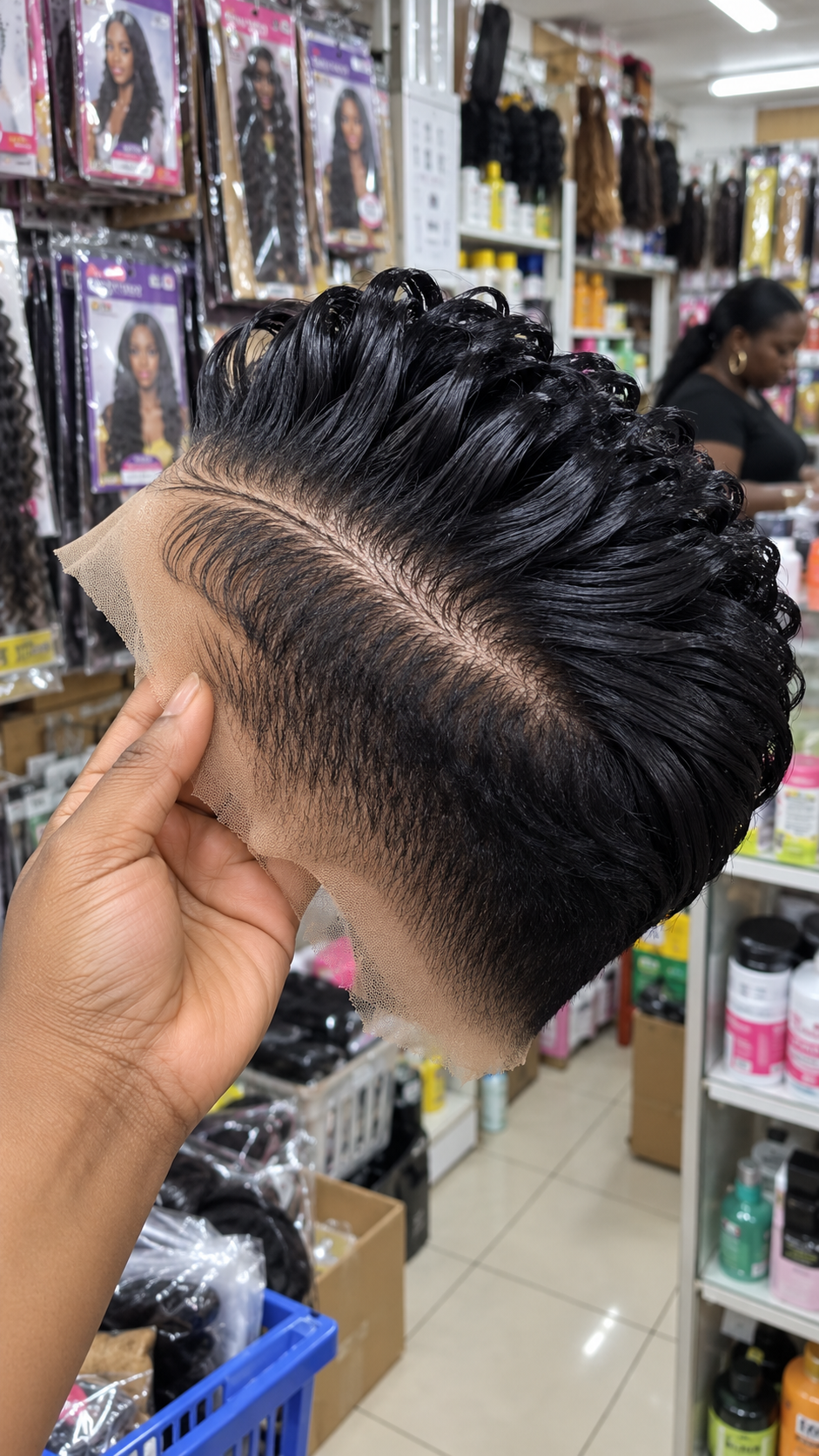
A black wig can look simple at first glance, but this piece depends far more on construction than color. The visual identity comes from the way the hair is directed across the crown, the close side area beneath it, and the deliberate separation between those two zones. Instead of relying on length or dramatic color placement, the design creates interest through controlled movement. The upper hair is arranged into broad, glossy wave loops that travel backward and slightly outward, while the lower section stays much closer to the cap. That contrast is what gives the wig its recognizable profile.
The photograph also gives useful information that buyers do not always get from a finished portrait. The wig is being held before installation, so the front lace extends beyond the hairline and remains clearly visible. This makes it easier to understand where trimming and fitting would take place. The image supports describing the piece as a lace-front style, but it does not provide enough evidence to label the material as HD lace. That distinction matters when ordering because lace transparency, thickness and tint can vary considerably between suppliers.
The Crown Is Built Around Direction Rather Than Height
The strongest design element is the crown. Black strands have been arranged into a sequence of curved sections rather than being allowed to fall randomly. Each section bends backward and joins the next, producing a layered rhythm across the upper portion of the wig. Some ends curl inward, giving the surface a looped appearance without turning the entire crown into tight curls.
This construction works because the hair does not rise excessively high from the base. There is enough elevation to make the individual wave sections visible, but the overall silhouette remains controlled. A stylist recreating this piece should therefore pay close attention to direction. Adding too much volume would change the character of the wig even if the same black color and general haircut were retained.
The glossy surface also makes separation between the wave groups easier to see. For a customer ordering remotely, close photographs of the crown from the front, side and rear would be valuable. They can reveal whether the waves have actually been shaped into sections or whether a seller is offering a loosely similar black wig with ordinary combed-back hair.
A Side Structure That Changes the Entire Profile
Beneath the upper waves, the hair transitions into a much closer side area. This lower section is not merely background for the crown. It creates the visual boundary that allows the larger upper pieces to stand out. The photograph shows fine, close hair around the side and temple region, with the density increasing as it approaches the upper construction.
A narrow curved separation runs through this area. It follows the direction of the head rather than appearing as a straight horizontal stripe. That geometry deserves attention during customization because moving the line too high, making it too wide or cutting it into an unrelated shape would produce a noticeably different result.
This is one reason a buyer may benefit from working with a wig stylist or barber who is comfortable with precision wig work. The supplier can provide the basic unit, but the final side geometry may need to be refined after the wig has been fitted to the wearer. Custom work should be discussed before cutting because material removed from a wig cannot simply grow back.
What the Visible Lace Tells a Buyer
The untrimmed lace is particularly useful in this photograph. It extends beyond the front and around portions of the perimeter, showing that the photographed unit has not yet reached its final installed state. Hair has been ventilated near the front boundary, and the transition toward the denser crown can be examined before the excess lace is removed.
The front also contains fine strands arranged near the hairline. Their purpose is to reduce the abrupt visual jump between skin and the heavier body of hair. During installation, these strands should not automatically be cut away or overloaded with styling product. A stylist can first position the unit, determine the correct lace trimming line and then decide how much of the finer front hair should remain visible.
Lace color should also be discussed when ordering. A product photograph can be affected by flash, store lighting and camera processing, so a buyer should not assume that the photographed lace will disappear against every complexion. Asking a seller about available lace shades is more reliable than choosing solely from a brightly lit photograph.
Ordering This Particular Construction Without Losing Its Identity
When contacting a wig seller, sending the reference image is only the beginning. The order description should identify the elements that cannot be substituted: black color, sculpted backward crown waves, compact side density, the curved side separation and a lace-front construction. This gives the seller a much more precise brief than simply requesting a black pixie wig.
It is also worth asking whether the crown arrives pre-shaped. Some units may be supplied with the general haircut while expecting the customer or stylist to create the final wave arrangement. Others may be sold after the crown has already been set. That difference can affect both price and the amount of salon work required after delivery.
For a custom order, request current photographs of the actual unit before shipping whenever the seller offers that service. A front view alone is not enough for this design. Ask for one photograph showing the crown, another showing the side separation and another showing the lace before trimming. Those angles allow the buyer to check the construction before the wig reaches the salon.
If the unit will be installed professionally, booking the appointment after confirming the delivery date can prevent unnecessary rescheduling. The stylist should ideally see the wig before making irreversible adjustments. Lace trimming, ear-area fitting, side refinement and final crown shaping can then be planned around the wearer’s head rather than performed according to a generic mannequin measurement.
Where the Money Is Actually Going
The price of a wig in this category should not be judged only by hair length. Much of the work is concentrated in areas that are easy to overlook: ventilation around the front, density control near the side, shaping of the upper wave sections and any hand customization required to reproduce the curved separation. Two black wigs of similar size can therefore carry very different prices.
| Construction Level | Typical Price Range | What the Buyer Should Expect |
|---|---|---|
| Premium Custom | $280–$480+ | Higher-grade hair with extensive hand shaping, lace fitting and detailed crown and side customization. |
| Standard Custom | $180–$300 | A customized unit with deliberate wave placement and additional work around the front and side structure. |
| Basic Human Hair | $110–$190 | A human-hair foundation that may require further cutting, crown setting and lace adjustment by a stylist. |
| Premium Synthetic | $70–$130 | A pre-shaped alternative that can hold its form well but offers less freedom for heat-based reshaping. |
| Basic Synthetic | $35–$75 | A budget-oriented interpretation where lace quality, density control and detailed side work may be simpler. |
These ranges are practical comparison points rather than universal retail prices. Country, hair origin, lace choice, cap size, labor and seller markup can all change the final quotation. Shipping, fitting and salon customization may also be billed separately. For that reason, a useful quotation should state what is included instead of presenting one unexplained total.
Human Hair and Synthetic Versions Need Different Expectations
A human-hair version can make sense for someone who wants a stylist to refresh the crown repeatedly. Individual wave groups can usually be reset with suitable tools and products, although heat limits should always be confirmed with the supplier. Human hair also gives a barber or wig specialist more flexibility when refining the side area after fitting.
Synthetic fiber offers a different advantage. A well-made pre-shaped unit can retain its sculpted crown with less daily manipulation. However, the buyer should not assume that every synthetic fiber can tolerate heated tools. If the crown loses its intended direction, attempting to reshape an unknown fiber at a high temperature can permanently damage it.
The decision should therefore be based on how the wig will actually be used. Someone who regularly visits a stylist and enjoys restyling may value human hair more. Someone who wants the crown pattern to remain largely pre-set may prefer a quality synthetic option, provided the photographed construction closely matches the desired reference.
Keeping the Wave Pattern From Collapsing During Storage
Maintenance for this design begins with preserving the crown’s directional pattern. Aggressive brushing across the entire top can merge the individual wave sections and remove the spacing that makes them visible. Instead, maintenance should follow the existing direction of each group. Fingers or an appropriate wide tool can be used carefully where separation is necessary.
Heavy product buildup is another concern. The photographed hair has considerable shine, but recreating that appearance by repeatedly adding oils or gels can weigh down the upper sections. Product should be applied sparingly and according to the fiber type. When buildup becomes noticeable, cleaning should focus on restoring movement without scrubbing the lace or disturbing ventilated hairs around the front.
Storage matters just as much. Compressing the wig under other items can flatten the upper loops and bend the lace. A mannequin head or suitable wig stand gives the crown room to retain its shape. Before storing it, the lace should be allowed to dry completely, particularly after washing or adhesive removal.
The close side region needs a lighter touch than the crown. Repeated cutting every time the wig is worn can gradually alter its proportions. If a barber is maintaining the piece, showing the original reference photograph can help preserve the intended relationship between the compact lower section, curved separation and larger upper waves.
Planning the Salon Appointment Around the Wig
This is the kind of unit that benefits from fitting before final detailing. At the first appointment, the stylist can check cap placement, front position and how the side design sits relative to the wearer’s temple and ear. Only after those points are established should the excess lace be trimmed and any additional side work considered.
A barber may be especially useful if the customer wants the close side section refined, while a wig stylist can handle cap positioning, lace work and crown arrangement. In some cases, booking professionals who are comfortable with both disciplines can produce a better result than asking someone unfamiliar with wigs to treat the piece like growing hair.
Customers purchasing online should also ask whether the seller offers cap-size choices. A beautiful crown cannot compensate for a unit that sits too far forward, shifts backward or creates excess material around the ears. Measurements should follow the seller’s own sizing instructions because cap charts are not identical across every manufacturer.
A Strong Reference for Buyers Who Prefer Construction Over Color
The appeal of this wig comes from restraint in the palette and complexity in the shaping. The black color keeps attention on the architecture of the hair: broad crown waves, compact lower density, a curved side separation and a visible lace-front foundation awaiting installation. There are no contrasting highlights needed to explain the design.
For wig businesses, this type of piece is also a useful example of why detailed product photography matters. Showing an uninstalled unit can answer questions that a finished model portrait cannot. Buyers can inspect the lace boundary, see the relationship between the crown and side section, and decide which parts may require professional customization before ordering.
The safest purchasing approach is to compare construction rather than accepting any black wig with a similar overall silhouette. Ask for multiple angles, confirm whether crown shaping is included, discuss lace shade and cap sizing, and establish which customization services are part of the quoted price. Once the unit arrives, professional fitting can preserve the details that made the reference attractive in the first place rather than transforming it into a generic alternative.
Search Terms
black sculpted wave lace wig · backward loop crown wig · curved side separation wig · black lace front wave wig · close side detail wig · glossy crown wave wig · untrimmed lace black wig · precision side pattern wig