
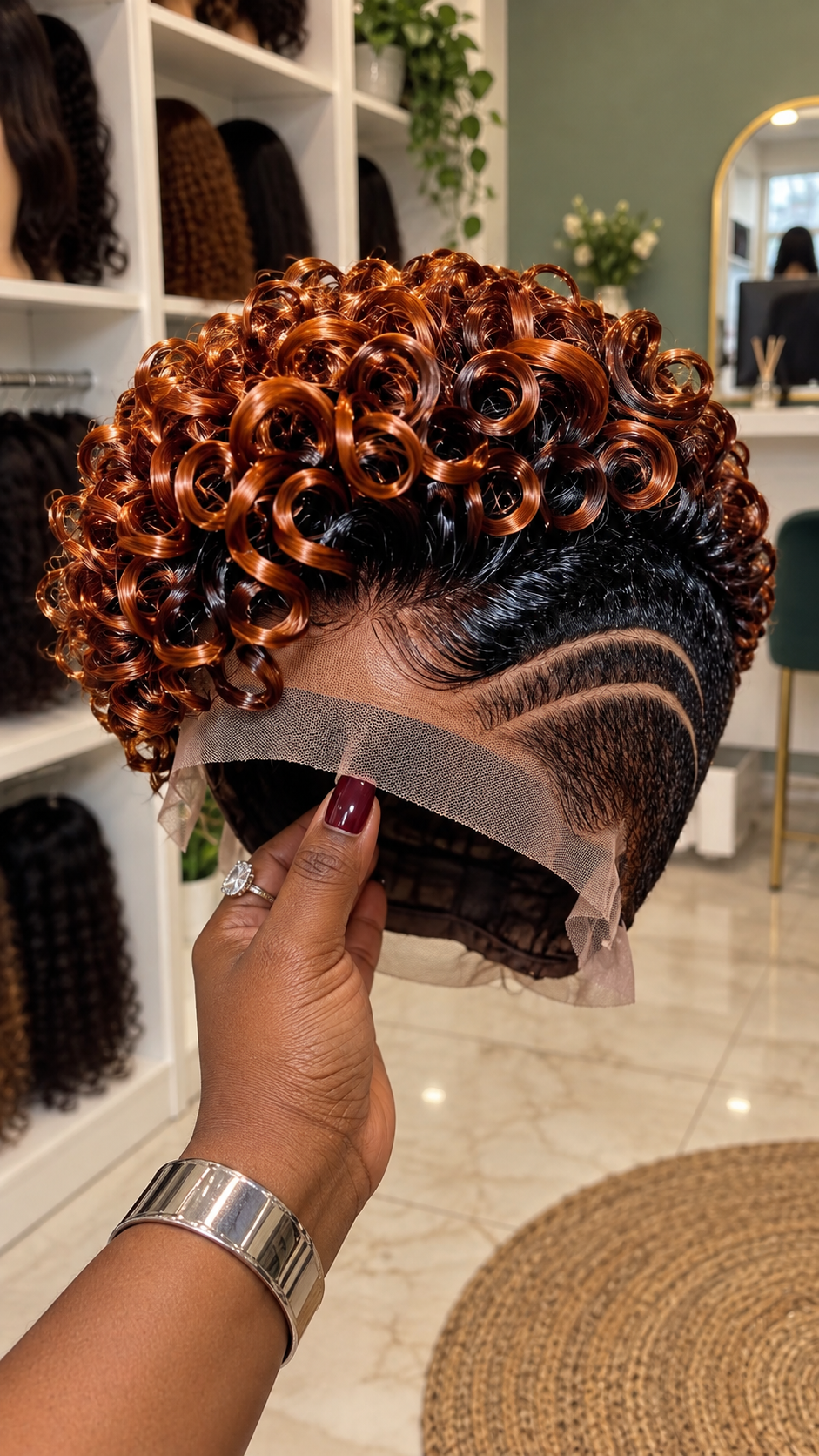
A rich copper crown can completely change the personality of a sculpted wig when the color is paired with compact circular curls rather than loose waves. This piece uses that idea particularly well. Bright cinnamon-copper ringlets dominate the upper section while a much darker foundation remains visible beneath them, creating a dramatic contrast between the crown and the closely arranged side area. Two sweeping curved lines then travel through the side panel, giving the lower portion its own recognizable shape instead of allowing the curls to carry the entire design.
The photograph also reveals important construction details that are often hidden once a wig is installed. Lace extends beyond the frontal and side perimeter, the darker interior cap can be seen underneath, and the hairline has already been customized with delicate strands and carefully directed baby hair. For anyone considering a similar custom unit, these visible details make the image useful as both style inspiration and an ordering reference.
What makes the piece especially interesting is the difference between the two main surfaces. The crown is energetic, circular and bright. The side is darker, flatter and shaped by long curved separations. Neither area competes with the other because they have clearly different jobs. The ringlets create visual volume while the side panel gives the wig structure.
Cinnamon Copper Ringlets Create the Main Focal Point
The first thing that attracts attention is the concentration of glossy copper curls across the crown. These are not loose spirals hanging downward. They have been arranged into compact circular formations, many of which resemble open rings when viewed from the front and side. The result is a crown with considerable movement even though the overall length remains controlled.
The color appears particularly effective because the curl pattern repeatedly changes the direction of the strands. Light hits the outer surfaces of the rings while the interiors remain deeper in tone. This creates natural variations between brighter copper, cinnamon and darker auburn areas without requiring every curl to contain a completely different color.
When requesting a recreation, the curl geometry should be discussed as carefully as the shade. Asking only for a copper curly wig could produce soft spirals, waves or fluffy curls that bear little resemblance to this reference. A better description would specify compact polished ringlets arranged closely across the crown, with visible circular openings and controlled placement.
A Dark Foundation Gives the Copper More Impact
The crown does not begin as a uniformly bright copper mass. Dark hair remains visible underneath and around the lower portions of the design. This darker foundation provides contrast and makes each warm ringlet easier to distinguish.
Near the side and hairline, the palette moves into a deep natural black or very dark brown appearance. The transition creates a useful visual boundary between the colorful crown and the carved side section. Without that darker area, the entire unit could become overwhelmingly copper and some of the side workmanship would be harder to notice.
For custom coloring, this distinction should be communicated before the unit is processed. A fully copper base with dark color added afterward will not necessarily create the same result as deliberately retaining a darker foundation. Buyers should ask the colorist how the root area, side panel and crown will relate to one another before approving the final color plan.
The Ringlets Need Controlled Spacing to Keep Their Shape Visible
Density is particularly important with circular curls. If too many ringlets are compressed into a small area, individual shapes disappear and the crown can look like one heavy mass. If they are spaced too far apart, the underlying construction may become unnecessarily exposed.
This wig occupies the middle ground. The curls sit close enough to create a full crown while enough separation remains for many individual rings to be visible. Larger circles appear around the upper frontal region, while smaller loops fill surrounding areas and help connect the arrangement.
A stylist recreating the look should therefore think about curl size distribution rather than producing identical circles everywhere. Slight variations help the crown appear dimensional. The goal is not randomness, however. Every section still contributes to the same rounded silhouette.
The Hairline Uses Fine Directional Work Before the Side Design Begins
Directly below the copper crown, the frontal area becomes much more delicate. Fine strands are directed into the hairline and a sweeping baby-hair section curves toward the temple. This softer transition prevents the dense crown from beginning abruptly at the lace edge.
The contrast is useful visually. Large ringlets provide weight above, while finer hairline work provides detail below. When the unit is installed, preserving this relationship will be important. Excessive trimming, heavy adhesive placement or aggressive brushing around the perimeter could alter the intended shape.
The lace visible in the photograph extends beyond the hairline because the unit has not yet been fully fitted to a wearer. The exact lace specification cannot be established from appearance alone. Anyone purchasing a similar unit should confirm the material, color and coverage directly with the maker rather than relying on photographs to determine a technical lace grade.
Two Curved Side Lines Give the Lower Section Its Identity
The side detailing deserves separate attention because it is not simply decoration added beneath the curls. Two prominent curved separations run backward through the dark side area. Their spacing remains generous enough that each line can be read individually.
The upper curve follows the transition beneath the crown, while the lower curve creates another directional layer before the perimeter. Both lines bend with the shape of the wig instead of running horizontally. This makes the design look integrated into the silhouette.
One common mistake when recreating this type of work is adding too many lines. More detailing does not automatically make the result more impressive. Here, the pair of broad curves is enough to create a strong profile without competing with the ringlet crown.
If this side work is essential to your order, send the stylist a direct side reference and specify the number of lines. Also discuss their width, distance from one another and approximate route around the temple. Those details are easier to establish before construction than to correct afterward.
The Front and Side Tell Two Different Visual Stories
From the upper front, the wig is primarily about copper curls. Move toward the side and the character changes immediately. Darker hair, baby-hair movement and the paired curves become much more prominent.
This makes the design particularly suitable for photography from several angles. A straight frontal photograph would showcase the ringlets but hide much of the side work. A three-quarter angle reveals both elements simultaneously, while a full side photograph can emphasize the curved detailing.
For wig sellers, showing these different perspectives is valuable because customers can understand what they are paying for. A customized unit with significant side work should not be marketed using only one frontal photograph. Buyers need to see the construction and placement that distinguish it from a standard curly piece.
Color Consultation Should Start With Copper Temperature
Copper is a broad color family. Some versions lean strongly orange, others are closer to red, and others contain a deeper cinnamon-brown character. The shade shown here sits in a warm copper-cinnamon range with enough depth to avoid appearing pale or yellow.
When ordering, screenshots alone may not guarantee an exact color match because lighting and camera processing can alter how copper appears. Ask the colorist which shade system they use and whether they can provide a daylight photograph or color swatch before completing the unit.
It is also useful to discuss whether the dark foundation should remain natural black, soft black or deep brown. That choice can subtly alter the transition into copper. A very dark foundation creates stronger contrast, while deep brown can make the progression appear softer.
Choosing Between Human Hair and Synthetic Fiber
The photograph does not provide enough information to confirm the fiber type, so a buyer should treat material as a separate purchasing decision. Human hair may provide greater flexibility for future restyling, but quality, processing history and color treatment will influence how well it responds. Premium synthetic fibers can also hold sculpted ringlets effectively, although heat tolerance and reshaping options depend on the specific product.
Do not assume that the more expensive material automatically produces a closer recreation. The stylist’s ability to construct and arrange the ringlets is equally important. A poorly shaped crown made from expensive hair will still look different from the reference.
Before ordering, ask whether the chosen material can maintain compact circular curls, whether heat can be used safely and what products are recommended for refreshing the crown. Those answers will help determine whether the unit suits your maintenance routine.
Cap Fit Can Change the Position of the Side Curves
A customized side pattern makes proper sizing especially important. When a wig contains recognizable curves around the temple, the cap cannot be treated merely as something that holds the hair. Its position determines where the artwork lands on the wearer’s head.
Measure according to the wig maker’s instructions and provide accurate circumference, front-to-nape and ear-to-ear measurements when requested. If the company uses standard small, medium and large sizing, compare your measurements with its own chart rather than assuming all manufacturers use identical dimensions.
During fitting, the stylist should position the unit before permanently trimming the lace. Once the placement is established, the relationship between the ringlet crown, temple area and curved lines can be evaluated together.
What to Ask a Wig Stylist Before Booking
Start by asking whether the stylist has experience with sculpted ringlet crowns and customized side work. Portfolio photographs are more useful than general claims. Look specifically for compact curls, lace customization and directional side designs.
Next, ask whether coloring, crown styling and installation are included in one service. Some wig makers construct and color the unit but leave the final fitting to another stylist. Others complete every stage. Knowing this beforehand helps you calculate the true cost and avoid booking conflicts.
It is also worth asking how much of the design will arrive pre-shaped. If the copper ringlets are already arranged, find out how the wig should be transported and stored. If the crown will be shaped during the appointment, allow enough time for detailed styling rather than expecting a basic installation slot to cover everything.
Ordering This Look Without Losing the Reference Details
A useful order request should separate the wig into several specifications. First describe the crown: compact cinnamon-copper ringlets with a darker foundation and visible circular curl openings. Next describe the hairline: customized frontal work with fine directional strands and a curved baby-hair section.
Then explain the side: dark close-cropped appearance with two broad curved separation lines following the head shape. Finally, confirm the construction details including cap size, lace coverage, lace shade, density, adjustment system and hair material.
Send more than one reference image if possible. A crown photograph helps with curl arrangement, while a side photograph helps with the curved pattern. If you are commissioning the wig remotely, ask the maker to send photographs of the completed unit before shipment so any major differences can be discussed before delivery.
Refreshing Circular Curls Without Destroying Their Arrangement
This crown should not be maintained like loose everyday curls. The circular shapes are part of the design, so pulling a brush through the entire top could dismantle the arrangement. Maintenance should concentrate on preserving individual sections and controlling product buildup.
Ask the maker what method was used to form the rings and how they recommend restoring them after wear. The correct procedure will depend heavily on whether the unit is human hair or synthetic. Heat should never be applied until the material and safe temperature range have been confirmed.
When cleansing becomes necessary, avoid twisting the crown into one bundle. Follow the recommended washing procedure and allow the wig to dry in a position that supports its silhouette. If professional reshaping is needed, taking the original reference back to the stylist can help prevent the crown from gradually changing into a different curl pattern.
Storage Matters More With a Sculpted Crown
Compact ringlets can become distorted when a wig is pressed against other items. A suitable stand or protected storage area gives the curls enough room to retain their circular form. Avoid placing the unit under heavy clothing, inside an overcrowded drawer or beneath other wigs.
Before storing it, make sure the hair is dry and that excessive styling product has not accumulated between the curls. The side area should also remain free from pressure that could bend the lace or disturb the fine hairline work.
If the wig needs to travel, ask the stylist how they package sculpted pieces. Supporting the interior of the cap and protecting the crown can be more effective than simply placing the unit inside a flat bag.
Best Photographs to Request From a Seller
Ask for a front view that shows the ringlet density and frontal placement. A top or elevated three-quarter photograph should reveal the distribution of copper curls across the crown. The side view should clearly show both curved lines, the darker panel and the transition into the crown.
A photograph of the inside cap can answer practical questions about construction, combs, elastic bands or adjustment mechanisms. Requesting these views before payment is particularly useful when purchasing a customized unit from a seller you have not used before.
Video can also help because the copper shade may look different as lighting changes. A slow rotation of the wig can reveal color variation, crown height and side placement more clearly than a single highly staged image.
Who This Copper Ringlet Design May Suit
This is a strong option for someone who wants a hairstyle with substantial detail but prefers the length to remain controlled. The ringlet crown provides visual impact without relying on long hair, while the dark side area prevents the copper from dominating every part of the piece.
The warm palette can work particularly well for buyers who enjoy cinnamon, auburn and copper shades but still want darker contrast near the foundation. The paired side curves add another point of interest for anyone who prefers barber-inspired detailing incorporated into a wig.
Customization can still be made for personal fit, but preserving the relationship between crown size and side detailing is important. Increasing the crown dramatically or reducing the side area too much could change the proportions that make this reference distinctive.
Price Guide for a Copper Ringlet Custom Wig
Final pricing depends on the selected material, coloring process, lace coverage, cap construction, curl work and amount of side customization. Sculpting many individual ringlets and preparing a customized side area can require considerably more labor than producing a basic ready-to-wear unit. These ranges are general planning estimates rather than a price quotation for the exact wig shown.
| Wig Category | Estimated Price Range | What May Affect the Price |
|---|---|---|
| Premium Custom | $500–$950+ | Premium hair selection, custom sizing, copper coloring, detailed ringlet sculpting and specialized side work |
| Standard Custom | $310–$500 | Custom cap, warm color work, crown shaping, lace customization and curved side detailing |
| Basic Human Hair | $190–$330 | Hair grade, density, lace area, coloring requirements and styling labor |
| Premium Synthetic | $115–$215 | Fiber quality, heat resistance, ringlet construction, cap quality and color depth |
| Basic Synthetic | $65–$125 | Standard fiber, simpler cap construction and reduced customization options |
Final Checks Before Installation
Before the lace is trimmed, inspect the wig from more than one direction. Look first at the copper crown and confirm that the ringlets remain individually visible rather than collapsing into a single mass. Check that the dark foundation still creates enough contrast underneath the brighter sections.
Next, inspect the temple and side area. Both curved lines should remain readable and should follow a consistent route through the darker panel. Examine the fine hairline work and confirm that the cap sits in the intended position before any permanent cutting begins.
Finally, compare the entire silhouette with the original reference rather than judging isolated details. The personality of this wig comes from the combination of tightly arranged cinnamon-copper rings, a dark supporting foundation, carefully directed frontal strands and two sweeping side curves. Preserving that balance is what keeps a custom recreation connected to the original inspiration.
Search Terms
cinnamon copper ringlet wig · copper circular curl crown · dark root copper wig · double curved side line wig · copper ringlet lace wig · sculpted cinnamon curl crown · dark side panel copper wig · copper curls with curved lines