
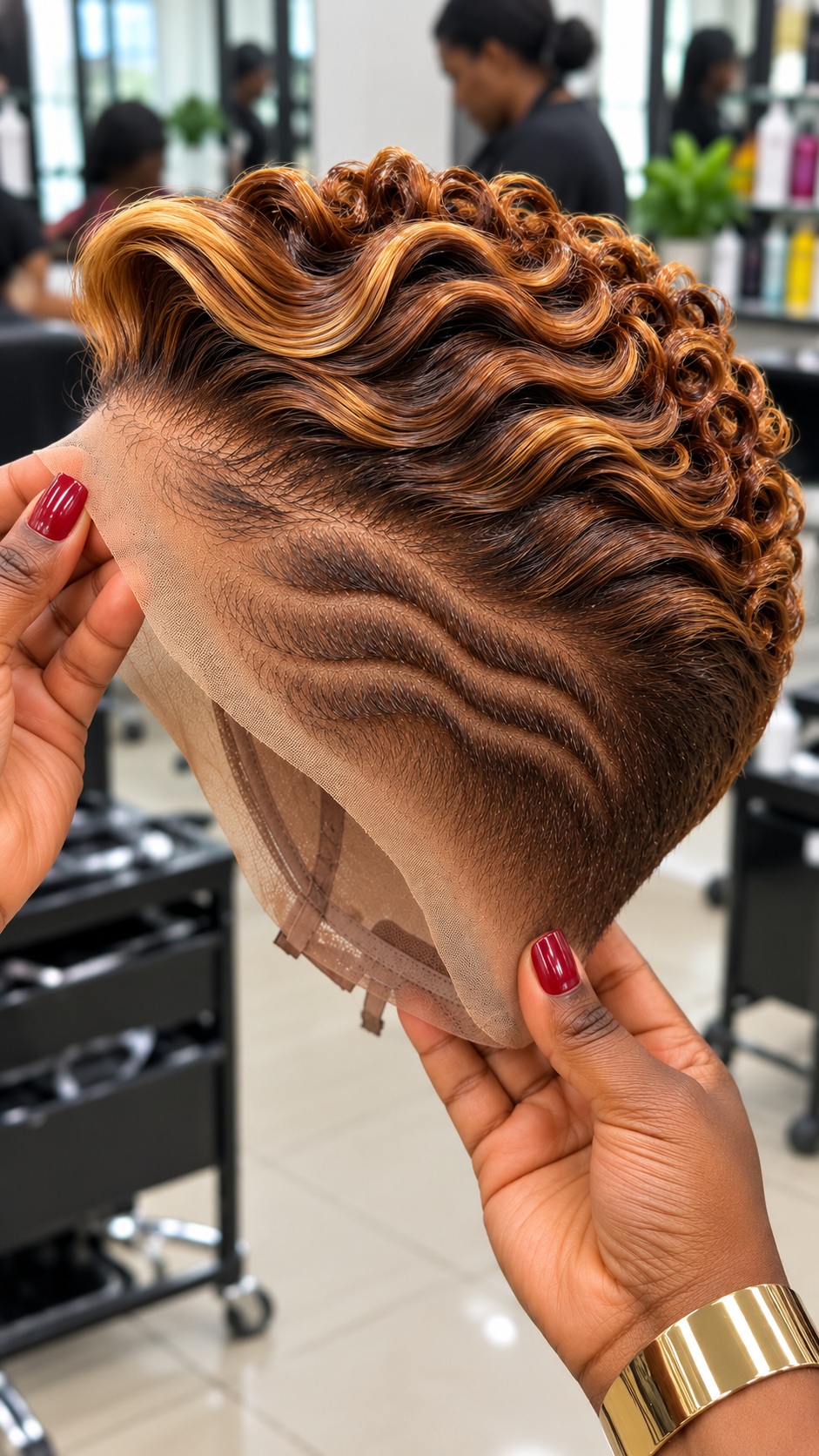
Warm amber highlights follow the curves of this short hairstyle, drawing attention to a raised front wave and the smaller curls gathered behind it. The darker brown base gives the lighter strands depth, while closely styled sides keep the overall shape compact. It is a striking choice for anyone who likes short hair with movement, rich color, and a clear difference between the top and the temples.
The appeal comes from the way each section contributes something different. Across the front, broad waves travel backward in flowing ridges. Toward the crown and rear, those ridges become rounded curls. Along the visible side, curved channels separate sections of closely laid hair. Together, these details create a sculpted pixie that feels dressy without depending on length.
The most useful reference points are the amber ribbons, lifted front, and curved side pattern. Preserving their relationship matters more than adding extra volume or brighter color. A version with an oversized crown or uniformly light ends would create a different effect.
How the Color Brings Out the Waves
The color placement makes the top particularly eye-catching. Golden amber and copper tones sit over a deeper brown foundation, following the direction of the waves rather than appearing as isolated patches. Light catches the raised sections, while the darker areas beneath them make the curves easier to see. This gives the hairstyle dimension even before the smaller curls come into view.
For a similar result, ask a colorist or wig maker for warm highlights that travel through the front and upper sections. Keep enough dark hair between the lighter ribbons to preserve contrast. An all-over blonde finish would soften that contrast, while highlights placed only at the ends might miss the flowing pattern shown here.
Request a daylight video before approving a custom color. Salon lighting can make brown look warmer and copper appear more golden. A second view near a window helps establish whether the shade is closer to honey, amber, or orange copper. If matching an existing wig or extension piece, provide that reference as well as the hairstyle photograph.
A Lifted Front Balanced by Smaller Curls
The front has a broad, raised curve that moves away from the hairline. Several smaller ridges continue behind it, creating a gradual transition into the curls around the crown. The top has height, but its shape remains rounded rather than sharply upright. That balance is central to the finished look.
The curls farther back are more compact than the front waves. They add fullness without requiring long strands around the face. When discussing a recreation, explain that the front needs enough length to form those broad bends, while the rear should retain a tighter curl pattern. Cutting every section to the same short length could make that combination difficult to achieve.
The exact strand length cannot be measured from the photograph. Ask your stylist to recommend lengths based on the finished silhouette, the chosen fiber, and how much the curls contract after setting. A sample curl or a progress photograph is more useful than selecting a length number without considering the intended shape.
The Curved Detail Along the Side
The visible side contains sweeping, exposed channels between short sections of dark hair. Their curved direction echoes the movement above them, connecting the close side to the fuller top. Fine hairs around the front add another layer of detail without covering the pattern.
A stylist recreating this on a wig needs experience with short cuts and exposed parting work. Request a close view of the side before approving the final cut. Check that the curves follow the reference and that the hair between them remains even. The design should still be readable when the wig is worn at its intended position.
For a natural-hair adaptation, consult a barber or short-hair specialist about the closest practical version. Your growth pattern and available length will influence the result. Bring separate reference views for the top and side so the consultation covers both. Agree on how much hair may be removed before the cutting begins.
Choosing Fullness Without Losing the Shape
This hairstyle concentrates fullness across the upper section while keeping the lower sides close. That distribution matters more than a single advertised density percentage. Too much hair around the temples could cover the curved detail, while insufficient hair at the front might leave the raised wave looking narrow.
Ask the seller where the density is concentrated and whether the unit has already been cut for this arrangement. Request photographs on a head form that show the front, profile, and rear. An in-hand photograph is helpful for examining the styling, but a fitted view gives a clearer idea of the overall proportions.
A slightly lower crown can be requested for everyday wear, provided the broad front wave and smaller rear curls remain distinct. If you prefer the pictured height, make that clear before thinning or cutting starts. Removing too much hair can be harder to correct than adjusting an initially fuller shape.
Understanding the Visible Lace and Cap Options
A broad area of tan lace is visible around the front and side of the wig. Interior seams and part of the adjustment system can also be seen. These details show that fitting and lace preparation will be part of achieving a finished appearance. They do not establish the lace grade, fiber type, or full construction of the unit.
A lace frontal may offer room for the exposed front and side styling, depending on its dimensions. A smaller closure has a more limited lace area and may require changes to the placement of the design. Full-lace construction is another option to discuss, but it should be selected for a specific styling need rather than assumed necessary from this photograph.
Ask for the lace measurements, cap size, and clear interior photographs. Check where the lace ends relative to the curved side detail. Also ask whether the displayed hairline is the actual unit being sold or a separately prepared sample. Construction should support the hairstyle you want to wear.
Glueless Wear or a Professional Installation
Whether a similar wig can be worn glueless depends on its fit and construction. An adjustable strap alone does not confirm that it will hold securely without adhesive. Head measurements, cap depth, an appropriate band, and the position of the lace all contribute to the result.
If glueless wear is your preference, tell the seller before ordering. Ask how the front and side edges are intended to sit and whether a fitting adjustment is included. The close side pattern makes positioning especially noticeable, so the cap should settle comfortably without being pulled into place.
A professional installation may help with trimming the lace, matching its appearance to your skin, and arranging the fine front hairs. For adhesive wear, ask the installer to explain the product and removal method. Avoid repeatedly pulling the unit off at the front. Follow the adhesive manufacturer’s directions and stop using a product if it causes irritation.
Where To Buy This Wig
Look for wig studios, custom makers, or beauty suppliers that can show examples of short sculpted styles with highlighted waves. A seller experienced mainly in long straight units may not offer the same cutting and setting service. Ask to see previous work that includes close sides, raised fronts, and contrasting color placement.
You can also buy a suitable base unit and book a separate stylist to cut and set it. Confirm that the stylist accepts that fiber and construction before purchasing. The base needs enough usable length, an appropriate lace area, and sufficient hair in the sections that will become waves.
The photograph does not identify a verified supplier, so it should be used as a design reference. When contacting a business by phone, direct message, or WhatsApp, send the image and describe the details you want preserved. Request current stock footage, a written quote, and the terms for custom work before paying.
What to Confirm When Booking or Ordering
Start with your cap measurements, preferred fiber, and intended wearing routine. Mention whether you plan to remove the wig each evening or keep it installed for longer periods. These choices affect the construction and fitting advice a seller should provide.
Have the order specify the dark brown foundation, amber highlights, raised front waves, smaller rear curls, and curved side pattern. Ask which details are included in the quoted price and which cost extra. Color work, lace preparation, custom cutting, fitting, and later restyling may be separate services.
For a custom unit, agree on an approval stage before dispatch. A short video should show the hairline, both sides, crown, rear, and interior. Confirm production time, delivery charges, and any restrictions on returns after customization. Keep the written description so both you and the maker can refer to the same agreed result.
Comparing Price Levels
The ranges below are illustrative planning estimates in USD, not verified prices for the photographed wig. Local prices can differ considerably. Fiber, lace area, workmanship, color services, and included appointments all affect the total. Obtain a current itemized quote from the business handling your order.
| Tier | Illustrative Price Range | Potential Scope |
|---|---|---|
| Budget | $25–$70 | Ready-made synthetic short style with limited customization and a simpler interpretation of the waves. |
| Value | $70–$150 | More detailed ready-styled unit, potentially with a lace area and basic fitting adjustments. |
| Mid | $150–$300 | Greater choice of fiber and construction, with selected cutting, coloring, or setting services. |
| Premium | $300–$550 | Custom measurements, carefully placed highlights, and more extensive hairline and styling work. |
| Salon-Grade | $550–$900+ | Bespoke unit and specialist finishing, potentially including consultation, fitting, and follow-up care. |
Compare the scope as carefully as the price. A lower unit price may exclude the cutting and color needed for this look. A higher quote should explain the additional workmanship or services. Shipping, import charges, installation, and future resets should be included in your overall budget.
Keeping the Waves Presentable Between Wears
Handle the wig from the cap rather than lifting it by the front wave or curls. Place it on a suitable stand when removing it, and leave enough space around the upper section so the shape is not pressed against a shelf or wall.
For small adjustments, use your fingertips to guide a displaced curl back toward its existing direction. Avoid brushing through the finished top unless you intend to reset it. Separating the strands repeatedly can turn the broad wave ridges into a softer, less sculpted arrangement.
Use styling products sparingly and only when they are compatible with the fiber. Additional oil or heavy serum may reduce the separation between the highlighted ribbons. If product residue makes the hair feel coated, ask about cleaning rather than adding another layer to restore shine.
Washing and Resetting the Style
Follow the maker’s washing instructions for the actual fiber. Human hair and synthetic hair require different handling, and heat-friendly synthetic fiber still has specific temperature limits. Do not use a hot tool simply because the wig looks glossy or resembles human hair.
A wash schedule should reflect wear, perspiration, and product buildup. With regular use, review its condition weekly and wash when needed; some wearers may reach that point after a couple of weeks, while occasional wear may allow longer intervals. The supplier’s care directions should take priority over a fixed calendar.
Expect the sculpted arrangement to need attention after washing. Human-hair waves may require a fresh set, while some synthetic styles retain more of their original form. Ask whether the seller offers a reset service and what it costs. Photograph the wig before its first wash so the stylist has a reference for the wave direction and side arrangement.
Daily Wear, Travel, and Practical Tradeoffs
The short length stays clear of collars and shoulders, which can make dressing and everyday movement easier. The warm highlights also remain visible across a relatively small hairstyle. For work or daytime outings, simple earrings and an open neckline allow the hair’s movement to remain the main detail.
The tradeoff is that a sculpted finish needs careful handling. Tight hats, firm headrests, and sleeping in the unit can compress the raised front and rear curls. If you travel with it, use a box or structured carrier with enough room around the hairstyle. Avoid packing clothing directly on top.
Plan for occasional professional attention if maintaining the pictured shape is important to you. The color placement, wave direction, and close side detail work together, so a hurried trim or aggressive restyling can change the balance. A well-fitted unit and a realistic care routine make it easier to enjoy this expressive short look.
Search Terms
amber wave pixie wig · copper highlights on dark brown short hair · sculpted waves with curved side lines · short lace wig with lifted front · golden amber curls with tapered sides · brown pixie with ribbon waves · highlighted short wig with curled crown · warm copper waves on short hair