
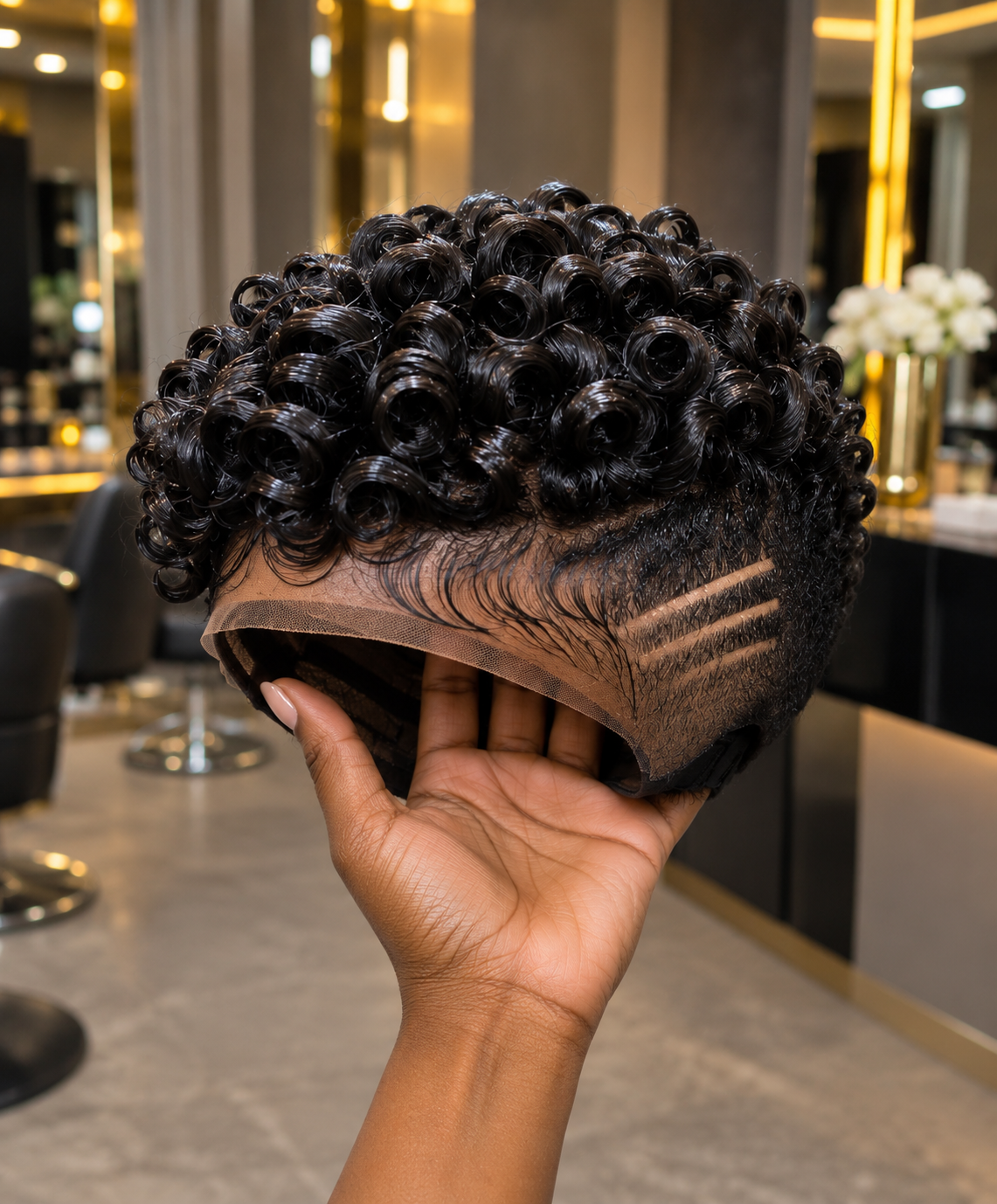
Glossy black ringlets gather into a full, rounded crown on this short wig, with the front curls leaning gently toward the forehead. Each loop has a visible opening and several closely arranged turns of hair around its rim. Some curls face forward, while others turn sideways and overlap. That variation gives the crown a generous shape without making its surface look uniform. The fullest area sits above a close temple panel, where three exposed lines add a crisp detail to the profile.
The lines run diagonally across the visible side, with the upper two extending farther than the lowest accent. Short dark hairs sit between them and continue toward the lower edge. Above the panel, finer strands follow a shallow curve along the hairline before meeting the raised curls. This transition is one of the most attractive parts of the style. The top carries volume, the temple stays close and the front has enough delicate movement to connect the two.
A hand supports the black ringlet taper wig from underneath. Tan lace extends beyond the front and featured side, and a small portion of the dark interior is visible. The photograph makes the curl size and temple design easy to inspect before installation. The final placement will depend on the wearer’s head shape and cap fit, especially where the three lines sit above the ear and where the lowest front curls fall in relation to the brows.


A Full Crown That Still Shows Individual Curls
The ringlets have enough space for their openings to remain visible even where neighboring sections touch. Larger loops sit through the upper front and center, while smaller curls help round off the sides. A few strands cross the openings, giving the set a natural amount of fine detail. When comparing a similar wig, look at both the outline and the spaces within it. The rounded silhouette creates fullness from a distance, while the open loops make the styling interesting at close range.
The front curls lean forward more than the curls near the upper back of the visible crown. That direction creates a short fringe without a straight line across the forehead. If you want the same effect, ask a maker to show where the first row will sit on your head. A curl resting above the brow can be adjusted independently from the rest of the crown. Moving that row slightly higher may give you more forehead space while preserving the volume through the top.
The hair appears black, with warm and cool reflections tracing the rounded surfaces under the salon lighting. Ask for a daylight video when choosing a comparable shade. Watch the unit as it turns out of the brightest reflection so you can judge how clearly the curls show in softer light. If you prefer a gentler sheen, discuss the finish before the set is completed. The shape of an open ringlet should remain easy to follow even when the strongest shine moves away.
Three Temple Lines With Different Lengths
The exposed side accents form a small group within the close panel. Their similar angle makes them feel coordinated, while the shorter lowest line gives the arrangement a tapered ending. The dark strips between the lines are wide enough to remain distinct. If you order a custom interpretation, mark the start and finish of each accent on the reference. Their spacing matters as much as their length, particularly when the design must fit above a smaller ear opening.
Ask the maker how the exposed areas will be produced within the proposed construction. The photograph shows the visible result, while an interior view will explain what supports it. Request a close image of a similar finished side and another taken from ordinary conversation distance. The close view helps you assess the edges of the short hair. The wider view shows whether the three lines still read clearly beneath the fuller crown.
During fitting, position the cap comfortably before judging the design. Look at the featured profile at eye level and check whether the upper line stays visible below the curls. Put on your usual glasses if you wear them, then move the frames into their normal position. A frame arm can cover a line or press nearby hair into the exposed space. The stylist can take that contact point into account when finishing the side.
The opposite temple and the nape need separate decisions. You might want a plain close finish on the other side, another set of accents or a single longer curve. Ask for a rear photograph before approving the full cut. If you wear high collars or large earrings, explain how much clearance you want around the lower edge. These choices help establish where the rounded crown should narrow toward the back and how much short hair remains visible around the ears.
Fine Front Waves Beneath the Ringlets
The fine hairs across the front follow a low, shallow wave. They lie close to the lace and gradually join the thicker curls above. Near the featured temple, the strands become more directional, turning downward beside the short panel. This makes the front lighter than the crown. If you like that balance, point out the thin strands and the spaces between them when discussing the reference. A heavier hairline arrangement would change how the forehead is framed.
Try the front at two slightly different heights before the lace is trimmed. A higher position opens the area above the brows and emphasizes the ringlet crown. A lower placement brings the fringe curls closer to the eyes. Look straight ahead, speak and turn your head while checking the result. The front should remain comfortable and return to the agreed position. Take a photograph once you are happy with it so you have a practical guide when putting the wig on yourself.
How To Order This Style
Start with custom wig studios, specialist short-wig boutiques and beauty supply stores that carry styled pixies. Look for portfolios showing open ringlet crowns and patterned temple panels. A ready-made unit may already offer the curl size and fullness you want. A custom maker can plan the three lines around your measurements and preferred side. Send the entire reference with your inquiry so the seller can see the relationship between the full top and the close lower section.
For a custom order, describe the black shade, rounded crown, forward-facing front curls and three diagonal temple accents. State the preferred side from your own perspective and mark the image if necessary. Include the measurements requested by the maker, your preferred crown height and how much forehead you like to show. Mention glasses, headphones or head coverings you use regularly. Those details can affect the position of the side accents and the amount of room needed near the ear.
Before paying, request photographs of the front, both profiles, the back and the complete cap interior. Confirm the fiber, cap size, lace shade, usable lace area and adjustment components. For an existing unit, ask for a video of the actual piece. For made-to-order work, establish when you can approve the curl set and temple design, which alterations are included and how long production will take. Get the delivery cost and fitting or return terms in writing.
To book locally, contact a wig stylist experienced in short installations and close hairline finishing. Explain whether you need a fitting, minor front adjustments or a complete curl reset. Send photographs before reserving the full appointment so the salon can allocate enough time. If you want a similar style on your own hair, consult a short-hair stylist and a barber who can coordinate the crown with the temple detail. They can assess the available length and discuss how the taper will sit with your natural hairline.
Cap Options for the Featured Side
The photograph shows tan lace around the front and temple, with only a partial view of the interior. Ask the seller to identify the working area needed for the side accents. A lace-front wig can suit the design when the usable lace reaches the intended temple position. A frontal may offer more room across the forehead and toward the ears, depending on its dimensions. Have the maker show where the three lines would fall in relation to the lace edge and nearby seams.
A closure may work for a version with a fixed front and a separately planned side finish. If the three accents are central to your choice, ask for an example made on the same cap construction. Full lace can provide more flexibility when placing exposed details farther around the head or changing the direction of the hair later. Compare actual dimensions and completed examples. The cap needs to support the intended design while sitting comfortably at the forehead, ears and nape.
For a glueless installation, ask how the elastic band, adjustable straps and other attachments hold the unit. Follow the maker’s measuring instructions, including circumference and any requested ear-to-ear or front-to-nape distances. Try the wig with the hair preparation you expect to use underneath it. Look down and turn your head in both directions. If the temple panel shifts, have the fit reviewed before the lace is trimmed or the design is repositioned.
Adhesive fitting is another option for a compatible lace unit when additional hold suits your routine. Agree on the placement first and check the lace shade against your skin near both the forehead and exposed side lines. Ask which remover matches the adhesive and have the stylist demonstrate gentle release. Tell them how frequently you plan to remove the wig. A practical removal routine helps protect the fine hairs around the front and the shorter strands beside the temple accents.
Choose Fullness by Area
The finished height of a ringlet set can differ considerably from its advertised strand length. Each curl uses hair to complete several turns, so a short-looking loop may require more length than expected. Ask for the diameter of the finished curls and a profile showing the tallest part of the crown. If you want the same broad openings with less height, discuss angling selected curls sideways or toward the back before shortening the hair throughout.
Density should preserve the distinction between the crown and close side. Too much hair near the perimeter can hang over the upper line and hide the temple detail. Excessive fullness through the front can also cover the fine waves. Ask the maker where they would add volume if you prefer a fuller version. Concentrating it through the upper crown may keep the featured side open while giving the silhouette more height.
Review the set from eye level and slightly above. The eye-level view shows how the front curls frame the face, while the upper view reveals whether neighboring ringlets have room to open. If one area looks crowded, changing a curl’s direction may create more space. Ask the maker to explain any proposed adjustment so you can judge whether it preserves the shape you chose. Keep the final approval photographs for future styling appointments.
Illustrative Costs for a Ringlet Taper Wig
The following USD ranges are illustrative budgeting examples. Actual quotes vary with fiber, cap construction, supplier, location and customization. Shipping, installation and future resets may be separate charges. Ask whether the price includes the complete ringlet set, fine front waves and three temple accents. A ready-made curly unit may still need additional salon work to achieve the same side finish.
| Tier | Illustrative Price Range | Potential Scope |
|---|---|---|
| Budget | USD 20–50 | Ready-made synthetic pixie with a fixed curl pattern and a simple close side. |
| Value | USD 50–115 | Pre-styled synthetic unit with open ringlets or a more visible temple accent. |
| Mid | USD 95–200 | Short human-hair base with cutting, curl setting and fitting potentially billed separately. |
| Premium | USD 180–340 | Custom finish on a standard cap with planned crown height and tailored side lines. |
| Salon-Grade | USD 340–675+ | Made-to-measure construction with individual ringlet placement and temple work checked at fitting. |
Compare the complete service before deciding. A suitable ready-made crown may require only fitting and a small front adjustment, while a base with a different side construction can involve more extensive work. Show the proposed unit to your installer before ordering. For a custom piece, record the agreed curl size, crown height and line placement. Ask who can restore the set after washing and what that maintenance appointment would include.
A Care Routine for Volume and Side Detail
After each wear, check the front curls and the short hair around the temple lines. Glasses, headphones and scarves can disturb those areas while the center of the crown remains intact. Hold the wig by the sturdier parts of the cap and guide a displaced curl along its existing direction with your fingers. Work on the affected section individually. Brushing across the entire surface can open several ringlets and change the spacing near the close side.
For frequent wear, inspect the lace and interior weekly for perspiration and product residue. Let actual use, buildup, fiber type and manufacturer instructions determine the washing interval. Support the lace during cleaning and avoid rubbing the curls together. Blot excess moisture gently and dry the unit on a suitably sized stand. Leave room around the temple so the short hairs can settle without pressure. If adhesive was used, follow the compatible remover’s directions before cleaning the underside.
A human-hair unit may allow a wet reset or another method chosen for its condition. Ask the stylist how the ringlets were formed and which small adjustments are appropriate at home. Synthetic fibers vary in their tolerance for heat, steam and reshaping, so follow the specific unit’s instructions. If several curls open or short hairs begin crossing the exposed lines, schedule a professional touch-up. Repeated product layers can obscure the detail and make later cleaning more involved.
Use finishing products sparingly and choose them for the actual fiber. The pictured black shade places most of the visual emphasis on curl direction and reflected light. Check the fully dry wig in indirect daylight before adding more product. If you commission a colored variation, ask for additional instructions suited to its treatment history. Lighter accents can make residue more noticeable, and color-processed human hair may require care selected for its condition.
Store the wig on a stand that supports the cap without stretching it. Leave clearance around the featured side and above the tallest ringlets. For travel, use a firm case with light support inside the cap and enough room for the lace to remain unfolded. Unpack the unit when you arrive and inspect the temple lines before wearing it. Save front and profile photographs from the first fitting so the original proportions can be restored after washing or extended wear.
Try the Fit With Your Everyday Accessories
The rounded crown gives this pixie presence while keeping the length clear of the shoulders. The close side leaves space for earrings, and the three lines create a profile that remains interesting when the front curls sit forward. It can suit someone who wants a consistent short style with a full top. A comfortable cap makes that consistency easier to repeat because the front waves and side accents return to familiar positions each time.
The main commitment is preserving the raised curls and exposed temple together. Tight headwear can compress the crown, while repeated contact near the ear can move hairs across the lines. The fixed side detail also limits how far the unit can be redirected. Before leaving a fitting, remove and replace the wig yourself, then check the upper line and the lowest front curl. If both return to the places you chose and the cap stays comfortable as you move, you can assess how readily the hairstyle will fit into your usual routine.
Search Terms
black ringlet wig with three temple lines · full curl crown taper pixie · short black lace wig with side accents · glossy ringlets with close temple panel · black curly pixie with fine front waves · triple diagonal line pixie wig · rounded ringlet crown with tapered sides · short black curls with patterned temple