
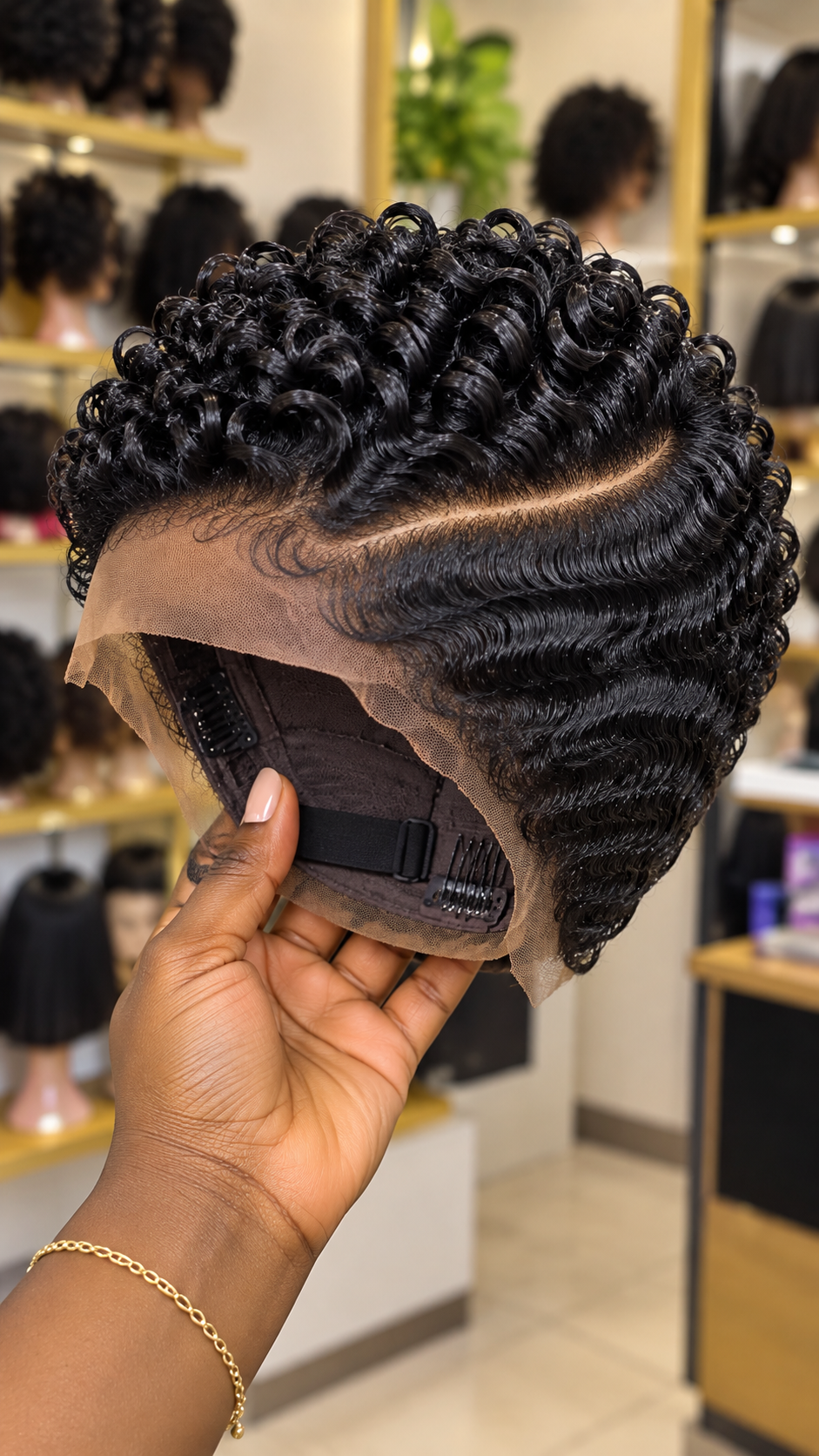
A hairstyle can attract attention through color, length, or volume, but this black lace wig demonstrates another approach: placing two contrasting hair formations on the same compact silhouette. Its upper section carries tightly arranged, glossy spiral curls, while the visible side is shaped into continuous finger waves. A diagonal parting line separates these two areas, creating a deliberate transition between elevated curls and hair that lies close to the cap.
The photograph shows the wig being held before installation inside a hair retail environment. This matters because the viewer can inspect details that would normally disappear once the unit is worn. The untrimmed lace extends beyond the hairline, and the exposed interior reveals attachment hardware, including combs and an adjustable strap. These visible elements provide useful information for anyone considering a similar hairstyle, although the photograph alone cannot establish the hair fiber, lace grade, or whether adhesive-free wear is appropriate.
Rather than treating this design as an ordinary curly pixie wig, buyers should understand how its spiral arrangement, diagonal separation, and side-wave construction work together. Those characteristics determine which product photographs to request, what a stylist must reproduce, and which maintenance habits will preserve the appearance.
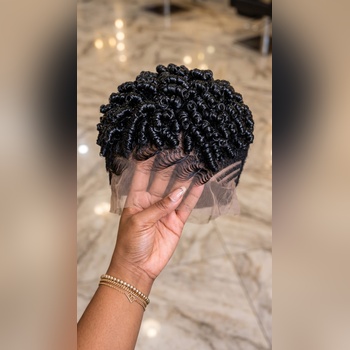
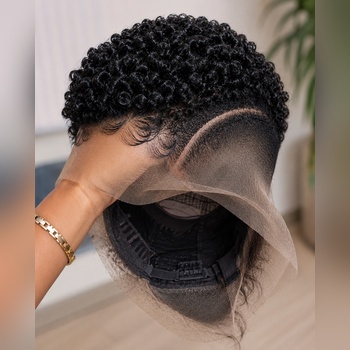
The Diagonal Parting Creates the Visual Architecture
The most recognizable detail is the exposed diagonal part that runs from the upper side toward the front portion of the hairstyle. It is not merely a decorative gap between curls. It establishes a boundary between two different styling techniques.
Above the separation, the hair rises into closely positioned circular spirals. Below it, the strands travel in coordinated wave formations that follow the contour of the wig. The exposed channel gives each section its own visual identity without requiring a dramatic change in color.
The part appears relatively narrow and intentional, with a lighter underlying surface visible between the dark hair sections. Its direction contributes to the asymmetrical character of the style. A straight central part would produce an entirely different impression, even if the same curls and finger waves were retained.
For a custom order, this makes the diagonal separation an essential reference point. A wig maker should receive a clear photograph showing where the part begins, how it travels, and where it meets the surrounding hair. Simply requesting a black curly wig with finger waves would leave too much room for interpretation.
Why the Separation Must Be Planned Before Styling
The location of the part influences the available space for both curl placement and side-wave formation. If the separation is moved too high, the wave panel may occupy a larger portion of the wig. If it is moved too low, the spirals may dominate the visible side and obscure the intended contrast.
Buyers commissioning a reproduction should ask whether the parting arrangement is established through the wig’s hair placement, through styling, or through a combination of both. The answer affects how reliably the hairstyle can be recreated after washing or restyling.
Examining the Circular Spirals Above the Hairline
The upper area contains numerous compact, glossy spiral formations. Several curls appear as open circular loops, while others overlap in tighter curved sections. The arrangement is dense, but individual curl shapes remain recognizable.
The spirals are not presented as loose, hanging ringlets. They form a relatively compact crown with visible elevation above the finger-wave section. This distinction is important when searching for comparable wigs because ordinary curly pixie products may have softer, less organized curl patterns.
The color reads as deep black with reflective highlights created by the lighting. There is no clearly visible blonde, copper, burgundy, or silver color placement. Bright reflections along the curved strands should not be mistaken for dyed streaks.
The shine emphasizes the direction of each loop. Where the hair bends toward the light, the reflective surface appears brighter; where curls overlap, the black becomes visually deeper. This variation adds dimension without introducing another hair color.
What Buyers Should Compare in Crown Photographs
When examining another wig advertised as a similar design, focus on the physical organization of the curls rather than the overall impression alone.
- Check whether the spirals form recognizable circular openings or irregular loose curls.
- Compare the crown height relative to the finger-wave panel.
- Look for consistent curl placement without large unintended gaps.
- Examine whether the front spirals interfere with the visible diagonal part.
- Request a photograph taken from above to assess the arrangement across the upper surface.
A product can look similar from one angle while differing considerably from another. A slightly elevated front view, a side profile, and a crown photograph are especially useful for this particular design.
The Side Panel Relies on Continuous Finger-Wave Movement
The visible side is one of the most technically interesting parts of the hairstyle. Instead of shaved decorative lines, the surface displays tightly arranged finger waves. These waves create alternating ridges and curved channels that travel backward and downward across the side.
The difference matters when communicating with a barber or wig stylist. A carved razor design removes hair to create visible lines, while finger waves arrange existing strands into controlled directional formations. The photograph supports the second description.
The waves appear closely fitted to the underlying wig shape. Their placement produces a flatter side profile than the raised spiral section above. The contrast between the two areas gives the hairstyle its distinctive silhouette.
Near the lower visible edge, the wave formation continues into smaller curved sections. The photograph does not provide a complete rear view, so the exact arrangement across the back cannot be established.
Reproducing the Side Without Losing Its Character
A stylist recreating this look should pay attention to the direction and spacing of the wave ridges. Excessive separation between the waves can make the panel appear disconnected, while too much product may cause adjacent ridges to merge visually.
The appropriate technique depends on the fiber and its compatibility with water, setting products, and heat. Human hair and synthetic fibers may respond differently to reshaping. Buyers should establish the material before attempting to reset the waves themselves.
If the wave pattern is permanently manufactured into a synthetic unit, its care requirements may differ from those of a human-hair wig styled with setting products. Neither construction method can be confirmed from this image alone.
What the Untrimmed Lace and Exposed Interior Reveal
The wig is photographed with its underside facing partly toward the camera. A broad section of light beige lace extends beyond the front hairline. The visible lace has not yet been cut to the final wearing shape.
Fine hairline strands and curved baby-hair styling are visible near the front. These details contribute to the intended appearance, but the lace color and its suitability for a particular complexion must be evaluated in person or through reliable close-up photographs.
The interior also shows a dark cap structure, an adjustable strap, and comb attachments. These are meaningful purchasing details because they influence how the wig can be positioned and secured.
However, visible combs and adjustment hardware do not automatically establish that a wig is glueless. Adhesive requirements depend on the complete cap construction, fit, intended security, and installation method.
Questions Worth Asking About the Cap
Before purchasing, request a photograph of the entire underside laid open. The current image provides a useful partial view, but it does not show every seam, attachment point, or internal panel.
Ask the seller for the cap circumference, available size options, lace dimensions, placement of the combs, and adjustment range. If adhesive-free installation is important, request explicit confirmation that the unit is designed for that purpose.
It is also sensible to ask whether the cap includes an elastic security band or any additional fastening mechanism not visible in the photograph. Do not assume that unseen components are included.
Finally, confirm the hair material in writing. Glossiness, curl formation, and photographic appearance are insufficient to distinguish human hair from synthetic fiber with confidence.
Commissioning This Hairstyle From a Wig Maker
A custom reproduction should begin with a discussion of the hairstyle’s construction rather than an immediate request for a price. The supplier needs to understand that the design combines organized upper spirals with a separate finger-wave panel, divided by a specific diagonal part.
Send the original image along with a brief description of the details that must remain unchanged. Identify the black color, compact spiral height, part direction, close-fitting wave panel, and visible front hairline styling.
Ask the wig maker whether the proposed unit will be delivered fully styled or whether a local salon must complete the final curl and wave setting. This distinction is particularly important for international orders because transport and packaging may affect carefully arranged hair.
A ready-made unit may be more convenient if its silhouette closely matches the photograph. However, a product marketed simply as a curly pixie wig may not include the diagonal separation or the sculpted finger-wave section.
Custom construction offers more control over those details, but buyers should request photographs of the completed wig before shipment. A front view alone is insufficient for approving a hairstyle with this much side-specific work.
Approving a Finished Custom Unit
Before confirming completion, compare the supplier’s photographs against the original reference. Begin with the parting direction, then assess the crown elevation and the finger-wave alignment. After those details are satisfactory, examine the hairline and visible cap construction.
Request an unfiltered video showing the wig rotating slowly from front to side and toward the back. The video should be recorded under ordinary lighting so that reflective styling products do not conceal irregularities.
Ask whether the wig can be returned or adjusted if the parting location or side-wave arrangement differs substantially from the agreed design. Custom orders often have different return conditions from ready-made products, so those terms should be established before payment.
Planning a Salon Appointment for the First Fitting
Once the wig arrives, its first appointment should focus on fit and placement rather than immediately cutting the lace. A wig stylist can check the cap circumference, strap adjustment, hairline position, and the way the side panel sits around the temple.
This hairstyle requires particular attention to orientation. If the cap is positioned too far to one side, the diagonal part may appear incorrectly placed and the finger waves may sit at an unintended angle.
The stylist should first establish the correct wearing position. Only afterward should any necessary lace trimming be considered. Cutting away too much lace is difficult to reverse, and careless trimming may damage the delicate hairline.
The visible front styling should also be evaluated against the wearer’s forehead and temple proportions. Small adjustments may improve placement, but major changes to the part or wave arrangement could compromise the original design.
If the crown spirals have shifted during shipping, discuss whether they can be repositioned safely. Avoid applying heat or strong setting products until the material and manufacturer instructions are known.
For buyers who use a local barber and a separate wig stylist, it may be more efficient to book the wig specialist first. A barber should only perform additional cutting or shaping when the proposed changes are appropriate for the wig’s construction.
Estimated Costs for Spiral Curl and Finger-Wave Wig Orders
The following USD figures are illustrative budgeting ranges, not verified current listings or quotations for the photographed wig. Actual prices depend on the supplier, fiber, cap construction, lace specifications, labor, and market location.
| Wig Category | Illustrative Price Range (USD) | Potential Purchase Considerations |
|---|---|---|
| Premium Custom | $280–$650+ | Individualized cap sizing, detailed spiral arrangement, diagonal part placement, and specialist finger-wave styling. |
| Standard Custom | $160–$320 | Selected cap options with custom styling work and possible limits on revisions or construction choices. |
| Basic Human Hair | $95–$230 | A simpler human-hair starting unit that may require additional salon work to reproduce the pictured design. |
| Premium Synthetic | $65–$155 | Potentially suitable for a manufactured spiral-and-wave appearance when the exact design is available. |
| Basic Synthetic | $25–$75 | Lower initial expense, although matching the precise parting and sculpted side may be difficult. |
The photograph does not establish which category applies to the displayed wig. The categories represent possible purchasing routes rather than a material identification.
The greatest price difference may come from the amount of specialist styling required. A basic black curly wig and a unit with deliberately positioned spirals, a diagonal separation, and closely arranged finger waves are not necessarily comparable products.
When requesting quotations, ask sellers to separate the wig price from optional hairline customization, shipping, fitting, lace trimming, and salon restyling. This makes it easier to compare offers that initially appear similar.
Also clarify whether the quoted price includes the finished hairstyle or only the base wig. Paying less for an unfinished unit may not be economical if substantial specialist labor is needed afterward.
Keeping the Spiral Openings and Wave Ridges Intact
The two styling zones require different kinds of attention. The upper spirals depend on retaining their circular shape, while the side panel depends on maintaining the direction and spacing of its wave ridges.
Frequent finger-combing can disturb both areas. Pulling through the spirals may loosen their loops, and brushing across the side panel can break the continuity of the waves.
Instead, inspect the hairstyle before each use and identify any sections that have shifted. Minor adjustments should be made only with techniques suitable for the confirmed hair material.
For human hair, an experienced stylist may be able to refresh the curl and wave arrangement using compatible products and controlled setting methods. Previously processed hair can have different tolerances, so the seller’s care guidance remains important.
For synthetic hair, avoid assuming that steam, hot tools, or conventional styling products are safe. Some synthetic fibers tolerate particular temperatures, while others can deform permanently. Request the manufacturer’s recommended care limits.
Protecting the Parting Channel During Handling
The diagonal separation is particularly vulnerable to careless restyling because strands from either side can shift across the exposed channel. Repeatedly pulling hair over the part may alter its appearance.
When handling the wig, support the cap rather than lifting the unit by its curls. Avoid gripping the lace edge or pulling directly on the small hairline strands.
If the part begins to look irregular, seek advice from the wig maker before attempting to widen it. Removing hair, cutting strands, or using aggressive tools can create permanent gaps.
When the wig is not being worn, support its compact silhouette on an appropriately sized wig stand. Avoid pressing the spiral crown against a flat surface or allowing other objects to compress the side waves.
Choosing This Design for Everyday Wear or Special Occasions
This hairstyle offers a distinctive alternative for someone who prefers a compact wig with visible styling detail. Its black color allows the spiral and wave formations to carry the visual interest without relying on contrasting highlights.
The raised curls create movement around the upper head, while the flatter side provides a more controlled outline. The diagonal part gives the hairstyle a directional appearance that can be appreciated from several viewing angles.
For everyday use, the most important practical considerations are cap comfort, reliable placement, and the amount of restyling required after wear. A beautifully arranged wig is not necessarily convenient if its construction demands frequent specialist attention.
For occasional wear, a buyer may be more willing to invest in elaborate spiral placement and salon finishing. The right choice depends on how frequently the wig will be worn and whether the owner has access to someone experienced in maintaining its particular styling techniques.
Anyone comparing multiple products should prioritize an accurate hairstyle match over vague marketing descriptions. The photograph provides enough visible information to establish the essential design: black circular crown spirals, a pronounced diagonal part, closely fitted finger waves, an extended lace front, and visible interior adjustment hardware.
Those are the details worth protecting throughout the purchase and installation process. With clear reference photographs, verified construction information, and careful fitting, a buyer can make a much more informed decision about whether a ready-made wig or a custom commission is the better route.
Search Terms
Black circular spiral curl lace wig · Diagonal side part curly pixie wig · Sculpted finger wave side panel wig · Glossy black ringlet crown hairstyle · Untrimmed beige lace front wig · Adjustable strap wig with interior combs · Asymmetrical spiral and finger wave wig · Black lace wig with curved baby hairs