
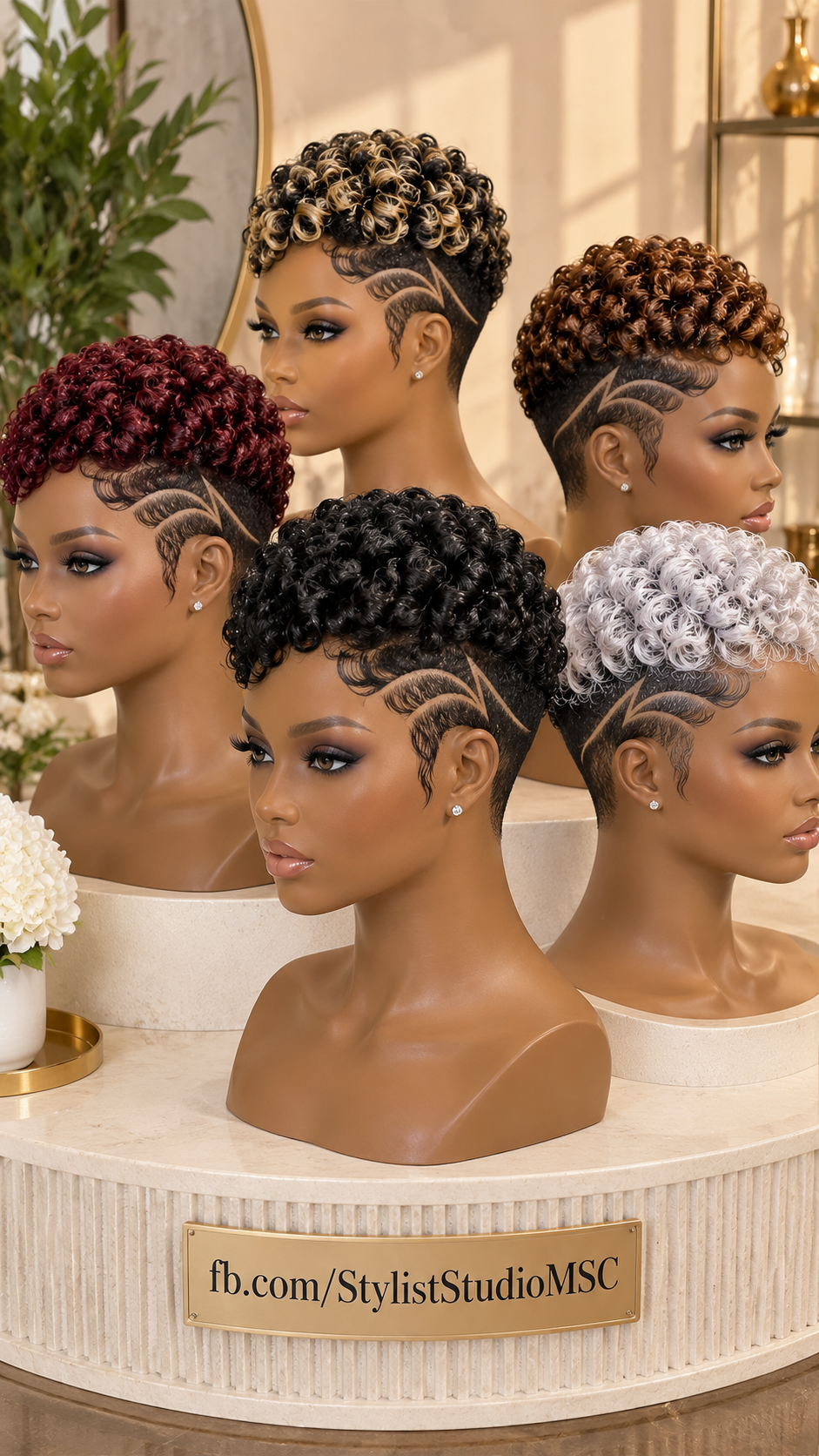
This curly pixie wig collection stands out because the crown and side profile have been designed to work as one complete statement. Five color variations are shown with tightly arranged glossy coils, close tapered sides, sculpted front edges and a distinctive lightning-inspired carved pattern above the ear. Instead of relying only on color to separate one wig from another, the collection uses a recognizable silhouette that remains consistent across deep natural black, burgundy wine, caramel-highlighted black, warm copper brown and pearl silver.
The upper section carries concentrated volume without becoming oversized. Compact curls sit closely together across the crown, while the sides remain very close to the head. This difference in length creates a strong profile and makes the carved side pattern much easier to see. The front edge is also carefully styled, with curved hairline details flowing toward the temple and connecting visually with the geometric side design.
For customers looking for a pixie wig that feels more customized than a basic curly unit, this combination offers several details worth discussing with a wig stylist. Curl diameter, crown density, side placement, color distribution and the carved pattern all influence the final result, so ordering this style successfully requires more than simply requesting a curly pixie.
Compact Coil Placement Builds the Rounded Crown
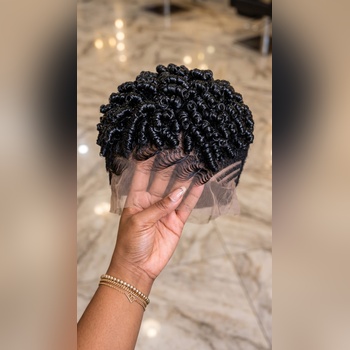
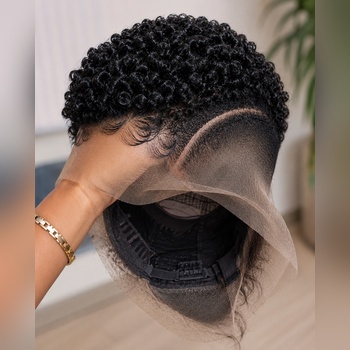
The crown is constructed from numerous small spiral curls placed closely together. Rather than allowing individual curls to hang downward, the coils sit upward and slightly forward, creating a rounded dome that follows the natural shape of the head. This keeps the hairstyle compact while still providing visible volume.
The curls around the front are particularly important. They are arranged close enough to frame the forehead but do not completely cover the hairline styling underneath. That balance allows both the coil pattern and the sculpted front edge to remain visible.
When ordering a similar wig, show the stylist a close reference of the crown rather than describing it only as curly. Ask for small, glossy spiral coils with controlled height and concentrated placement. Larger ringlets would create a very different silhouette, while curls that are too loose could hide the structured side work.
The Lightning Side Pattern Gives the Wig Its Signature Profile
The most distinctive detail in this collection is the carved design positioned above and behind the ear. Two sharp directional lines create a lightning or angular arrow effect through the close side section. The pattern begins near the temple and moves backward, producing a strong geometric contrast against the rounded curls above it.
This is not simply a decorative line added randomly to the side. Its angle follows the transition between the crown and tapered perimeter. The upper line rises toward the crown while the lower section creates a sharper point, giving the profile an energetic visual direction.
If this detail is important to your order, provide a profile photograph to the stylist. Side designs can vary significantly even when described with the same words. Ask the stylist to confirm the number of lines, their direction, width and placement before completing the unit.
Sculpted Temple Work Connects the Curls to the Undercut
Another detail that deserves attention is the transition around the temple. The front edge does not stop abruptly where the close side begins. Instead, curved strands sweep downward and backward, visually connecting the curl crown with the carved profile.
This styling creates a softer counterpoint to the angular lightning pattern. The crown is circular, the temple work is curved and the side design is geometric. Combining these three shapes gives the wig much more visual depth than a simple curl-and-taper construction.
During fitting, the temple placement should be checked carefully. If the wig sits too far forward or too far back, the carved detail may no longer align naturally with the wearer’s ear and facial structure. A professional fitting can help determine whether small adjustments are needed before the final placement is established.
Deep Natural Black Keeps Attention on Shape and Shine
The deep natural black version places the greatest emphasis on construction. Without a contrasting highlight color, the viewer notices the circular curl pattern, sculpted front edge and angular side design first. Light reflects across the glossy coils and reveals their individual shape even though the overall shade remains dark.
This option can work well for customers who prefer a strong haircut-inspired silhouette without introducing a bright color. It also makes the carved pattern particularly noticeable because the exposed lines contrast strongly against the dark side area.
When ordering, confirm whether the available shade is natural black, soft black, espresso black or another deep tone. These shades can appear almost identical under indoor lighting but show different undertones outdoors.
Burgundy Wine Brings Rich Red Depth to the Coil Pattern
The burgundy variation uses a deep red-wine shade across the upper curls while maintaining a darker foundation through the close side area. This produces a strong transition between the crown and perimeter without making the color appear disconnected from the hairstyle.
Burgundy works particularly well with small coils because every curl catches light differently. Some areas appear dark wine, while the outer curves reflect brighter cherry-red tones. The result has more dimension than a completely flat red shade.
Customers ordering this color should provide a visual reference because burgundy can range from purple-based wine to warmer red-brown. The example shown here stays deep enough to preserve the sculpted appearance while still giving the crown a clearly visible red identity.
Caramel Highlights Reveal Every Turn of the Curl
The highlighted variation combines a dark foundation with golden caramel strands distributed through the upper coils. This creates one of the most dimensional options in the collection because the lighter strands repeatedly appear and disappear as they travel around each spiral.
Instead of covering the entire crown in one lighter shade, the darker base remains visible between the highlighted sections. That contrast helps separate neighboring curls and makes the crown appear layered from multiple viewing angles.
For a custom version, discuss highlight placement before coloring begins. Some customers may prefer caramel concentrated toward the front, while others may want it distributed across the crown. Showing the stylist exactly how much dark base should remain visible is one of the easiest ways to avoid receiving an overly light result.
Warm Copper Brown Creates a Rich Earth-Toned Alternative
The copper-brown wig offers a warmer direction without reaching the brightness of blonde. Its curls reflect chestnut, amber and copper tones depending on the lighting, giving the crown a rich dimensional appearance.
Because the close side remains deeper, the warm crown retains a strong outline. This is especially useful with the lightning design, which needs enough contrast to remain visually distinct underneath the curls.
If ordering a similar shade, ask whether the stylist recommends a single copper-brown color or a blend of deeper brown and brighter copper strands. A blended approach can create more variation through the coils and may reproduce the depth seen in the reference more accurately.
Pearl Silver Makes the Crown Structure Highly Visible
The pearl-silver variation is the brightest option shown. Light-colored curls reveal individual coil placement immediately because shadows form between each spiral. The result emphasizes the construction of the crown more strongly than the darker versions.
The contrast between the pale upper section and the darker side also makes the silhouette especially noticeable. The lightning pattern remains visible below, while the silver curls create a clear visual boundary above it.
Before purchasing a pale unit, ask the seller how the color was achieved and what material the wig uses. Human hair and synthetic fiber can require very different care routines. The photograph confirms the visible color and styling but does not establish the fiber type or processing history.
Why the Crown and Side Proportions Matter
This hairstyle depends heavily on proportion. If the crown becomes too tall, the compact pixie silhouette changes. If the side section is left too full, the lightning pattern loses visibility. Likewise, reducing the crown too much can make the side detailing appear disproportionately large.
A useful ordering approach is to discuss the hairstyle as two connected zones. The first is the rounded coil crown, where density and curl diameter determine the volume. The second is the close perimeter, where the temple work and carved design determine the profile.
Ask the stylist to send photographs from the front, both sides and the back before final approval. This provides a much clearer idea of the overall proportions than a single front-facing image.
Choosing a Color Without Losing the Original Silhouette
One advantage of this design is that several colors can be used without changing the underlying hairstyle. Customers who want an understated option can choose the deep natural shade. Those wanting richer color can move toward burgundy or copper, while caramel highlights add contrast and pearl silver creates the brightest result.
Color placement should still respect the curl structure. On highlighted wigs, the lighter strands should follow the direction of the coils rather than forming disconnected patches. This makes the color look integrated into the hairstyle.
For wig businesses, displaying multiple shades of the same construction can also simplify customer decisions. Buyers can compare color directly while knowing that the crown, side proportions and carved detail remain within the same design family.
What to Tell a Wig Stylist Before Ordering
Start by sending clear reference photographs. Tell the stylist that the upper section should contain closely packed spiral curls with a compact rounded profile. Mention that the front curls should remain controlled enough for the sculpted hairline work to stay visible.
Next, discuss the close side area and lightning-inspired carving separately. Specify that you want the angular pattern positioned around the temple and above the ear rather than a generic straight line. If possible, mark the preferred placement directly on a reference photograph.
Then choose the color direction. For burgundy, copper or caramel options, confirm the undertone and distribution. For pearl silver, ask whether the darker root or side contrast will be retained. Finally, provide accurate head measurements and ask what cap sizes and adjustment options are available.
Questions to Ask Before Paying for a Custom Unit
A photograph can show hairstyle, visible color and exterior construction, but it cannot confirm every product specification. Ask the seller whether the wig is human hair, synthetic fiber or a blend. Confirm whether heat styling is permitted and whether the curls can be reset after washing.
Ask for photographs of the interior cap as well. Determine whether the unit includes adjustable straps, combs, clips or another securing method. If the seller advertises a particular lace type, request confirmation directly rather than assuming the specification from appearance.
Custom buyers should also confirm production time, deposit policy, alteration policy, shipping cost and whether final styling is included in the quoted price. Keeping these details in writing can make the ordering process considerably clearer.
Premium Custom to Basic Synthetic Price Guide
The display does not show a confirmed selling price, so the figures below are general planning ranges rather than prices for these exact wigs. Costs can change according to country, stylist, hair source, coloring, cap construction and the amount of hand detailing required.
| Wig Category | Estimated Range | What May Be Included |
|---|---|---|
| Premium Custom | $330–$750+ | Higher-grade human hair, custom measurements, advanced coloring, sculpted crown and detailed side work |
| Standard Custom | $190–$390 | Personalized curl placement, selected color work and customized profile detailing |
| Basic Human Hair | $125–$270 | Human-hair construction with fewer personalized options |
| Premium Synthetic | $75–$175 | Higher-quality fiber, pre-styled coils and selected color choices |
| Basic Synthetic | $35–$100 | Entry-level fiber with limited customization |
Keeping the Coil Crown Intact Between Appointments
Storage is important because the compact curls can lose their arrangement if the crown is compressed. Keep the wig on an appropriately sized mannequin head or wig stand and leave enough space around it so other items do not press against the coils.
Avoid aggressively brushing through the crown. The visual identity depends on individual spirals remaining grouped and recognizable. If a curl moves out of position, it is usually better to reposition that section individually rather than brushing through the entire upper area.
Use maintenance products according to the confirmed hair material. Heavy product buildup can collect between tightly arranged curls and reduce their separation. Heat should only be used when the manufacturer or stylist confirms that the wig can tolerate the selected temperature.
Finding a Stylist for the Carved Pixie Profile
Look for a wig stylist or barber-stylist whose portfolio includes pixie construction, tapered sides, sculpted hairlines and carved patterns. The lightning detail requires control and symmetry, so previous examples of side-design work are useful when choosing a professional.
Send the reference before booking and ask whether the stylist can reproduce the compact spiral crown as well as the angular side detail. If you want one of the colored versions, request examples of their burgundy, copper, caramel or silver work too.
A consultation is especially useful for deciding where the side pattern should sit in relation to the ear and temple. Small placement changes can noticeably alter the profile, so discussing this before final construction can save significant correction work later.
Ordering Steps for a Customized Version
First, select the color and save photographs showing the exact crown and side pattern you want. Second, contact a stylist who has experience with sculpted pixie wigs and send those references before requesting a quote. Third, provide the required head measurements and confirm the cap construction.
Fourth, request a written description of the planned curl size, crown density, side design and color placement. Fifth, confirm the total price, deposit, production schedule and shipping terms. Finally, ask for photographs or a video of the completed wig from several angles before dispatch whenever the seller provides that option.
Following these steps makes it easier to communicate the details that give this collection its identity: concentrated spiral curls, a compact crown, sculpted temple work and the distinctive lightning-inspired side pattern.
Search Terms
Lightning Side Design Pixie Wig · Spiral Coil Crown Wig · Burgundy Curly Pixie Wig · Caramel Highlight Coil Wig · Pearl Silver Pixie Wig · Copper Brown Curly Wig · Sculpted Side Pixie Wig · Tapered Coil Crown Wig