
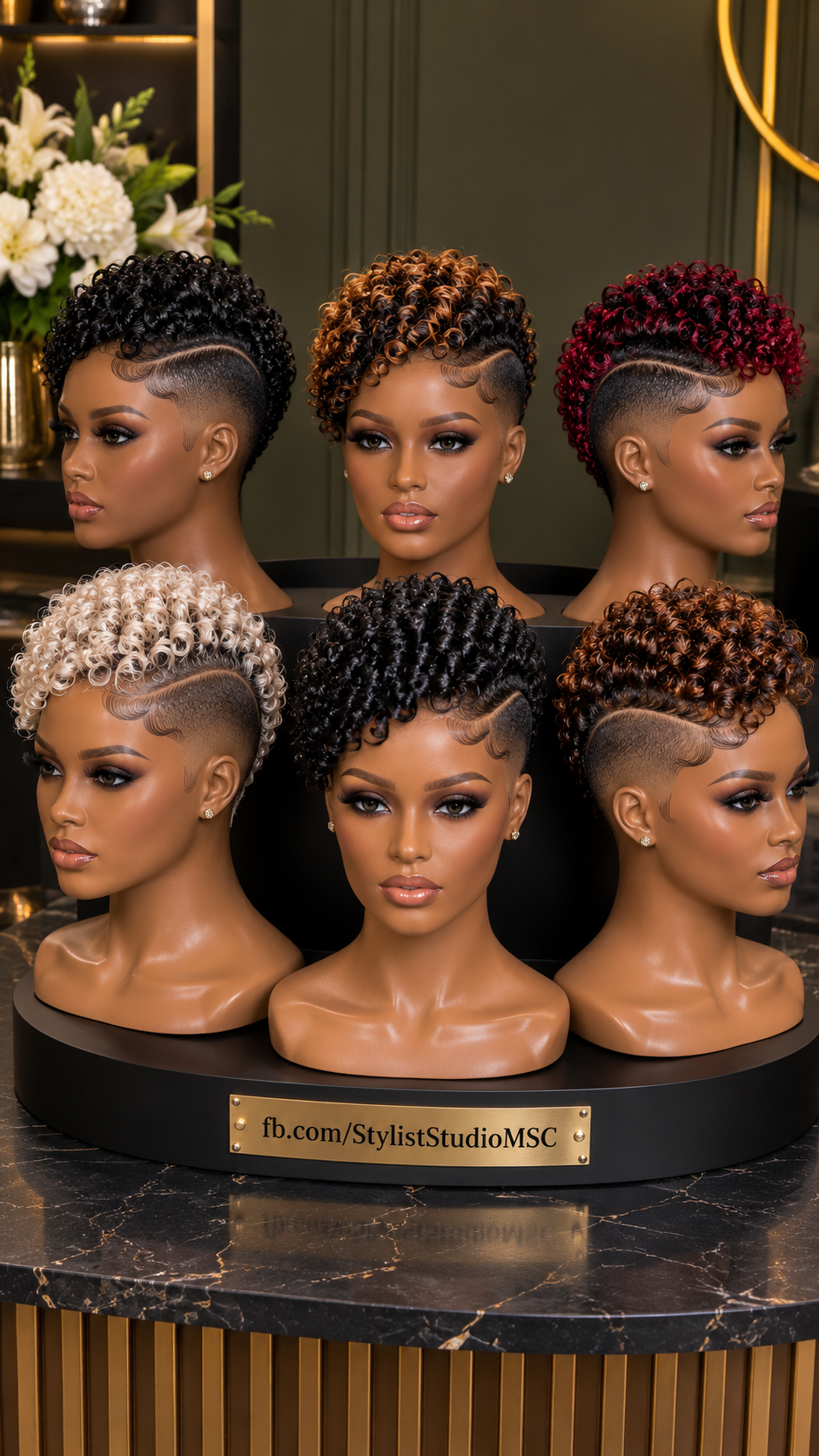
This coordinated pixie wig collection is built around a striking contrast: a dense crown of glossy spiral coils sits above a closely tapered side section separated by a sweeping curved part. The six displayed variations keep the same recognizable silhouette while exploring deep natural tones, burgundy wine, warm copper brown, golden caramel and pale pearl blonde. Because the construction remains consistent across the collection, the differences in color become easy to compare without losing the identity of the hairstyle.
The crown carries most of the volume. Small spiral curls are packed closely together and directed slightly forward, creating height without allowing the hair to spread too widely around the head. Beneath that crown, the side is kept extremely close and follows the shape of the mannequin head. A curved separation line runs from the front temple toward the back, giving the profile a strong barber-inspired structure.
This combination can appeal to customers who want the visual impact of curls while keeping the perimeter compact. It is also an interesting option for wig businesses because the same construction can be offered in several color families, giving customers meaningful choices without requiring an entirely different hairstyle for every shade.
The Crown Uses Compact Spiral Coils for Concentrated Volume
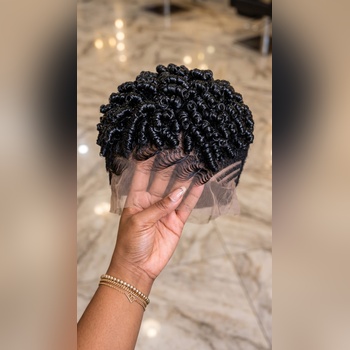
The most noticeable element across all six wigs is the curl formation on top. Rather than broad waves or loose ringlets, the crown consists of numerous compact coils. Each section turns into a small circular or spiral shape, and the curls overlap closely enough to create substantial density.
The curl placement becomes slightly directional toward the forehead. Some coils lean forward while others remain upright through the center, preventing the crown from appearing completely uniform. This variation helps the hairstyle retain depth when viewed from the front or at a three-quarter angle.
When requesting a comparable custom unit, curl diameter is worth discussing before production begins. Simply asking for a “curly pixie wig” leaves too much room for interpretation. Show the stylist a close reference and explain that you want concentrated spiral coils with controlled height rather than large open curls.
A Sweeping Curved Part Separates the Crown From the Tapered Side
The side profile gives this collection its strongest identifying detail. A prominent curved part begins around the front temple and sweeps backward underneath the curl crown. The line creates a visible boundary between the longer upper section and the much closer side area.
This separation also makes the silhouette easier to read. Without the curved line, the curls and tapered area could visually blend together. Here, the part acts almost like an outline around the upper section, emphasizing exactly where the crown begins.
The curve should be planned according to the shape and placement of the crown. If it sits too high, the upper curls can appear narrow. If positioned too low, the close side section may lose its visual impact. A stylist experienced with barber-inspired pixie construction can adjust the placement while preserving the overall proportions shown in the reference.
The Tapered Side Keeps the Profile Compact
Underneath the curved part, the hair sits very close to the head. This creates a dramatic difference between the dense crown and the restrained perimeter. The contrast is especially noticeable on the profile-facing mannequins, where the upper curls form a rounded silhouette while the side remains close and controlled.
The transition toward the back is equally important. The lower section gradually follows the head rather than creating unnecessary bulk behind the ears or around the nape. For customers who prefer pixie silhouettes that remain compact from multiple viewing angles, this type of construction can be particularly appealing.
If ordering remotely, request photographs showing both sides and the back before approving the completed wig. A front photograph alone cannot reveal whether the tapered section maintains the same proportions around the entire perimeter.
Natural Dark Coils Put the Structure at the Center
Several wigs in the display use a deep natural dark shade. On these units, the hairstyle depends primarily on shape and reflected light rather than dramatic color contrast. Highlights from the salon lighting travel around the surface of each coil, allowing individual spirals to remain visible even within the dark crown.
This color direction works particularly well with the curved side part. The exposed separation creates a strong visual break against the surrounding dark hair, making the profile immediately recognizable.
Customers interested in this option should ask the seller whether the available shade is natural black, soft black, espresso or another deep brown-black. These colors may look similar indoors but can show different undertones in daylight.
Burgundy Wine Gives the Coils a Rich Red Dimension
The burgundy variation introduces a deep wine-red tone while preserving the same compact coil pattern. Because the shade contains both dark and brighter red areas, each curl produces several levels of color depending on how the light reaches it.
This is particularly effective on tightly arranged spirals. The outside edge of a curl can appear brighter while its center remains deeper, giving the crown noticeable dimension without requiring contrasting highlights.
When requesting burgundy, send a reference rather than relying only on a color name. Some burgundy shades lean heavily toward purple, while others move closer to cherry or dark red. The example shown here has enough depth to preserve the sculpted appearance of the crown while still providing a clearly visible wine-red color.
Copper Brown Adds Warmth Without Overpowering the Shape
The copper-brown wig introduces warm reddish and brown reflections across the spiral crown. Compared with burgundy, this shade appears earthier and more golden. It complements the compact curl structure because light catches the curved surfaces and produces subtle changes from dark brown to brighter copper.
A multidimensional copper result can be created by retaining a deeper foundation and introducing warmer strands through selected upper curls. This helps maintain visual separation between neighboring coils. Coloring every strand to exactly the same brightness can make a densely curled crown appear flatter from a distance.
Ask a colorist for photographs taken in natural light before approving a custom copper shade. Indoor salon lighting can make warm tones appear considerably richer than they will outdoors.
Golden Caramel Highlights Emphasize Individual Spirals
The caramel variation uses lighter golden-brown accents over a darker foundation. These lighter sections become particularly noticeable as they travel around the spiral curls. Instead of appearing as straight highlight streaks, the color repeatedly disappears and reappears around each coil.
This placement gives the crown a lively dimensional effect. The darker foundation prevents the upper section from becoming visually flat, while the caramel strands reveal the direction of individual curls.
For a custom order, discuss highlight distribution as carefully as the shade itself. Ask whether the lighter color will be concentrated around the front, distributed across the entire crown or placed selectively through individual curls. The final result can look very different depending on that decision.
Pearl Blonde Creates the Brightest Version of the Collection
The pale pearl-blonde wig offers the strongest contrast among the six displayed options. Its light crown immediately exposes the spiral structure because shadows form between neighboring curls. The close side area remains visually distinct beneath the sweeping part, preserving the barber-inspired profile.
Pale colors can also make the front curl placement more noticeable. Small variations in direction that might appear subtle on a dark wig become much easier to see when the strands are light.
If purchasing a pale wig, confirm whether the color is permanent, processed human hair or manufactured fiber. The photograph alone cannot establish the material. This information matters because washing, heat styling, toning and recoloring requirements vary significantly between different wig materials.
Why These Colors Work Well as a Coordinated Wig Collection
A strong wig collection does not necessarily require completely different hairstyles. Keeping one recognizable construction and offering carefully selected colors can make shopping easier. Customers can first decide whether they like the silhouette and then select the shade that best fits their preference.
Here, the deep natural version offers an understated direction. Burgundy adds rich red color, copper brown introduces warmth, golden caramel increases contrast and pearl blonde creates the brightest alternative. Despite those differences, the spiral crown and curved side separation connect every unit visually.
For wig sellers, presenting color options together can also help customers understand differences that are difficult to communicate through color names alone. Side-by-side photography is particularly useful for warm brown shades, where names such as caramel, copper, chestnut and honey can otherwise be interpreted very differently.
What to Request When Ordering This Style From a Wig Maker
Begin with clear reference photographs. Include a front view and a profile view whenever possible. Tell the wig maker that the crown should contain closely packed spiral coils with controlled height and a slight forward direction around the front.
Next, discuss the side construction separately. Specify that you want a sweeping curved separation underneath the crown with a close tapered area below it. Do not assume that requesting a pixie automatically includes this detail.
Choose the color only after the construction has been understood. For highlighted versions, explain whether you want lighter strands distributed throughout the crown or concentrated around particular sections. For burgundy or copper shades, provide a reference showing the exact undertone you prefer.
Finally, confirm head measurements, cap size, attachment method, production time, deposit requirement and shipping arrangements before payment. A custom order should include enough written detail that both buyer and stylist understand what is being produced.
Questions to Ask About the Wig Cap and Front Area
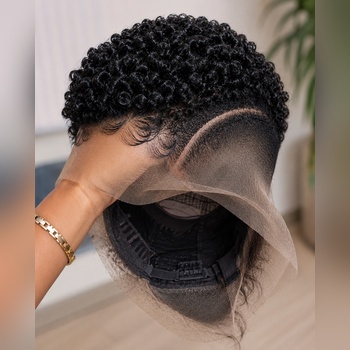
The finished appearance does not tell buyers everything about the internal construction. Before purchasing, request photographs of the actual cap, adjustment system and any combs or clips included with the unit.
If the seller describes the product using a particular lace specification, ask for confirmation of that specification. A photograph should not be used to assume that a wig has HD lace or another specific lace grade. The seller or wig maker should provide that information directly.
Also ask whether the displayed styling is permanent or whether the curls will need to be reset after washing. Some pre-styled synthetic units retain their shape differently from human-hair wigs, so care instructions should always match the confirmed material.
Salon Fitting Helps Position the Curved Side Detail Correctly
Professional fitting can be especially useful for this design because the side separation is intended to sit in a very specific position around the temple. If the wig sits too far forward, backward or sideways, the curved part may not align naturally with the wearer’s facial proportions.
During fitting, check the wig from the front, both profiles and the back before any permanent trimming takes place. The crown should appear balanced, and the close side should sit comfortably without unnecessary bulk around the ear.
If customization is required, ask the stylist to preserve the relationship between the crown and curved separation. Altering one area without considering the other can change the character of the hairstyle.
How to Compare a Ready-Made Wig With a Custom Version
A ready-made wig can be a practical option when its cap size, color and curl arrangement already match what you need. Before buying, request current photographs of the exact unit rather than relying only on promotional images.
A custom wig gives the buyer more control over crown density, color placement, cap measurements and side detailing. This can be useful when the curved separation and tapered profile are priorities.
When comparing quotes, look beyond the final price. Determine whether coloring, styling, fitting and adjustments are included. A lower initial quote may become more expensive if each customization is charged separately.
Premium Custom to Basic Synthetic Price Guide
No confirmed selling price appears in the image, so the ranges below are general planning estimates rather than prices for these exact wigs. Actual costs depend on location, hair source, fiber quality, cap construction, color work and stylist labor.
| Wig Category | Estimated Price Range | Typical Considerations |
|---|---|---|
| Premium Custom | $320–$700+ | Higher-grade human hair, personalized measurements, advanced coloring and detailed styling |
| Standard Custom | $190–$380 | Custom curl placement, selected color work and personalized side construction |
| Basic Human Hair | $120–$260 | Human-hair base with fewer personalized options |
| Premium Synthetic | $75–$170 | Higher-quality fiber with pre-set curl structure and selected shades |
| Basic Synthetic | $35–$95 | Entry-level fiber with limited customization |
Protecting the Spiral Crown Between Wears
The compact coils are the centerpiece of this hairstyle, so storage should protect their shape. Keep the wig on an appropriately sized stand or mannequin head and avoid placing clothing, boxes or other wigs directly against the crown.
Do not repeatedly brush through the spiral sections. If an individual curl becomes displaced, separate and reposition that curl rather than disturbing the entire crown. Frequent brushing can loosen the concentrated spiral pattern that gives the wig its distinctive appearance.
Product use should remain appropriate for the confirmed hair material. Heavy creams or oils may collect between closely packed curls and reduce their separation. Lightweight maintenance is generally easier for a crown with this amount of detail.
Heat should only be applied when the manufacturer or stylist confirms that the fibers can tolerate it. Synthetic units in particular may have strict temperature limits.
Booking a Stylist for This Barber-Inspired Pixie Wig
Look for a wig stylist or barber-stylist whose portfolio includes compact pixie work, close side detailing and sculpted curl placement. A stylist who mainly works with long wigs may not necessarily specialize in this type of construction.
Send the reference before booking and ask whether they can reproduce both the spiral crown and sweeping side separation. If coloring is required, request examples of similar burgundy, copper, caramel or pearl-blonde work.
When possible, schedule a consultation before placing a custom order. This allows measurements, color expectations and styling details to be discussed before production begins and reduces the risk of major changes being required after completion.
Search Terms
Side-Swept Coil Pixie Wig · Curved Undercut Pixie Wig · Burgundy Spiral Curl Wig · Golden Caramel Coil Pixie · Pearl Blonde Curly Pixie Wig · Copper Brown Spiral Wig · Tapered Side Pixie Wig · Sculpted Curl Crown Wig