
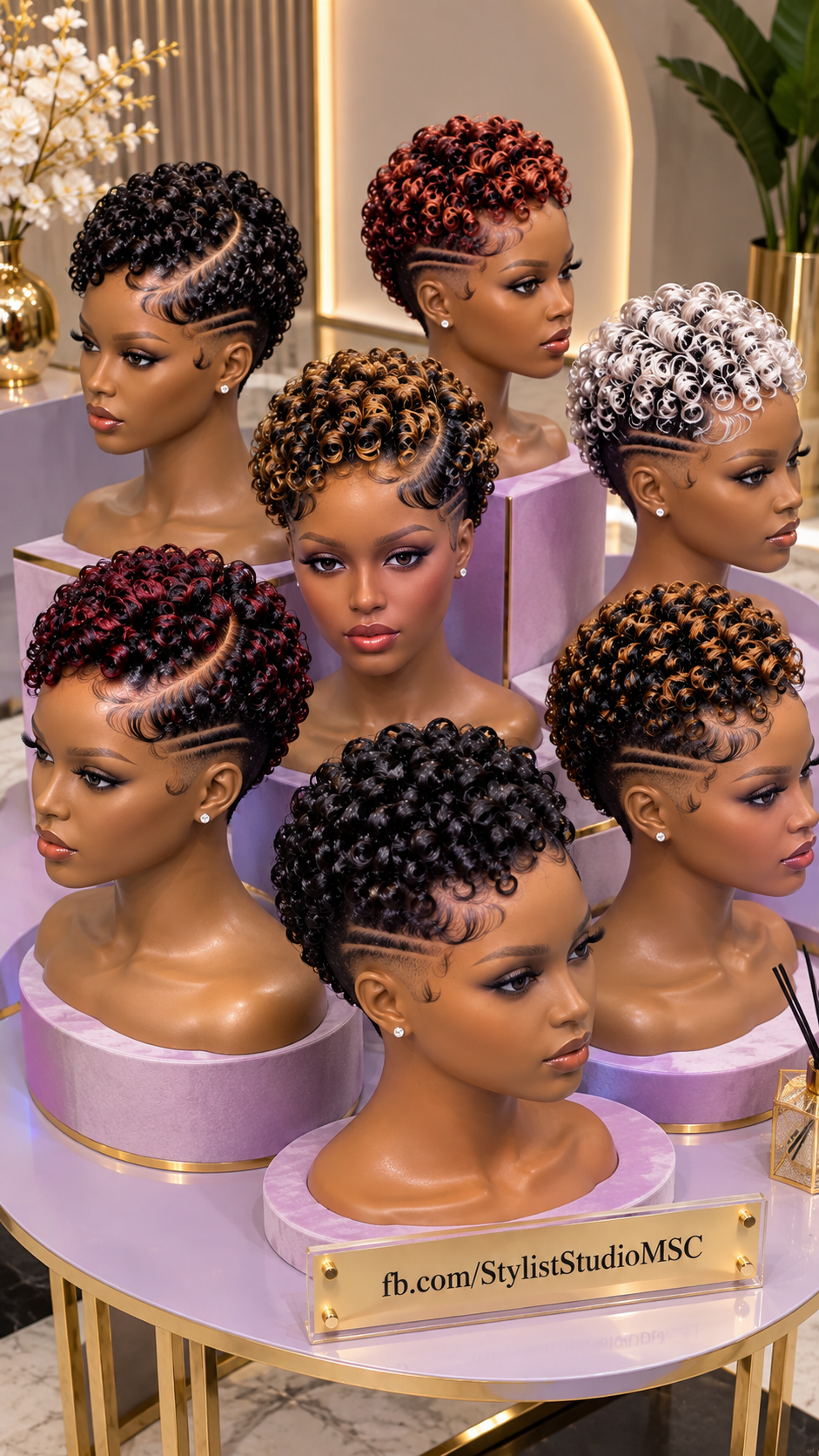
This striking pixie wig collection brings together tightly formed loop curls, sweeping hairline details, tapered side sections and precision line work in a coordinated range of rich colors. The display shows how one recognizable silhouette can take on completely different personalities through burgundy, pearl silver, natural dark tones, copper brown and golden caramel accents. Instead of relying on extra length for impact, these wigs use compact curl placement and detailed side styling to create their character.
The defining element is the rounded crown. Small glossy curls are arranged closely together so the upper section looks full without becoming oversized. Around the forehead, the curl pattern transitions into sweeping strands that follow the contour of the hairline. The sides sit much closer to the head and feature narrow carved lines, creating a strong contrast with the raised crown.
For wig buyers, this type of collection offers a useful way to compare colors while keeping the hairstyle itself consistent. Someone who likes the basic pixie construction can choose a deeper or brighter shade without giving up the compact crown, directional front styling or detailed side profile.
Why the Circular Crown Gives This Pixie Its Signature Shape
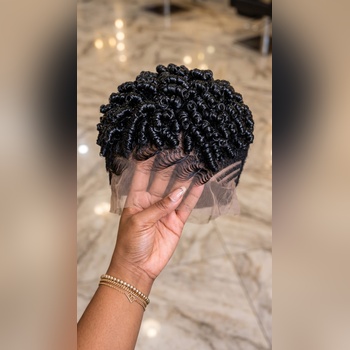
The crown is constructed from numerous small circular curls rather than loose waves. Each curl turns back toward itself, producing the ring-like pattern visible across the upper section. Because the curls are closely spaced, the crown has substantial visual density even though the overall hairstyle remains compact.
The stylist has also controlled the height carefully. The curls near the front sit slightly lower, allowing the forehead styling to remain visible. The upper center gains more elevation, while the back gradually narrows toward the perimeter. This creates a balanced dome instead of a flat top or an excessively tall crown.
When requesting a similar wig, curl diameter should be discussed specifically. Larger curls would make the hairstyle look softer and more open, while smaller loops create the concentrated pattern seen here. A reference photograph is particularly valuable because terms such as “curly pixie” can describe many completely different curl structures.
The Sweeping Front Section Creates a Dramatic Transition
One of the most distinctive details in this collection is the directional styling around the forehead. Rather than allowing the curls to extend randomly toward the face, selected strands are shaped into broad sweeps that travel toward the temple. These sections lie flatter than the crown and create a clear visual path between the upper curls and the side design.
The effect becomes especially noticeable on the burgundy, caramel and pearl-silver variations because the color makes every curve easier to see. On the darker wigs, reflected light performs the same function, tracing the glossy surface of the strands and revealing their direction.
A stylist recreating this look should treat the forehead area as its own design zone. The front should not simply be brushed downward after the crown has been styled. Its direction, width and relationship with the side lines need to be planned before the final setting.
Precision Side Lines Give the Wig a Barber-Inspired Profile
The side work separates this collection from a conventional curly pixie wig. Narrow parallel lines appear through the close side area, introducing a barber-inspired element beneath the sculpted crown. Depending on the individual unit, the lines may appear as two or three distinct tracks.
Their placement is important. They begin close to the temple and travel backward at an angle that follows the overall direction of the hairstyle. This makes the lines feel integrated into the design rather than added as an unrelated decoration.
Anyone ordering a custom version should provide a clear side-view photograph and specify the preferred number of lines. It is also worth discussing their thickness and length. Even a small change in the spacing can make the finished profile look noticeably different.
Burgundy Wine Curls Bring Depth Without Hiding the Details
The burgundy wigs provide one of the richest color directions in the display. The shade sits between deep wine red and dark cherry, giving the crown a strong color identity while preserving enough depth for individual curls to remain visible.
Light catches the outside of each loop, producing brighter red reflections against the darker interior. This is particularly effective with compact curls because every loop creates its own highlight and shadow. The result looks dimensional rather than like a single flat block of red.
If burgundy is your preferred direction, request an actual color sample or recent photograph from the seller. Burgundy can range from purple-based wine to brighter cherry red, and salon lighting can alter its appearance significantly.
Golden Caramel Highlights Make Every Loop More Visible
The caramel-highlighted versions create a completely different effect. Instead of covering the entire wig with one light shade, golden brown strands move through a darker foundation. As those strands curve around the loops, the lighter color repeatedly appears and disappears.
This creates natural-looking depth across the crown. Some curls show a strong caramel ribbon, while neighboring sections remain considerably darker. The combination makes the circular construction easy to appreciate from several viewing angles.
For custom coloring, ask the stylist to retain enough dark foundation between the lighter strands. Too much light color can reduce the contrast that gives the loops their three-dimensional appearance. A controlled mixture of espresso or dark brown with caramel and golden accents is closer to the visual effect shown here.
Pearl Silver Turns the Curl Pattern Into the Main Attraction
The pearl-silver wig is the brightest option in the collection and immediately draws attention to the curl pattern. Light-colored strands reveal practically every turn of the loops, making the crown appear exceptionally detailed.
The pale color also highlights the transition around the forehead. Sweeping front sections are easy to distinguish from the raised curls above them, while darker areas underneath can create additional contrast. This makes pearl silver a strong choice for someone who wants the construction itself to be highly visible.
Before ordering a pale unit, confirm how the color was achieved and what maintenance the material requires. Human hair and synthetic fibers can require very different care routines. Do not assume that the wig can be recolored or exposed to high heat without checking the manufacturer’s or stylist’s instructions.
Copper Brown Offers Warm Color With a Softer Contrast
The copper-brown variations sit between the deeper burgundy wigs and the brighter golden options. Warm reddish-brown reflections move through the curls while darker sections provide depth underneath. This creates a rich color that remains relatively easy to coordinate with different clothing palettes.
Copper brown is particularly effective when several tones are blended together. A darker base can transition into cinnamon, amber or warm copper through selected curls, giving the crown a layered appearance without creating harsh stripes.
When discussing this shade with a colorist, avoid relying on the word “copper” alone. Show the exact reference because copper can range from subtle brown-orange to extremely bright orange-red. The version pictured here is better described through its warm brown foundation and brighter copper reflections.
Deep Natural Tones Keep Attention on the Construction
The darkest wigs demonstrate how effective this design can be without bright color. Their visual impact comes from the curl formation, glossy surface, sculpted forehead strands and carved side details. Light reflecting from the loops creates enough separation for the pattern to remain visible.
This direction is useful for customers who want the hairstyle to be distinctive while keeping the color understated. It also makes the side lines particularly noticeable because the exposed paths contrast clearly against the surrounding dark hair.
If ordering a dark unit, ask whether the available shade is natural black, soft black, espresso or another deep brown-black tone. Similar shades can look nearly identical in photographs but noticeably different when worn in daylight.
Color Placement Matters as Much as the Color Itself
A successful highlighted pixie is not only about choosing attractive shades. The position of those shades determines how the curl pattern will read. Highlights placed through the outer surface of selected loops create movement, while an evenly distributed light color produces a much more uniform result.
For caramel or copper versions, ask the stylist where the lighter strands will appear before production begins. If possible, provide front, side and crown references. The crown view is particularly important because it shows how highlights travel across the top rather than only around the forehead.
Buyers who prefer stronger contrast can request darker roots with brighter curl ends. Those wanting a more blended result can ask for several neighboring warm tones rather than one dramatically lighter highlight.
Choosing Between Two-Line and Three-Line Side Designs
The carved side pattern can subtly change the personality of the wig. Two lines create a simpler profile with more uninterrupted hair between the crown and lower perimeter. Three lines produce a busier, more graphic side view.
Neither arrangement requires changing the crown. This means the same loop-curl structure can be paired with different side designs depending on the buyer’s preference. The angle can also be adjusted, although it should continue to complement the movement of the forehead styling.
For the closest recreation, do not simply request “lines on the side.” Show the stylist exactly where the first line begins, how much space should remain between lines and approximately where they should finish toward the back.
What to Confirm Before Paying for a Custom Wig
Start by confirming the hair or fiber type. The photograph shows the appearance of the finished wigs, but it does not establish whether every displayed unit is human hair, synthetic fiber or a blend. Ask the seller directly rather than assuming the material from shine or texture.
Next, confirm cap size and adjustment options. Provide accurate head measurements if the wig is being made specifically for you. Ask whether the finished unit includes an adjustable strap, combs, clips or another security system.
You should also confirm which parts of the styling are included in the quoted price. A custom wig may require separate charges for coloring, curl setting, side detailing or final fitting. Request a written breakdown so you know whether the quote represents a completed ready-to-wear unit or only the base construction.
Ask for Proof of the Actual Lace and Cap Construction
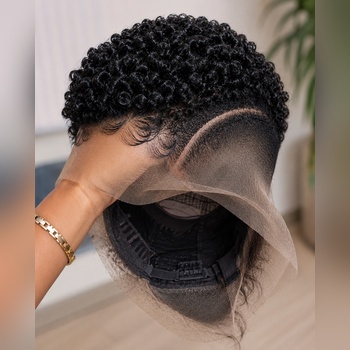
The appearance of a photographed wig cannot confirm every technical construction claim. Although a lace area may be visible on a unit, that alone does not establish a specific lace grade or commercial designation. For that reason, buyers should request close photographs of the actual product before purchasing.
Ask the seller to show the inside of the cap, front perimeter, adjustment system and attachment points. If a particular lace specification is important to you, have the seller confirm it explicitly in the product description or invoice.
This is especially important when comparing prices. Two wigs can look similar from the outside while using very different cap materials and construction methods.
How to Order This Pixie Style From a Wig Maker
Begin by selecting the exact wig in the collection that most closely matches your preferred color and side design. Save a clear front photograph and, if available, a side or crown view. Send these references to a wig maker who already has compact pixie work in their portfolio.
Explain that you want a close-set circular curl crown rather than loose curls. Mention the sweeping forehead sections separately and specify the carved side-line arrangement. If you want caramel, copper or burgundy coloring, identify the areas where you want the brighter shade concentrated.
After receiving the quote, confirm the production time, deposit requirement, shipping method and revision policy. For custom orders, request photographs or a brief video of the completed wig before shipment. This gives you an opportunity to check the curl scale, color balance and side detailing before the unit leaves the seller.
Salon Fitting Can Refine the Final Position of the Wig
Even a well-made custom wig can benefit from professional fitting. A stylist can position the unit so the directional front section and carved side details sit correctly around the wearer’s temples and ears.
Before any trimming takes place, examine the wig from both sides. The crown should sit naturally without leaning too far forward or backward, and the decorative side details should appear intentional from normal viewing angles.
If the front requires adjustment, ask the stylist to preserve the original sweep pattern. Removing too much hair or separating the styled strands can change the visual connection between the crown and side section.
Premium Custom to Basic Synthetic Price Guide
No retail price is visible in the image, so the figures below should be treated as general planning ranges rather than prices for the exact wigs shown. Hair material, cap construction, custom color, stylist labor and detailed side work can significantly change the final cost.
| Wig Category | Estimated Range | What May Affect the Quote |
|---|---|---|
| Premium Custom | $320–$700+ | Higher-grade human hair, custom sizing, advanced coloring and detailed hand styling |
| Standard Custom | $190–$380 | Personalized curl setting, selected color work and side detailing |
| Basic Human Hair | $120–$260 | Human-hair base with fewer customization options |
| Premium Synthetic | $75–$170 | Higher-quality fiber, pre-shaped curls and selected color choices |
| Basic Synthetic | $35–$95 | Entry-level fiber with limited personalized styling |
Preserving the Sculpted Loops After Purchase
These compact curls should be stored carefully because pressure can flatten their circular formation. Place the wig on an appropriately sized stand or mannequin head and keep other objects away from the crown.
Avoid brushing through the loop curls with a conventional brush. If a curl shifts, work on that individual section rather than combing through the entire crown. Excessive manipulation can separate the carefully arranged loops and make the hairstyle appear much fuller and less sculpted than intended.
Use styling products sparingly. Heavy product buildup can cause neighboring curls to stick together and reduce the separation visible in the reference. Always choose products suitable for the confirmed hair or fiber type.
Heat styling should only be used when the seller has confirmed that the material can tolerate the required temperature. This is especially important for synthetic wigs, where excessive heat can permanently damage the fibers.
Finding a Salon That Understands Sculpted Pixie Wigs
Look for a stylist whose portfolio includes pixie wigs, compact curl setting and precision side work. Front photographs alone are not enough. Check whether their portfolio also shows profiles and close views of finished hairlines.
When booking, explain that you are looking for a sculpted loop-curl pixie with close sides rather than a conventional curly wig. Send the reference before the appointment so the stylist can tell you whether the requested structure can be achieved with the unit you plan to purchase.
If you are ordering the wig from one business and having it fitted by another stylist, discuss the plan with both parties before production. The wig maker needs to understand the desired construction, while the installing stylist needs to know what can and cannot be altered during fitting.
Building a Custom Color Rotation From One Pixie Shape
One advantage of this collection is that buyers do not need to choose an entirely different hairstyle every time they want a new look. The same compact silhouette can be recreated in several colors, allowing someone to build a rotation while keeping the familiar curl structure and side profile.
A deeper natural tone can work as the everyday option. Golden caramel or copper brown can provide warmer alternatives. Burgundy introduces richer red color, while pearl silver creates the highest contrast and makes the curl pattern especially noticeable.
The important point is consistency in construction. If you want multiple units to look like variations of the same hairstyle, provide the wig maker with the same reference for crown height, curl diameter, front sweep and side-line placement each time. Change only the color specification unless you intentionally want another structural variation.
Search Terms
Sculpted Loop Curl Pixie Wig · Burgundy Pin Curl Wig · Golden Caramel Pixie Wig · Pearl Silver Curl Pixie · Tapered Side Line Wig · Copper Brown Loop Curl Wig · Barber Line Pixie Wig · Swept Hairline Curl Wig