
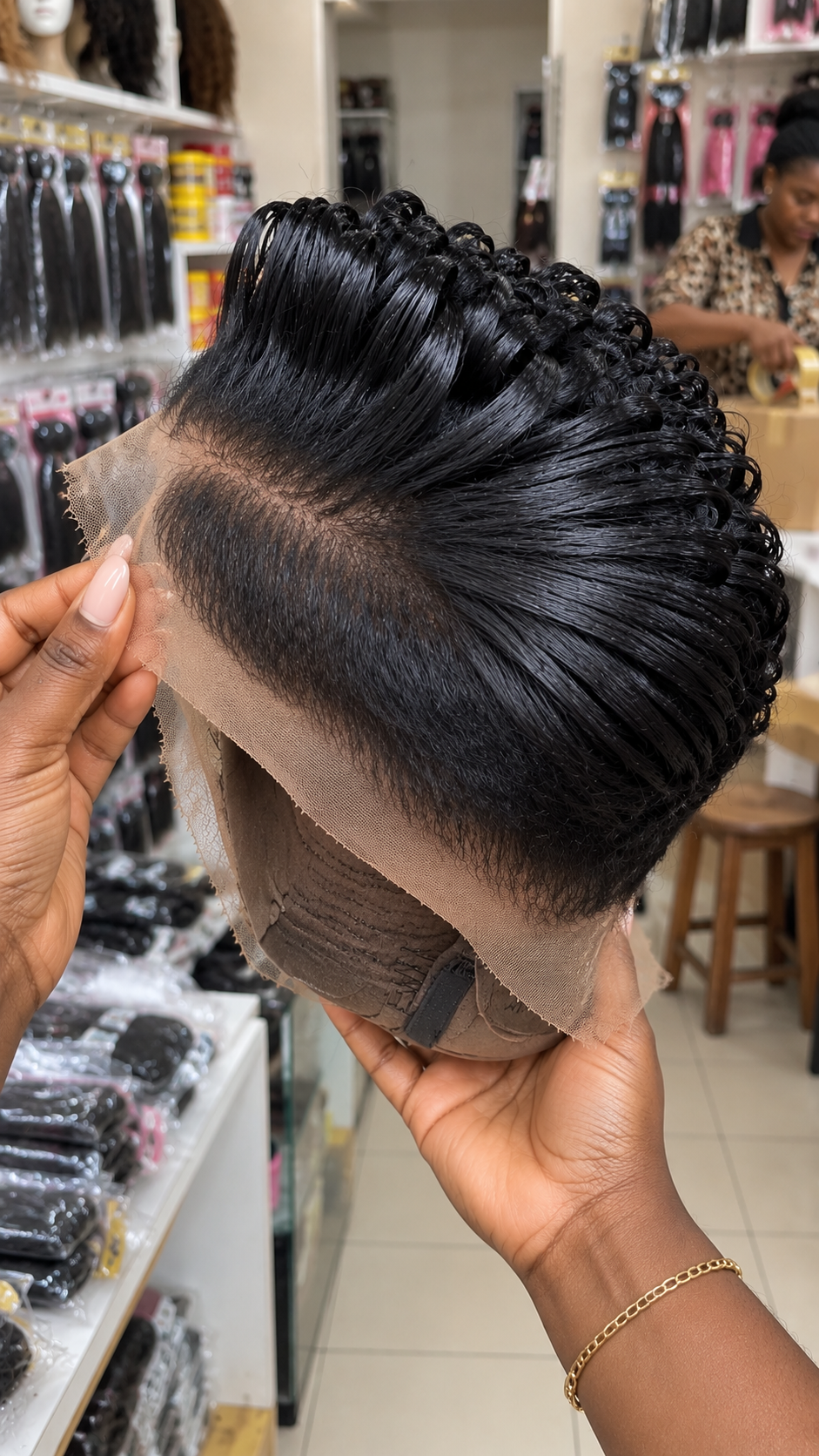
This jet black wig presents a very different construction from a conventional ringlet-heavy pixie. The upper section is shaped with wide polished loops that sweep backward across the crown, while the lower side remains extremely close and compact. The contrast between the elevated loop work and the tapered perimeter gives the wig a sharply structured silhouette without requiring long hair.
The photograph also reveals the lace before final trimming and part of the interior cap, making the construction easier to examine. The styling is dominated by a single deep black shade, so dimension comes primarily from strand direction, reflection, height and the transition between the upper and lower sections.
Wide Loop Curls Replace Small Circular Ringlets
The upper section uses broad ribbon-like loops rather than tiny circular coils. Individual sections rise from the base, curve backward and fold into rounded openings. This produces a layered appearance with considerably more movement than a crown filled with uniformly small curls.


The loops are especially prominent toward the front and upper crown. As the styling travels backward, they become increasingly integrated with the surrounding hair, helping the shape remain cohesive.
When requesting this construction, describe the top as wide sculpted loop curls with backward-directed movement. Asking simply for curls could produce a completely different texture.
The Crown Has Strong Directional Flow
Nearly every longer section follows the same general backward direction. Hair rises from the front and side foundation before sweeping toward the rear, creating an intentional flow through the entire upper structure.
This directional styling is important because it keeps the large loops organized. If every section faced a different direction, the crown would appear considerably more irregular and the clean pixie silhouette would be lost.
A stylist recreating the design should establish the overall direction before forming the individual loops. The curl placement and the underlying strand direction need to work together.
The Side Section Creates a Dramatic Density Contrast
One of the strongest elements visible in the photograph is the transition from the elevated crown into the close side area. The lower section contains substantially less length and volume, producing the appearance of a precision taper.
This contrast makes the upper loops look even fuller. Rather than building volume everywhere, the design concentrates it above the taper and keeps the perimeter close to the head.
For a custom order, emphasize that the sides should remain compact. Excess hair around this area could make the finished wig appear bulky and obscure the intended pixie proportions.
A Curved Transition Connects the Top and Taper
The boundary between the long upper hair and the close lower section follows the natural contour of the wig rather than creating a straight horizontal division. Fine strands gradually increase in length as they approach the crown.
This softer transition helps the two very different textures feel connected. The close section provides structure while the longer hair above supplies movement and height.
Side-view reference photographs are especially valuable for communicating this feature because a frontal image would not show the transition clearly enough.
Jet Black Emphasizes the Sculptural Shape
The monochrome jet black color allows the construction itself to dominate. Deep shadows appear underneath the raised loops, while narrow highlights travel across the curved outer surfaces.
The hair has a mirror-like glossy finish, silky reflective surface, healthy wet-look shine and individually visible strands. These reflections help separate one loop from another even though every section uses the same dark color.
For a similar result, the finish should look polished without becoming overloaded with product. Heavy oils can make neighboring strands merge and reduce the definition of the loop structure.
The Front Section Builds Height Without Excessive Length
The frontal crown rises noticeably before curving backward. This creates height at the top while keeping the overall hairstyle compact.
Because the strands are folded into loops rather than allowed to extend freely, relatively modest hair length can produce substantial visual volume. This is one reason the design retains a pixie character despite the elevated crown.
During customization, the front height should be discussed with the stylist. Increasing it too much can shift the silhouette toward a taller pompadour-like shape, while reducing it excessively can hide the loop pattern.
The Lace Is Visible Before Final Fitting
The image shows lace extending beyond the hair perimeter, indicating that the wig is being presented before the excess lace has been fully trimmed for wear. This provides a useful view of the relationship between the styled hair and the underlying construction.
Buyers should still confirm the exact lace configuration directly with the seller because a photograph alone does not reliably identify every technical specification.
Ask whether the wig arrives with uncut lace, whether perimeter customization is included and whether professional fitting is recommended before trimming.
The Interior Cap Is Partially Visible
The underside of the wig can be seen beneath the lace. This gives a partial view of the cap construction and securing components, but not enough information to determine every feature of the unit.
Before ordering, request the seller’s cap specifications and available sizes. Measurements are particularly important with a close pixie because an incorrect fit can affect where the tapered side section sits on the wearer’s head.
If adjustable components are included, they can help refine the fit, but they should not be treated as a substitute for choosing an appropriate cap size.
What to Tell a Stylist About the Crown
Show the stylist the photograph and point specifically to the large loops rather than describing the hair as generally curly. Request a series of broad sections that rise from the crown, fold backward and retain visible openings between the strands.
Explain that the loops should remain individually distinguishable while collectively following the same backward direction. The crown needs density, but the goal is organized movement rather than maximum fullness.
A stylist experienced with molded pixies, sculpted curls and custom wig shaping is likely to be more suitable for this technique than someone who works primarily with long loose-wave units.
Finding the Right Wig Foundation
A suitable base unit needs enough workable length through the upper section to create the large loops while retaining considerably less bulk around the lower sides.
If you already own a wig, send photographs to the stylist before booking. They can assess whether the current length distribution will support the reference shape or whether substantial cutting and restructuring would be necessary.
For a new custom build, show the wig maker this side reference before construction begins so the difference between crown length and perimeter length can be planned from the start.
How to Order a Similar Wig Online
Search for custom wig makers specializing in pixie units and hand-styled cropped designs. When contacting a seller, send the reference image and describe the key elements separately: jet black color, elevated loop crown, backward sweep, close tapered sides and visible strand separation.
Ask whether the seller can reproduce the actual styling rather than merely supply a basic pixie foundation. Confirm whether the quoted price includes cutting, loop setting and final finishing.
For made-to-order work, request photographs of the completed unit before shipment whenever that service is available.
Booking a Local Customization Appointment
If you purchase an unstylized or partially styled unit, look for a local wig stylist who offers pixie reshaping and sculpted curl work. Send the reference before booking so the stylist can estimate the time and determine whether your wig is suitable.
Explain that the upper hair needs to remain considerably longer than the close side section. Mention that the loops should sweep backward rather than forming small ringlets across the entire crown.
If extensive cutting is required, ask whether the stylist prefers to complete the taper before or after forming the upper loops. Planning the sequence can help maintain balanced proportions.
Price Guide for Comparable Custom Work
| Category | Estimated Price Range | Typical Service Level |
|---|---|---|
| Premium Custom | $450–$900+ | Higher-grade human hair, custom cap options, precision tapering and extensive hand-sculpted loop work |
| Standard Custom | $250–$500 | Human-hair construction with customized crown loops, side shaping and finishing |
| Basic Human Hair | $140–$300 | Human-hair pixie foundation that may require additional professional sculpting |
| Premium Synthetic | $85–$190 | Higher-grade fiber with structured upper curls and stronger shape retention |
| Basic Synthetic | $40–$100 | Budget-friendly construction with simpler loop formation and fewer customization options |
These figures are general estimates rather than pricing for the exact wig pictured. Hair material, cap construction, stylist location, density and the amount of hand shaping required can significantly change the final quotation.
Inspect the Side Profile Before Approving a Custom Unit
The side profile is crucial for this hairstyle. Check whether the lower section remains genuinely close and whether the crown begins gaining length gradually rather than suddenly.
Next, inspect the large loops. They should remain open enough to reveal their curved construction while following a consistent backward direction.
Finally, examine the overall height. The crown should provide noticeable lift without becoming disproportionately tall compared with the tapered side.
Keeping the Large Loops in Position
Unlike loose curls, these broad sculpted sections depend heavily on their placement. Avoid brushing through the upper structure or repeatedly pulling individual strands apart.
Store the wig upright with sufficient clearance around the crown. Pressure from packaging or neighboring wigs can flatten the loops and change their direction.
If several sections begin losing their original formation, professional resetting can be more effective than attempting to rebuild each loop individually at home.
Maintaining the Close Perimeter
The lower section contributes just as much to the silhouette as the upper loops. Over time, displaced strands or growth-like bulk in a human-hair unit’s styled perimeter can make the side appear less precise.
A wig stylist can refresh the shape and restore the contrast between the close base and longer crown. Bring the original reference photograph to maintenance appointments so the intended transition remains clear.
For synthetic units, follow the manufacturer’s care instructions and verify heat compatibility before attempting any reshaping.
Search Terms
Jet Black Sculpted Loop Crown · Backward Swept Loop Curls · Close Tapered Pixie Sides · Glossy Black Ribbon Loops · Elevated Jet Black Crown · Curved Taper Transition · Reflective Black Loop Curls · Sculpted Swept Crown Wig