
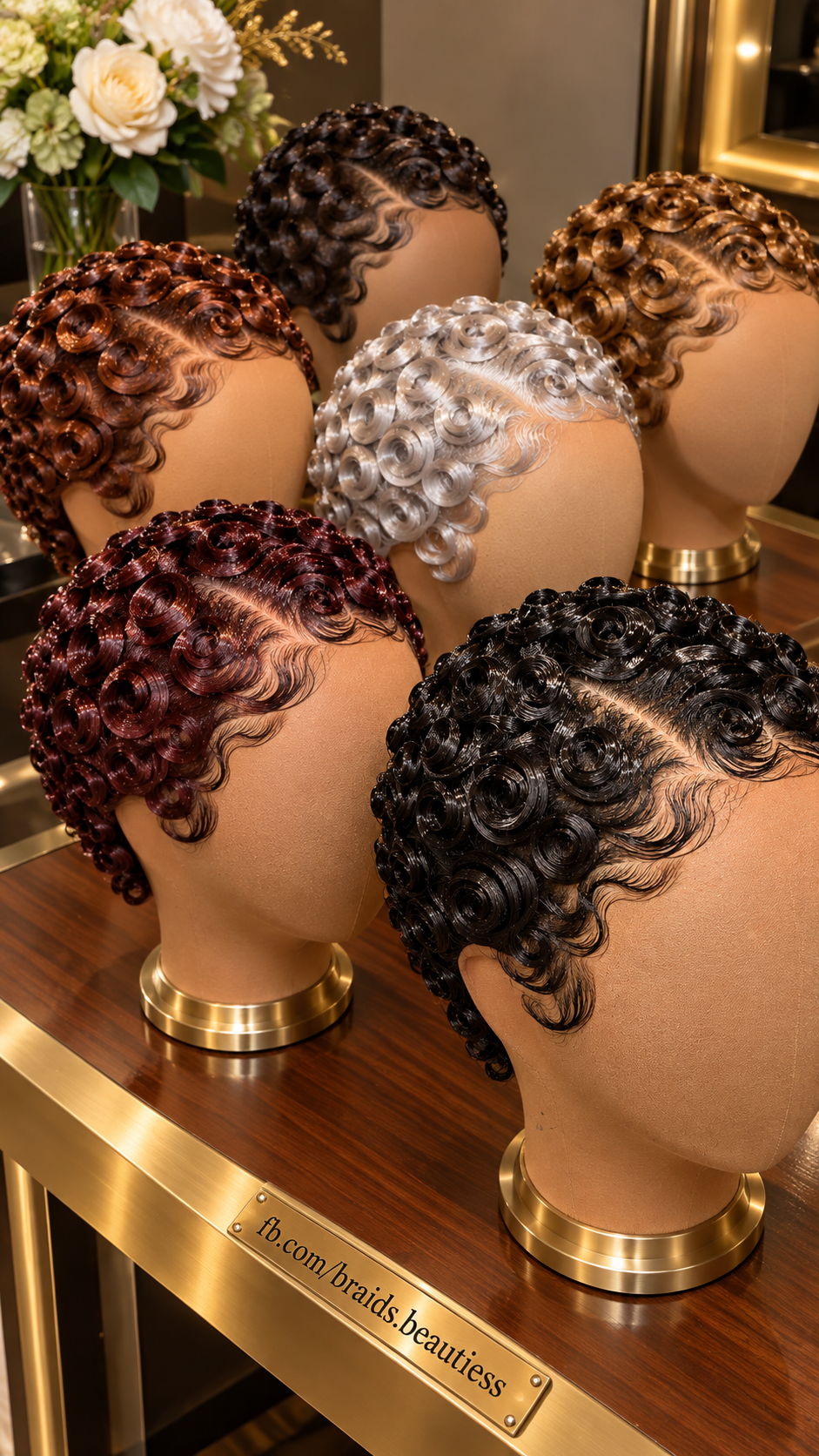
This six-piece wig display centers on a highly polished pixie concept built from compact circular ringlets, diagonal parting and long sculpted waves around the temples. The collection includes jet black, deep burgundy, copper, warm brown, golden caramel and icy silver variations. Although the colors change dramatically, the wigs share the same recognizable construction and close-fitting silhouette.
The strongest visual element is the contrast between the raised circular curls and the flatter side styling. Dozens of small ringlets create dimension across the crown, while precisely arranged strands sweep outward from the parting and curve toward the temple. This combination gives the style considerably more detail than an ordinary curly pixie.
Compact Circular Curls Shape the Crown
The upper portion of each wig is covered with closely positioned ringlets. These are not loose hanging curls. Each section has been formed into a small circular coil that rests close to the head, creating a controlled rounded surface.
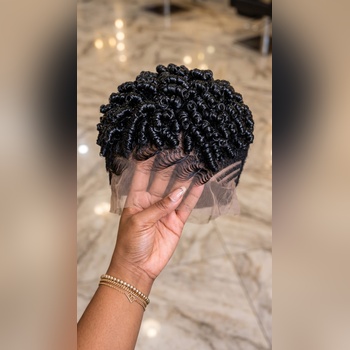
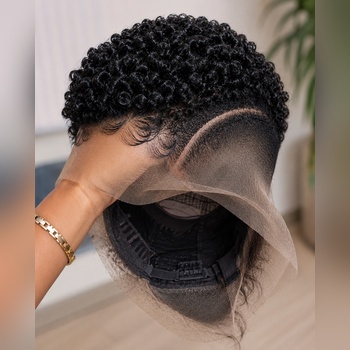
The ringlets vary slightly in orientation rather than following identical rows. That subtle variation keeps the crown visually dimensional while preserving an organized appearance. Under direct lighting, individual strands become visible around every circular curl.
For a custom order, describing the crown simply as “curly” would be too vague. A better request is densely arranged polished circular ringlets with a compact rounded silhouette.
A Precise Side Part Controls the Hair Direction
A defined diagonal part separates the crown curls from the sculpted frontal section. The division is particularly noticeable on the black and silver examples because of the strong contrast around the parting area.
Hair above the part transitions directly into the ringlet crown. Hair below it follows a completely different direction, sweeping forward and downward before curving back toward the side.
This part placement is important when commissioning a similar wig. Send the stylist a clear reference showing both its starting point and angle rather than requesting a generic side part.
Feathered Temple Waves Create the Signature Detail
The large waves around the temple are constructed from numerous fine strands arranged into parallel curves. Instead of one thick swoop, several narrow sections follow one another and form broad S-shaped movements.
The waves gradually become smaller toward the lower perimeter. Some sections finish with tighter curls near the side of the wig, creating a transition between the sweeping frontal design and the compact ringlets surrounding the back.
This type of perimeter work requires considerable control. When choosing a stylist, look for examples of precision finger waves, sculpted pixie styling and detailed frontal work rather than relying only on photographs of conventional curly wigs.
Jet Black Produces Maximum Visual Contrast
The black variation makes every reflective curve easy to distinguish. Bright highlights travel around the circular ringlets while the inner portions remain dark, emphasizing their rounded construction.
The temple section also appears especially crisp in black because the individual strands remain visually separated against the foundation beneath them.
This shade works particularly well when the objective is to emphasize styling geometry rather than color variation.
Burgundy Gives the Ringlets Deep Wine Reflections
The burgundy option introduces a dark red direction without reducing the visibility of the curl structure. Its deepest sections approach a dark wine tone, while exposed ringlet surfaces reflect brighter red highlights.
The result is dimensional rather than uniformly red. This is worth communicating when placing an order because a single flat burgundy dye can look substantially different.
Use the reference image to indicate the desired depth and ask the colorist or wig maker to retain darker areas between the curls.
Copper Adds a Brighter Red-Brown Direction
The copper variation is warmer and brighter than the burgundy unit. Its ringlets reflect orange-brown and reddish tones, particularly around the upper surfaces exposed to direct light.
This shade draws considerable attention to the circular pattern because every curved strand catches a different amount of light.
If requesting this color, terms such as rich copper brown or warm auburn copper can provide a starting point, but the photograph should remain the primary color reference.
Warm Brown Keeps the Look Rich and Dimensional
The darker brown wig offers a middle ground between jet black and the brighter warm shades. Its crown retains strong depth while the illuminated portions reveal warm brown reflections.
Because the color is comparatively restrained, the parting and sculpted temple work remain prominent. This makes it useful for someone who wants visible warmth without moving into a bright copper or golden shade.
Golden Caramel Makes Every Ringlet Stand Out
The golden caramel version is among the brightest wigs in the collection. Its lighter surface reveals the circular construction particularly clearly, making individual ringlets easy to distinguish even where the crown is densely packed.
The color contains warm golden and caramel-like reflections rather than an extremely pale blonde appearance. Slightly deeper sections between the curls add necessary contrast.
When ordering a similar shade, ask to retain tonal depth instead of making the entire unit one uniform light color.
Icy Silver Creates the Strongest Color Transformation
The silver version changes the character of the hairstyle while preserving the same ringlet-and-wave concept. Light silver strands create intense reflections across the crown, making the circular coils extremely visible.
Its sculpted side section also becomes prominent because the fine wave pattern is easier to inspect in a lighter shade. The color appears cool and bright rather than warm platinum.
If purchasing a silver human-hair unit, ask the seller how the color was achieved and what maintenance they recommend, since heavily lightened hair can require different handling from naturally dark units.
Why the Curl Diameter Matters
The ringlets remain relatively small compared with the overall size of the wig. This allows many curls to fit across the crown without creating excessive height.
If the curl diameter is increased substantially, fewer rings will fit into the same area and the hairstyle will begin to resemble a conventional curled pixie. If the rings are made much smaller, the visual pattern can become overly dense.
Include close-up photographs when placing a custom order so the stylist can estimate the intended curl scale.
Where to Have This Type of Wig Made
A custom wig studio with experience in pixie cutting and detailed wet-set styling is the most appropriate starting point. A salon specializing primarily in long installations may not routinely perform this type of compact sculpting.
Before booking, send the reference image and specifically ask whether the stylist can reproduce the circular crown curls and elongated temple waves. Request examples of comparable work if available.
A barber or precision-cut specialist can also help establish the close perimeter shape, while a wig stylist can handle the cap, parting, curl formation and final sculpting.
How to Search for a Similar Wig Online
Look through custom wig boutiques, independent wig makers and specialist pixie-wig sellers rather than relying solely on broad marketplace searches.
Search using the actual visual characteristics: ringlet crown, sculpted temple waves, diagonal side part and compact pixie silhouette. Color can then be added to narrow the results.
Before ordering, confirm whether product photographs show the actual item or a styling example. Detailed hand-set ringlets can vary from one custom unit to another.
Steps for Ordering a Custom Version
Begin by choosing one color from the reference collection. Send photographs showing the crown, parting and temple area. Provide the measurements requested by the wig maker and confirm the preferred cap size.
Next, specify the side on which you want the prominent part and sculpted wave section. Mirror-image mistakes can happen if this is not discussed beforehand.
Confirm the hair material, density, cap construction, approximate completion time and whether final curl setting is included. Ask whether the unit will arrive fully styled or require a salon appointment after delivery.
For an expensive custom order, requesting completion photographs before shipping can help confirm the color and overall construction.
Price Guide for Comparable Custom Pixie Units
| Category | Estimated Price | What You May Expect |
|---|---|---|
| Premium Custom | $450–$900+ | Higher-grade human hair, advanced color work, extensive ringlet setting and detailed perimeter sculpting |
| Standard Custom | $250–$500 | Human-hair construction with customized curls, side parting and hand-shaped temple waves |
| Basic Human Hair | $140–$300 | Human-hair foundation with simpler factory styling or additional salon customization required |
| Premium Synthetic | $80–$180 | Higher-quality fiber with pre-set compact ringlets and stronger shape retention |
| Basic Synthetic | $40–$95 | Affordable fiber construction with less intricate curl and perimeter work |
These ranges are general estimates for comparable work and are not prices for the wigs shown. The final cost can vary according to hair type, cap construction, color processing, stylist location and the amount of hand finishing required.
Protecting the Circular Crown Between Wears
A dense ringlet arrangement should not be treated like ordinary loose curls. Frequent brushing can open the individual rings and quickly change the appearance of the crown.
Handle the unit from its cap whenever practical and place it on a suitable wig stand after removal. Avoid pressing other items against the crown during storage.
If individual ringlets begin to loosen, concentrate on those sections rather than restyling the entire wig unnecessarily.
Preserving the Long Temple Pattern
The fine side waves are more delicate than the compact crown. Friction from repeated handling can separate the strands and weaken the sweeping pattern.
Use styling products sparingly so the individual hairs remain visible. Heavy product accumulation can make the fine wave sections look thick and rigid.
For synthetic units, always check the manufacturer’s heat recommendations before attempting to reset curls or waves. Human-hair versions may offer greater restyling flexibility, but the original construction still requires careful handling.
One Curl Concept Creates Six Distinct Color Personalities
The collection demonstrates how a consistent hairstyle can look substantially different through color alone. Black emphasizes the sculpted architecture, burgundy adds deep red richness, copper increases warmth, brown provides understated depth, golden caramel brightens the ringlet pattern and icy silver creates a dramatic cool-toned variation.
The essential design remains consistent throughout: a close rounded crown of polished circular curls, a strong diagonal part and flowing feathered waves sculpted along the temple.
For anyone commissioning a similar wig, preserving these proportions is more important than simply requesting a curly pixie. The reference photographs should be used to communicate curl diameter, crown density, part direction and the exact scale of the side-wave design.
Search Terms
Compact Circular Ringlet Crown · Sweeping Temple S-Waves · Deep Diagonal Side Part · Jet Black Ringlet Crown · Burgundy Sculpted Ringlets · Copper Circular Pixie Curls · Golden Caramel Ringlet Crown · Icy Silver Sculpted Waves