
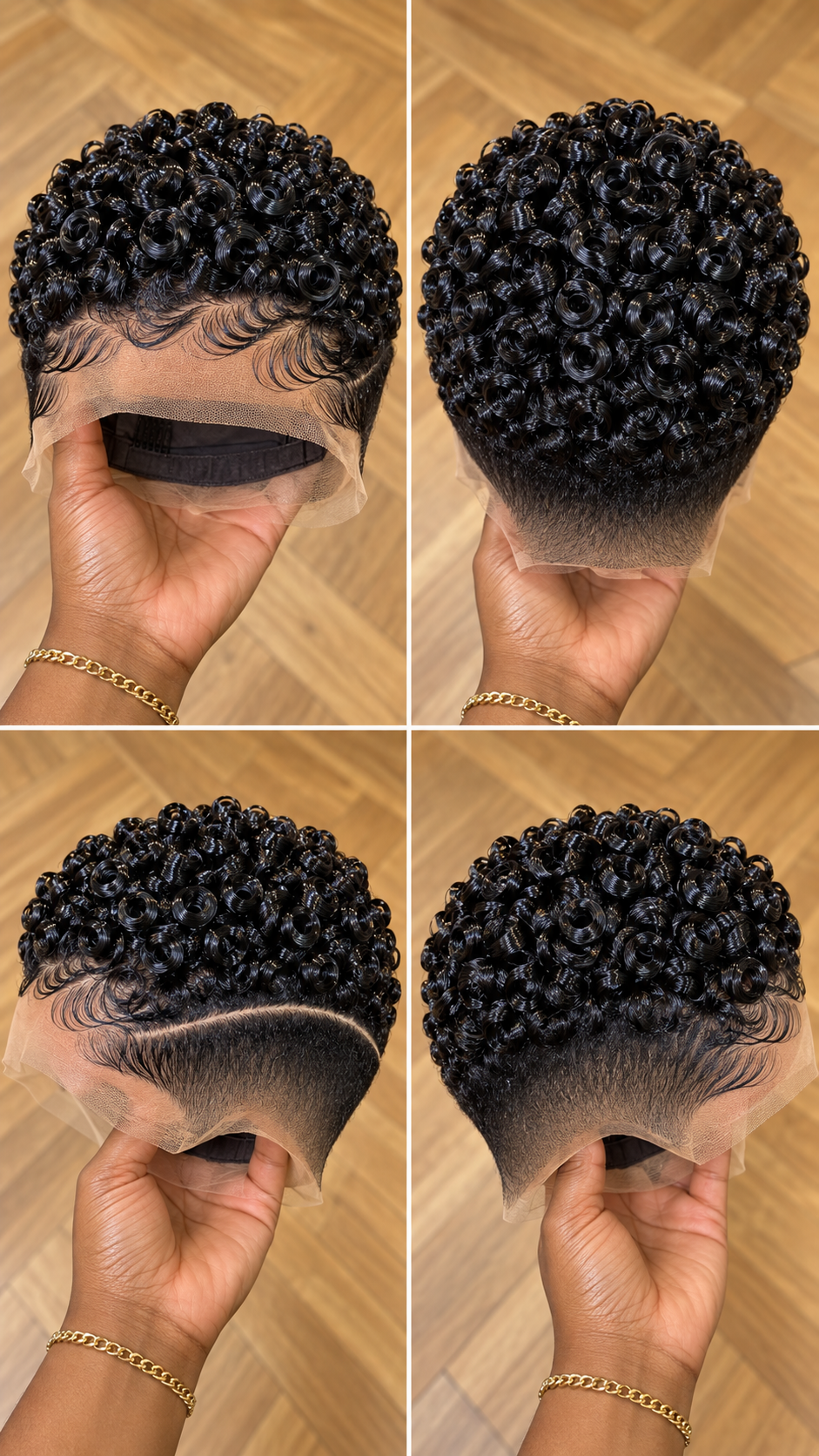
This jet black pixie wig combines densely arranged circular ringlets, sculpted front waves, closely tapered sides and an exposed lace perimeter in a compact shape that looks striking from every direction. The four-angle presentation is especially useful because it reveals details that would be difficult to judge from a single front photograph.
The front shows the decorative wave work around the hairline, the rear reveals the gradual taper beneath the curls, and both side views show how the ringlet-heavy crown transitions into closely cropped sections. The result is a distinctive wig design where the silhouette remains compact while the crown carries substantial visual detail.
A Crown Built From Hundreds of Compact Circular Curls
The most noticeable element is the concentration of small ringlets covering almost the entire upper section. These curls are not loose spirals hanging away from the wig. Instead, they are tightly formed into small circular and coil-like shapes positioned close to one another.
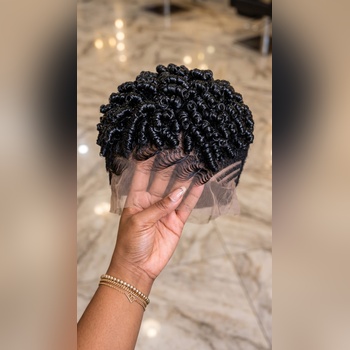
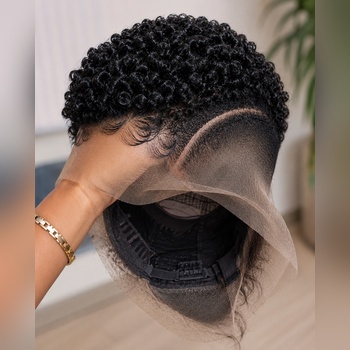
Different curl sizes prevent the crown from looking mechanically uniform. Some rings sit upright and expose their hollow centers, while others overlap neighboring curls or turn slightly sideways. This creates natural variation while preserving the rounded overall silhouette.
The glossy jet black shade strengthens the effect. Light catches the outer edges of each ringlet, producing narrow reflective highlights that make individual strands easier to distinguish.
The Front Hairline Uses a Completely Different Technique
Instead of continuing the circular curls all the way to the lace edge, the front perimeter changes into elongated sculpted waves. Several sections sweep horizontally and curve into narrow points, creating a decorative transition between the dense crown and the forehead area.
This contrast matters. If the circular ringlets extended directly to the front edge, much of the intricate hairline work would disappear. The flatter waves create breathing room beneath the crown and make the front construction visually lighter.
For a custom order, ask specifically for sculpted temple waves beneath a dense ringlet crown rather than requesting only a curly pixie. That extra description helps distinguish this design from conventional tightly curled units.
Side Profiles Reveal the Tapered Construction
The left and right views expose one of the most interesting aspects of this wig: the curls do not continue at full density down the sides. The hair becomes progressively closer toward the lower perimeter, producing the appearance of a professionally tapered pixie cut.
A clearly separated curved section runs underneath the ringlet area. Below it, closely cropped hair creates a darker, compact panel that follows the contour of the wig.
The difference between the voluminous crown and the reduced side density gives the design its recognizable shape. This is why side photographs should always be requested when buying a similar unit online.
The Rear View Shows How the Volume Is Controlled
From behind, the ringlets cover the upper and middle portions in a rounded formation before transitioning into a much closer nape area. The crown retains substantial density, but the bottom edge remains compact rather than becoming bulky.
This rear taper is particularly important for a pixie silhouette. Too much hair at the nape can make a compact wig appear heavier and longer than intended. Here, the visual weight remains concentrated above the taper.
When commissioning a similar piece, send the stylist a rear reference as well as the front image. Specify that the crown should remain densely curled while the lower back gradually reduces into a close tapered finish.
Why Jet Black Works So Well With This Curl Pattern
Jet black gives the ringlets exceptional visual depth. The recessed centers remain extremely dark while raised strands catch narrow highlights. This creates strong separation without requiring multiple hair colors.
The finish is also important: mirror-like glossy hair, silky reflective strands and a healthy wet-look shine emphasize every circular curl. The effect should remain polished without appearing saturated with oil.
Under softer lighting, the wig appears deep black and compact. Under stronger salon or daylight illumination, dozens of individual reflective lines become visible across the ringlets.
Visible Lace Shows the Wig Before Final Installation
The extended lace around the perimeter indicates that the unit is being shown before the excess material has been fully trimmed for wear. This is useful when evaluating a wig because the buyer can see more of the underlying construction instead of viewing only a finished installation.
Before purchasing a similar piece, ask the seller whether the lace arrives uncut, partially trimmed or completely customized. Also confirm whether the pictured hairline styling is included with the wig or performed separately for promotional photographs.
If professional installation is planned, leaving sufficient lace available gives the installer more flexibility when positioning and customizing the perimeter.
What to Ask a Wig Stylist to Recreate
Bring all four reference angles to a stylist rather than relying on the frontal view alone. Point out the compact ringlet crown, elongated front waves, curved side separation, closely tapered lower sections and reduced nape density.
Ask whether the stylist regularly works with pixie wig customization, molded curls and detailed perimeter styling. This design requires considerably more controlled placement than simply curling a wig with a small iron.
A portfolio containing compact pixies, finger-wave work or sculpted curl sets is a better indicator of suitability than a portfolio consisting primarily of long straight or body-wave installations.
Ordering the Correct Curl Density
Density should be discussed carefully. The crown needs enough hair to create a full field of ringlets, but excessive density can make the finished unit disproportionately tall.
Show the seller the side profile and explain that you want substantial curl coverage across the upper section while retaining a close silhouette around the perimeter. The curls should sit together rather than forming a tall rounded afro shape.
If ordering remotely, request an unfinished side photograph before shipment whenever custom work is included. It provides an opportunity to identify excessive volume before the final setting is completed.
How to Check the Wig Before Accepting a Custom Order
Start with the front. Look for recognizable individual ringlets and check that the sculpted waves remain visible beneath the crown. Then inspect both sides to confirm that the lower sections actually taper instead of maintaining uniform density from top to bottom.
Finally, examine the rear. The crown should continue naturally around the back while the nape becomes progressively closer. A rear photograph is also useful for spotting uneven curl distribution that might be hidden in front-facing product images.
For online purchases, request close photographs rather than relying entirely on heavily edited promotional images. Fine details such as lace condition, strand separation and taper transitions are easier to evaluate at close range.
Maintaining the Glossy Ringlets Without Flattening Them
The circular curls are the feature most likely to lose their original arrangement through unnecessary handling. Avoid brushing through the crown or repeatedly running fingers across the rings.
When storing the unit, use a properly sized wig stand and leave sufficient space around it. Compressing the crown against other wigs, packaging or a shelf can distort individual curls.
Use lightweight products sparingly. Heavy oils may temporarily increase shine but can cause neighboring strands to merge, reducing the crisp separation that gives these ringlets their distinctive appearance.
When a Professional Curl Reset Makes Sense
After repeated wear, some ringlets may loosen even when the wig itself remains in good condition. In that situation, professional resetting can be more practical than replacing the entire unit.
Take photographs of the wig when the curl arrangement is still fresh. Those images give the stylist a visual map for restoring the original size, direction and distribution of the rings.
The same appointment can also be used to refresh the sculpted temple sections and inspect the tapered perimeter for areas requiring minor reshaping.
Where to Buy or Have a Similar Wig Made
Look for sellers specializing in custom human-hair pixie wigs, sculpted curly wigs and salon-finished units. For a highly specific design like this, custom ordering is usually more reliable than searching only for a generic ready-made curly wig.
When contacting a seller, send the four-angle reference and ask whether they can reproduce the crown density, front wave placement and side taper. Confirm the hair material, cap size, lace construction, customization level and whether styling is included in the quoted price.
For local service, search for a wig stylist or salon that offers pixie customization and molded curl setting. Book a consultation first if possible, particularly when supplying your own wig foundation.
Estimated Price Levels for This Type of Pixie Wig
| Category | Typical Estimate | Expected Service Level |
|---|---|---|
| Premium Custom | $450–$900+ | Premium human hair, custom cap options, extensive ringlet setting and detailed perimeter work |
| Standard Custom | $250–$500 | Human hair with custom tapering, crown curls and sculpted front styling |
| Basic Human Hair | $140–$300 | Human-hair foundation with simpler customization or additional salon work required |
| Premium Synthetic | $80–$180 | Higher-grade fiber with pre-shaped curls and stronger shape retention |
| Basic Synthetic | $40–$95 | Affordable fiber construction with less individualized curl placement |
Actual prices vary considerably by country, hair quality, cap construction, stylist experience and the amount of manual curl work required. A detailed custom ringlet set generally involves more labor than a basic pre-curled pixie.
A Four-Angle Reference Makes Custom Ordering Much Easier
This particular presentation provides something buyers often lack: a clear view of the same hairstyle from the front, back, left side and right side. Together, those angles explain the construction far better than a single beauty photograph.
The front establishes the sculpted hairline. The sides demonstrate how the dense curls transition into the tapered panels. The rear confirms the rounded crown and close nape. Anyone ordering a similar wig should keep all four images together when communicating with a seller or stylist.
That visual information reduces ambiguity and makes it easier to specify exactly which elements should remain consistent in the finished unit.
Search Terms
Jet Black Circular Ringlet Crown · Sculpted Temple Wave Pixie · Glossy Black Coil Ringlets · Curved Side Taper Pixie · Close Tapered Nape Ringlets · Black Sculpted Hairline Waves · Dense Ringlet Crown Wig · Jet Black Reflective Coil Curls