
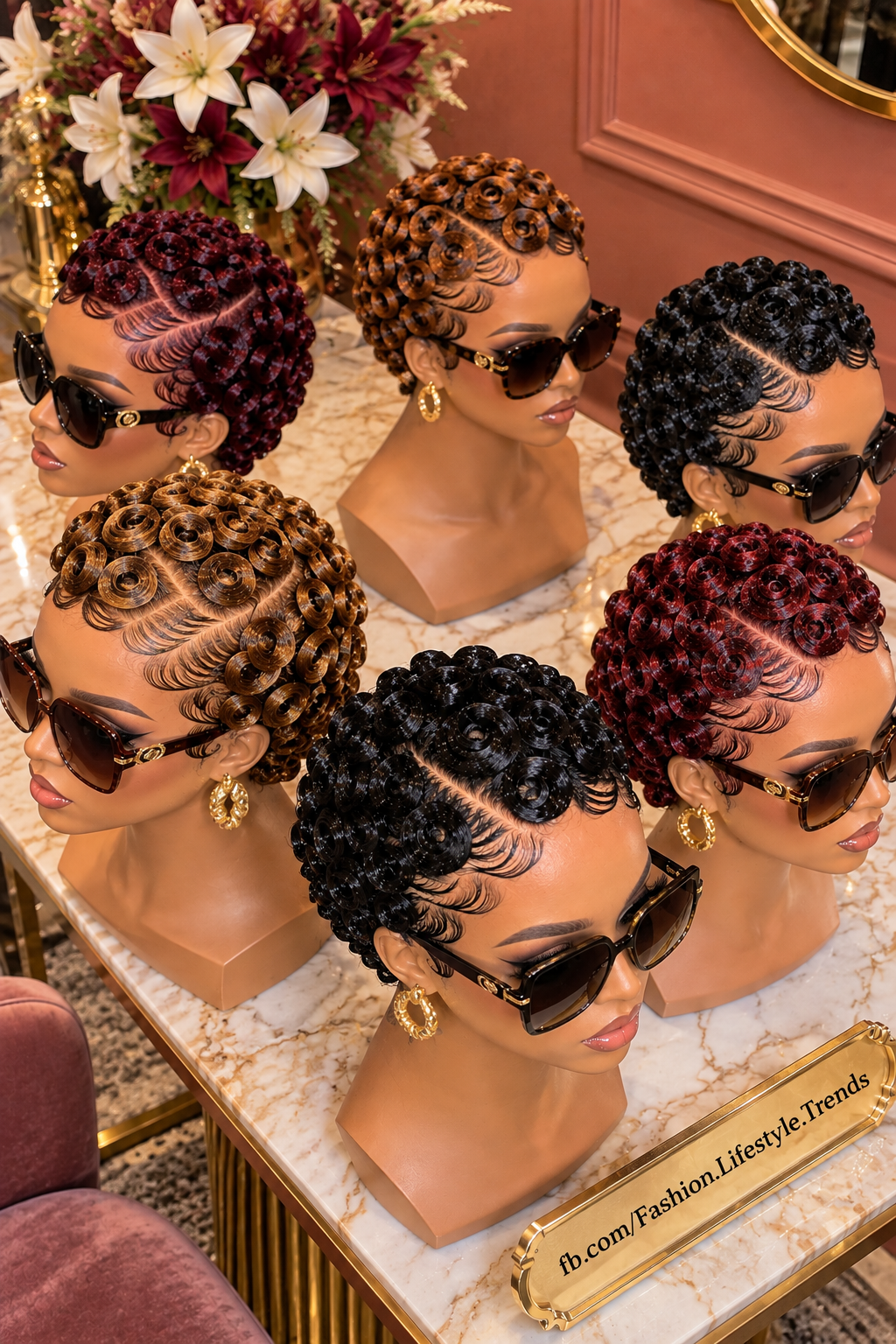
This coordinated pixie wig collection brings together high-shine circular curls, sweeping temple waves and carefully exposed diagonal parting. The display includes rich jet black, deep burgundy, honey brown and warm caramel-brown variations, allowing the same sculpted silhouette to take on noticeably different personalities through color.
The most recognizable detail is the relationship between the compact spiral curls and the flatter wave work around the forehead. Rather than covering the entire head with identical curls, the design uses controlled changes in direction. Circular formations dominate the crown, while the front and temple sections are combed into elongated feather-like curves.
This makes the style especially suitable for customers who want a pixie unit with substantial visual detail without adding excessive height or loose volume.
A Dense Spiral Crown Gives the Wig Its Signature Shape
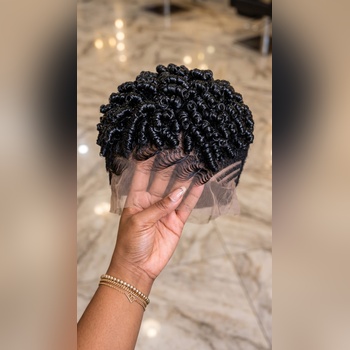
The upper section is constructed from dozens of closely arranged circular curls. Each ring has a visible center and a highly polished surface, creating a layered appearance when several curls overlap.
The rings remain relatively close to the head. This is important because the hairstyle relies on pattern rather than height. A looser roller set would produce larger curls and a softer silhouette, while these compact formations create the distinctive sculpted crown seen in the collection.
When commissioning a similar wig, ask specifically for small polished spiral rings arranged across a compact pixie crown. Showing an overhead photograph will also help the stylist understand the desired density.
Diagonal Parting Separates the Crown From the Front Waves
A narrow diagonal part runs from the front toward the crown. Its purpose goes beyond simply exposing the scalp area: it creates a visual boundary between the ring curls and the directional waves beside the forehead.
The placement varies subtly from unit to unit, which keeps the collection from appearing mechanically identical. On some wigs, the part travels more centrally through the crown. On others, it sits farther toward the side and leaves a larger field of curls opposite the wave section.
This is a useful detail to discuss before ordering because moving the part can significantly change how the finished wig frames the face.
Long Feathered Waves Add Movement Around the Temple
The front sections are styled into elongated curved strokes that sweep from the part toward the temple. Numerous fine strands remain visible inside each wave, giving the section a feathered appearance rather than forming one thick block of hair.
Several smaller curves continue toward the sideburn area, connecting the dramatic front sweep with the compact curls positioned farther back.
For this type of styling, the front hair must have enough workable length to create a broad curve. Cutting the base wig too aggressively before molding the waves could make it difficult to reproduce the same effect.
Jet Black Highlights the Sculptural Curl Pattern
The black units provide the deepest contrast in the collection. Their curl centers remain dark while narrow reflections travel around the outer rings, making each spiral visible even without additional color variation.
Black also emphasizes the separation lines between the crown and temple sections. Under direct salon lighting, the glossy strands create bright highlights against the deeper base, producing substantial visual depth.
For customers wanting the strongest dark finish, request a deep reflective jet black rather than a lighter off-black shade.
Burgundy Creates Rich Cherry-Wine Reflections
The burgundy variations combine a dark red foundation with brighter cherry reflections across the raised portions of the curls. Because the rings curve in multiple directions, the same color can appear almost black inside one curl and vivid wine-red along another edge.
This natural light variation gives the crown extra dimension without requiring contrasting highlights.
When discussing this shade with a stylist or seller, terms such as deep burgundy, cherry wine and dark red can help, but reference photographs remain important because burgundy formulas vary significantly between brands.
Honey Brown Makes Individual Rings Easy to See
The lighter brown unit reveals substantially more detail inside each curl. Warm honey reflections follow the circular strands while deeper brown areas remain visible between the rings.
This creates a multidimensional result without moving fully into blonde territory. The overall impression remains brown, but the brighter surface reflections give the style a warmer golden character.
A similar color request could be described as honey brown with caramel highlights and a deeper brown foundation.
Warm Caramel Brown Offers a Middle Ground
For customers who find jet black too dark and golden shades too bright, caramel brown provides a useful middle option. The shade retains enough depth to emphasize the parting while allowing individual strands to remain highly visible.
Warm lighting may push this color toward copper or amber, so buyers ordering online should request photographs taken in daylight as well as indoor lighting.
This is particularly important for wigs sold internationally, where supplier color numbers do not always correspond precisely between manufacturers.
The Hairline Requires Precision Rather Than Excessive Density
The front sections are intentionally flatter than the crown. Heavy density at the hairline would make the feathered curves difficult to separate and could hide the diagonal part.
A carefully prepared front allows the stylist to create narrow groups of strands and direct each group into a controlled curve. The transition into the side curls should remain gradual rather than abrupt.
If ordering a custom unit, ask the maker how the front density will be prepared before styling begins.
Why High Shine Works Particularly Well With Ring Curls
Circular curls interact strongly with light because every ring contains multiple angles. A narrow highlight can travel around the circumference and visually outline the curl.
The ideal finish is mirror-like glossy hair, silky reflective shine, healthy wet-look luminosity, individually visible strands and highly detailed curl separation. The hair should look polished without appearing saturated with heavy oil.
Too much finishing product can cause neighboring strands to stick together, reducing the fine detail visible in the temple waves.
Finding a Stylist Who Can Reproduce the Pattern
Look for a wig stylist with a portfolio containing sculpted pixie units, pin curls, molded waves and detailed hairline work. A stylist who mainly installs long straight or body-wave units may not regularly perform this type of precision setting.
Before booking, send clear photographs showing the crown and front section. Ask whether the stylist can reproduce the small circular rings, diagonal part and elongated temple waves rather than simply asking for a curly pixie.
A specialist wig salon or experienced pixie stylist should also be able to advise whether your existing unit has the correct density and length for the design.
Choosing a Base Unit for Custom Styling
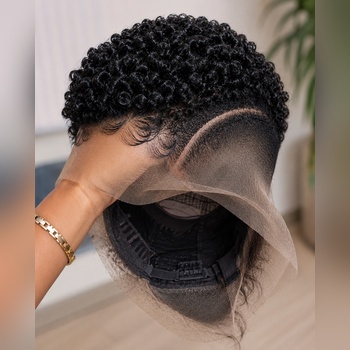
The ideal base needs sufficient crown density to create numerous individual rings while still allowing the finished profile to remain compact. The front requires workable length for the elongated wave sections.
Human hair generally provides greater flexibility for heat styling, reshaping and custom coloring. Premium heat-compatible synthetic hair may offer strong curl retention at a lower cost, but buyers should confirm its maximum styling temperature before attempting any restyling.
If purchasing the wig separately from the styling service, send the product specifications to your stylist before ordering. This can prevent buying a unit that is too sparse, excessively dense or unsuitable for the required heat work.
What to Send When Requesting a Custom Order
Start with several reference photographs rather than relying on a written description alone. Include an overhead image showing the spiral distribution, a side view showing the wave direction and a clear photograph representing the exact color you want.
Then specify whether you prefer jet black, burgundy, honey brown or caramel brown. Ask the seller to confirm the final shade before beginning any permanent coloring.
Also confirm cap measurements, expected completion time, deposit requirements, customization fees and whether styling is included in the quoted price.
Price Guide for Similar Sculpted Pixie Units
| Wig Category | Typical Price Range | Common Inclusions |
|---|---|---|
| Premium Custom | $450–$950+ | Higher-grade hair, custom color, extensive hand styling, fitting and precision finishing |
| Standard Custom | $250–$500 | Custom shaping, ring curl setting, selected color and detailed front styling |
| Basic Human Hair | $130–$320 | Human-hair base suitable for professional cutting and restyling |
| Premium Synthetic | $80–$210 | Higher-quality fiber, stronger shape retention and more detailed preset styling |
| Basic Synthetic | $35–$100 | Affordable construction with more limited customization options |
These ranges are general estimates rather than fixed retail prices. Hair origin, cap construction, stylist experience, coloring complexity and the number of individually formed curls can all affect the final quotation.
Buying a Similar Wig Online
Search specialist wig stores, independent wig makers and established salon pages using descriptions based on visible characteristics rather than relying on a single generic product name.
Useful details to mention include circular pixie curls, diagonal side parting, feathered temple waves and the desired shade. Ask whether photographs show the exact unit being sold or a sample design that will be recreated after ordering.
Before paying, request information about cap sizing, fiber type, return conditions, production time and customization. For custom-colored units, ask whether the final sale becomes non-returnable once coloring or cutting begins.
Checking the Finished Wig Before Collection or Shipping
A completed custom order should ideally be photographed from several positions. Examine the crown to make sure the rings remain individually recognizable and check that the part follows the requested direction.
Next, inspect the temple. The sweeping sections should show fine parallel strands instead of thick clumps. Finally, compare the color under more than one lighting condition whenever possible.
For shipped orders, requesting this visual confirmation before dispatch can prevent misunderstandings about curl size, placement or shade.
Protecting the Circular Curls During Storage
These curls should not be treated like loose everyday waves. Avoid brushing through the crown or placing the wig upside down, as either action can disturb the circular pattern.
Store the unit upright on a properly sized wig stand. Keep other objects away from the crown so the rings are not compressed. If individual curls need adjustment, reshape them carefully rather than combing through surrounding sections.
A satin covering can provide additional protection from dust while reducing unnecessary friction during longer storage periods.
Building a Color Collection Around One Recognizable Silhouette
From a merchandising perspective, this design works well as a coordinated collection because customers can compare colors without having to evaluate completely different hairstyles.
The same crown construction could be extended into shades such as espresso-to-toffee, cinnamon-to-amber copper, jet black-to-caramel honey, natural black-to-mocha toffee or dark chocolate-to-copper ginger.
Keeping the ring diameter, part placement and sweeping front structure consistent helps preserve the recognizable identity of the style while giving customers more color choices.
Search Terms
Jet Black Spiral Pixie Curls · Burgundy Circular Crown Curls · Honey Brown Ring Curl Pixie · Caramel Brown Spiral Rings · Diagonal Pixie Side Part · Sweeping Temple Hair Waves · Glossy Sculpted Ring Curls · Feathered Pixie Hairline Waves