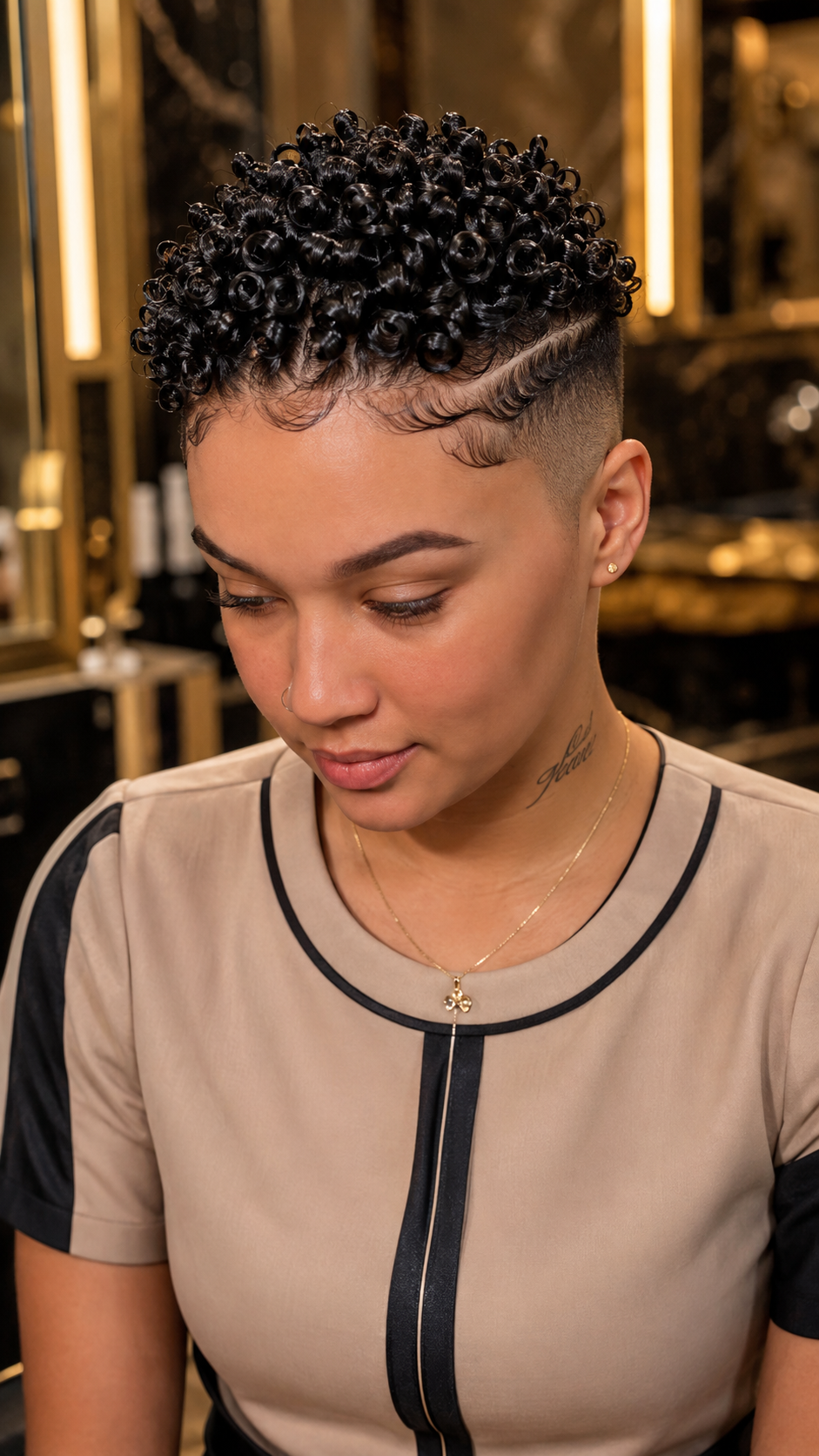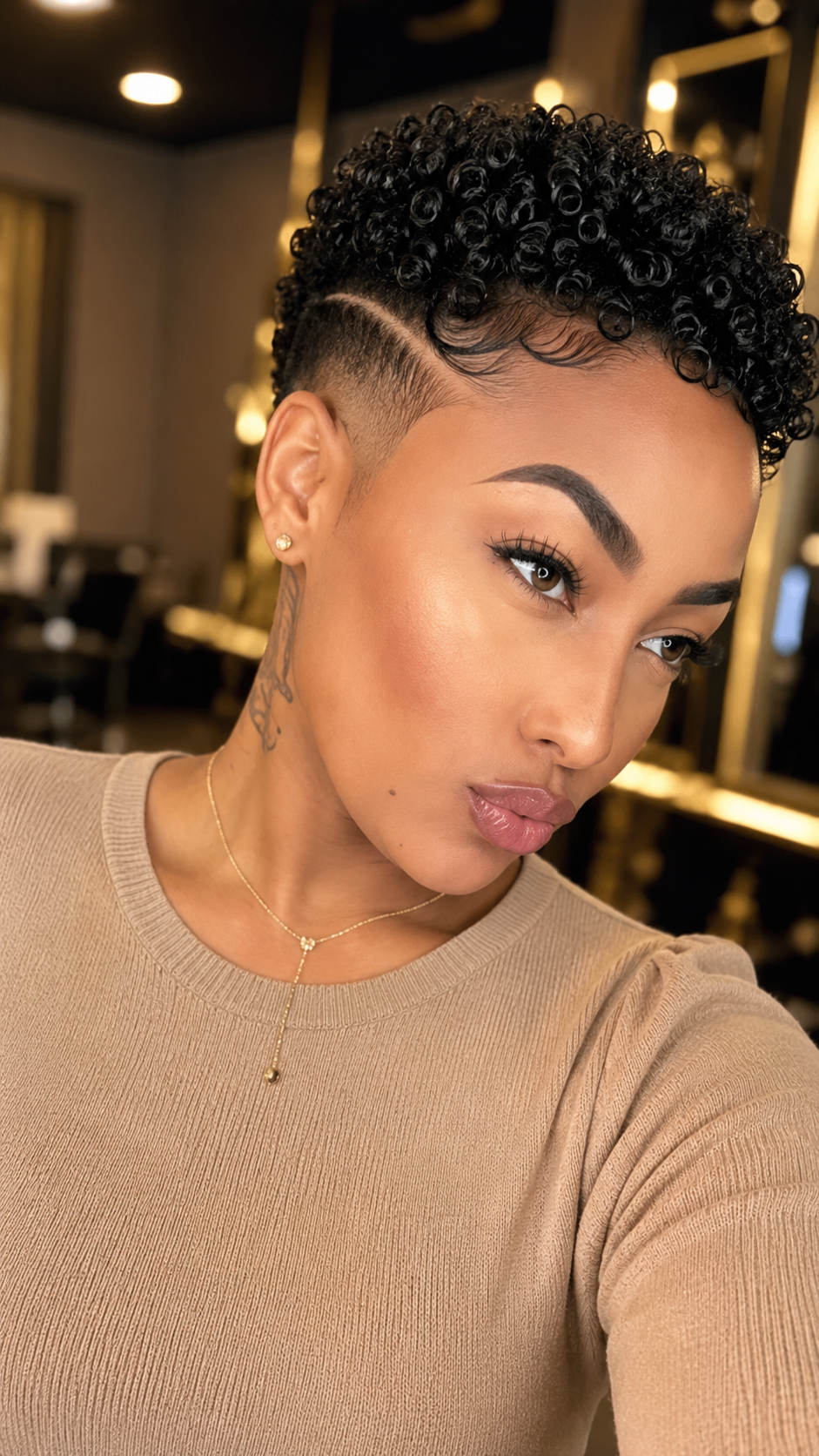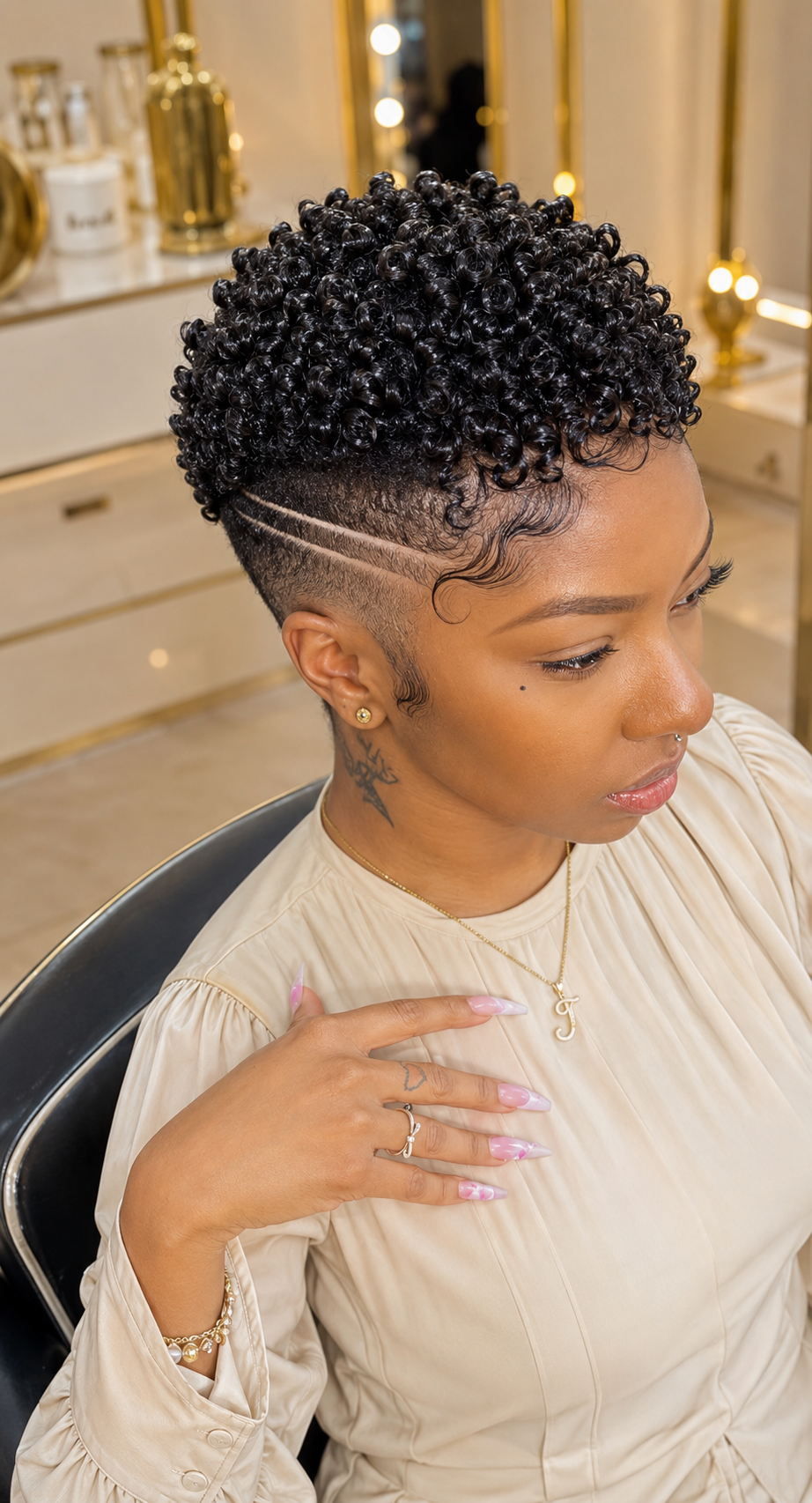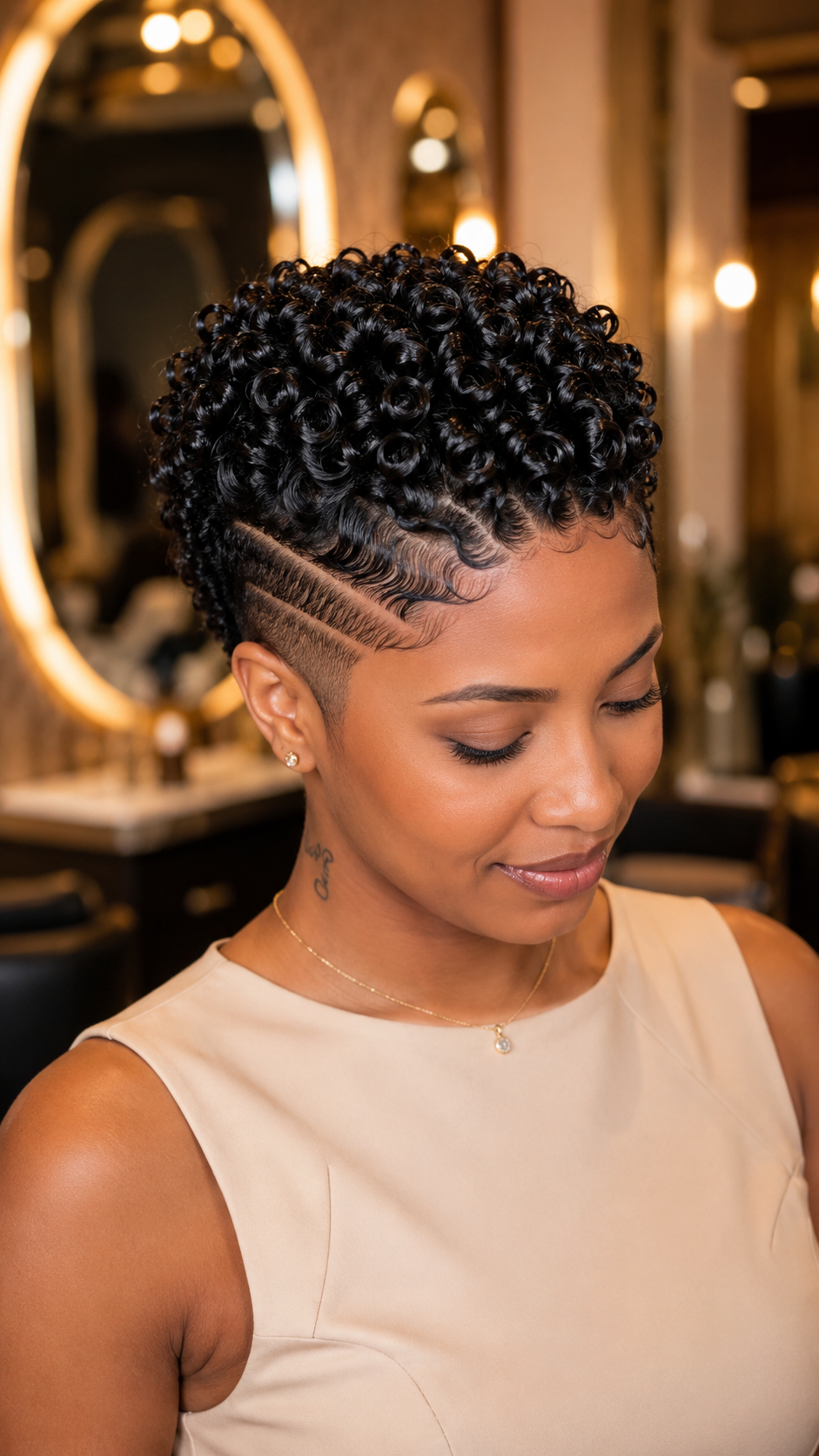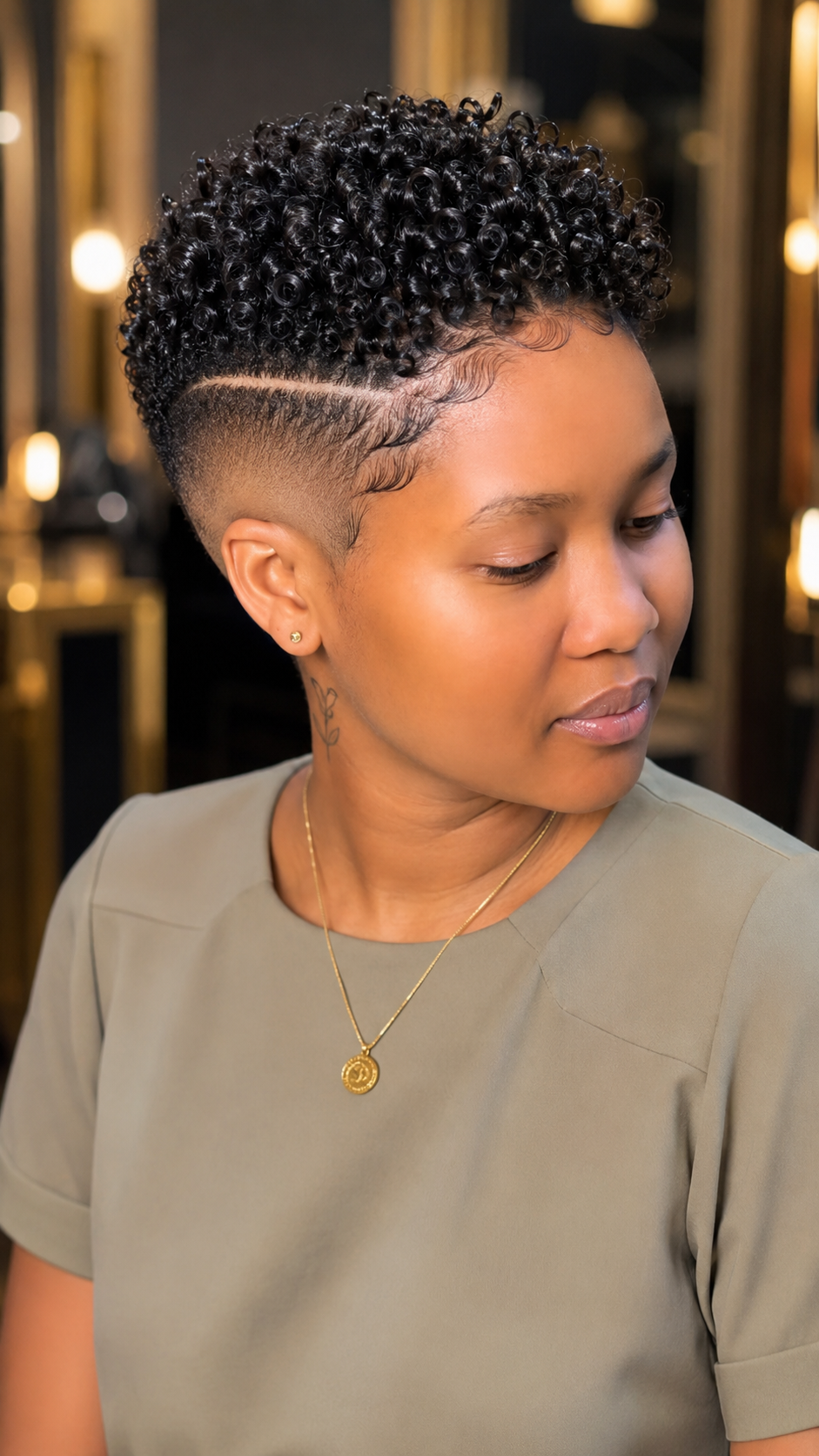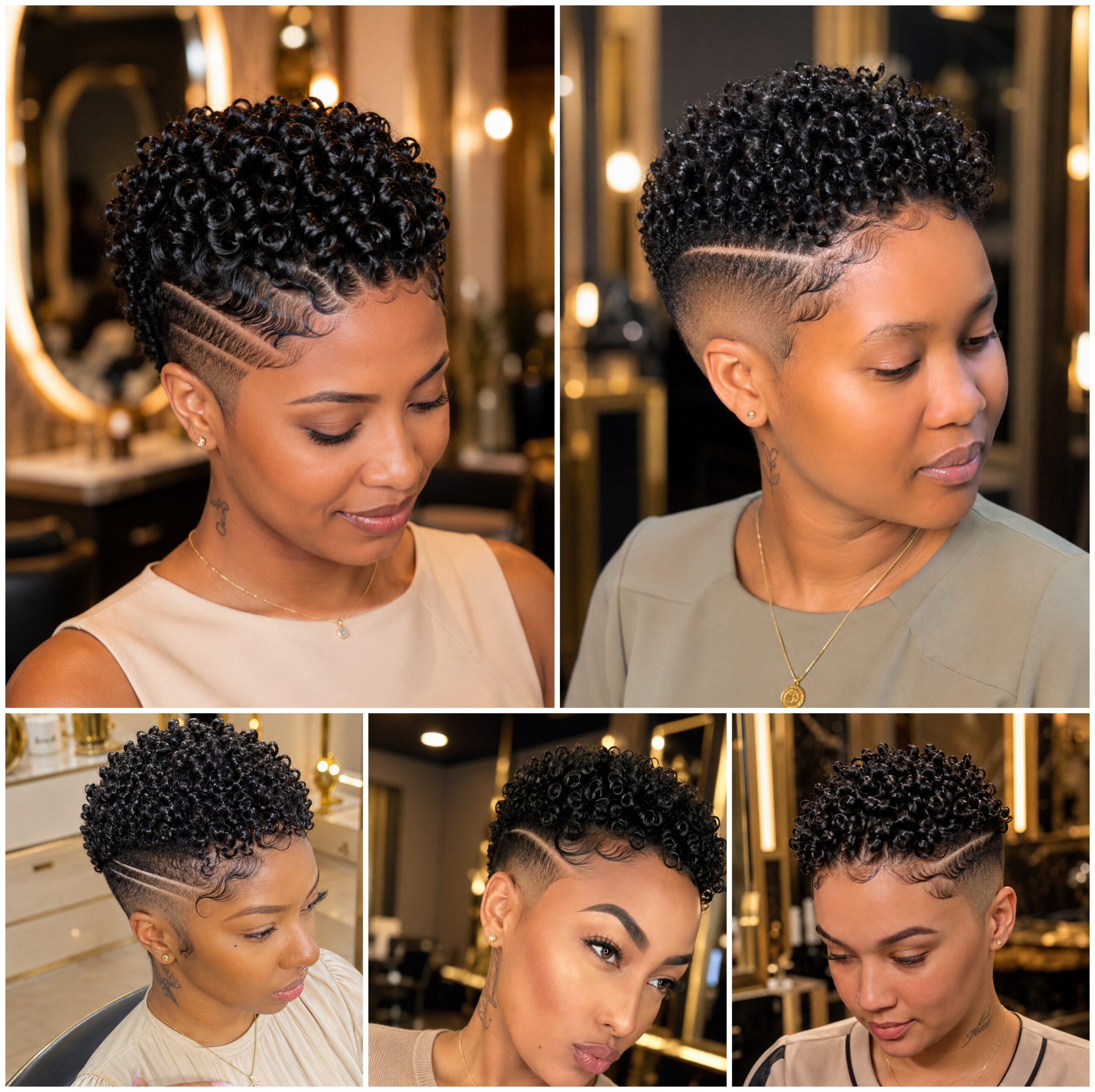
A lively crown of tightly formed finger coils works beautifully with a subtle temple fade, creating a compact natural hairstyle that keeps plenty of curl volume on top. The gradual reduction around the temples adds structure to the profile without removing too much density from the sides or disturbing the movement of the curls.
Proper hydration helps the spirals remain flexible and glossy. Lightweight leave-in conditioner, curl foam, or a small amount of styling cream can be worked through damp hair before each section is shaped. Products with excessive weight should be avoided when maintaining bounce and separation is the priority.
Forming a Bouncy Coiled Crown
Finger styling works best when the hair is divided into manageable sections. Each small section can be wrapped around a finger from root to end, creating consistent spirals throughout the crown.
Smaller sections generally produce tighter curls with greater separation, while slightly larger sections provide additional fullness. The stylist can combine both sizes strategically to create a rounded silhouette with natural-looking movement.
Shrinkage should always be considered before the final trim. Coily hair can lose considerable visible length while drying, so preserving extra height initially gives the stylist more control over the finished shape.
Keeping the Temple Area Subtle
A low temple fade focuses the shortest hair around the front sides rather than removing significant density throughout the entire head. This makes it particularly useful for women who want visible barber detailing while retaining a fuller natural profile.
The transition should gradually connect with the longer hair above. A softer blend creates an understated result, while taking the lowest section closer to the skin produces stronger contrast.
The hair around the ears and neckline can also be lightly tapered to maintain balance without turning the haircut into a much higher fade.
Creating a Balanced Hairline
Careful hairline work can complement the compact crown and shorter temple areas. The front should follow the natural growth pattern rather than being pushed excessively backward simply to create a sharper outline.
Small edge sections can be shaped with styling foam or edge control when desired. Subtle curves usually blend more naturally with a coily crown than oversized patterns.
Anyone with a delicate hairline should tell the barber before the service begins so unnecessary tension or aggressive trimming can be avoided.
Finding a Stylist or Barber
Look for an Afro hair salon, natural hair studio, curl specialist, or barber experienced with women’s coily cuts. Useful searches include finger coil stylist near me, women’s temple fade barber, natural hair salon for coily hair, and Afro pixie barber near me.
Portfolio photographs are particularly valuable. Look for clients with a similar curl density and check whether the transition around the temples appears gradual rather than abruptly disconnected from the crown.
Appointments can often be arranged through Instagram, WhatsApp, salon websites, or online booking platforms. Send a clear reference photograph beforehand and mention the preferred crown height and amount of hair you want removed around the temples.
Ask whether washing, conditioning, finger styling, cutting, fading, and hairline work are included in the service. This helps avoid booking only a basic haircut when curl preparation and finishing are required separately.
Buying a Similar Wig
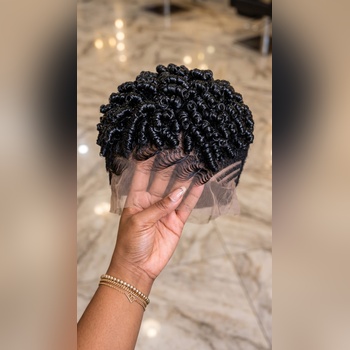
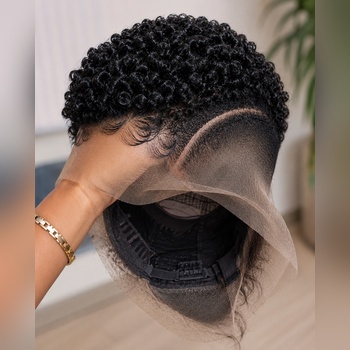
Women who prefer a removable alternative can explore custom wig makers, beauty supply stores, and online retailers specializing in natural-looking Afro units. Helpful search phrases include finger coil pixie wig, coily wig for Black women, tapered Afro lace wig, and short natural curl wig.
Human-hair units provide greater flexibility for reshaping individual spirals, changing crown volume, and refreshing the curls with styling products. Quality synthetic units can be practical when maintaining a consistent pattern with minimal daily manipulation is preferred.
Before ordering, compare cap measurements, crown density, coil diameter, side length, lace shade, and hairline construction. A custom maker should receive front, side, and back reference photographs when a particular silhouette is required.
Pay particular attention to the side profile in product photographs. Some units may have an attractive curly crown but too much density around the temples to reproduce the compact appearance of a barber-shaped cut.
Maintaining Curl Bounce
Between wash days, a fine water mist can help reactivate existing styling products. Follow with a small amount of leave-in conditioner or foam when additional moisture or hold is needed.
Loose spirals can be reshaped individually around a finger instead of repeatedly manipulating the entire crown. This helps preserve separation and reduces unnecessary frizz.
A satin bonnet, scarf, or pillowcase can reduce friction and moisture loss overnight. The curls can then be gently lifted with the fingers in the morning rather than heavily combed.
The temple area usually requires attention sooner than the crown because even a small amount of new growth changes the appearance of a close blend. Periodic barber touch-ups can refresh these sections while allowing the curls above to continue growing.
Springy spirals combined with softly shortened temples provide an attractive balance of natural fullness and precise shaping. With consistent moisture care and occasional barber maintenance, the crown can remain lively while the side profile stays neat and proportional.