
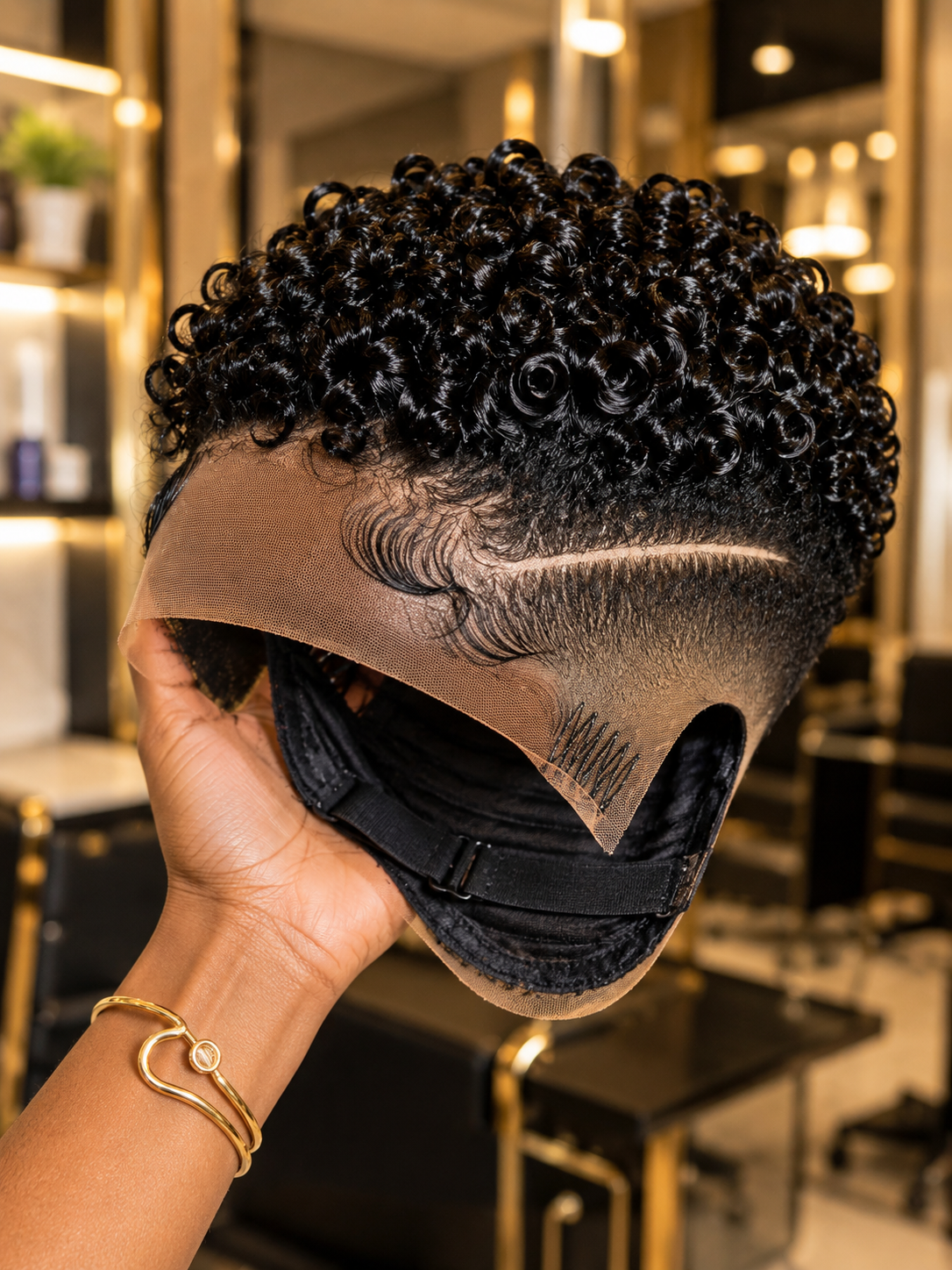
A blunt hairline and a hairline framed with sculpted, wave-like edges can sit on the very same unit and look like two completely different wigs. Look at the front of this one: the baby hairs are laid into flowing, deliberate swoops, and that styling is not an accident or a finishing touch, it is a design choice doing real work. Well-designed laid edges turn a plain hairline into a signature, personalise the front to your face, and are often the single thing that makes a unit read as grown rather than installed. So the edges are not just there; they are styled, and how they are styled changes everything about how the front reads.
Laid edges are genuinely a form of design. The shape of the swoops, how many there are, whether they are symmetrical or flowing, and how they move around the hairline are all choices, and they can be as personal as a signature. A soft, natural set of edges melts the hairline into the face; a bold, sculpted set makes a statement of the front itself. Either way, the edges frame the whole unit, so they carry a lot of the look, which is why the same curls can read soft and natural or sharp and done depending entirely on how the front is laid.
But this power comes with conditions worth knowing before you buy. Designed edges need enough good baby hairs to lay, so the unit has to have them. They are redone every wear, not permanent, so they are a styling commitment, not a one-time feature. They take skill to lay well, since a clumsy attempt looks worse than none. And overdone, they tip from natural into artificial, so restraint matters. Judge whether a unit has the baby hairs to lay, and be ready to design and redo the edges, because on a short unit like this, the laid edges are as much of the look as the curls.
Where To Buy A Pixie Wig You Can Lay Edges On
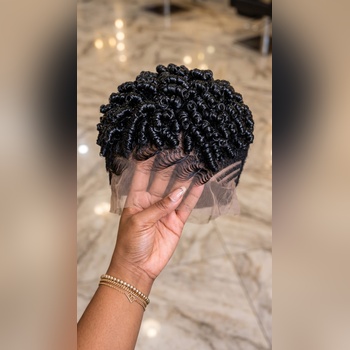
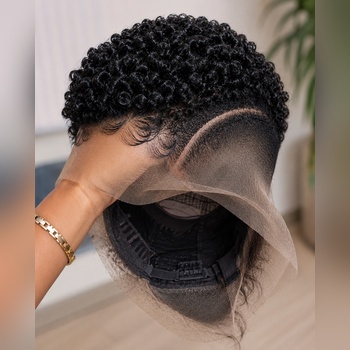
Custom makers can build a hairline with the fine baby hairs that designed edges need, so ask whether the unit has enough good baby hairs to lay and shape. A maker who understands laid edges will include layable hairs; one who does not may give you a blunt front with nothing to design.
Instagram and TikTok sellers show units with edges already laid into swoops, so ask to see the hairline unstyled to judge whether the baby hairs are real and yours to lay. A pixie wig with designed edges in a photo means little if the unit itself lacks the baby hairs to recreate them.
Etsy works with makers who show the hairline and its baby hairs, with worn photos of laid edges. The risk is a beautifully laid photo over a unit with poor wisps. Read reviews for whether buyers could lay the edges themselves.
Marketplaces like Amazon, AliExpress, and Temu vary widely, and cheaper units often have coarse or absent baby hairs that will not lay into a design. If designed edges matter, scrutinise the hairline closely. A blunt front cannot be styled into swoops.
Local beauty supply shops and salons let you see and test the baby hairs and even have the edges laid to show you, which for a design feature is genuinely useful. You pay a premium in-store, but the edges are exactly the thing worth seeing laid in person.
Vendors and wholesalers direct ship standard hairlines of varying quality, so check for fine, layable baby hairs. For a front you can design, good wisps are essential.
Regionally, laid-edge artistry comes strongly out of Lagos, Accra, Atlanta, London, and across South Africa, where designing edges is a real skill and easy to see done on video.
Vet the seller the usual way: check the account age, look for real buyer photos, time a plain question for a genuine reply, and ask whether the hairline has baby hairs you can lay and design. A seller who shows the wisps unstyled is being honest about what you can do with the front.
Red flags: a blunt hairline with no baby hairs, coarse wisps that will not lay, and laid-edge photos with no shot of the unstyled front.
When you order, send your measurements and ask for fine, natural baby hairs at the hairline that you can lay and design. That gets you a front you can style into a signature rather than a blunt edge.
Contact / order inquiries: WhatsApp [WhatsApp: +XX XXX XXX XX XX].
How Much It Costs
Designed edges cost almost nothing in products but a lot in skill and time, and they depend on a unit that has the baby hairs to lay, so the spend is on the hairline quality, not the styling.
Tiered pricing. Human hair, full build with a natural hairline and fine baby hairs, glueless with a fine lace, in black: roughly $180 to $400, with the hairline being much of what makes designed edges possible. Human hair, mid build: about $140 to $300. Human hair, basic cap: around $70 to $170, though a basic hairline may lack layable wisps. Good synthetic: $60 to $140, with baby hair quality varying. Basic synthetic: $25 to $60, often with coarse or no wisps.
What that includes and excludes. The price covers the unit and its hairline. It excludes shipping, any customs, and the edge control and brush to lay the design, which sit on top and are cheap.
Shipping and duty. These sit outside the price and change with where you live, so plan a realistic band and confirm your own country’s import rate.
Ongoing costs. Laying edges needs only edge control and a small brush, a tiny spend, but it is redone every wear, so the real cost is your time and skill. The baby hairs are also delicate and wear away, so gentle handling is the main care.
First-year total. A human unit plus shipping plus any customs plus edge control tends to land between a low three-figure sum and roughly double the sticker, with the edge design costing effort rather than money.
Cost per wear. A unit whose edges you can design looks real and personal every wear, so good baby hairs add value well beyond their cost. A blunt hairline you cannot style undermines an otherwise good unit.
What a very low price signals. Cheap units often skimp on baby hairs, leaving nothing to design, so a bargain front may block laid edges entirely. Judge the wisps, since that is where a low price shows at the hairline.
Deposit structure. For custom work, thirty to fifty percent down with the balance before shipping is standard, and use a method you can dispute.
Shipping, Delivery, And What To Expect After Ordering
A unit arrives with its baby hairs unstyled, so judge them by laying a design, not by the flat hairline in the box. Ask that it ship protected, choose a tracked service, and confirm your country’s import charge before it lands. When it arrives, lay the edges with a little product to see how the baby hairs move and what designs they hold, and remember they are delicate, so a gentle hand keeps them longer. What you unbox is a hairline you design, and the baby hairs are the medium for it.
Edges Frame The Whole Unit
The reason laid edges matter so much is that they frame the entire front, so they set the tone for the whole look. Soft, natural swoops make a unit read gentle and grown; bold, sculpted ones make the hairline a feature in itself. Because the edges sit right at the face, they carry more visual weight than their size suggests, which is why designing them well transforms a unit and designing them badly spoils one.
Design Is Personal, And Redone Each Wear
The swoops are a choice you make, and remake, every time you wear the unit, so they are personal and never permanent. This means you can change the design to suit the day, soft one time, bold the next, but also that you commit to laying them each wear. For someone who enjoys styling, that is a feature; for someone who wants zero effort, it is worth knowing the edges will not lay themselves.
Restraint Keeps Them Looking Real
The line between natural and artificial on laid edges is restraint. Soft, believable swoops read as real baby hairs; heavy, over-sculpted, too-perfect edges read as done and can undercut the natural look. So the skill is not just laying them, but knowing when to stop, since the most convincing edges look effortless. Design them to frame, not to dominate, and they lift the whole unit.
Before You Pay
- Does the unit have fine baby hairs I can lay and design?
- Have I seen the hairline unstyled, not just with edges already laid?
- Am I ready to lay and redo the edges every wear?
- Can I keep the design restrained enough to look natural?
- Will the wisps lie down, or are they coarse and stubborn?
Trimming The Lace
The lace comes off the front the usual way, and the baby hairs sit right at that edge, so cut carefully to preserve them for laying rather than trimming them off. Trim in small offset steps and leave a shallow margin rather than cutting flush, in daylight, keeping the blade clear of the wisps. If this is your first unit, let a stylist make the first pass and lay a design to show you, since preserving and styling baby hairs while cutting takes a careful hand.
Search Terms
laid edges pixie wig · baby hair swoop short wig · designed hairline pixie unit · black curl pixie with edges · sculpted edges short curl wig · natural baby hair pixie lace · styled hairline pixie wig · short coil pixie wig edges
Final Thoughts
The curls on this unit draw the eye, but the laid edges at the front are doing just as much work, framing the whole look and deciding whether it reads soft and natural or bold and done. Designed edges are a real choice, the shape, number, and flow of the swoops are as personal as a signature, and they are often what makes a unit look grown rather than installed. They turn a plain hairline into a feature.
Buy a unit with the fine baby hairs that designed edges need, judge them unstyled rather than in a laid photo, and be ready to design and redo them each wear with a restrained, natural hand. A blunt hairline with no wisps blocks all of this, while good baby hairs, laid well, transform the front. Laid edges are a design choice, and on a short unit like this they can make or break how it reads, so treat the hairline as the canvas it is.