
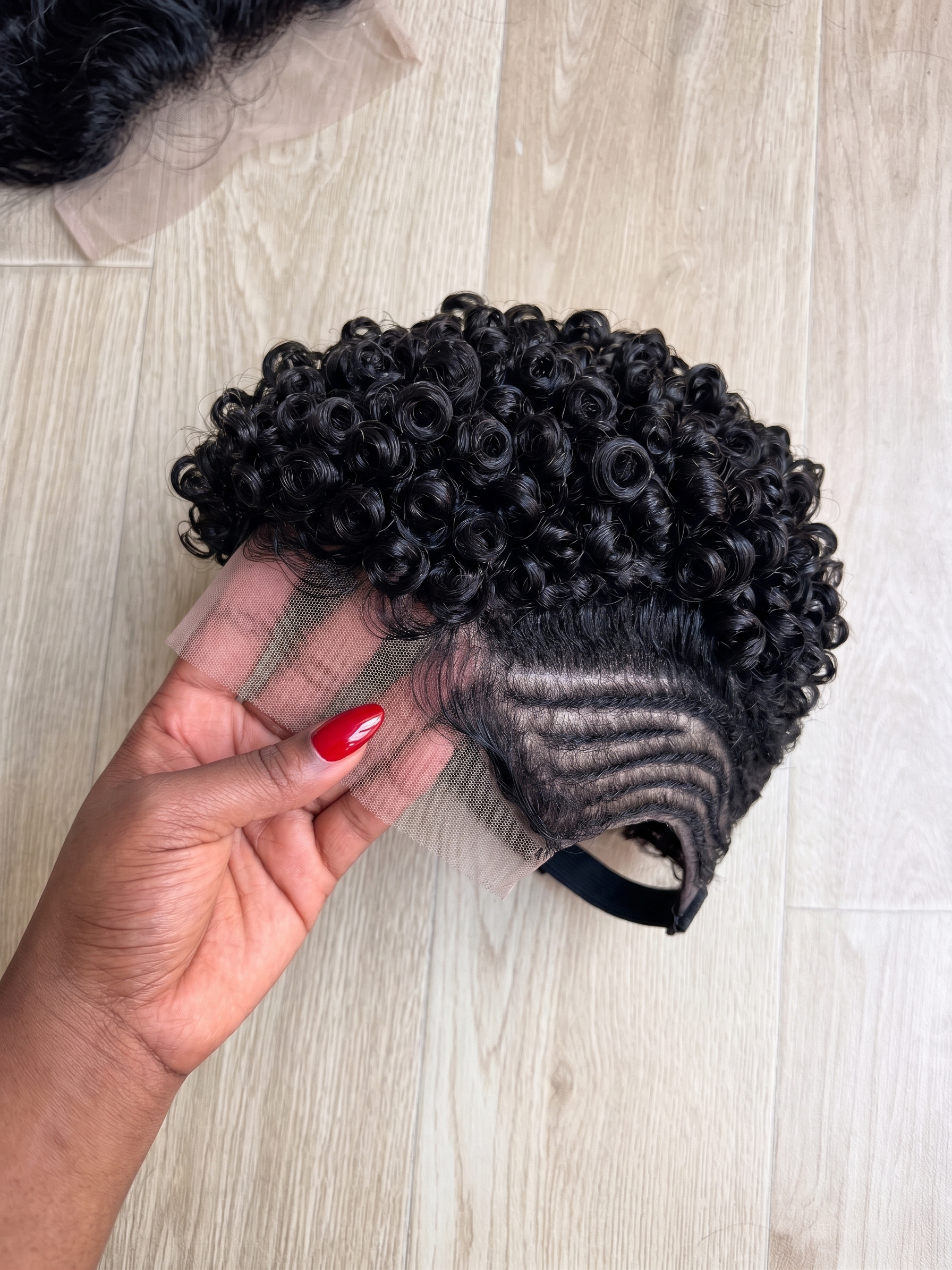
Sellers quote density as a percentage and let you assume higher is better. On a short curl, that assumption works against you. Density is simply how much hair is packed into the cap, written as numbers like 130, 150, or 180 percent, and buyers reach for the biggest one thinking full equals good. On a long unit that can hold. On a short curly pixie wig it does the opposite, because a short style packed dense sits high off the head, reads as a stiff helmet, and loses the light, moving look that makes a short curl believable. The curls on this unit look real partly because the density is calibrated, not maxed out.
Here is the part that surprises people: real hair is not that dense, especially short and curly. A natural short curl has air and movement in it, the scalp peeks through in places, and the whole thing sits close to the head. Pack a cap to 180 or 200 percent and you get the opposite, a solid dome that no one grows naturally, that traps heat, weighs on the pins, and sheds from more surface than a lighter unit ever would. More hair is not more natural. It is more wig.
So the density number is not a quality score, it is a styling choice, and for a short curl the right choice is lower than most buyers expect. Judge the fullness by how the unit looks and moves, not by the biggest percentage on the listing.
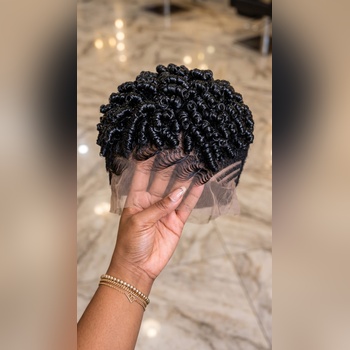
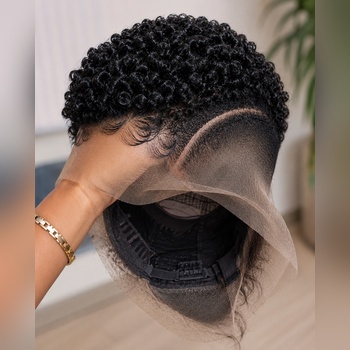
Where To Buy A Curly Pixie Wig With The Right Density
Custom makers should build to a density that suits a short curl, not just to whatever number sounds impressive. Ask them to recommend a density for a natural short look rather than quoting you the highest they offer. A maker who understands short styles will steer you lighter; one selling on numbers will push the biggest percentage.
Instagram and TikTok sellers often advertise high density because it photographs full, so ask for a video where the unit moves and the light passes through it. A curly pixie wig at the right density has movement and a little visible scalp; one packed too full sits like a solid cap, and video shows the difference a still hides.
Etsy works with makers who describe density honestly and show the unit in motion. The risk is a listing that boasts a high percentage as if it were a feature. Read reviews for anyone saying the unit sat too high or looked bulky, which are density complaints.
Marketplaces like Amazon, AliExpress, and Temu frequently over-pack short units because density sells, and synthetic short units especially tend to run too dense and stiff. That is fine only if you want a full, obvious look. For realism, choose a lighter density and judge by the photos, not the number.
Local beauty supply shops and salons let you see how a short unit sits on a head and whether it looks like hair or a dome. You pay a premium in-store, but seeing the density in person is the surest way to judge it.
Vendors and wholesalers direct quote density in bulk terms that vary by supplier, so the percentages are not comparable across sellers. For one natural short unit, a maker who calibrates density beats a stock number.
Regionally, makers who build short units at natural densities come strongly out of Lagos, Accra, Atlanta, London, and across South Africa, where you can find sellers who show short curls moving on video.
Vet the seller on density: check the account age, look for real buyer photos, time a plain question for a genuine reply, and ask what density they recommend for a natural short curl. A seller who only pushes the highest number is selling fullness, not realism.
Red flags: density sold as a headline feature, only very high percentages offered, units shown full but never in motion, and no lighter option for a natural look.
When you order, send your measurements and ask for a density suited to a natural short curl, and say you want movement and a light hairline rather than maximum fullness. That tells the maker you know more is not better here.
On payment, thirty to fifty percent down with the balance before shipping is standard for custom work. Use a method you can dispute, and ask for a moving video at the finished density before releasing the last part.
How Much It Costs
Density affects price directly, since more hair costs more to add, which means on a short curl you can pay extra for a fullness that actually looks worse. Spending wisely here means not overpaying for density you do not want.
Human hair, full build at a natural short-curl density, glueless with bleached knots and a fine lace: roughly $190 to $410. The same unit packed to a very high density costs more, often twenty to sixty dollars more, for hair that makes a short style look bulkier, not better. Human hair, mid build: about $150 to $310. Human hair, basic cap: around $70 to $180. Good synthetic, which tends to run dense: $60 to $140. Basic synthetic: $20 to $55.
The honest point is that the higher density is the more expensive and the less natural on a short curl, so it is the rare case where paying more buys a worse result. Put the money you would spend chasing fullness toward better hair quality or a finer lace instead, both of which improve a short unit where extra density harms it.
Shipping and any customs charge sit outside the price and change with where you live, so plan a realistic band and confirm your own country’s import rate rather than trusting a single quoted figure.
Then the later costs, which a sensible density keeps low. A lighter unit is cooler, lighter on the pins, and sheds less, so it is easier to live with; an over-dense one is hot, heavy, and harder to keep neat. A canvas block and curl product cover most upkeep. First-year math, honestly: a well-judged short unit plus shipping plus any customs plus a small kit plus upkeep tends to land between a low three-figure total and somewhat above the sticker, with a lighter density quietly making it more comfortable to wear.
Per wear, a short unit at the right density gets worn more because it looks and feels natural, while an over-dense one often sits unused because it reads bulky. A very high density at a bargain price is still a bulky short unit, so do not let a big number stand in for value.
Deposits follow the custom pattern: thirty to fifty percent to start, balance before shipping, and a moving video at the finished density before the last payment clears.
Shipping, Delivery, And What To Expect After Ordering
A short unit can look denser in the box than it will once styled, because packing compresses the curls together, so give it a gentle shake and let it fall before you judge the fullness. Ask that it ship so the curls are not crushed, choose a tracked service for custom work, and confirm your country’s import charge before it lands. When it arrives, a natural density will move and show a little scalp at the crown, which is correct, not thin; a dome that does not move is over-packed. What you unbox should look like hair with air in it, not a solid cap of curl.
Real Short Hair Is Not That Dense
The reason a lighter density looks more natural is that no one grows a solid, even dome of short curl. Real hair has gaps, movement, and a scalp that shows through here and there, and a unit that mimics that reads as real, while one packed edge to edge reads as a wig. Aiming for natural fullness rather than maximum fullness is the single easiest way to make a short curly unit convincing.
Density Should Taper At The Hairline
Just as the overall density should be moderate, the front should be lighter than the crown, because real hair thins toward the hairline. A unit dense right up to the edge looks blunt and false, while one that tapers at the front blends into skin. When you judge density, look at the hairline as well as the crown, since a heavy front gives a unit away even when the overall density is right.
The Number Is Not Standardised
Density percentages have no fixed definition across sellers, so one maker’s 150 is another’s 180, and the figure tells you far less than it pretends to. Treat the number as a rough guide at most and judge the actual fullness by eye. A seller leaning hard on a high percentage is selling the number, not the look, and on a short curl the look is all that matters.
Before You Pay
- What density suits a natural short curl, rather than the highest offered?
- Can I see the unit moving, so I judge fullness by the look, not the number?
- Does the hairline taper lighter than the crown, as real hair does?
- Am I paying extra for a density that makes a short style bulkier?
- Would that money be better spent on hair quality or a finer lace?
Trimming The Lace
The lace comes off the front the usual way, and a lighter, tapered density actually makes the hairline easier to cut convincingly, since there is less bulk crowding the edge. Trim in small offset steps and leave a shallow margin rather than cutting flush, and thin nothing at the front, because the taper you want is built into a good unit, not cut in after. If this is your first lace unit, let a stylist make the first pass so the hairline stays light and natural against the calibrated density behind it.
Search Terms
curly pixie wig · short curly pixie unit · natural density pixie wig · low density curly wig · lightweight short curly wig · glueless curly pixie lace · tapered hairline pixie · realistic short curl wig
Final Thoughts
This unit looks natural in large part because of a decision most buyers never think about: its density. The curls read as real hair because there is air and movement in them, not because the cap is packed as full as possible. On a short curly pixie wig, more hair is not the upgrade it sounds like; it is the thing that turns a believable short curl into a stiff, high-sitting dome that traps heat and gives itself away.
Buy it by choosing a density that suits a short style, which is lower than instinct suggests, and judge fullness by how the unit moves rather than by the biggest number on the listing. Let the hairline taper, spend the density money on better hair or lace instead, and you get a short curl that looks grown, not built. The percentage is a styling choice dressed up as a quality score. On a short curl, the right amount of hair is less than you think, and that restraint is exactly what makes it look real.