
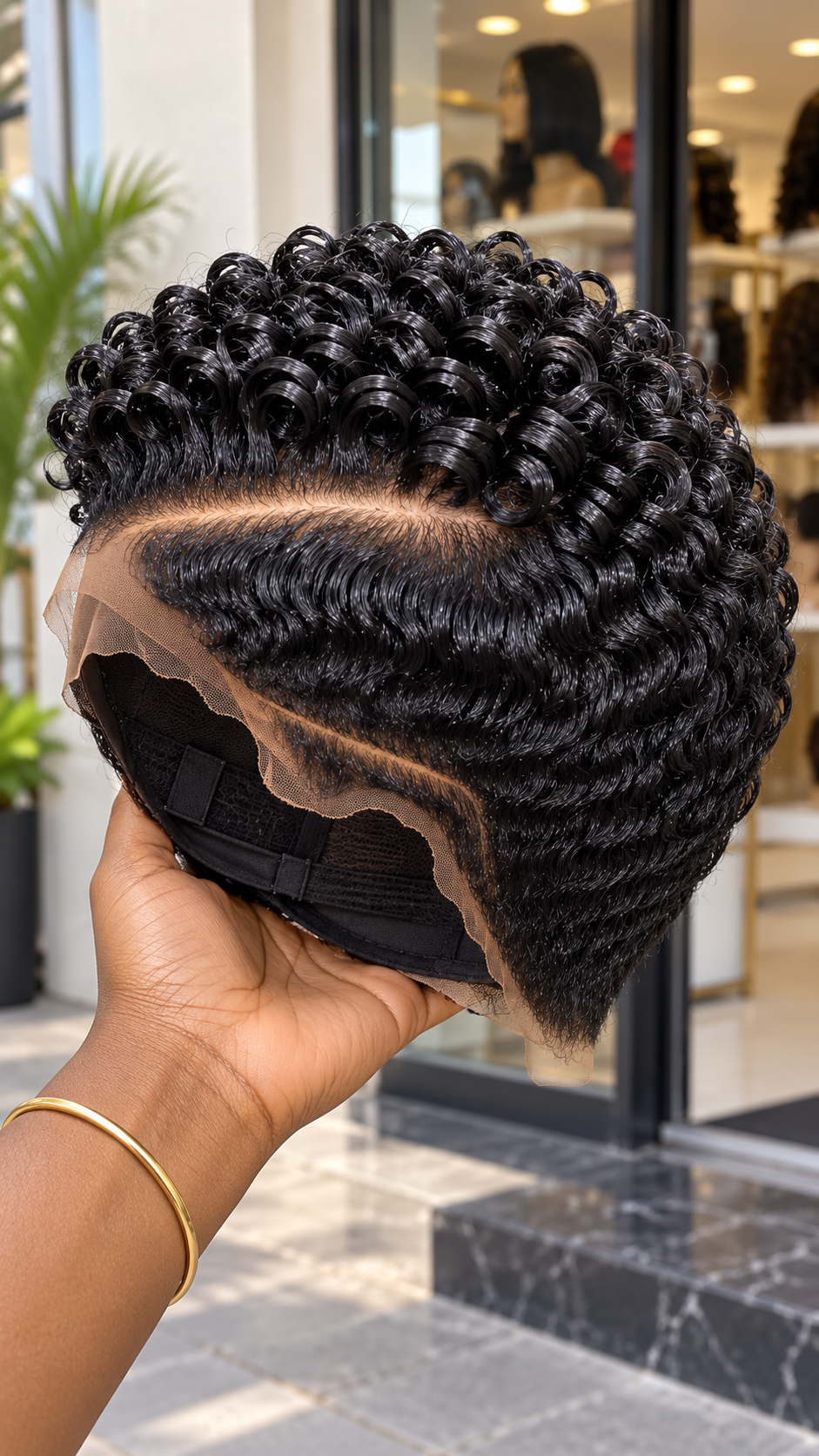
A beautiful curl pattern can lose its character when every section receives the same treatment. This black pixie wig takes a more deliberate approach: open ringlets rise across the top, while closely arranged waves travel along the visible side. Between them, a curved, scalp-colored separation gives each pattern room to stand out. The result is a compact hairstyle with movement above the forehead and a fitted outline around the temple.
Photographed in hand before installation, the wig also reveals details that a finished portrait would conceal. Untrimmed brown-toned lace extends beyond the hair perimeter, and the opening exposes portions of a black interior with mesh and banding. These visible elements make this reference useful for discussing both the hairstyle and the preparation needed before wearing it. They do not, however, establish the hair material, lace grade, or whether the unit can be worn securely without adhesive.
The Curved Separation Is the Detail to Preserve
The most distinctive element is the pale curved channel running beneath the front ringlets and above the side waves. It creates a clear boundary between two different arrangements of hair. Above it, individual curls form rounded openings; below it, closely laid strands bend into repeated ridges. When ordering a similar wig, this relationship deserves more attention than a general request for a curly pixie.
A stylist should study where the channel begins, how it follows the front section, and how much space it leaves above the temple. A wider separation could make the style appear more divided. A narrower one could disappear beneath the curls. The reference shows a noticeable but restrained line, with fine hairs along its edges rather than a broad bare strip.


This is not evidence of a shaved design on the wearer’s own head. The photograph shows a wig being held, and the visible separation belongs to its styling and construction. Ask the maker how that effect is produced and whether it remains visible after fitting. Its position may look different when the cap is stretched over a head instead of supported by a hand.
Open Rings Above a Close Wave Panel
The top contains black ringlets with visible hollow centers. Some turn forward toward the hairline, while others overlap toward the upper and rear portions shown. Their variation prevents the crown from looking like a grid of identical curls. The front row is especially important because its openings are clearly visible and establish the hairstyle’s character.
These curls appear larger and more open than tiny, tightly packed coils. Asking for miniature coils throughout could produce a substantially different result, even if the color and overall length were similar. A useful consultation should address the approximate curl opening, the amount of separation between neighboring rings, and the height of the front section.
The side uses a different visual rhythm. Hair lies close to the underlying form and follows repeated waves toward the lower perimeter. There is no clearly visible skin fade or set of parallel razor stripes to reproduce. The appeal comes from the change between raised curls and closely laid waves, so adding a shaved pattern would alter the reference.
Although the visible right-hand area gives some indication of how the styling continues, the entire rear is not presented in a straight-on view. Request an additional photograph before agreeing to a custom order. A tapered back, a fuller rounded back, and a flatter nape can each change how this same front arrangement looks when worn.
Read the Black Color Without Mistaking Reflection for Highlights
The hair appears consistently black, with bright reflections following the bends of the ringlets and waves. Those lighter streaks do not establish silver coloring or deliberate highlights. The image supports a black color description, but a seller’s daylight video would help clarify whether the actual product reads as a very deep black or a slightly softer natural black.
Color matters here because the pale separation and visible lace sit beside a dark hair surface. That contrast makes the placement of individual strands easier to notice. An overly dense edge could obscure the curved channel, while an excessively sparse edge could create a different appearance from the reference.
For an online purchase, request unfiltered footage near a window and a close view of the front section. Ask the seller to move the wig slowly so you can see whether the apparent sheen changes with the light. Shine alone cannot confirm human hair, synthetic fiber, quality, or processing history.
Make the Supplier Demonstrate the Actual Unit
A catalog photograph can communicate a styling idea without showing what will arrive. Before buying, establish whether the seller is offering the photographed unit, a ready-made approximation, or a custom recreation. Each arrangement calls for a different level of checking, particularly when the curved separation is central to your decision.
For a ready-made wig, ask for a continuous video showing the front ringlets, both temples, the back, and the interior. Have the seller include the lace perimeter and any fastening components. The photograph reveals black interior sections, but it does not provide enough information to identify every attachment or adjustment mechanism.
For a custom commission, agree on several visible priorities in writing: black coloring, open crown ringlets, the curved separation, closely laid side waves, and a compact silhouette. Then ask for progress photographs before the final styling is completed. This gives you an opportunity to address excessive crown height or an incorrectly positioned channel while changes may still be possible.
Also establish whether the displayed curl arrangement is intended to survive routine care or needs professional resetting. A wig sold already styled may look quite different after its first wash. The supplier should explain what is being purchased: the underlying haircut, a temporary set, or a unit accompanied by a repeatable styling service.
Book the Appointment Around Fitting and Wave Work
Look for a wig stylist or wig maker whose portfolio includes cropped lace units, finger-wave work, and ringlet setting. A general installation portfolio filled with long straight wigs may not demonstrate the skills this design requires. Ask to see close photographs of comparable side panels and finished hairlines.
A local wig boutique with an in-person fitting service can be helpful if you need to assess cap proportions before ordering. Online sellers may offer more customization, but the measurement process becomes especially important. Follow the chosen maker’s measuring instructions and provide the requested dimensions without guessing from another brand’s size label.
Bring or send this reference before booking so the stylist can allocate time for both fitting and detailed styling. Explain that the separation and side waves are priorities. If a barber is involved, confirm that they have experience cutting wigs and understand the cap boundaries; ordinary clipper work can remove hair needed to conceal the foundation.
At the appointment, inspect the unit first, then assess its position and fit before any lace is removed. The hairline, temple coverage, and curved channel should be evaluated together. Once those relationships are settled, the stylist can determine whether lace trimming, edge adjustment, or a minor haircut is appropriate.
Budget for the Curl Work as Well as the Wig
The following USD ranges are illustrative planning allowances, not verified current listings or a valuation of the photographed wig. They describe possible purchasing categories. The image does not confirm which category this unit belongs to, and an individual quote may fall outside these figures.
| Purchase Category | Illustrative USD Allowance | Details to Confirm Before Paying |
|---|---|---|
| Premium Custom | $450–$950+ | Individual cap specification, detailed ringlet placement, wave-panel work, and fitting or revision arrangements. |
| Standard Custom | $240–$480 | Available cap options, reference-based shaping, and whether final lace preparation is included. |
| Basic Human Hair | $130–$290 | Material verification, processing information, and the cost of recreating the photographed styling. |
| Premium Synthetic | $80–$190 | Fiber instructions, cap construction, and how closely the supplied curl pattern matches the reference. |
| Basic Synthetic | $30–$85 | Actual product photographs, perimeter appearance, sizing limitations, and return conditions. |
The extra labor in this design lies in coordinating two patterns within a small area. A supplier may charge separately for arranging open ringlets, laying the side waves, or refining the curved separation. A lower-priced base wig may therefore require additional salon work before it resembles the reference.
Request a written breakdown separating the unit, styling, fitting, lace preparation, delivery, and any later reset service. Also ask what happens if the fit is incorrect before customization. Comparing complete quotes gives a more useful picture than comparing a styled custom unit with an unstyled base wig.
Protect the Space Inside Each Ringlet
The open centers are part of the design, so brushing through the crown as though it were loose hair could dismantle the arrangement. Begin with the supplier’s instructions for the confirmed material and styling method. For minor displacement, a stylist may be able to reposition individual curls without disturbing the entire top.
The side panel needs a different approach. Heavy handling can separate the close waves or lift strands across the pale channel. Avoid repeatedly pulling the panel downward to make it look flatter. If the section sits incorrectly when worn, the cause may be cap position or fit rather than insufficient styling product.
Before washing, establish whether the wave pattern will remain or require resetting. If the unit is human hair, ask about its processing history and suitable products. If it is synthetic, obtain the fiber-specific instructions before introducing heat, color, or chemical products. The photograph supplies no reliable basis for choosing a temperature.
Between wears, support the wig without pressing the ringlets against a hard surface. Check that the support does not stretch the cap or push the side panel outward. A storage arrangement that preserves the silhouette can reduce the amount of handling needed before the next wear.
Approve the Shape on Your Head Before Calling It Finished
The final assessment should happen while the wig is fitted, because the hand-held presentation cannot show how its proportions relate to a wearer’s forehead and temples. View the front at eye level, then check both profiles. The ringlets should retain their openings, the separation should remain visible, and the side waves should sit where intended.
Ask for a rear photograph during the fitting if you cannot comfortably inspect the back yourself. Resolve any uneven positioning before requesting a cut. A small adjustment to placement can change the balance of a cropped wig, while cutting an incorrectly positioned section may create a problem that remains after the fit is corrected.
The most useful purchase is one whose construction, fit, and care requirements support the hairstyle you actually want. With this reference, that means preserving the conversation between open black ringlets and the close wave panel beneath them. A careful consultation turns those visible details into a clear order rather than leaving the result to a broad style name.
Search Terms
black open ringlet pixie wig · curved separation curly lace wig · swept finger wave side panel · black mesh interior cropped wig · untrimmed brown lace perimeter · glossy black hollow crown curls · compact waved temple wig · hand held ringlet lace unit