
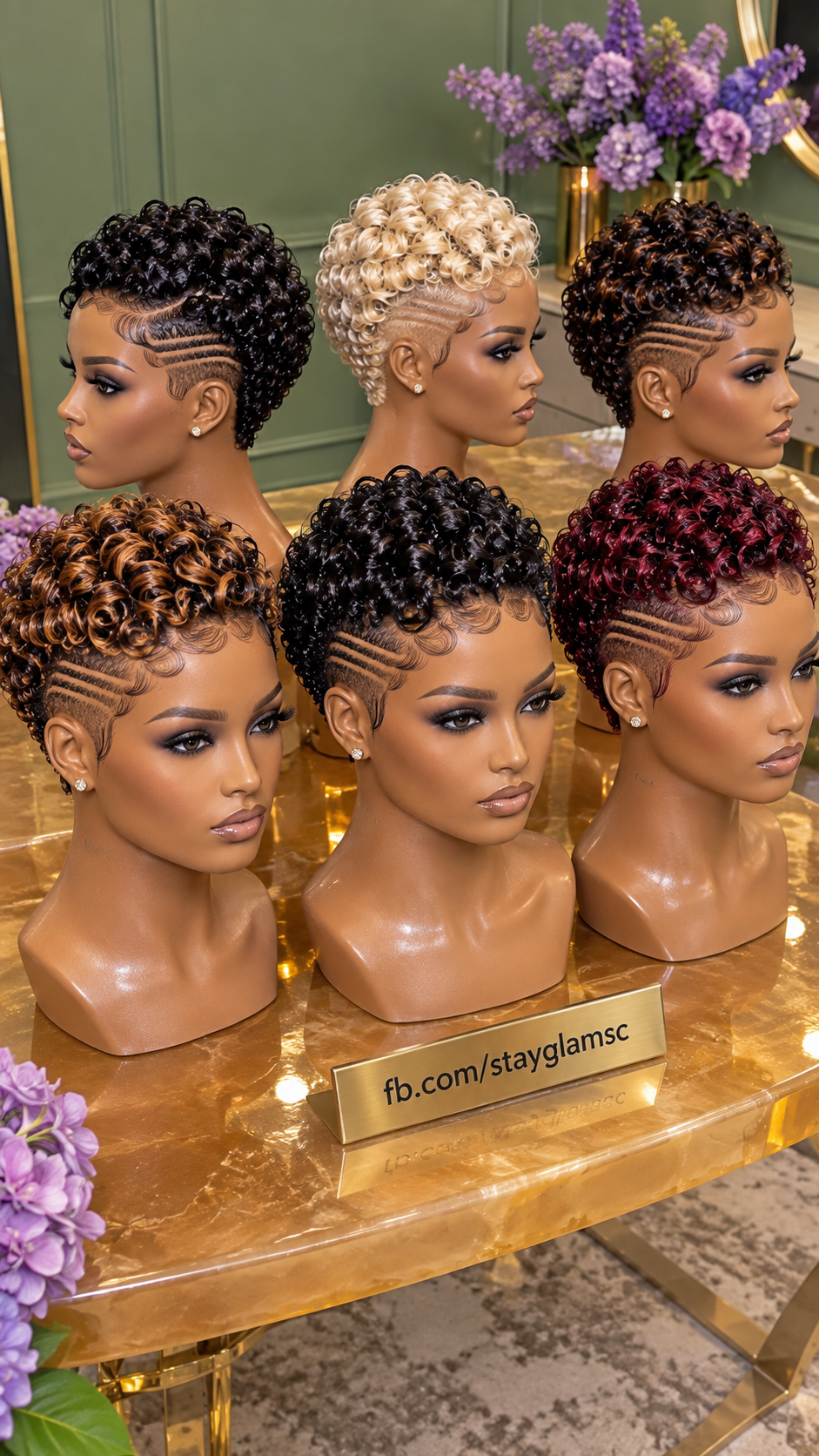
Some pixie wigs attract attention primarily through color, while others depend on curl formation or side detailing. The collection pictured here combines all three. Compact glossy curls create volume across the crown, sweeping hairline work frames the face, and multiple parallel side lines add a recognizable barber-inspired signature. The result is a coordinated wig collection that can be customized in several shades without losing its core identity.
The display includes deep natural tones, warm golden brown, rich burgundy, copper brown and a pale silver-blonde variation. Because the general silhouette remains consistent across the mannequins, the photograph is especially useful for customers deciding between color options. Instead of imagining how one hairstyle might look in another shade, they can compare several interpretations at once.
A Closer Look at the Triple-Line Side Design
The strongest visual detail in this particular collection is the group of narrow parallel lines placed along the side. Rather than using one large carved section, the design relies on multiple slim lines with carefully controlled spacing. Their direction follows the shape of the head and visually connects the temple area with the fuller curls above.
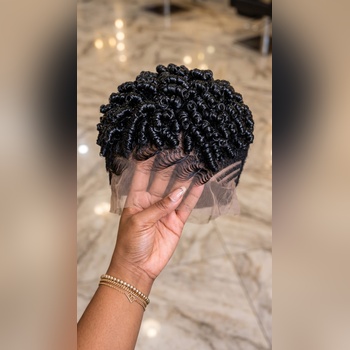
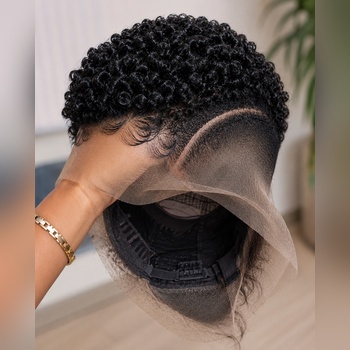
The lines also create contrast against the compact curl crown. The top has considerable visual density because of the many small ringlets, while the side appears lighter and more architectural. This balance keeps the hairstyle from becoming visually crowded.
If you are commissioning a similar unit, specify how many lines you want. A request for “side lines” is not precise enough because a stylist may interpret that as one, two or several lines. The angle should also be discussed. Horizontal, diagonal and curved placements can produce noticeably different profiles.
The Front Wave Pattern Deserves Equal Attention
The hairline area is not simply brushed backward. It contains deliberately arranged wave sections that curve across the forehead before connecting to the side design. This gives the front of the hairstyle a decorative quality even when viewed directly from the front.
For a custom wig, this area is particularly important because it influences how the style frames the face. Some customers may prefer a larger sweeping wave, while others may want a narrower wave that leaves more forehead visible. Reference photographs should therefore include the front hairline rather than focusing only on the curls.
The side wave near the temple creates another transition point. It visually connects the forehead styling with the barber-line area, preventing the top and sides from looking like unrelated sections.
Ring Curls Create Height Without Excess Length
The crown is built from many compact circular curls. Their small diameter allows a stylist to create substantial visual detail while keeping the overall silhouette close to the head. From a distance, the crown reads as a rounded curly shape; from nearby, each individual ring becomes visible.
This type of curl arrangement is particularly effective in product photography because directional light reflects from the curved strands. Darker shades display a glossy dimensional surface, while lighter colors make the separation between individual curls easier to see.
The curl pattern should remain balanced from front to back. Concentrating every curl at the forehead can make the front appear too heavy, while placing too much volume at the rear can change the intended pixie silhouette. A skilled stylist will distribute the curls according to the shape of the cap and the customer’s requested profile.
Choosing Between Burgundy, Copper, Golden Brown and Silver
Burgundy creates one of the richest variations in the collection. Its red-wine undertone becomes especially visible under bright salon lighting while deeper areas maintain enough contrast to show the curl pattern. This shade can be a strong option for customers who want noticeable color without moving into extremely bright fashion shades.
Copper brown offers a warmer result. It emphasizes the circular shape of the curls and works especially well when photographed under neutral or daylight-balanced lighting. Golden brown provides a lighter alternative and can be combined with deeper roots or darker lowlights if a customer wants more tonal variation.
The pale silver-blonde version has a completely different visual character. Its light surface makes the waves and curls highly visible and creates strong contrast with darker structural areas. Customers considering this shade should ask how the color is achieved and what maintenance the chosen fiber requires.
Buying a Ready Unit Versus Commissioning a Custom Piece
A ready-to-wear unit can be convenient when its measurements and styling already match the customer’s needs. However, designs with specific side lines, curl positioning and directional waves often benefit from customization. A custom stylist can adjust the part placement, line configuration and overall proportions according to the wearer.
Before buying a ready unit, request photographs of the actual item whenever possible. Ask for front, side and back views rather than relying on one promotional angle. Confirm cap size, fiber type, adjustable features and whether the curls shown in the listing are exactly how the wig will arrive.
For custom orders, send measurements and visual references before the stylist begins construction. Discuss whether the side design will be reproduced exactly or adapted to the cap. This is especially important when a reference hairstyle originally appears on natural hair but is being recreated as a wig.
Estimated Price Levels for This Type of Custom Work
| Wig Category | Estimated Range | Possible Service Level |
|---|---|---|
| Premium Custom | $375–$750+ | Detailed hand styling, personalized measurements, advanced color work and extensive finishing |
| Standard Custom | $230–$475 | Custom curl arrangement, chosen color, side design and fitting adjustments |
| Basic Human Hair | $160–$340 | Human-hair unit with selected styling services |
| Premium Synthetic | $95–$230 | Quality synthetic fiber with pre-arranged curls and limited personalization |
| Basic Synthetic | $50–$130 | Pre-styled construction with basic color and size selections |
The exact wigs in the photograph do not display confirmed retail prices, so these figures should be treated only as general market guidance. Labor, fiber quality, cap construction, color work, stylist experience, local pricing and shipping can substantially change the final quote.
Booking the Right Professional for a Detailed Pixie Wig
Look for a stylist whose portfolio includes pixie wigs, sculpted curl work and barber-inspired detailing. A stylist who primarily works with long straight units may not necessarily specialize in this type of compact construction. Review close-up photographs of previous work and pay attention to the hairline, curl consistency and side profiles.
When contacting the salon, explain that you want a compact curly crown combined with directional forehead waves and multiple side lines. Send the reference image and identify the specific mannequin whose color you prefer. If the stylist offers consultations, use the appointment to compare fiber options and discuss how closely the reference can be reproduced.
Ask for the expected turnaround time before paying a deposit. Highly customized units may require additional styling time, especially when individual curls are formed and arranged by hand.
Keeping the Curl Pattern Looking Salon Fresh
The crown should not be brushed aggressively. The circular curl formations are a major part of the design, and repeatedly pulling a brush through them can change their shape. Light finger placement is generally more suitable for preserving individual rings, although the correct maintenance method depends on the fiber used.
When the wig is not being worn, store it upright on a suitable stand or mannequin head. Give the crown enough clearance so that the curls are not compressed against a shelf. Keep the unit away from unnecessary heat and direct prolonged sunlight, particularly when maintaining burgundy or copper tones.
If the wig requires washing, follow the maker’s instructions and