
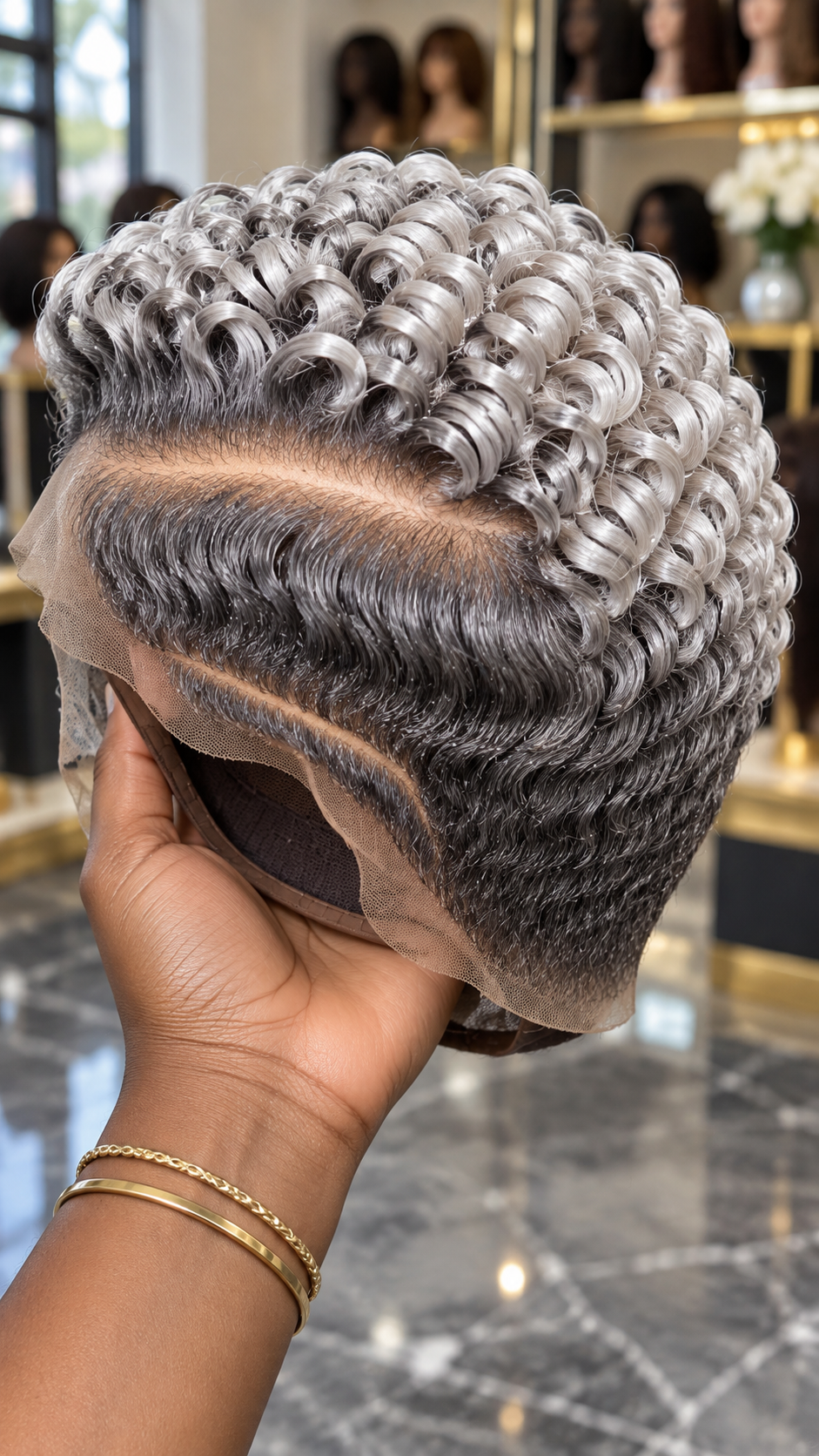
Silver curls rise over a charcoal panel of finger waves in this two-tone pixie. The crown is full of open loops, with pale silver on the broad turns and darker grey showing closer to the roots. Beneath them, the shorter hair lies close to the side in a repeating S pattern. A long, exposed part separates the two areas, following the contour of the wig before disappearing beneath the curls. The contrast is visible even from a distance because the color changes at the same place as the shape.
Look below the main part and you can see a second, narrower line near the lower edge. It frames a slim section of short hair and leaves the wider charcoal waves above it uninterrupted. That lower line is easy to miss in a photograph of the crown alone. It matters if you want to order a close reproduction, because it determines where the wave panel ends and how much detail will sit near the temple once the wig is fitted.
The wig is held from underneath, with brown lace extending beyond the styled edge and part of the dark interior visible. This view is especially helpful for judging the relationship between the pale crown and darker side. It also gives you a practical starting point for a salon consultation. Show the stylist where you want the color to change, which line you want to keep visible and how much height you want from the finished curls.


What to Look for in the Silver
The crown reads as cool silver with a pearly cast where the light hits the outer turns. Darker hair shows through some openings and around the bases of the curls. That depth helps you distinguish neighboring loops, especially where several overlap. If you are buying a similar wig online, ask for a view in indirect daylight. A bright display light can make the crown look nearly white, while a softer view lets you see how much grey remains in the curl and how strong the contrast is at the root.
Ask for a curled color sample if the maker can provide one. A straight swatch is useful for choosing the overall tone, but a curled section shows where the darker shade falls once the hair bends. If you want the reference’s darker transition, point to the grey beneath the first row of silver curls. Then show where you want the palest tone to begin. That gives the maker more to work with than a request for a silver ombré, which can mean very different placements on a short wig.
The side has its own color variation. It reads as charcoal overall, with fine silver strands following the ridges of the waves. Those lighter strands connect the side to the crown without giving both sections the same brightness. If you want a more restrained result, ask for less visible silver through the short side and compare a sample before approving it. If you prefer the wave pattern to stand out, check that the grey strands remain visible from a normal viewing distance and in the indoor light you use most often.
Why the Side Waves Matter as Much as the Curls
The upper part marks a change in direction. Above it, the strands rise into curved loops. Below it, the hair turns in long, shallow bends. The part gives the eye a place to pause between these two shapes. If the first row of curls leans too far over the line, the silver can cover the very detail that separates the crown from the side. When discussing a custom set, ask the stylist how they will keep the part visible while giving the upper section enough fullness.
There is also a change in scale within the charcoal panel. The wide waves occupy most of the visible side, while the area below the lower curved line is much narrower. At a fitting, ask where that lower detail will sit in relation to your temple and ear. A line that looks well placed on a form can end up closer to your brow or farther behind your glasses once the cap is on. Have the stylist show you a profile before they trim the lace or make permanent adjustments.
The opposite side and back need their own decisions. The photo gives a clear view of the featured wave panel and part of the rear silhouette. For a custom wig, specify whether you want the second side kept close and simple or styled to echo the visible waves. Ask to see how the grey transitions around the back. This is particularly useful if you wear an open neckline often, because the lower edge and color transition will be visible when you turn away.
Get The Details On This Wig
For a similar piece, look at specialist wig boutiques, beauty supply stores that carry styled pixies and custom wig studios. Search portfolios for silver barrel curls and short finger waves, then ask to see both finishes on the same unit if possible. A maker who can produce the crown may still need a different base to reproduce the lower line. If you see a ready-made wig you like, send its photos to the person who will fit it and ask how much work the side would need.
For a custom order, describe the design in the order you see it from the crown down. Ask for pale silver loops with darker bases, a long exposed part, a charcoal wave panel and a narrow lower curve. Specify which side will carry the detail from your own perspective. Include your preferred crown height and cap measurements. If you wear glasses or often tuck hair around your ears, say so at the start. The maker can plan the lower edge around how you intend to wear the wig.
Request a straight-on photograph, both profiles, a rear view and a clear look inside the cap. For a wig that is already made, ask to see the actual piece beside a window as it turns. Confirm the fiber, cap size, usable lace area and whether the lace arrives trimmed. For custom work, establish when you can approve the shade and side design, what adjustments the price includes and how alterations are handled after delivery. If you are buying across borders, ask for the full delivered price in your currency, including any charges the seller can confirm.
To book a fitting, look for a salon with examples of short wig installs and sculpted finger waves photographed at eye level. Tell the stylist whether you are bringing a finished wig or a base that needs cutting and styling. Those are different appointments and may require different preparation. For a similar look on your own hair, consult a short-hair stylist about the length available for the crown loops and whether the side can be shaped to leave the part and lower line visible. Discuss the silver color separately with the colorist before booking the full service.
How Much Lace Does This Side Need?
The brown lace visible at the perimeter gives you a view of the edge, but the photograph shows only part of the interior. When comparing caps, ask the seller to identify the area available for the main part and the lower curved line. A lace-front cap can work when its usable area reaches both positions. A frontal with more room toward the temple may give the stylist greater control over where the two lines end. Ask for a photo with those positions marked on the proposed cap.
A closure may work for a simpler version if the main part sits within its usable area and the maker has a separate plan for the lower side. If both exposed lines are important to you, ask for an example of that combination on the same type of cap. A full-lace unit is another option when you want more flexibility over where the lines sit or expect to restyle the piece later. Consider how much of that flexibility you will use if you intend to wear the crown and side in a fixed arrangement.
For a glueless fit, check how the band and adjustable straps hold the wig while you look down and turn your head. Follow the maker’s measuring instructions and include any requested ear-to-ear and front-to-nape dimensions. A cap can fit well around the circumference and still sit too high near one ear. Check the lower line at that point during the fitting. If the unit shifts, ask the stylist to adjust the fit before trimming the lace, since trimming changes the edge you have available to work with.
An adhesive-based fitting is an option for a compatible lace unit when you prefer additional hold. Agree on the placement of the side panel first and check the upper part in the same mirror view. Ask the stylist which remover goes with the adhesive they use and how to release the lace without tugging on the short hairs. Tell them how frequently you plan to remove the wig. That will help you choose an installation routine that fits the amount of daily handling the style will receive.
Balancing Curl Length and Density
The pale loops need enough strand length to rise and fold back into the crown. An advertised length tells you how long the hair is before styling, while a side photo tells you how high the finished curls sit. Compare both when ordering. If you want the same width with less height, ask whether some of the loops can be angled farther toward the back. You can keep the visible silver turns while reducing the lift that would otherwise sit directly above the part.
Density has different jobs above and below the part. The crown needs enough hair for the loops to look broad, while space between the curls keeps their openings visible. The side needs enough coverage to form continuous waves, with room for the two exposed lines to read clearly. Ask the maker where they would place extra hair if you want a fuller look. Adding density around the temple can make the side feel heavier and make the charcoal ridges harder to distinguish. A little more fullness through the top may suit the design better.
Before approving a finished set, ask for one photograph from the height of your eyes and another from slightly above. The first view helps you judge the volume you will see in the mirror. The second shows how much of the part remains open beneath the pale curls. If the curls are large enough but the line is partially covered, ask whether their direction can be adjusted before reducing the overall density. A change to one or two loops may be all the shape needs.
Illustrative Prices for a Two-Tone Sculpted Pixie
These USD ranges are budgeting examples. Fiber, color work, cap construction and fitting affect the final quote. When comparing prices, ask whether the seller includes the finished crown, both side lines and the initial fitting. A unit advertised in silver and charcoal may already give you the right colors but still need separate salon work to produce the waves shown here.
| Category | Illustrative Price Range | Potential Scope |
|---|---|---|
| Basic Synthetic | USD 20–45 | A ready-made grey pixie with a fixed curl set and a simpler side. |
| Premium Synthetic | USD 45–115 | A pre-styled unit with blended silver and charcoal tones or more detailed waves. |
| Basic Human Hair | USD 95–190 | A short base that may need separate color work, cutting and setting. |
| Standard Custom | USD 175–320 | A standard cap with requested color placement, crown loops and a shaped side panel. |
| Premium Custom | USD 320–650+ | A made-to-measure unit with tailored lace placement, a planned color transition and individually set waves and curls. |
Ask for separate amounts for the wig, color service, styling, delivery and installation. If a local stylist will do the final set, have them assess the fiber and cap first. A base with an appropriate two-tone blend may save color work, while a cap with too little usable lace may require you to simplify the side design. For a custom order, agree on which features you can approve before delivery. The shade and the position of the lower curve are both easier to assess before any final trimming.
Caring for Pale Curls and Dark Waves
After each wear, check the first row of silver curls and the waves closest to your ear. Hold the sturdier parts of the cap when removing it and keep pressure off the crown. If a loop turns out of place, support its base and guide it along its existing curve. Work on the displaced section individually. Brushing across the entire crown can open neighboring curls and leave pale strands lying over the part, where they are especially easy to see against the charcoal.
For regular wear, inspect the cap and lace about once a week for perspiration and product buildup. Schedule washing according to the fiber instructions and how often you wear the unit. Support the lace while cleaning and avoid rubbing the silver loops against the charcoal panel. Blot excess moisture gently and let the wig dry on a stand that supports its shape. Keep the side waves free from pressure and follow the adhesive maker’s directions for removing any residue before washing.
Ask for separate care instructions for the silver and charcoal areas, particularly if the unit has been custom colored. Pale hair can show residue around the outer turns, and heavy product can make the dark waves look less distinct. Choose products approved for the actual fiber. If the shade looks different after washing, let the wig dry fully and check it in daylight before adding a color treatment. Ask the maker what they recommend for restoring the tone if the change persists.
Human hair may be suitable for a wet set or another method selected for its condition. With synthetic fiber, follow the manufacturer’s limits for heated tools and steam. Book a professional reset when several loops lose their opening or the short waves begin to cross the exposed lines. Take front and profile photographs after the first fitting. Those views help the stylist restore the original curl height and wave direction without relying on a picture taken while the wig was held in the hand.
Between wears, keep the wig on a stand with clearance around the crown and the featured side. Use a firm case for travel and check that the lid clears the highest loops. Support the cap lightly from the inside and leave the lace edge unfolded. When you arrive, place the unit on a stand and give yourself time to check the side before wearing it. The crown may look unchanged even when a narrow wave near the temple has been pressed out of shape.
Deciding How Often You Will Wear the Style
The appeal of this pixie is how much color it shows within a short silhouette. The silver is visible from the front, while the charcoal waves and curved line give the profile a distinct finish. It leaves the neck clear and can sit well alongside earrings when the side is fitted with them in mind. If you want to wear it regularly, try on the wig in daylight and under your usual indoor lighting. Pay attention to how much silver you see at eye level and how clearly the wave panel reads when you turn.
The trade-off is maintaining two different shapes. The loops need clearance at the crown, while the side waves need gentle handling around the ear. Tight headwear can flatten the top, and regular contact from glasses or headphones can disturb the shorter hair. A fixed part and side design also limit how far you can redirect the wig. Before you leave the fitting, put the unit on yourself and check whether the two lines return to the positions you liked. Ask the stylist what a reset would involve so you can decide whether the upkeep suits your routine.
Search Terms
silver pixie with charcoal finger waves · dark root silver barrel curls · two tone short curly wig · silver crown with grey side waves · short lace wig with curved side line · silver loop curls with long side part · charcoal wave panel pixie wig · salt and pepper sculpted short wig