
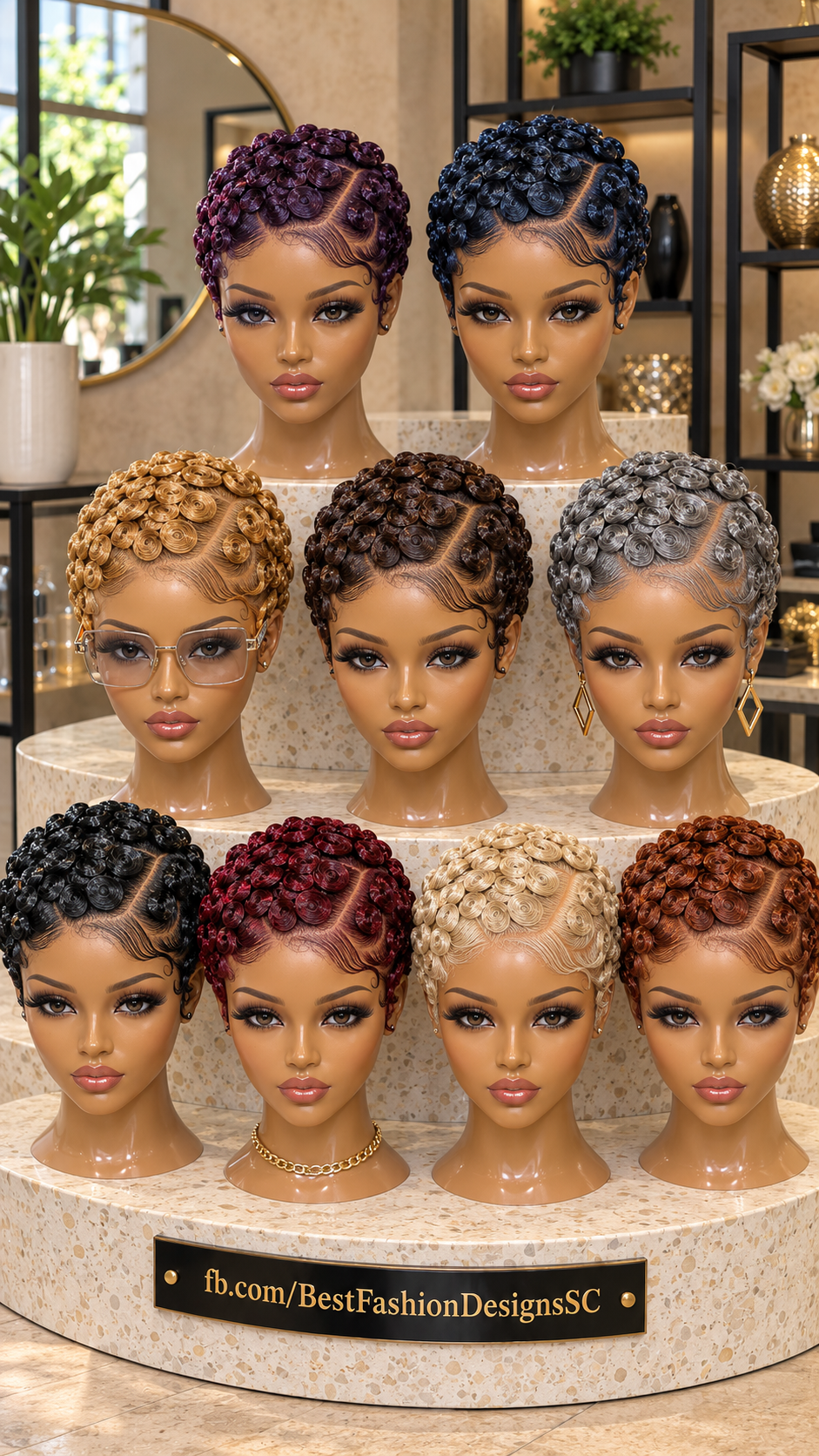
Choosing a wig color becomes much more interesting when you can compare several shades in the same hairstyle. This collection brings together nine pixie wigs with compact circular curls, side parts, and delicate waves along the forehead. From black and brown to silver, blonde, burgundy, copper, plum, and deep blue, the display shows how much color can change the impression of a closely fitted cut.
The arrangement makes those differences easy to study. Two mannequins occupy the highest level, three sit across the middle, and four form the lowest row. Each wig shares a similar styling idea, yet the individual curl placement and front arrangement vary slightly. Some parts appear more conspicuous, some curls sit flatter, and some forehead waves extend farther toward the temple. Those details matter just as much as the shade when selecting a particular unit.
For a prospective buyer, the most useful question is which combination of color and shape feels right for everyday wear, a special occasion, or a change of appearance. This photograph can help narrow the choice, but it cannot establish the material, cap construction, stock availability, or price of the displayed pieces. A successful purchase uses the image to describe the look, then relies on verified product information to complete the decision.
Start With Three Colors You Would Actually Wear
Nine options can make choosing harder rather than easier. A practical first step is to select three shades that fit your preferences, wardrobe, and willingness to maintain the purchased unit. One might be a familiar dark shade, another a warmer alternative, and the third something noticeably different. This creates a useful comparison without treating every mannequin as an equally likely purchase.


The front-left black wig offers the deepest neutral-looking option. The middle-row brown has warmer reflections, while the copper at the lower right introduces a stronger reddish-orange appearance. Comparing those three gives a sense of how increasing warmth changes the look without immediately moving into blonde or a cool fashion color.
For a lighter selection, compare the middle-left golden honey, middle-right silver-gray, and front-row pale blonde. They are distinct choices. Honey carries a warm golden cast, silver appears cooler and grayer, and the pale blonde has a creamy appearance. Requesting simply “a light color” would leave a seller with too much freedom to interpret the order.
The top-left plum, top-right deep blue, and lower-row burgundy provide another comparison group. Plum has a purple character, blue remains cool and dark, and burgundy leans toward wine red. Their appearance will change with lighting, so they deserve current footage rather than approval based only on a color name.
Read the Display by Position
At the highest level, plum sits on the left and deep blue on the right. Both are dark enough to retain strong contrast around their visible part channels, but the illuminated curls reveal their different color directions. The plum shows purple reflections, while the blue catches cooler highlights across the rounded curls.
The middle row contains golden honey, brown, and silver-gray from left to right. The honey mannequin wears glasses, which partly distract from the forehead and temple areas. The silver mannequin has geometric earrings, but those accessories are separate from the wig itself. Ask for unobstructed product photographs before comparing perimeter coverage.
Across the lowest row are black, burgundy, pale blonde, and copper. The burgundy mannequin wears a necklace, while the other accessories vary across the display. These styling choices help distinguish the mannequins visually, but they should not influence assumptions about what comes with a purchase. Confirm the actual contents of the order.
When contacting a seller, identify the chosen piece by row and position. “Lowest row, second from the left” is more precise than “the reddish one.” If you want the color of one mannequin and the curl arrangement of another, describe them separately and ask the maker to confirm that combination.
Small Circular Curls Keep the Outline Compact
The wigs are styled with small, closely placed circular curls across the upper sections. Some have visible open centers, while others appear flatter and more spiral-like. These are not loose lengths hanging away from the head. The arrangement creates detail across a compact surface rather than relying on a large amount of outward volume.
That distinction is important when shopping. A product advertised as a curly pixie might have fluffy curls, a lifted fringe, or a completely different perimeter. Use the photograph to communicate the specific surface you want: compact circular curls, a fitted outline, and a deliberate side-parted front.
The curl layout varies between the nine wigs. The pale blonde shows several lighter, flatter-looking spirals near the front, while the darker pieces emphasize the shadows between curls. Some upper sections appear more densely packed than others. Do not assume the entire collection represents one identical pattern reproduced in different shades.
The photograph primarily shows front and three-quarter views. It does not reveal complete nape shapes or the full rear arrangement. Before choosing a unit, request a back photograph taken at head level. The rear should be assessed as part of the hairstyle rather than left to assumption.
The Forehead Waves Change the Expression
Beneath the upper curls, fine strands form curved waves along the forehead. These sections are flatter and smaller in scale than the circular curls above them. Their placement gives the front a carefully arranged appearance and helps connect the fuller upper area with the closely fitted sides.
Several mannequins have a small curled detail near the temple. The length and direction vary, which can subtly change how much of the forehead or side is exposed. If one front arrangement particularly appeals to you, make it part of the order brief rather than asking only for the general cut.
The pale channels running backward from the front are visible parts, not proof of shaved designs. Their contrast depends partly on the surrounding color. Black, blue, and burgundy make the channels look more pronounced, while pale blonde reduces the contrast. The image does not establish the underlying part construction or whether it can be relocated.
Ask the maker how the front will be adapted to your fit. A mannequin can display a fixed arrangement, but a wearer needs suitable placement around the forehead and ears. The goal is to retain the reference’s proportions without forcing the cap into an uncomfortable position.
Find Out Where To Buy This
A wig boutique with a good selection of fitted pixie styles is a useful place to start. Send the photograph before visiting and ask whether the shop carries circular-curl wigs with waved fronts. Explain your preferred shade and identify the mannequin position. This allows the shop to check relevant stock instead of showing unrelated curly units.
An independent wig maker may be more appropriate if you want a particular color combined with a specific front arrangement. Look for examples of compact curled wigs, controlled forehead waves, and consistent work around the ears. Request several angles of previous pieces, including the back and inside.
Online sellers can provide another route, especially when local options are limited. Ask whether the photographed item is existing stock or an example of a custom service. Existing stock should be available for current footage, while a commission requires measurements, material choices, production timing, and approval stages.
The page address on the display does not independently verify a retailer, location, or available inventory. No confirmed shop address can be established from this image alone. Obtain the supplier’s city, country, delivery area, and collection arrangements directly before paying or travelling.
For local searches, combine your city with phrases such as “pin curl pixie wig boutique” or “finger wave wig stylist.” You can also purchase from one supplier and use a local professional for fitting, provided the stylist accepts outside units and confirms that the proposed construction is suitable.
Ask for a Color Comparison Under Consistent Light
Color decisions are easier when two potential choices are photographed together. Ask the seller to place your preferred shades side by side under neutral daylight, keeping the camera settings consistent. Separate listing images may use different lighting or exposure, making the comparison less dependable.
This is particularly useful for golden honey versus pale blonde. The honey shade has a warmer, deeper appearance, while the pale blonde looks creamier and lighter. A seller’s names may not match your interpretation, so pair the written label with the actual unit footage.
The same principle applies to burgundy, plum, and copper. These shades can be described loosely as red or purple by different sellers, even when they look substantially different. Ask for the supplier’s own color reference and keep a copy of the approved image with the order details.
If repeat purchases matter to you, ask whether the shade can be reordered consistently. A color name alone may not guarantee a close match across batches or custom work. Written specifications and approved photographs give a future order a clearer starting point.
Estimated Prices for a Similar Pixie Collection
The USD amounts below are illustrative planning ranges, not verified current prices for these displayed wigs. They compare possible purchasing categories rather than identify the fiber of any individual piece. A final quote should describe the actual material, cap, styling, color, and services included.
| Purchase Category | Illustrative USD Range | What to Confirm Before Paying |
|---|---|---|
| Premium Custom | $450–$990+ | Individually specified fit, selected color, circular-curl arrangement, waved front, and approval stages. |
| Standard Custom | $215–$475 | An existing base adapted toward the reference, with agreed limits on color changes and styling revisions. |
| Basic Human Hair | $110–$275 | Verified composition, processing information where available, construction details, and whether the styled set is included. |
| Premium Synthetic | $65–$175 | Fiber specifications, preset curl quality, available shades, cap sizing, and maintenance restrictions. |
| Basic Synthetic | $25–$80 | Actual product photographs, fit options, front coverage, and return eligibility. |
Price differences should be explained through the work or product being supplied. A particular shade might be available as a manufactured unit, while another requires custom processing on a suitable base. Those are different routes. Do not assume all nine colors involve the same materials or production method.
Ask whether the quoted amount covers a finished hairstyle or an unstyled base. Creating the compact curls and forehead waves may be a separate service. If a local appointment is required after delivery, include that cost when comparing offers rather than treating the online listing price as the full budget.
Delivery, applicable taxes, cap adjustment, fitting, and later resets may also affect the total. Request an itemized estimate and compare what each supplier actually includes. A higher initial price may cover useful services, while a lower one may still be appropriate if the unit already fits and requires little additional work.
Separate the Appearance From the Construction Claims
The mannequins show the hairstyles clearly, but they do not reveal cap interiors, fastening systems, or loose lace edges. The photograph therefore cannot establish a lace grade, adhesive-free wear, or a particular construction technology. Ask for an underside view of the exact unit you intend to buy.
Fiber composition also needs confirmation. Human hair, synthetic fibers, products, and lighting can all produce reflective surfaces. The shine across these curls is not reliable evidence of material. Obtain a written description and care instructions that correspond to the actual product.
The visible part channels deserve a close photograph. Ask whether the part is fixed and whether any customization is possible. If the seller describes styling flexibility, clarify exactly which areas can be changed. A general claim should not replace an explanation of the cap’s actual capabilities.
If secure wear without adhesive is advertised, ask what provides the hold and how the cap measurements affect it. A closely fitted display on a mannequin cannot demonstrate stability during ordinary movement. The supplier should explain the fastening system in relation to the wearer.
Commission One Clear Version First
When a collection contains several appealing options, it can be tempting to combine too many details. Start with one primary reference for the cut and front arrangement. Then specify any deliberate color change. This gives the maker a clear target instead of a loose mixture of preferences from all nine mannequins.
For example, you might choose the middle-row brown wig’s shape but request the lowest-row burgundy shade. Describe that combination explicitly and ask for confirmation. If the maker needs to alter the curl scale or front placement because of the base, discuss the change before work begins.
Provide measurements using the maker’s instructions. The mannequin heads do not establish how a unit will fit your head or your prepared natural hair. Tell the supplier how you plan to wear your hair underneath and whether you have particular needs around the ears or forehead.
Agree on approval photographs and revision terms. Ask to review the full silhouette, selected shade, front waves, and rear before dispatch. Knowing when changes remain possible is especially helpful for a custom order involving both color and detailed styling.
Let the First Fitting Set the Final Position
A compact pixie leaves less room to hide unsuitable cap placement. If the unit sits too high, the forehead and ear areas may look different from the reference. If it is too large, excess material may alter the outline. Establish fit before considering permanent changes to the hair or perimeter.
At the appointment, check the front, both profiles, and the back. The side part should sit comfortably with the overall position rather than determine it at the expense of fit. Ask the stylist to identify whether a concern comes from cap size, placement, or the arrangement of the hair.
If you wear glasses, bring them. The golden honey mannequin wears frames, but that does not prove the wig will sit comfortably with yours. Check the temple area while wearing the glasses and make sure routine use does not push the unit away from its intended position.
Any lace trimming, if the purchased unit requires it, should follow this assessment. The photograph does not show exposed lace or establish that trimming is necessary. Ask the fitter to explain proposed alterations and preserve the chosen front arrangement wherever practical.
Check the Delivered Wig Before Altering It
Compare the item with the approved images while it remains unaltered. Look at the color, curl scale, part position, front coverage, and overall silhouette. Packaging may disturb a set temporarily, so obtain instructions for settling the wig after unpacking before attempting your own restyling.
Inspect the inside against the written specification. Confirm the cap size information, promised fastening components, and any other agreed construction details. If the product differs materially from the order, document it and contact the seller according to the stated policy before washing or cutting anything.
Keep the invoice, product description, approved photographs, and care guidance together. This is useful for future maintenance as well as any order query. A stylist can work more confidently when the material and construction information are available rather than inferred from appearance.
Preserve the Curls Without Overhandling Them
The compact surface depends on the curls retaining their arrangement. Avoid repeatedly running fingers through the circular openings or lifting the unit by its upper section. Support the cap when moving it and ask the maker how to correct a displaced curl without disturbing neighboring sections.
The forehead waves may need different handling from the upper curls. Ask whether they should be left in place between wears and what method is recommended for refreshing them. Adding products without guidance can change the surface appearance or complicate later cleansing.
Before washing, establish whether the original set is expected to remain or needs to be recreated. Follow instructions for the confirmed material. Do not apply hot tools to unidentified fibers, and do not assume that a method used successfully on another wig is suitable here.
If a professional reset is recommended, locate someone who can reproduce both the circular curls and the waved front. Ask about service cost and availability before buying, especially if the original maker is far away. Accessible maintenance can make a particular purchase much easier to enjoy.
Choose a Shade You Can Enjoy Beyond the Photograph
A beautiful display is designed to make every option appealing. Your best choice should also work with the way you plan to wear the wig. Consider whether it is for regular use, occasional events, or a deliberate change from your usual color, then compare the practical requirements of the actual units offered.
Store the wig with enough clearance around the curled surface and without stretching the cap. Keep glasses and jewelry separate rather than leaving them pressed against the hair. The accessories help style the mannequins, but they should not interfere with inspection or storage of the purchased unit.
Before committing, bring the essential information into one written agreement: selected shade, primary shape reference, confirmed material, cap measurements, total cost, production or dispatch timing, and aftercare terms. Those details turn an attractive choice into a reviewable purchase.
The strength of this collection is the variety it offers within a compact silhouette. You can favor the depth of black, the warmth of honey and copper, the brightness of pale blonde and silver, or the richness of burgundy, plum, and blue. Choose the individual arrangement as carefully as the color, and let verified specifications and a suitable fitting complete the decision.
Search Terms
nine shade curly pixie wig collection · plum circular curl pixie · deep blue side part wig · golden honey waved hairline wig · brown compact spiral curl wig · silver gray pin curl hairstyle · pale blonde fitted pixie wig · burgundy and copper curled wigs