
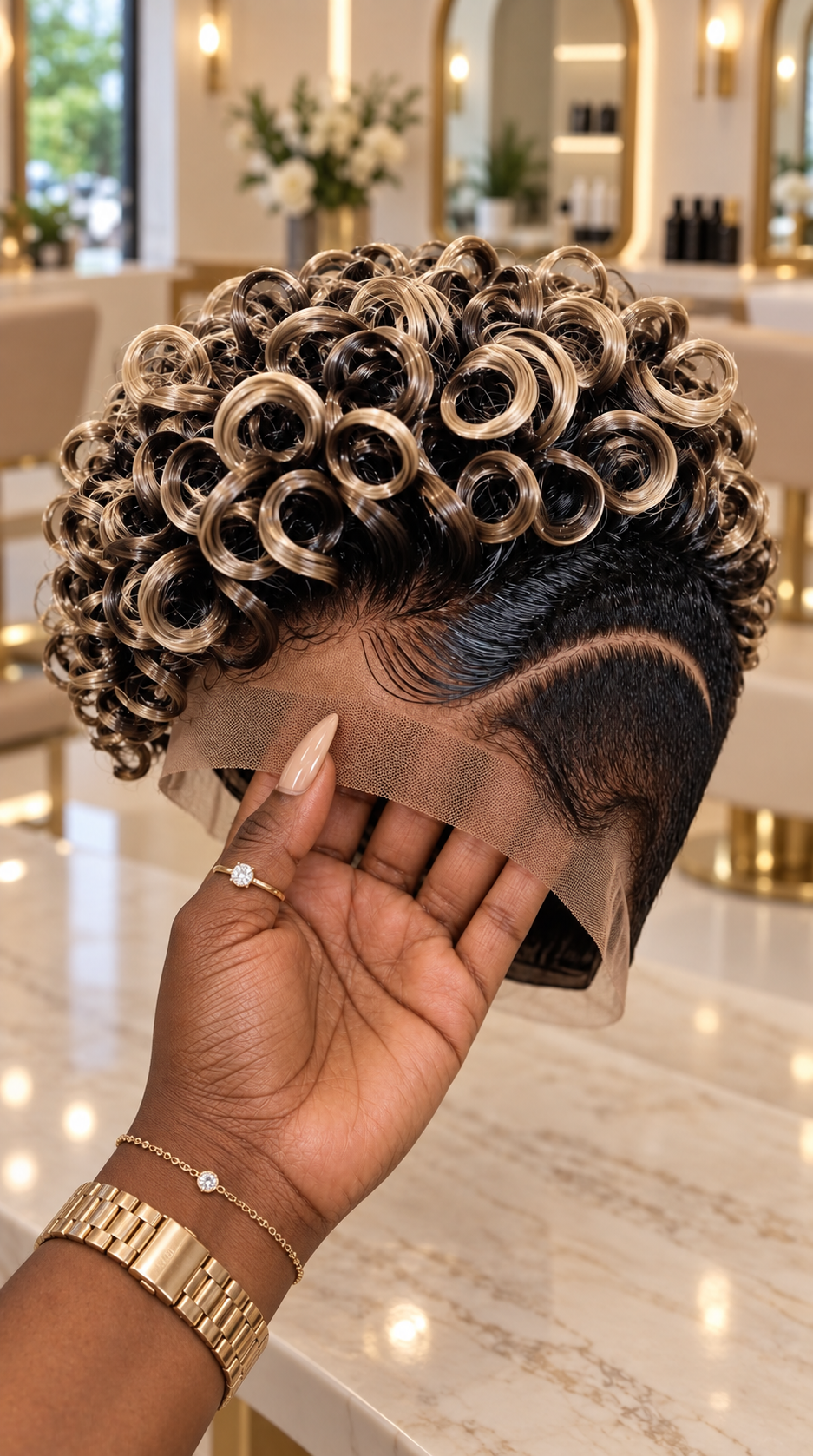
The first thing you notice about this short curly wig is the way the blonde follows the shape of each ringlet. The hair looks almost black at the base, then shifts through brown and into pale gold as it curves. Because the lighter strands travel around the loops, you can see where one curl ends and another begins, even where they overlap. The result is a golden ringlet pixie with enough contrast to show the work that went into each curl.
The visible side gives the wig a second point of interest. An arched, scalp-toned line crosses a close dark section near the temple. Above it, the hair curves forward in a broad wave before meeting the ringlets. Below it, the short hair stays close to the shape of the wig. That quiet patch of dark hair gives the blonde loops room to stand out and makes the profile feel deliberate, even though the curls themselves vary in size and direction.
The unit is held by hand, with a strip of brown lace extending beyond the front hairline. That view lets you see the lace, the fine hairs at the edge and the arrangement of the curls before the wig goes on. The way the temple detail frames your face will become clear at a fitting. If you want a similar wig made, use the photo to communicate three things clearly: the size of the ringlets, the placement of the blonde and the curve you want to see from the side.


What Gives the Ringlets Their Shape
Several of the curls have open centers, so each one reads as a loop even where it sits close to its neighbors. Some face forward and look almost round. Others turn away, showing a longer curve or a narrow flash of gold. Around the front, a few curls sit low enough to partly shade the edge of the wig. Higher up, the loops overlap and build height through the top. A stylist can use that contrast in direction to keep a similar set from looking uniform all the way across.
If the reference is going to a wig maker, show which ringlets you like best. The larger loops near the upper front give the style its boldest shape. The smaller ones along the outer edge help round off the silhouette. Ask the maker how that mix would translate to a cap in your size. The same number and size of curls can sit differently on a smaller or larger cap. What matters in the finished piece is whether you can still make out the loops and whether the top looks balanced from the front and side.
The dark roots are part of what makes the open centers easy to read. Where the hair curves away from the light, the blonde gives way to darker brown or black. That creates depth even in sections where the hair sits close together. For a similar effect, ask to see a highlighted strand curled into a loop. A flat color swatch can help you choose the shade, but a curled sample also shows where the light and dark tones end up once the hair is set.
Choosing Blonde That Works With the Dark Base
The highlights in the photo range from beige blonde to a warmer gold. They look broad on some loops and fine on others, and the area closest to the visible temple stays dark. If you want a similar contrast, describe where the blonde should be strongest as well as the shade itself. You might ask for the lightest hair on the outward-facing turns through the top, with a softer blend underneath. This gives a colorist a clearer brief than asking for a blonde pixie or choosing a shade name from a chart.
Warm salon lighting can make a beige highlight look more golden. Compare a color sample by a window and under indoor lighting if you can. For an online order, request a short video of the finished wig beside a neutral background. A slow turn will show how much blonde you see from the front and whether the dark base is still visible when the wig is viewed from the side. If the seller offers several shades, ask to compare them under the same lighting.
A little more depth at the root can make the color transition feel gradual, while a stronger blonde band gives each curl a brighter outline. Consider how much contrast you want near your forehead, where the light strands will be closest to your face. If you already own a short wig you like, take a photo of it in daylight and tell the maker whether you want these highlights brighter, warmer or more muted. It gives both of you a shared reference for decisions that are difficult to convey in words alone.
The Temple Curve and How It Sits on the Face
The arched line is most visible because the hair around it lies in two different directions. Above the line, the front section curves toward the brow. Below it, the short dark hair follows the side of the unit. The photo shows the outline clearly on one side. If you are commissioning the wig, discuss the opposite side and nape separately. You might choose a simpler finish on the other side so the arch remains the focus, or ask to see how a second curve would look on the maker’s head form.
Decide which side you want the arc on before ordering. Use your own left and right in the written brief, especially if you send a selfie or a screenshot that may have been flipped. At a fitting, look at the line from eye level and from a slight angle. A curve that looks high on a display head may sit closer to your ear once the cap is in place. If you wear glasses often, bring them so the stylist can check where the arms meet the short side and whether they cover part of the arch.
How To Order This Style
Look for specialist wig makers, custom wig studios and short-hair stylists whose portfolios include open ringlets and close temple work. Beauty supply stores and wig boutiques can also be good places to try on a ready-made curly pixie and see which cap shape suits you. If you find one with the right curls, ask whether the seller can show you the short side clearly. Product photos taken straight on can hide how far the fuller hair extends toward the temple or how much room there is for an arched detail.
For a custom order, send the reference along with your head measurements, your preferred temple side and a short description of where you want the blonde. Tell the maker whether you want the front curls above the brow or falling slightly forward. Ask what they would change to make the wig sit well on you. Someone who regularly makes short styles should be able to explain where they would place the fullest curls and how they would arrange the shorter hair around the ear.
Before paying, request a front view, both side views, a back view and a clear photo of the inside of the cap. Ask the seller to confirm the fiber, the lace shade, the cap measurements and whether the lace arrives trimmed. For a custom piece, check when you can approve the style, whether adjustments are included and what the seller’s policy covers after the lace is cut. If you are buying a ready-made wig to have altered locally, show the listing to your stylist first and ask which parts of the look they can reproduce on that unit.
To book a salon appointment, look for examples of short wig fittings, curly pixies and sculpted hairlines. Ask whether the stylist can fit the wig and refine the temple in one visit or needs time to work on it beforehand. If you want a version on your own hair, book a consultation with a stylist who works with short sets. They can look at the length available for larger loops on top and discuss whether the curved side would come from the direction of the set, a part or a cut tailored to your hair.
Choosing a Cap and Installation Method
The brown lace is visible at the front of the pictured wig. The full extent of the lace and the attachment system are harder to assess from this angle. When shopping for a similar unit, ask the seller to show the lace against a background close to your skin tone and provide a photo of the inside. Check that the cap can sit where you want the hairline, especially above the eyebrow and beside the ear. The exposed temple makes those areas more prominent than they would be under a longer fringe.
A lace-front wig or a unit made with a frontal can offer room to shape the front and work around the temple, depending on how far the lace extends. A closure can work if the visible curve sits within the available area or if the maker can incorporate it into the short side using another method. Ask to see a finished example. Full lace can give the stylist more room for future changes to the part or direction of the hair. If you expect to wear the same set most days, focus on how the front and the exposed side sit in the finished style.
For a glueless pixie wig, check how the adjustable straps, elastic band or other attachments are positioned. Measure according to the maker’s instructions, including ear to ear if requested. Try turning your head and looking down during the fitting. If the cap moves, check the size and attachment placement before tightening the band further. Even a small shift can change where the arc lands at the temple. A comfortable fit also makes it easier to remove the wig at the end of the day without disturbing the front wave.
An adhesive-based installation may be an option if you want added hold along the exposed lace edge. Have the stylist show you the placement before they trim or secure the lace. Use a mirror to see how the curve relates to your brow and ear, then check that the front ringlets fall where you want them. If you choose adhesive, ask which removal product matches it and how to release the edge gently. Ask the stylist to explain what to do if one corner begins to lift between appointments.
How Length and Density Affect the Finished Pixie
Order by the height and shape you want to wear as well as by the length listed on the product page. A section of hair takes up less visible space once it is wound into a ringlet, and a curl that sits upright gives the top more height than one turned toward the side. Ask for a profile photo to see where the tallest curls sit. If you like the ringlets but want a lower profile, discuss turning some of the loops sideways or using a smaller curl diameter at the crown.
Density is best considered by area. Extra hair across the top can make the silhouette fuller, but it can also cover the open centers and crowd the blonde sections together. A lighter temple area helps the arch remain visible and leaves space around the ear. Ask the maker how they would balance those sections, particularly if you prefer a fuller front. A photo of the finished wig from slightly above can show whether the curls still have room to read individually.
Illustrative Prices for a Highlighted Ringlet Pixie
The ranges below are in USD and are intended for budgeting. Actual quotes depend on fiber, lace, custom color, cap size, supplier and location. Ask separately about delivery, fitting, lace trimming and the first curl set. An online listing may include the styled wig only, while a salon quote may cover the unit, fitting and finishing during the same appointment.
| Category | Illustrative Price Range | Potential Scope |
|---|---|---|
| Premium Custom | USD 300–600+ | Made-to-measure cap, custom blonde placement, hand-shaped ringlets and a temple curve fitted to the wearer. |
| Standard Custom | USD 170–300 | Standard cap adapted for the preferred side, with a short cut and a requested curl set. |
| Basic Human Hair | USD 95–180 | Short human-hair base that may need separate color work, a curl set or temple shaping. |
| Premium Synthetic | USD 45–105 | Pre-styled curly pixie with a blended shade and a more detailed front, depending on the unit. |
| Basic Synthetic | USD 20–45 | Ready-made short curly wig with a fixed color pattern and simpler styling at the sides. |
When comparing quotes, find out which details come with the unit and which would require another appointment. A ready-made wig with well-placed highlights may only need a fitting. A plain dark base may need color, a short cut and a full reset before it resembles the reference. If the exact arch matters to you, ask the maker to list temple work on the order and send a side view for approval. That is easier to judge while the maker still has the piece on the stand.
Caring for the Ringlets and the Lace Edge
During daily wear, handle the unit from the cap rather than lifting it by the curls. If a loop has shifted, follow its existing direction with your fingers and settle it back into place. Concentrate on the curl that needs attention so the neighboring loops keep their shape. Check the temple after wearing glasses or headphones, since both can rub where the hair lies close. Ask the maker what product was used to form the front wave so you know which products are suitable for a small touch-up.
For frequent wear, check the lace and cap each week for perspiration and product buildup. Wash according to the fiber instructions and how much wear the unit has had. When it is time to clean it, handle the front edge gently and avoid rubbing the blonde loops against one another. Blot the wig and support it as it dries, leaving room around the front wave and the outer ringlets. If the wig has been installed with adhesive, follow the product’s removal instructions before cleaning the lace.
Human hair may allow more options for resetting the loops after washing, especially if you know the original direction and size of the set. The condition of highlighted hair can affect how it responds to heat and styling, so ask the maker what method they used. Some synthetic fibers hold a pre-set curl through ordinary washing, while others allow limited restyling under specific conditions. Use heat or steam only when the maker confirms that the fiber can tolerate it. A stylist can help when several loops lose their shape at once or the wave above the temple begins to separate.
Store the wig on a stand that supports the cap and leaves the side free. Keep it out of prolonged direct sunlight and use care products suitable for its fiber and color. For travel, choose a firm case with enough clearance for the tallest ringlets and support the inside of the cap so it keeps its shape. When you unpack, check the large loops at the top and the temple area first. A loose curl may only need a small adjustment, while a flattened section can benefit from a professional reset.
Where This Look Works Best
This pixie gives you visible color and fullness without hair falling onto the shoulders. The contrast between the golden loops and the dark side makes it especially striking in profile. It also gives you choices when ordering. You can keep the bolder blonde concentration at the top for more contrast, or request finer ribbons of color if you want the hairstyle to read darker indoors. Either choice can keep the round curl shape and the curved temple that make the look recognizable.
The more intricate finish takes some upkeep. Frequent pressure from headwear can flatten the outer loops, and the temple curve depends on consistent placement each time the wig goes on. A fixed side detail also gives you fewer ways to switch the direction of the front. Before deciding, look at the style from both sides and try putting the wig on yourself during the fitting. If the curve lands where you want it and the curls sit comfortably above the brow, you will have a clear idea of how the style will work in everyday wear.
Search Terms
golden ringlet pixie wig · blonde highlighted curly pixie · dark root ringlet wig · short curly wig with curved side part · beige blonde pixie ringlets · sculpted temple pixie wig · golden curls on a dark base · short lace pixie with blonde curls