
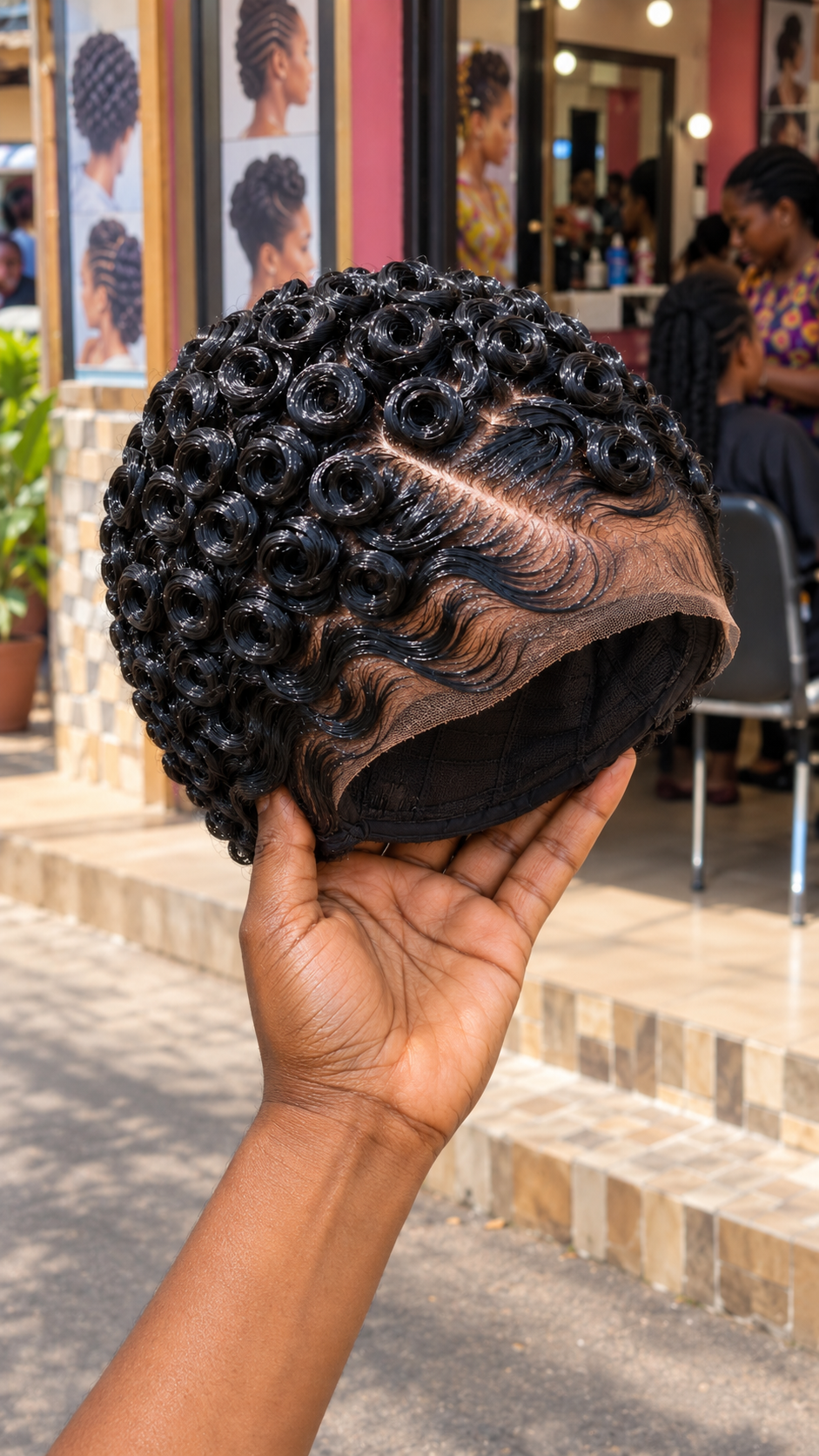
The front of this black finger wave pixie wig is where the hairstyle comes into focus. A broad wave curves away from the side part, dips along the hairline and turns back toward the temple. Above it, compact circular curls sit in close rows, each with a small, dark center. The waves lie low enough for their fine lines to show, while the raised curls catch brighter reflections. In daylight, those two surfaces give a single shade of black enough variation to show the pattern clearly.
The side part is one of the few open areas among the curls. It runs at an angle from near the front toward the top, separating the larger field of circles from the flatter hair beside it. The wave pattern changes scale as it moves outward. The first bend beside the part is broad, while the curves closer to the temple are smaller. Fine hairs follow the outer edge and soften the transition from the sculpted front to the visible brown lace.
The wig is held from underneath, so the photo shows both the styled surface and a section of the dark cap behind the front edge. If you are using this image to commission a wig, treat the curl arrangement and the front waves as two separate parts of the brief. A maker can reproduce the compact top and still tailor the front to the amount of forehead you like to show. That small adjustment can change the way the whole pixie frames your face.


The Wave That Sets Off the Whole Cut
Follow the hair from the part toward the outer edge and you can see how the direction changes at each bend. Near the part, short strands turn into the first long curve. Lower down, the wave doubles back before the ends come together closer to the temple. Those turns give the front its shape without adding much height. If you have seen short wigs where the edge looks like a row of separate little curls, this reference shows a different effect. The wider waves connect the front to the side and leave a longer line for the eye to follow.
At a consultation, point out how far you want the deepest part of the wave to dip. Some wearers like the front to sit high enough to leave the full brow area open. Others prefer the curve to sit closer to one brow, especially on the fuller side of the part. Ask the stylist to place the wig first and show you both positions in a mirror. The best place to judge the wave is against your forehead, with the cap resting where it will sit during ordinary wear.
The fine hairs at the edge are easier to appreciate because they follow the direction of the larger waves. If you like a more understated hairline, the stylist can use fewer of those fine hairs while retaining the broader bend behind them. If you enjoy a more visible finish, ask where the smallest curves will fall when viewed from the side. Bring your usual glasses if you wear them. A temple wave that looks balanced in a front photo may end up exactly where a frame arm needs to rest.
Why the Circular Curls Read So Clearly in Black
Most of the visible curls sit low and turn into themselves, giving the top a series of small circles. Their centers remain visible even where neighboring curls touch. On the fuller side, the circles continue downward and become smaller near the edge of the wig. That variation helps the shape stay rounded without becoming bulky at the side. When comparing ready-made units, look at the curl direction as well as the listed length. Short corkscrew curls that rise vertically will give a different profile, even if the wig is also sold as a pixie.
The bright marks along the ridges are reflections on black hair. If you want that level of shine, ask the maker to photograph the finished set outside or near a window. An image taken directly under a salon light can make the surface look uniformly glossy. In softer light, you can see whether the circular shape still reads and whether you like the contrast between the top and the flatter front. You can also tell the stylist if you prefer a gentler sheen for daytime wear while keeping the same curl arrangement.
Ask for a photo from slightly above if the spacing between circles matters to you. The view in the reference shows small gaps near the side part and a tighter grouping across the fuller side. A little room around the part keeps that line visible after the wig is fitted. Farther away from it, the close arrangement makes the top look continuous. A custom maker can preserve those proportions without matching every curl individually, which gives them room to work with your cap size and the finished height you want.
How To Order This Style
Look for a custom wig studio, a specialist short-wig boutique or a salon whose portfolio includes molded finger waves and close curly sets. Local beauty supply shops can be useful if you want to try a ready-made base before ordering a custom version. When you show the reference, point to the broad wave below the part and the circular curls above it. A listing for a short curly wig may show the right length while using a very different curl shape. The reference helps the seller check the details you care about before suggesting a unit.
For a custom order, provide your measurements, your preferred part side and a note about how closely you want the curls to sit. Describe left and right from your own perspective, or mark the side on the reference. Ask for a compact shape at the visible temple if you want the front wave to remain easy to see. The photo offers a good view of the top and front, so also discuss what you want at the back. A clear rear photo or a second reference is useful if the nape length is important to you.
Before paying, ask to see the front, both sides, the back and the inside of the actual wig if it is already made. A short video can show how the front and side look as the unit turns. Confirm the fiber, cap size, lace color, parting area and whether the lace comes trimmed. For custom work, ask when you can approve the set and what happens if the part or wave needs an adjustment. Get the production time, delivery cost and alteration terms in writing, especially when the maker and installer are different people.
To book an installation, send the salon the reference and a photo of the unit you plan to bring. Ask whether you need a fitting alone or a fitting with a new wave set. If you want to wear the style on your own hair, look for a stylist with experience in short cuts and sculpted sets. At the consultation, have them assess the length available beside the part and around the temple. There needs to be enough hair through the front to make the broad curve and enough length on top for the curls to turn inward.
Choosing a Cap for the Part and Hairline
Brown lace is visible at the front of the reference, and the dark interior appears behind it. To compare construction, ask for a clear view of the full inside of the wig. The area you need to inspect runs from the front hairline back along the intended part. A lace-front unit with enough depth in that area can give a stylist room to shape the wave and preserve the angle of the part. Ask the seller to show the usable lace with the hair gently moved away from it, especially if the wig comes with a fixed part.
A frontal can offer more working room across the front and near the temples, depending on its dimensions. That can be helpful if your stylist plans to adjust the position of the wave on both sides. A closure may suit a fixed part if its position and shape accommodate the longer wave you want. Ask where the closure ends relative to the temple. Full lace can make sense for someone who wants more options for rearranging the wig later. For this particular style, judge each option by how well it supports the front and how comfortably the rest of the cap fits.
For a glueless installation, ask to see where the adjustable straps, elastic band and any other attachments sit. Measure your head according to the maker’s directions. Circumference helps with the general size, while ear-to-ear and front-to-nape measurements can help establish where the sides and front will land. During a fitting, look down and turn your head before agreeing to the final position. If the wig slides or the band feels overly tight, ask the stylist to check the size and attachment placement before taking any lace off.
An adhesive-based installation can suit a compatible lace unit when you want extra hold along the front. Agree on the hairline position before the stylist secures it, because the longer wave can make even a small change in height easy to see. Ask how to release the lace and which remover goes with the product used. If you plan to take the unit off regularly, tell the stylist at the consultation. That gives you a chance to compare how each fitting method affects the time and care needed between wears.
Getting the Length and Fullness Right
For this wig, a profile photo tells you more about the finished length than a single measurement on a product page. Much of the hair folds into the circles, so a curl can sit close to the head even when its strand is long enough to wrap more than once. Ask for the height of the finished set and look at how the side meets the ear. If you prefer a lower top, the maker can discuss smaller circles or a flatter curl position while leaving enough length in front for the wider waves.
Density affects the crown and the hairline in different ways. Extra hair on top can give the pixie a fuller outline, but it can also crowd the circles until their centers are hard to see. At the front, too much hair can make the wide wave look thick along its edge. Ask the stylist how they would balance those areas if you want a fuller top. A finished photo beside a ruler or on a form close to your cap size can help you judge whether the height and width are right for you.
Illustrative Prices for a Black Finger Wave Pixie
The ranges below are in USD and are intended as budgeting examples. Quotes vary with the seller, fiber, cap, location and amount of styling. Ask separately about delivery, fitting, installation and future resets. A base wig and a finished custom unit may look similar in a product listing even when the prices cover different work.
| Category | Illustrative Price Range | Potential Scope |
|---|---|---|
| Basic Synthetic | USD 20–45 | Ready-made short wig with a fixed part or a simple molded front. |
| Premium Synthetic | USD 45–105 | Pre-styled pixie with more distinct circular curls or more detailed forehead waves. |
| Basic Human Hair | USD 95–180 | Short human-hair unit that may need a separate curl set and hairline appointment. |
| Standard Custom | USD 160–290 | Standard-size cap with a requested part direction, compact curl set and front wave arrangement. |
| Premium Custom | USD 285–575+ | Made-to-measure construction with a sculpted front and curl placement tailored to the wearer. |
When comparing quotes, ask what it would cost to achieve the visible finish you want. If the crown on a ready-made unit already suits you, you may only need the front refined and the cap fitted. If the part runs in the wrong direction, the stylist may need more room than the base allows. Show them the proposed unit before buying it. For a custom order, agree on the part, wave height and side finish ahead of time so you can assess those details in the approval photos.
Maintaining the Front Waves and Close Curls
Handle the cap at the sturdier sides when putting the wig on or taking it off. Try to keep pressure away from the long front wave, particularly where it makes its deepest turn. If one curl shifts, guide it gently along its original curve using your fingertips. Working on one circle at a time helps you preserve the arrangement around it. Check the smaller curls near the temple after wearing headphones or glasses. Those are the areas most likely to have been pressed or rubbed during the day.
For frequent wear, look at the inside edge and front lace weekly for perspiration or product residue. Set the wash interval according to how often you wear the wig and the care instructions for the fiber. During washing, support the front edge and avoid rubbing the circles together. Blot away excess moisture and dry the unit on a stand that gives the front waves space. If you use adhesive, release the edge with the compatible remover before cleaning the lace. Ask the stylist how to remove residue from the underside without pulling on the fine hairs.
When a human-hair unit needs a reset, a stylist can assess whether a wet set or another method suits the hair and the existing finish. Take a front and profile photo when you first receive the wig so you can show how the wave and curls were arranged. With synthetic fiber, follow the maker’s limits for water temperature, steam and heated tools. If the long wave loses its outline or several curls open at once, ask for a reset before layering on more styling product. Extra residue can make it harder to see the fine lines that give the front its shape.
Between wears, use a stand that supports the cap without stretching it. Leave space around the wave and the side curls. If you are taking the wig to a salon or traveling with it, use a firm case with enough clearance above the top. Add light support inside the cap so it keeps its shape, and check that the lid clears the longest wave. At your destination, put the unit on a stand and look at the hairline before wearing it. A displaced curl is easier to see when you can turn the whole wig in your hands.
Where This Pixie Fits Into Your Routine
The short shape keeps hair off the shoulders, and the front wave gives black hair a visible pattern even when you are seen straight on. The part and curl arrangement also give you a clear reference when returning to a stylist for a touch-up. For an occasion, you can leave the temple area open and let the wave sit beside a simple earring. For regular wear, decide how much shine you want in the places you spend the most time. The same style can read softly indoors and show every ridge outdoors.
The extra care comes from the shape of the front. Pressure from a tight hat can flatten the wave, and a fixed part limits how far you can move it from side to side. If you plan to wear the wig often, practice putting it on during the fitting and see whether the wave returns to the same place. Then check the visible part and temple in a mirror from the side. Those two views will help you decide whether you can maintain the finish yourself between appointments or would prefer a salon reset as part of your routine.
Search Terms
black finger wave pixie wig · glossy black circular curl wig · short wig with side part and waves · sculpted forehead wave pixie · black wig with flat ring curls · close curly pixie with temple waves · lace front finger wave pixie style · short black wig with molded edges