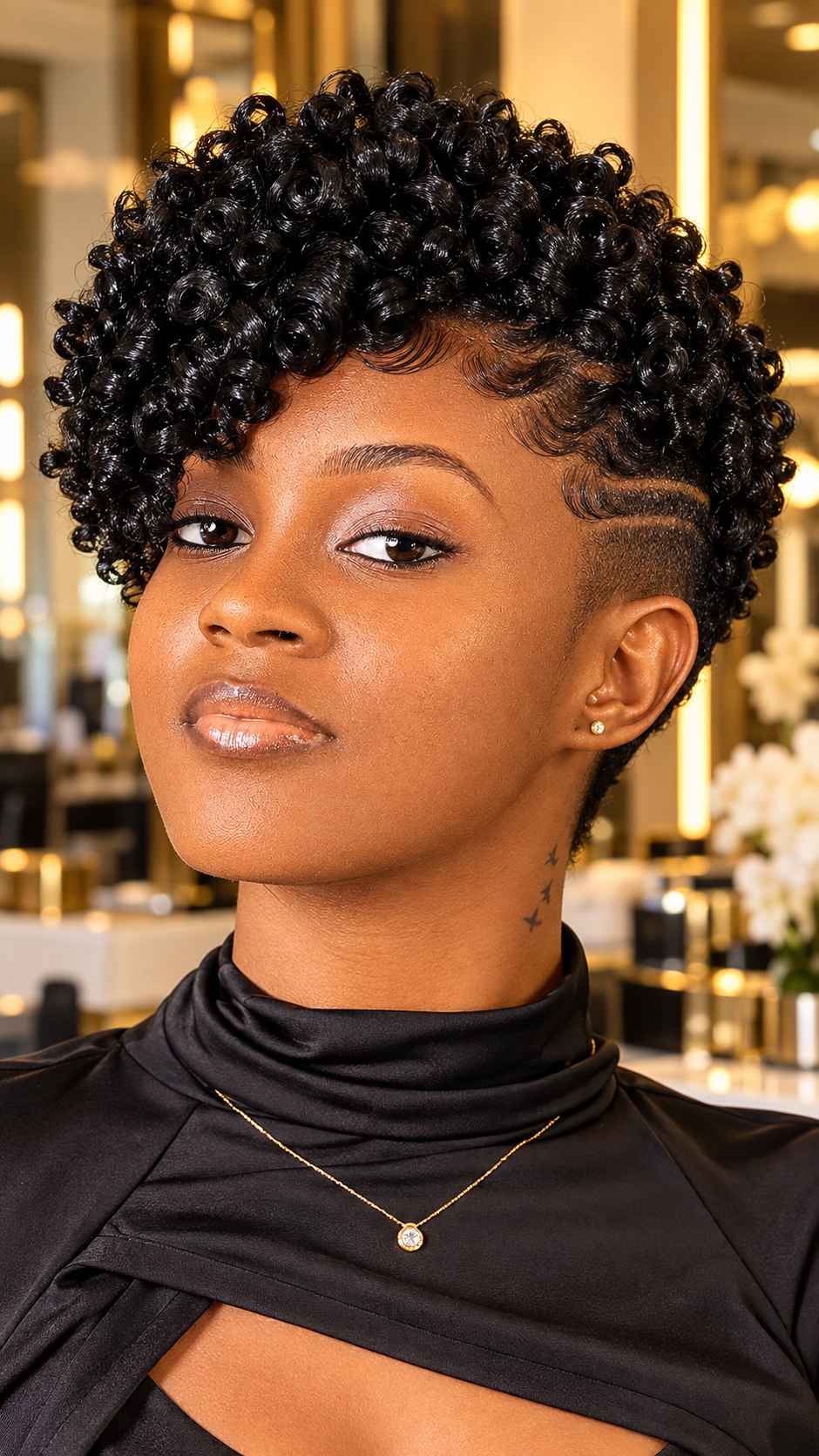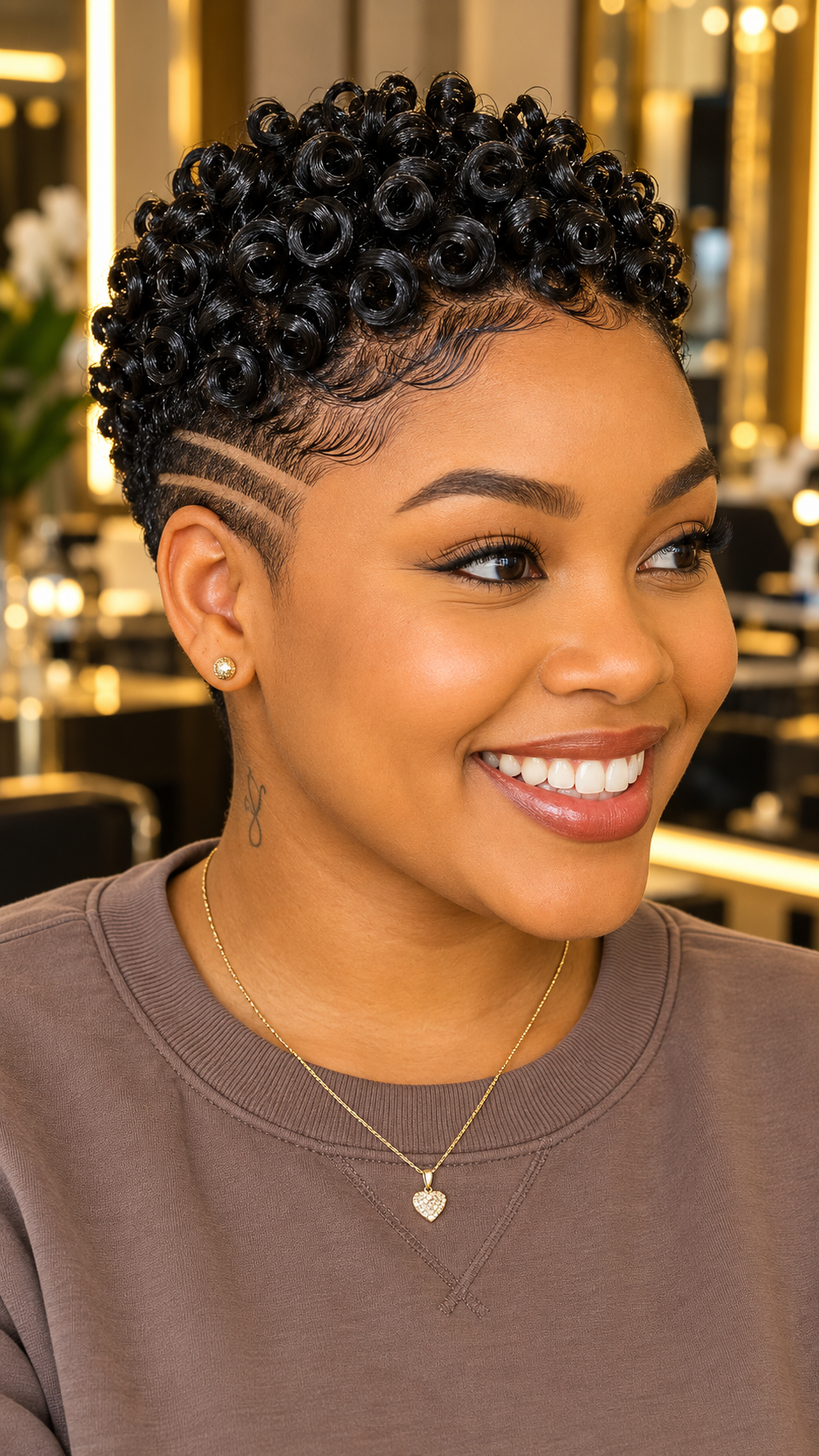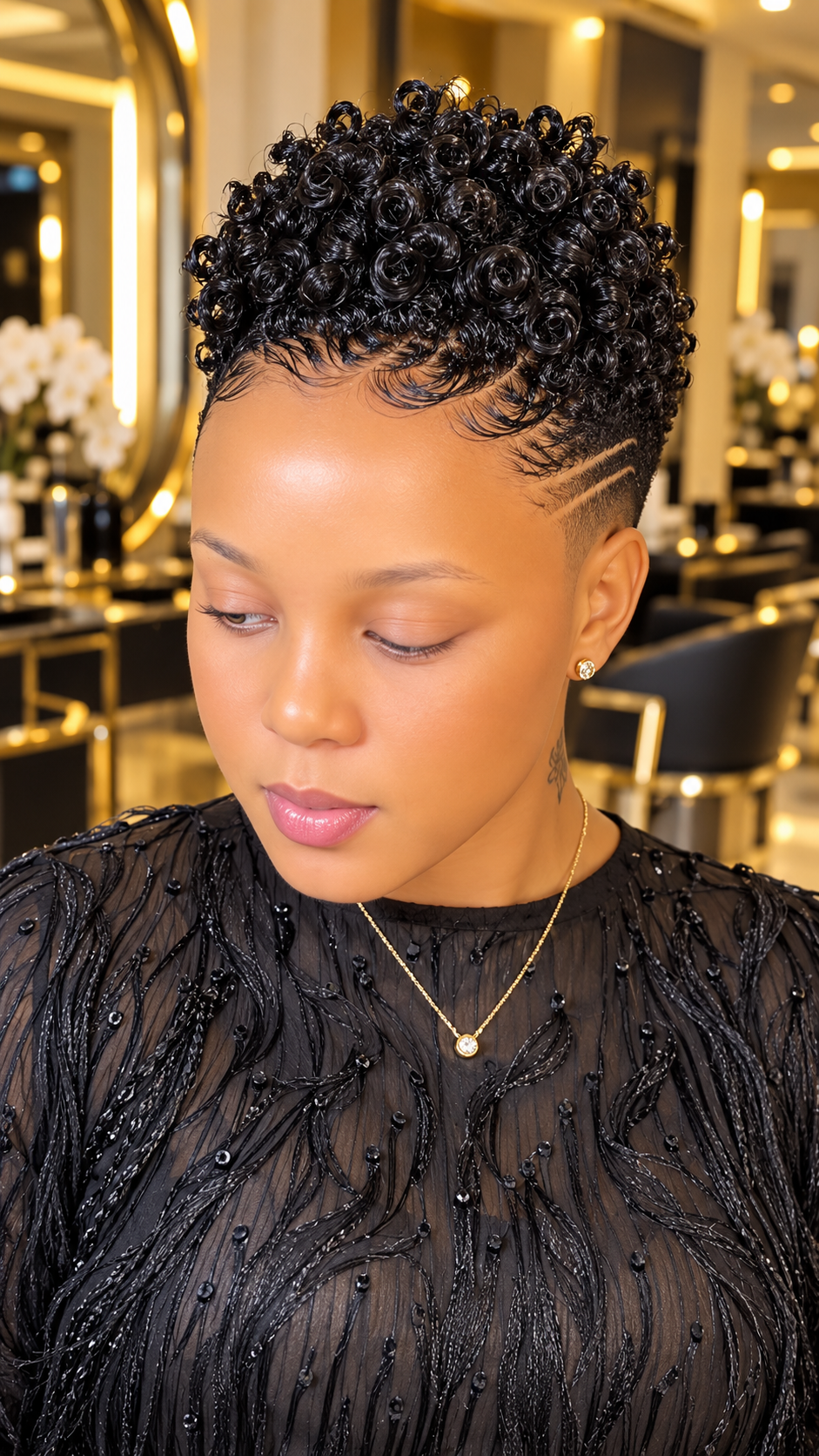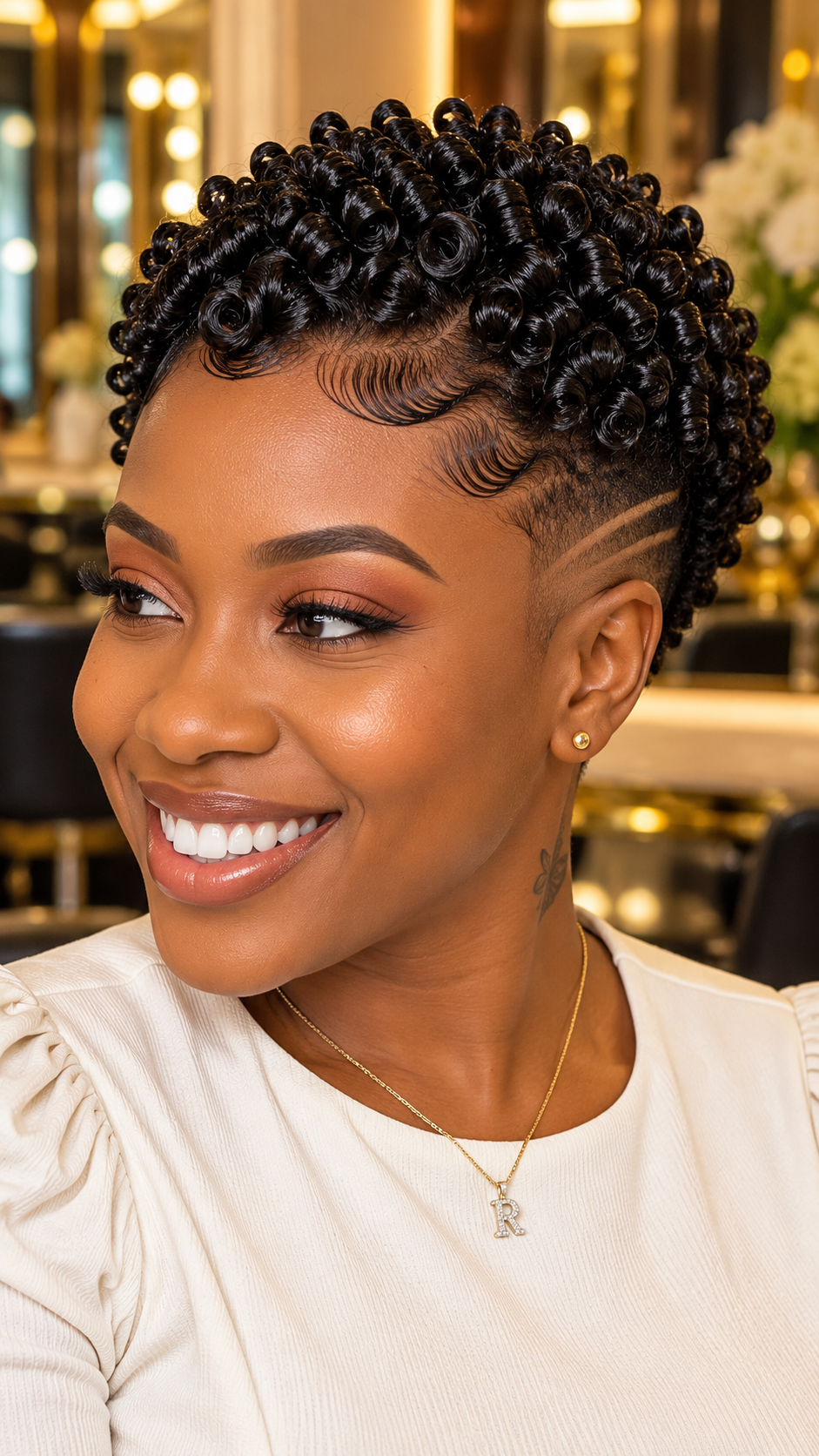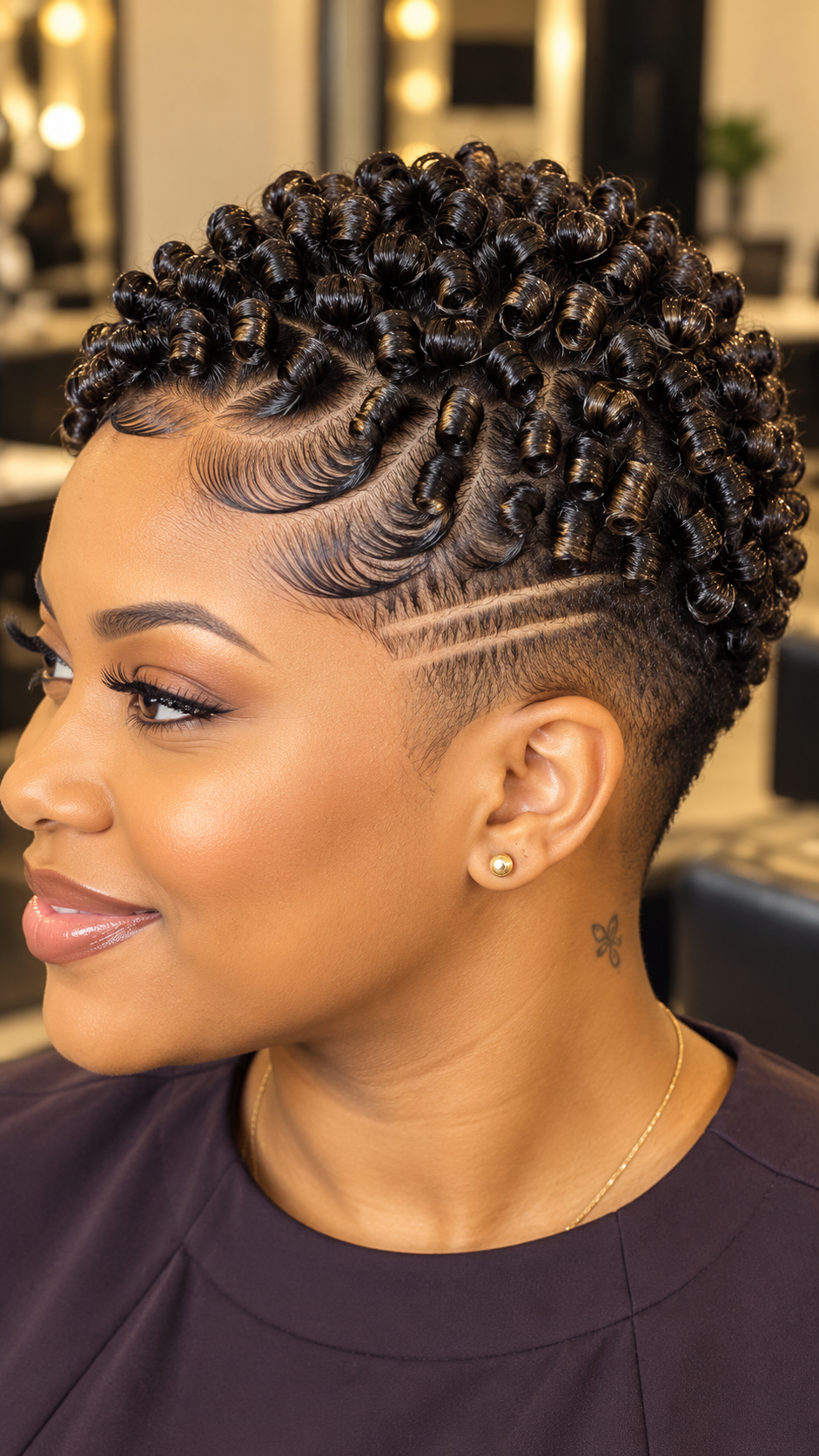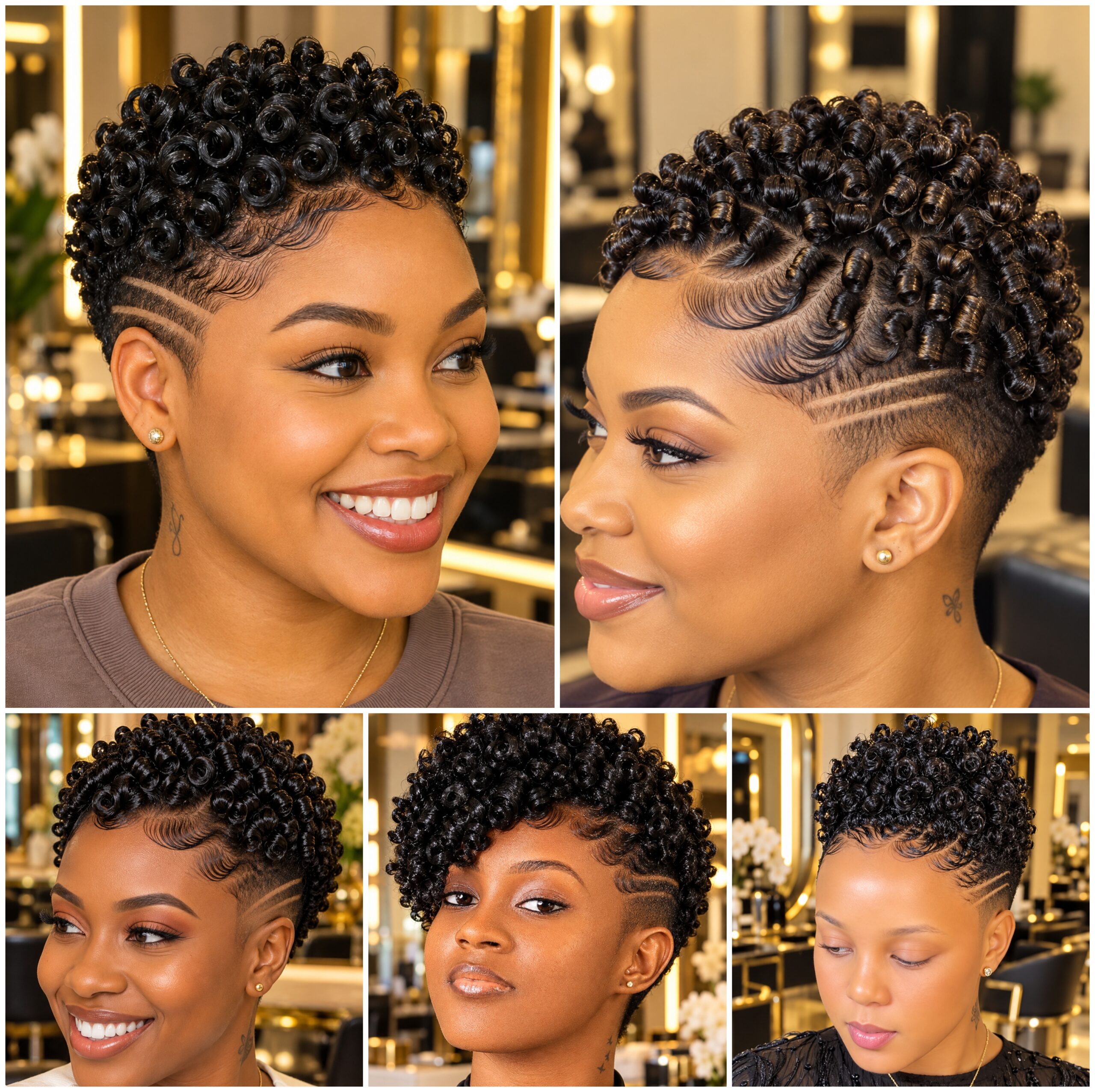
A sculpted wave pattern along the front paired with a compact coiled crown creates a distinctive short natural hairstyle with both softness and precision. Closely graduated sides provide contrast beneath the curls, while carefully shaved accents add personality around the temple area without taking attention away from the textured top.
Achieving a balanced result requires controlled moisture, flexible hold, and careful barber work. Lightweight leave-in conditioner can support the natural texture, while styling foam or a soft-hold gel helps shape both the spirals and the flowing front section. Heavy products are best avoided because they can flatten shorter curls and leave the hairline feeling stiff.
Combining Two Curl Patterns Naturally
The crown can be divided into small damp sections and shaped into individual coils with the fingers. Keeping the sections relatively consistent helps create visible separation while preserving enough density for a rounded silhouette.
The front requires a different approach. Instead of forming separate spirals, the hair can be guided into flowing S-shaped curves using a fine comb, fingers, and styling foam. This creates a smooth transition from the forehead into the fuller curls behind it.
Natural shrinkage should be considered before trimming the crown. Tightly curled textures may contract considerably after drying, so leaving additional height initially gives the stylist more control over the final proportions.
Shaping the Front Without Overloading the Edges
Small waves generally complement a compact crown better than oversized curves. The pattern can begin near one temple and move gradually across the front, or remain concentrated toward one side for a slightly asymmetrical appearance.
A fine-tooth comb or edge brush can guide the sections while the fingers hold each curve in position. Once the desired pattern is formed, a satin scarf can be placed gently around the front while the product sets.
Women with delicate edges may prefer styling foam instead of very firm edge-control formulas. Gentle manipulation helps preserve the natural hairline while still producing visible sculpted detail.
Creating Artistic Detail Through the Sides
The closely cut temple area provides space for personalized barber artwork. A single sweeping line offers a restrained accent, while two curved marks, angled sections, or a compact geometric design can create stronger visual interest.
The pattern should remain proportional to the available side area. Narrow, clearly separated carvings tend to work especially well because they remain recognizable without overwhelming the crown.
The barber can adjust the direction according to head shape and natural growth patterns rather than applying exactly the same design to every client.
Getting the Fade Proportions Right
A lower fade preserves additional density through the upper sides while concentrating the shortest hair around the temples, ears, and neckline. This provides a softer transition beneath the curls.
Taking the lowest sections closer to the skin creates stronger contrast and provides a clearer background for shaved artwork. The trade-off is more frequent maintenance because new growth becomes noticeable sooner on very closely cut areas.
The back should gradually connect with both sides so the silhouette remains balanced from every angle rather than appearing heavily faded only around the temples.
Where to Have the Hair Done
An Afro hair salon, natural hair studio, curl specialist, or barber experienced with women’s short natural cuts is usually the best place to request this combination. Useful searches include finger wave natural hair stylist near me, women’s coily fade barber, Afro barber with carved designs, and short natural hair specialist.
Review recent client photographs before choosing a professional. Look for examples showing both detailed front styling and precision barber work. A stylist who creates excellent curls may not necessarily specialize in carved fade designs, so checking both skills is worthwhile.
If the salon uses separate natural-hair stylists and barbers, ask whether both services can be coordinated during the same visit. This allows the crown proportions to be established before the final side artwork is added.
Booking the Correct Service
Appointments are commonly arranged through Instagram, WhatsApp, salon websites, direct phone booking, or online scheduling platforms. Send front and side reference photographs before confirming the appointment and explain the desired crown height, front wave pattern, fade depth, and side artwork.
When using an online booking menu, relevant services may appear under names such as finger waves, natural hair styling, women’s fade, taper cut, or hair design. If the menu is unclear, contact the salon before paying a deposit.
Ask whether shampooing, conditioning, curl preparation, wave setting, cutting, fading, outlining, and carved detailing are included in the quoted price. This prevents arriving for a basic haircut when multiple styling services are actually required.
Buying a Comparable Wig
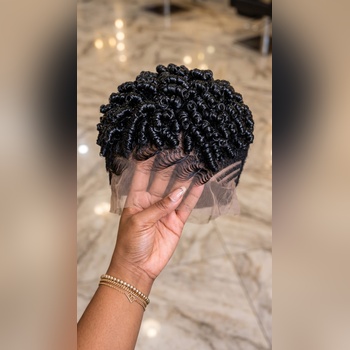
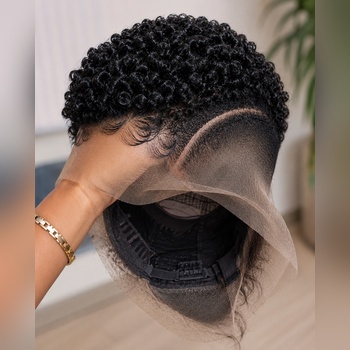
A removable interpretation can be explored through custom wig makers, beauty supply stores, specialist Afro wig retailers, and online wig shops. Helpful searches include finger wave coily pixie wig, short natural wig for Black women, finger coil lace wig, and tapered coily pixie wig.
Human-hair units generally provide more flexibility for reshaping the crown and creating small waves around the front. Quality synthetic units may preserve their curl pattern with less daily manipulation, although customization options can be more limited.
Before ordering, check cap measurements, coil density, crown length, temple density, lace shade, and hairline construction. A realistic lace front is particularly valuable when the front waves need to sit close to the forehead.
Authentic shaved artwork is difficult to reproduce convincingly on a conventional wig. For a custom order, send several reference photographs and ask whether reduced side density can imitate the barbered profile rather than assuming the carved effect will look identical to natural hair.
Refreshing the Crown and Front at Home
Between wash days, lightly mist individual curls with water when they begin losing shape. Add a small amount of leave-in conditioner or styling foam and rewind loose sections around a finger instead of disturbing the entire crown.
The front waves can be refreshed separately. Apply a small amount of foam, guide the existing curves back into position, and briefly secure the area with a satin scarf while it sets.
A satin bonnet or pillowcase can also reduce overnight friction. Heavy oils and thick creams should be used sparingly because excessive buildup can reduce curl bounce and make the sculpted front harder to reshape.
Keeping the Carved Areas Crisp
The shaved artwork and closest portions of the fade generally require attention sooner than the curls above. As new growth appears, the patterns gradually lose contrast even when the crown remains in good condition.
A barber can refresh the existing carvings and surrounding blend while preserving the upper length. Following the original design instead of making it progressively wider at every visit helps maintain the intended proportions.
Flowing front waves, springy natural coils, closely graduated sides, and personalized barber accents create a distinctive combination of texture and precision. Regular hydration, gentle edge care, and timely side maintenance can keep the hairstyle expressive while protecting the natural movement of the crown.
Search Terms
finger wave coily fade · carved side natural haircut · coily crown with finger wave front · women’s Afro fade design · natural hair finger waves with fade · short coils with carved sides · coily pixie finger wave hairline · Black women’s fade with side design