
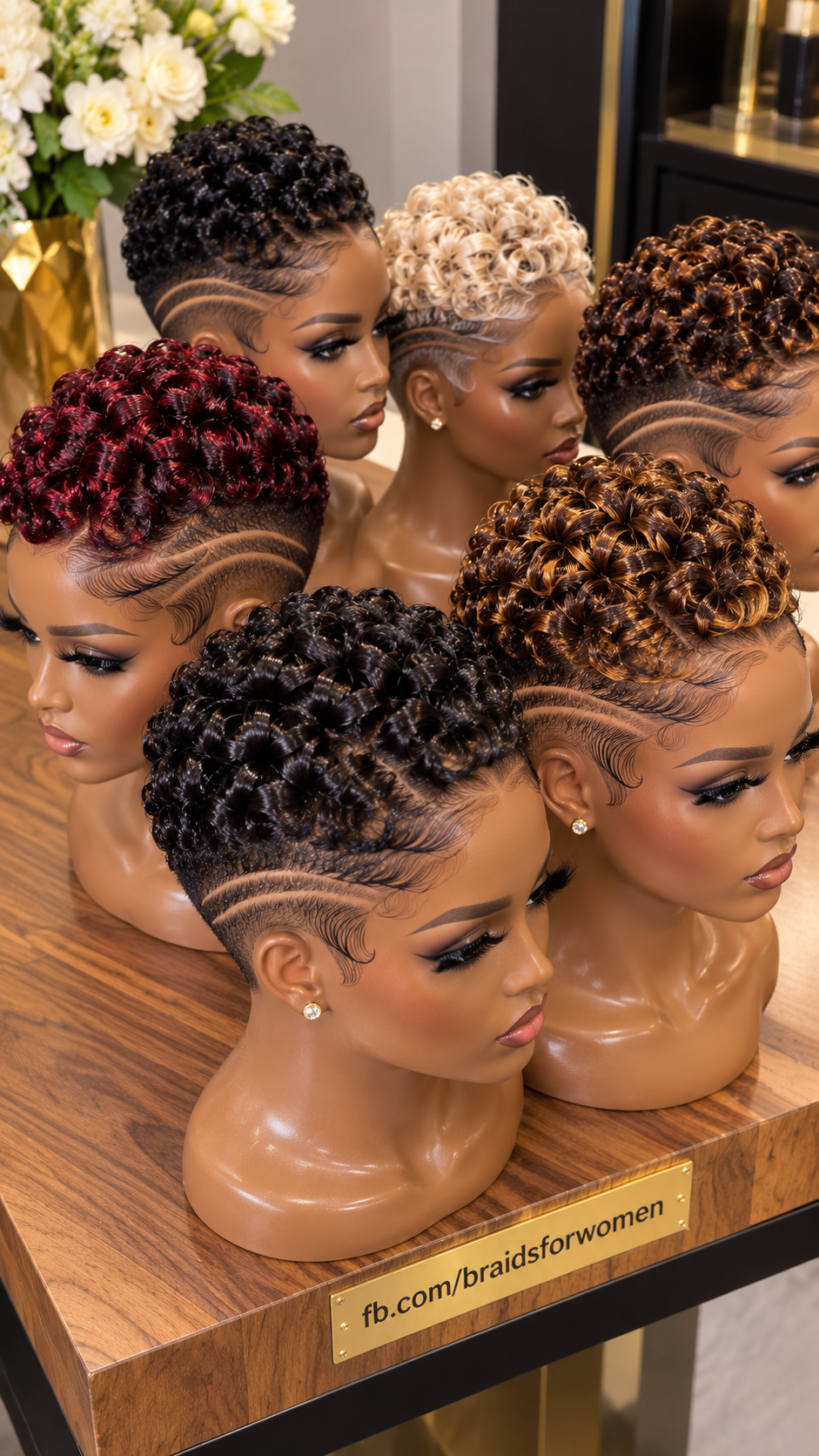
A strong wig collection does not need completely different silhouettes to give customers meaningful choices. The first image demonstrates this particularly well. Six closely related curly crown designs are displayed together, using the same compact sculpted concept while changing color, curl placement and the details around the sides. The result is a collection that immediately looks coordinated without making every unit appear identical.
The most noticeable visual element is the concentration of small glossy curls across the upper section. Instead of loose hanging curls, the hair has been arranged into compact circular formations that sit close together and create a rounded crown. Beneath that volume, the sides become much closer and more controlled. Fine curved lines and carefully directed hair provide contrast between the dense upper section and the lower perimeter.
The color selection expands the commercial appeal of the collection. Visible options include deep natural black, burgundy red, creamy blonde, warm copper brown and black mixed with golden brown. Because the underlying construction remains related across the collection, customers can focus on choosing the color and side-detail combination that best fits their preference.
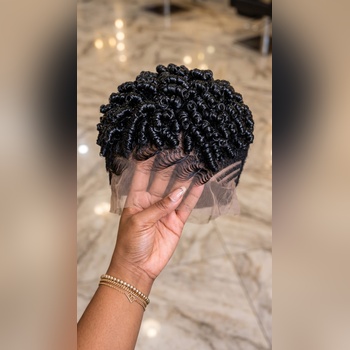
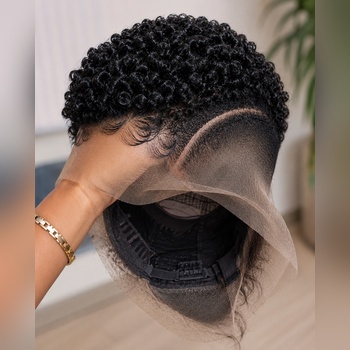
The Rounded Curl Formation Creates the Main Silhouette
The upper area is built around compact curls rather than fluffy volume. Each curl has a visible circular shape, and the curls are positioned close enough together to produce a substantial crown without creating excessive height. This is one reason the wigs photograph so effectively from slightly elevated angles: individual loops remain visible while the overall silhouette stays balanced.
For a custom order, the curl scale matters. Asking only for a curly wig could result in loose spirals, finger coils or a softer curl pattern. A closer description would be a compact sculpted curl crown with small glossy loops arranged densely across the upper section.
The front curl placement also deserves attention. The hair does not simply stop at a straight horizontal edge. Selected curls and directional strands approach the forehead area at different points, which helps connect the crown to the detailed perimeter underneath.
Precision Side Lines Change the Personality of Each Unit
The side work is one of the strongest elements visible in the first photograph. Several mannequins show multiple narrow parallel lines sweeping backward above the ear area. These lines sit below the curl-heavy crown and create a dramatic difference in texture.
The surrounding hair remains close enough for the lines to stay visible. That balance is important. If the side density were increased substantially, the separation would disappear. If the area were taken too low, the design could lose the soft transition visible in the reference.
Anyone commissioning a similar wig should send a dedicated side-view reference to the wig stylist. Specify the number of lines, their direction and whether they should remain parallel or gradually separate as they move backward. These details are difficult to communicate accurately using a frontal photograph alone.
Natural Black Works as the Collection Anchor
Several units use a deep natural black tone. Against the glossy circular curls, this color emphasizes reflected light and makes every individual loop easier to distinguish. It also keeps attention on the side architecture and perimeter work rather than introducing additional color contrast.
For wig businesses, carrying a dark anchor option alongside brighter colors can make a collection easier to sell. Customers who appreciate the shape but prefer a more restrained palette can choose the natural black version without sacrificing the sculpted construction.
When ordering, confirm whether the supplier describes the shade as natural black, soft black or another dark tone. Product photographs can make different dark shades appear similar under salon lighting, so a written color confirmation is useful.
Burgundy Red Adds Depth Without Hiding the Curl Pattern
The burgundy versions provide a richer alternative while preserving the same sculpted effect. The color appears deepest between the curls and brighter where salon lighting reflects from the upper surfaces. This natural variation gives the crown additional depth.
A burgundy unit can be especially effective when the side area remains darker or more subdued because the transition allows the curls to remain the visual focus. Customers ordering this option should ask for a reference swatch rather than relying exclusively on a generic burgundy color name. Burgundy can range from wine red to violet-red depending on the supplier.
Creamy Blonde Makes the Perimeter Work Highly Visible
The pale blonde wig in the collection creates a completely different visual impression. Because both the curls and perimeter details are lighter, the directional hair around the forehead and sides becomes particularly noticeable.
This shade also shows why careful root and side construction matters. On lighter wigs, inconsistent density can be easier to notice. A custom wig maker should therefore pay particular attention to the transition from the crown into the side area.
Buyers interested in the blonde version should request photographs under neutral lighting before approving the color. Warm salon lights can make pale blonde appear more golden than it actually is.
Copper Brown Brings Warmth to the Sculpted Curl Crown
The copper-brown option provides warmth while retaining enough depth for the individual curls to remain visually separated. Unlike very pale colors, this shade keeps stronger shadows between the loops, which helps preserve the three-dimensional effect of the crown.
It can be ordered as a single warm copper-brown tone or with subtle darker depth near the lower sections. If a buyer wants the exact appearance represented in the photograph, the stylist should be shown the complete reference instead of being asked simply for “brown.”
Black and Golden Brown Creates the Most Dimensional Color Mix
Another visible variation combines a dark foundation with warm golden-brown accents through the upper curls. This color arrangement emphasizes selected loops rather than lightening the entire wig.
Strategic placement is the key. If every curl receives the same amount of lighter color, the dimensional effect can disappear. Keeping dark curls between highlighted sections gives the eye natural separation and allows the warm accents to stand out.
A custom request can specify a natural-black or deep-brown foundation with selective golden-brown ribbons concentrated through the crown. Ask the stylist to avoid uniform striping and instead follow the direction of the curls.
What to Ask a Wig Stylist Before Ordering This Collection
Begin with the silhouette. Confirm that the stylist can produce a compact rounded crown made from small sculpted curls. Then discuss the side design separately. The number and position of the parallel lines should be agreed upon before construction.
Color should be the third decision. Ask for photographs or swatches representing the exact natural black, burgundy, blonde, copper or highlighted brown option you are considering. Finally, provide accurate head measurements according to the maker’s instructions.
Do not assume a particular lace specification from the finished mannequin photographs. Ask the seller directly about lace material, lace shade, cap construction, adjustment options and whether the unit arrives ready for fitting or requires additional customization.
Estimated Pricing for Sculpted Curly Crown Wigs
| Wig Category | Estimated Range | Typical Service Level |
|---|---|---|
| Premium Custom | $390–$720+ | Higher-grade hair, individual sizing, color work, sculpted crown and detailed side pattern |
| Standard Custom | $250–$430 | Custom styling with selected color and precision side detailing |
| Basic Human Hair | $170–$290 | Human-hair base with simplified sculpting and fewer custom details |
| Premium Synthetic | $100–$185 | Higher-quality fiber with preset curls and selected side styling |
| Basic Synthetic | $60–$120 | Budget interpretation with simpler curl formation and construction |
These are general estimated ranges rather than prices for the exact wigs shown. Custom coloring, hand sculpting, hair quality, cap specifications and local salon rates can substantially affect the final cost.
Booking the Right Professional for the Side Architecture
Look for a wig stylist, barber-stylist or salon professional whose portfolio includes precision side work as well as wig construction. This design requires both skills. A stylist may be excellent at curling a wig but have limited experience creating the narrow directional side patterns visible here.
Ask to see close-up photographs of previous work. Side and three-quarter views are more useful than frontal portraits for judging this type of design. Before booking, confirm whether the quoted price covers the wig itself, color, styling, fitting and final adjustments.
Keeping the Circular Curls Intact After Purchase
The crown should be protected from crushing during storage. Use an appropriately sized wig stand and leave enough space around the unit so other wigs do not press against the curls. Avoid aggressive brushing because the visual identity depends on maintaining the individual circular formations.
When a curl becomes displaced, reshape only that section rather than combing through the entire crown. For human-hair units, ask the original stylist which products and heat settings are appropriate. For synthetic units, verify whether the fiber is heat resistant before applying any heated tool.
Search Terms
sculpted curl crown wig · natural black curly crown wig · burgundy precision side wig · creamy blonde curl wig · copper brown sculpted curls · golden brown highlighted curl wig · parallel side line wig · compact curly crown unit