
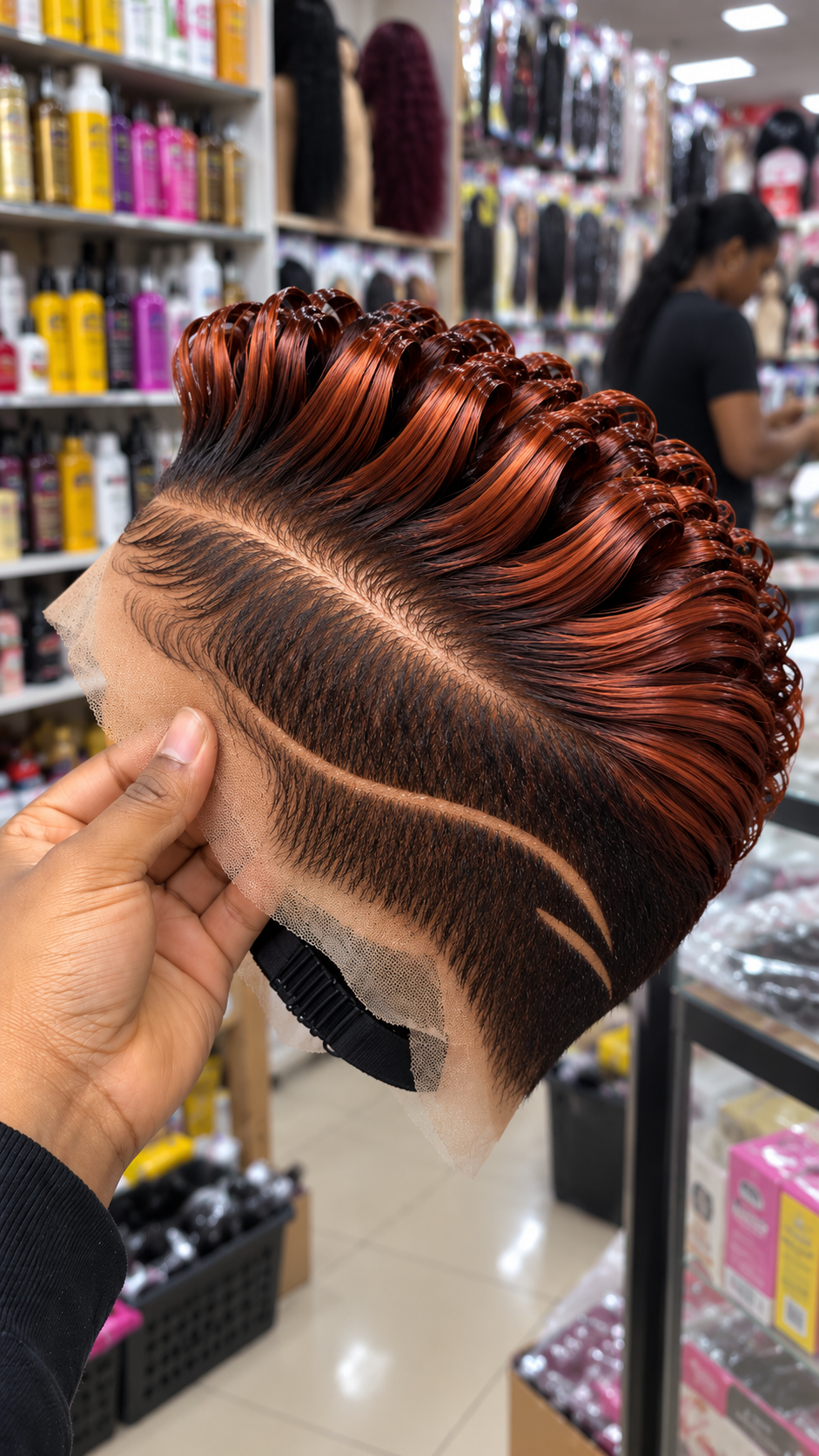
Rich copper hair rises from dark roots in broad, backward-moving waves, creating a striking short silhouette. The longer upper sections bend into open loops, while the close dark side carries a sweeping curved division and a shorter accent near the rear. The result combines expressive height with a carefully controlled lower outline.
The color placement strengthens that contrast. Copper follows the length of the raised sections, while the roots and lower side remain much darker. Each wave becomes easy to follow from its base to its curved end. Instead of forming a rounded crown of individual ringlets, the hair moves in elongated sections that travel together.
The defining relationship is between the lifted copper top and the close, patterned side. Keeping those areas in proportion matters more than adding extra curls or brighter color. A faithful recreation should preserve the flowing direction, dark foundation, and curved side detail.
Raised Waves With an Open Finish
The top has a lifted profile, with the front sections rising before bending backward. Their ends form loose loops rather than tight circular curls. That gives the hairstyle a continuous sense of movement, especially when viewed from the side.
When discussing the reference, ask for broad sections that retain their ribbonlike appearance. Separating the hair into many small ringlets would create a different finish. The longer strands need enough length to rise, bend, and settle into the arrangement without making the crown excessively tall.
A stylist should assess the shape on a fitted head before completing the set. The angle at which a wig is held can exaggerate its height, so an on-head view is useful for agreeing on the final proportions. Check the front and profile together rather than judging one angle alone.
Copper Color Built Around Dark Roots
The upper hair carries a deep copper tone with red-brown warmth. Dark roots remain visible beneath the brighter lengths, connecting the longer waves to the close lower section. This creates depth and prevents the color from appearing flat.
For a custom order, describe the transition as dark-rooted copper through the longer top. Ask the maker to show where the lighter shade begins and how much dark hair will remain visible. Bringing the copper too close to every root could reduce the contrast that gives this design its impact.
Request daylight footage before approving the color. Warm shop lighting can make copper look more orange, while cooler light may emphasize its red-brown character. If you want a softer or deeper version, discuss that adjustment before coloring rather than relying on a shade name alone.
The Long Curve Along the Side
The visible side contains a broad dark section beneath the upper division. A long exposed curve runs through the lower area, with a shorter accent appearing near its rear end. The lines follow the head’s contour and help give the close side a deliberate shape.
This is different from a collection of straight parallel stripes. The main curve is part of the overall movement, echoing the direction of the hair above it. Ask the stylist to preserve its sweep and placement rather than adding several unrelated lines.
For a natural-hair adaptation, consult a barber experienced in decorative short cuts. On a wig, the maker needs to consider the foundation before creating exposed channels. In either case, agree on the design before hair is removed, since later changes may be limited.
A Short Shape With Carefully Placed Fullness
The hairstyle concentrates its length and fullness across the upper section. The lower side stays close, allowing the copper waves to stand out. Too much hair around the temple could make the profile wider and conceal the curved detail.
Ask the maker to describe the distribution of hair rather than relying only on an overall density percentage. A unit can be full at the crown and relatively light at the perimeter. That balance is particularly important for a style with exposed side work.
The exact strand length cannot be established from this photograph. Request enough usable length for the elongated loops, then have the silhouette refined during fitting. Cutting the top too short at the beginning could leave insufficient hair for the desired bend.
Finding a Stylist for This Combination
Look for a short-hair specialist or custom wig stylist who can show lifted waves, close sides, and deliberate color placement in their portfolio. The design brings several skills together, so ask whether one professional handles the complete process.
Some salons may divide the work between a colorist, cutter, and finishing stylist. That can work well when everyone uses the same reference and understands the intended proportions. Confirm who is responsible for the final shape before booking.
During the consultation, explain how you plan to wear the hairstyle. A lower version may suit your everyday routine, while the pictured height may be your preference for events. Discuss those choices before the cut and final set, when changes are easier to make.
Find Out Where To Buy This
The photograph does not identify a verified supplier. To find a similar unit, contact custom wig studios, beauty suppliers, or salons that sell short styled wigs. Look for examples of dark-rooted copper hair with close side detailing.
You can send the reference by direct message or WhatsApp, or call to arrange a consultation. Describe the lifted copper waves, dark side, long curved channel, and smaller rear accent. Ask whether the business offers a ready-styled unit or would create the look to order.
Another option is purchasing a suitable base and having it customized locally. Have the stylist approve the material, available length, and construction before you buy. A base that cannot support the exposed side arrangement may require substantial changes to the design.
Putting the Order in Writing
A clear order should include your measurements, preferred material, color transition, and intended crown height. Specify which side should carry the exposed curve. Do not assume a maker will interpret an image in the same orientation you expect.
Ask whether the price includes coloring, cutting, setting, lace preparation, and fitting. Confirm the production time and whether adjustments are available after you try the wig on. Keep these details together so the finished unit can be compared with the agreed request.
For custom work, request an approval video before dispatch. It should show both sides, the front, rear, crown, and interior. Check the complete outline as carefully as the copper finish, and confirm delivery charges and customization terms before payment.
What the Visible Lace Can Tell You
Tan lace extends beyond the front and visible side. Dark adjustment components can also be seen inside the opening. These details make fitting and lace preparation relevant to the finished appearance, but they do not identify the complete cap construction.
Ask the seller for lace dimensions and clear interior photographs. The exposed side design needs an appropriate foundation, so the maker should explain how the chosen construction supports its placement. The photograph alone does not establish a particular lace grade.
A frontal may provide suitable space when its dimensions accommodate the design. A closure offers a more limited area and may require an adapted arrangement. Full-lace construction can be discussed where additional styling flexibility serves a specific need, rather than selected automatically.
Glueless Wear or an Adhesive Installation
The visible adjustment system does not confirm that this unit can be worn glueless. A secure fit depends on cap size, depth, band placement, and the way the perimeter sits. Tell the seller if daily removal is important to you.
The close side makes positioning especially noticeable. A shifting cap could move the curved detail away from its intended location. During a fitting, check comfort around the ears and whether the unit stays in place without repeated pulling.
For adhesive wear, choose an installer experienced with exposed side details and short styles. Request directions for the specific products used, including removal. Support the lace carefully rather than pulling the wig off by the raised top or perimeter.
Choosing the Material Behind the Finish
The image cannot establish whether the hair is human hair, synthetic fiber, or a blend. Its shine and individual strands are not reliable proof. Obtain written material information and care instructions before purchasing.
A preset synthetic version may suit someone who wants to retain a consistent arrangement. Ask how the waves behave after washing and whether a specialist reset is needed. Heat-friendly synthetic fiber still requires its own temperature limits and compatible styling methods.
A human-hair version may offer more opportunities for restyling, but rebuilding the raised sections can require time and skill. Consider the maintenance service you can access, as well as the initial purchase. The most useful material choice is one that fits your actual routine.
Planning a Five-Level Budget
The finished cost may include the base unit, custom color, close cutting, exposed side work, and the final wave set. Ask for an itemized quotation so you can see which services account for the total.
The USD amounts below are illustrative budgeting examples, not verified prices for the photographed wig. Actual quotations vary by supplier, location, construction, material, and the amount of customization included.
| Tier | Illustrative Price Range | Potential Scope |
|---|---|---|
| Budget | $30–$85 | Ready-made synthetic short unit with a simpler copper top and close sides. |
| Value | $85–$180 | More detailed preset unit, potentially including lace and minor styling adjustments. |
| Mid | $180–$350 | Selected material and construction choices with some custom coloring, cutting, or setting. |
| Premium | $350–$650 | More extensive customization of fit, copper placement, crown shape, and side design. |
| Salon-Grade | $650–$1,000+ | Bespoke unit with specialist finishing and an agreed consultation or fitting package. |
Allow separately for delivery, installation, and later maintenance unless they are included in writing. Compare complete service packages rather than assuming a higher unit price covers every appointment.
Maintaining the Raised Waves
Handle the wig from the cap and support its weight underneath. Lifting it by the longer copper sections can disturb the set, while pulling the lace can place strain on the perimeter. Give the top space when positioning the unit.
Before wearing it, inspect the raised sections for flattening or displaced ends. Guide individual pieces along their existing direction with your fingertips. Brushing through the full top may separate the broad sections and change the finish.
Use styling products sparingly and only when compatible with the confirmed material. Repeated layers can make the longer strands cling together or leave residue near the dark roots. If buildup develops, ask about cleaning rather than continually adding more product.
Washing and Refreshing the Set
Review the unit regularly for residue, odor, and buildup around the cap. Washing frequency should reflect wear, perspiration, and product use, following the maker’s instructions. Occasional wear and daily use will not necessarily require the same schedule.
Before the first wash, establish how the raised arrangement will be restored. Take photographs of the front height, upper loops, and curved side while the style is intact. Ask whether the material retains its set or needs a professional appointment afterward.
Follow the approved cleansing and drying method without vigorous rubbing. Do not apply heat until the material and permitted temperature are confirmed. A professional refresh is useful when the waves lose their direction or the side becomes difficult to arrange.
Daily Wear, Storage, and Practical Tradeoffs
The short lower sections stay clear of many collars, while the copper top brings a strong focal point to an outfit. Cream, dark brown, olive, and understated gold accessories can complement the warm shade without competing with it.
The main practical tradeoff is the raised silhouette. Tight hats, firm headrests, and crowded storage can compress the longer sections. Use a suitable support when the wig is off and leave enough space around the crown. For travel, a structured container can help protect the arrangement.
A fitted assessment is the best way to decide whether the pictured height suits your routine. You can request a slightly lower version while preserving the copper movement and dark curved side. With those proportions agreed in advance, the hairstyle offers a bold short look built around color, direction, and a distinctive profile.
Search Terms
copper crested wave wig · dark rooted copper pixie · short copper hair with curved side line · lifted waves with close dark sides · copper looped crown hairstyle · short lace wig with patterned side · red copper swept back hair · sculpted copper pixie with side curve